Kirjojen hintavertailu. Mukana 12 390 323 kirjaa ja 12 kauppaa.
Kirjailija
Mark H. Rose
Kirjat ja teokset yhdessä paikassa: 8 kirjaa, julkaisuja vuosilta 1990-2022, suosituimpien joukossa A Good Place to Do Business. Vertaile teosten hintoja ja tarkista saatavuus suomalaisista kirjakaupoista.
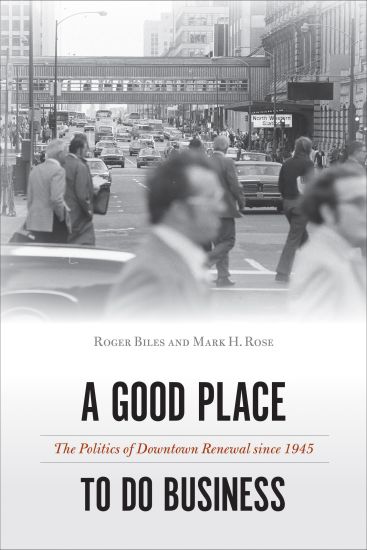
The “Pittsburgh Renaissance,” an urban renewal effort launched in the late 1940s, transformed the smoky rust belt city’s downtown. Working-class residents and people of color saw their neighborhoods cleared and replaced with upscale, white residents and with large corporations housed in massive skyscrapers. Pittsburgh’s Renaissance’s apparent success quickly became a model for several struggling industrial cities, including St. Louis, Cleveland, Detroit, Chicago, and Philadelphia. In A Good Place to Do Business, Roger Biles and Mark Rose chronicle these urban “makeovers” which promised increased tourism and fashionable shopping as well as the development of sports stadiums, convention centers, downtown parks, and more. They examine the politics of these government-funded redevelopment programs and show how city politics (and policymakers) often dictated the level of success. As city officials and business elites determined to reorganize their downtowns, a deeply racialized politics sacrificed neighborhoods and the livelihoods of those pushed out. Yet, as A Good Place to Do Business demonstrates, more often than not, costly efforts to bring about the hoped-for improvements failed to revitalize those cities, or even their downtowns.
The “Pittsburgh Renaissance,” an urban renewal effort launched in the late 1940s, transformed the smoky rust belt city’s downtown. Working-class residents and people of color saw their neighborhoods cleared and replaced with upscale, white residents and with large corporations housed in massive skyscrapers. Pittsburgh’s Renaissance’s apparent success quickly became a model for several struggling industrial cities, including St. Louis, Cleveland, Detroit, Chicago, and Philadelphia. In A Good Place to Do Business, Roger Biles and Mark Rose chronicle these urban “makeovers” which promised increased tourism and fashionable shopping as well as the development of sports stadiums, convention centers, downtown parks, and more. They examine the politics of these government-funded redevelopment programs and show how city politics (and policymakers) often dictated the level of success. As city officials and business elites determined to reorganize their downtowns, a deeply racialized politics sacrificed neighborhoods and the livelihoods of those pushed out. Yet, as A Good Place to Do Business demonstrates, more often than not, costly efforts to bring about the hoped-for improvements failed to revitalize those cities, or even their downtowns.
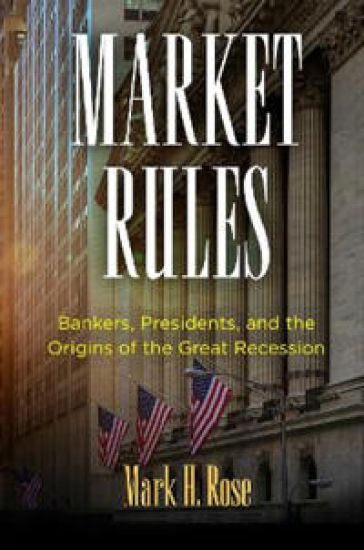
Although most Americans attribute shifting practices in the financial industry to the invisible hand of the market, Mark H. Rose reveals the degree to which presidents, legislators, regulators, and even bankers themselves have long taken an active interest in regulating the industry. In 1971, members of Richard Nixon's Commission on Financial Structure and Regulation described the banks they sought to create as "supermarkets." Analogous to the twentieth-century model of a store at which Americans could buy everything from soft drinks to fresh produce, supermarket banks would accept deposits, make loans, sell insurance, guide mergers and acquisitions, and underwrite stock and bond issues. The supermarket bank presented a radical departure from the financial industry as it stood, composed as it was of local savings and loans, commercial banks, investment banks, mutual funds, and insurance firms. Over the next four decades, through a process Rose describes as "grinding politics," supermarket banks became the guiding model of the financial industry. As the banking industry consolidated, it grew too large while remaining too fragmented and unwieldy for politicians to regulate and for regulators to understand-until, in 2008, those supermarket banks, such as Citigroup, needed federal help to survive and prosper once again. Rose explains the history of the financial industry as a story of individuals-some well-known, like Presidents Kennedy, Carter, Reagan, and Clinton; Treasury Secretaries Donald Regan and Timothy Geithner; and JP Morgan CEO Jamie Dimon; and some less so, though equally influential, such as Kennedy's Comptroller of the Currency James J. Saxon, Citicorp CEO Walter Wriston, and Bank of America CEOs Hugh McColl and Kenneth Lewis. Rose traces the evolution of supermarket banks from the early days of the Kennedy administration, through the financial crisis of 2008, and up to the Trump administration's attempts to modify bank rules. Deeply researched and accessibly written, Market Rules demystifies the major trends in the banking industry and brings financial policy to life.
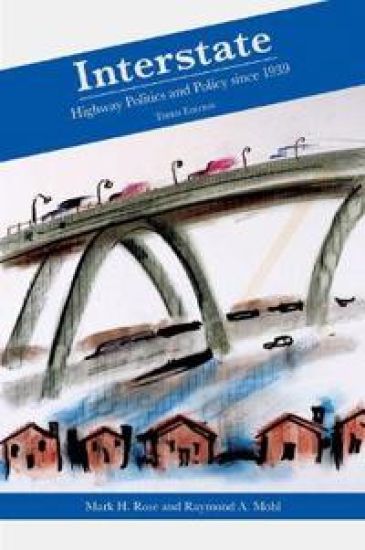
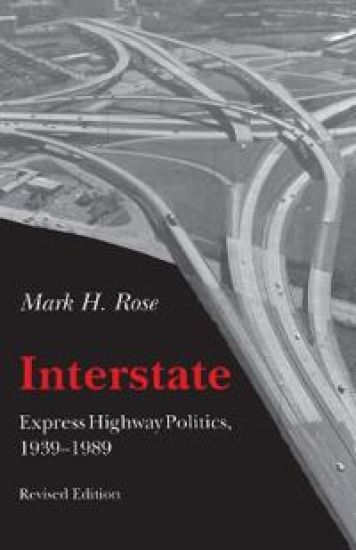
This new, expanded edition brings the story of the Interstates into the twenty-first century. It includes an account of the destruction of homes, businesses, and communities as the urban expressways of the highway network destroyed large portions of the nation’s central cities. Mohl and Rose analyse the subsequent urban freeway revolts, when citizen protest groups battled highway builders in San Francisco, Baltimore, Memphis, New Orleans, Washington, DC, and other cities. Their detailed research in the archival records of the Bureau of Public Roads, the Federal Highway Administration, and the U.S. Department of Transportation brings to light significant evidence of federal action to tame the spreading freeway revolts, curb the authority of state highway engineers, and promote the devolution of transportation decision making to the state and regional level. They analyse the passage of congressional legislation in the 1990s, especially the Intermodal Surface Transportation Efficiency Act (ISTEA), that initiated a major shift of Highway Trust Fund dollars to mass transit and light rail, as well as to hiking trails and bike lanes. Mohl and Rose conclude with the surprising popularity of the recent freeway teardown movement, an effort to replace deteriorating, environmentally damaging, and sometimes dangerous elevated expressway segments through the inner cities. Sometimes led by former anti-highway activists of the 1960s and 1970s, teardown movements aim to restore the urban street grid, provide space for new streetcar lines, and promote urban revitalisation efforts. This revised edition continues to be marked by accessible writing and solid research by two well-known scholars. |This new, expanded edition brings the story of the Interstates into the twenty-first century. It includes an account of the destruction of homes, businesses, and communities as the urban expressways of the highway network destroyed large portions of the nation’s central cities. Mohl and Rose analyze the subsequent urban freeway revolts, when citizen protest groups battled highway builders in San Francisco, Baltimore, Memphis, New Orleans, Washington, DC, and other cities. Their detailed research in the archival records of the Bureau of Public Roads, the Federal Highway Administration, and the U.S. Department of Transportation brings to light significant evidence of federal action to tame the spreading freeway revolts, curb the authority of state highway engineers, and promote the devolution of transportation decision making to the state and regional level. They analyze the passage of congressional legislation in the 1990s, especially the Intermodal Surface Transportation Efficiency Act (ISTEA), that initiated a major shift of Highway Trust Fund dollars to mass transit and light rail, as well as to hiking trails and bike lanes. Mohl and Rose conclude with the surprising popularity of the recent freeway teardown movement, an effort to replace deteriorating, environmentally damaging, and sometimes dangerous elevated expressway segments through the inner cities. Sometimes led by former anti-highway activists of the 1960s and 1970s, teardown movements aim to restore the urban street grid, provide space for new streetcar lines, and promote urban revitalization efforts. This revised edition continues to be marked by accessible writing and solid research by two well-known scholars. Raymond A. Mohl is distinguished professor of history at the University of Alabama at Birmingham. He is the author of South of the South: Jewish Activists and the Civil Rights Movement in Miami, 1945-1960 and co-editor of The Making of Urban America, 3rd edition. Mark H. Rose is professor of history at Florida Atlantic University. He is the author of Cities of Light and Heat: Domesticating Gas and Electricity in Urban America and coauthor of The Best Transportation System in the World: Railroads, Trucks, Airlines and American Public Policy in the Twentieth Century.
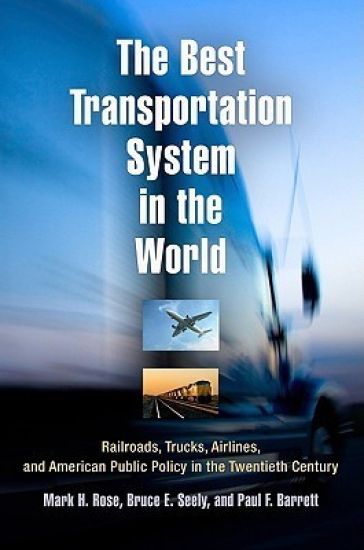
The Best Transportation System in the World focuses on the centrality of government in organizing the nation's transportation industries. As the authors show, over the course of the twentieth century, transportation in the United States was as much a product of hard-fought politics, lobbying, and litigation as it was a naturally evolving system of engineering and available technology. For example, in the mid-1950s, President Eisenhower, concerned about a railroad industry in decline, asked Congress to grant railroad executives authority to modify prices and service even as he introduced the legislation that provided for the national highway system. And as early as the 1960s, presidents across the political spectrum, including Johnson, Nixon, Ford, and Carter, sought broad deregulation of the transportation industry in order to prime the economic pump or, in the 1970s, reverse stagflation. At every turn, the authors contend, political considerations served to shape the businesses and infrastructure that Americans use to travel.
Cities of Light and Heat takes us to Kansas City and Denver during the late nineteenth century when gas and electricity were introduced to these "instant cities" of the west. With rich detail, Mark Rose shows how the new technology spread during the next century from a few streets and businesses within the city limits to countless private homes in the suburbs. In Kansas City and Denver, as in most communities throughout the U.S., business executives, city leaders, and engineers acted as early promoters of the new technology. But by the early 1900s educators, home builders, architects, and salespersons were becoming increasingly important as gas and electric utilities and appliances reached more and more American homes. But these voices for the new technology brought with them their own social attitudes and cultural values. By mid-century, whether in the classroom or in advertisements, Americans were regularly encouraged to fit the new technology within prevailing notions of cleanliness, comfort, convenience, and gender. Although in hindsight the spread of modern technology might seem inevitable to us, Rose shows how even the leaders of the nation's great gas and electric corporations with their vast production and distribution facilities were subject to geography, competing ideologies, urban politics, and even the choices of ordinary consumers. Rose thus locates the driving force behind the diffusion of technology in the neighborhoods, kitchens, and offices of the city. Cities of Light and Heat shows the importance of culture, politics, and urban growth in shaping technological change in the cities of North America.
Cities of Light and Heat takes us to Kansas City and Denver during the late nineteenth century when gas and electricity were introduced to these "instant cities" of the west. With rich detail, Mark Rose shows how the new technology spread during the next century from a few streets and businesses within the city limits to countless private homes in the suburbs. In Kansas City and Denver, as in most communities throughout the U.S., business executives, city leaders, and engineers acted as early promoters of the new technology. But by the early 1900s educators, home builders, architects, and salespersons were becoming increasingly important as gas and electric utilities and appliances reached more and more American homes. But these voices for the new technology brought with them their own social attitudes and cultural values. By mid-century, whether in the classroom or in advertisements, Americans were regularly encouraged to fit the new technology within prevailing notions of cleanliness, comfort, convenience, and gender. Although in hindsight the spread of modern technology might seem inevitable to us, Rose shows how even the leaders of the nation's great gas and electric corporations with their vast production and distribution facilities were subject to geography, competing ideologies, urban politics, and even the choices of ordinary consumers. Rose thus locates the driving force behind the diffusion of technology in the neighborhoods, kitchens, and offices of the city. Cities of Light and Heat shows the importance of culture, politics, and urban growth in shaping technological change in the cities of North America.