Kirjojen hintavertailu. Mukana 12 595 353 kirjaa ja 12 kauppaa.

Kirjailija

Mark Häberlein

Kirjat ja teokset yhdessä paikassa: 8 kirjaa, julkaisuja vuosilta 1998-2024, suosituimpien joukossa Aufbruch ins globale Zeitalter. Vertaile teosten hintoja ja tarkista saatavuus suomalaisista kirjakaupoista.

Mukana myös kirjoitusasut: Mark Haberlein

8 kirjaa

Kirjojen julkaisuhaarukka 1998-2024.

Die Fugger: Geschichte Einer Augsburger Familie (1367-1650)
Wie keine andere Familie verkorpern die Fugger wirtschaftlichen Erfolg und soziale Aufstiegschancen des suddeutschen Burgertums an der Wende vom Mittelalter zur Neuzeit. Unter der Leitung Jakob und Anton Fuggers baute die Familienfirma binnen weniger Jahrzehnte das grosste europaische Handels- und Bergbauunternehmen seiner Zeit auf. Als Geldgeber des Kaisers und als Bankiers der romischen Kurie spielten die Fugger eine wichtige Rolle bei der Finanzierung der europaischen Politik. Ihr Erfolg ermoglichte ihnen den Kauf grosser Landguter in Schwaben und den Aufstieg in den Reichsadel. Als uberzeugte Anhanger der alten Kirche exponierten sie sich in den konfessionellen Auseinandersetzungen der Reformationszeit. Als Stifter, Sammler und Mazene pragten sie die Kultur der suddeutschen Renaissance.
Die Marokkaner in Wien: Interkulturelle Diplomatie Und Stadtische Offentlichkeit Im Zeitalter Josephs II.
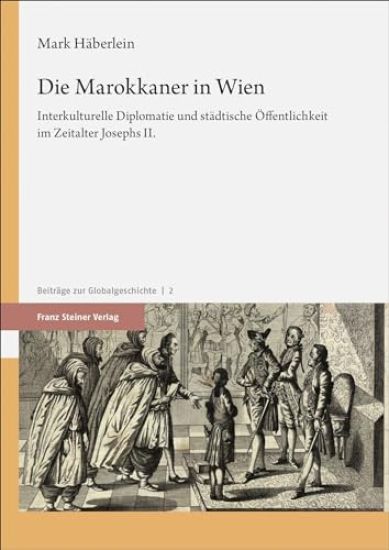
Im Jahre 1783 reiste eine Gesandtschaft des Sultans von Marokko nach Wien, um mit Kaiser Joseph II. einen Friedens-, Freundschafts- und Handelsvertrag zu schliessen. Diese diplomatische Initiative war in ein aufwendiges hofisches Zeremoniell eingebettet; sie fand zudem grosse Resonanz in der Wiener Offentlichkeit und wurde in unterschiedlichen Medien visuell, textuell und materiell verarbeitet. Mark Haberlein stellt Vorgeschichte, Verlauf, Ergebnisse und Nachwirkungen dieses interkulturellen Ereignisses erstmals auf breiter Quellengrundlage dar und verortet es in seinen politischen, sozialen und kulturellen Kontexten. Durch die prazise Rekonstruktion der marokkanischen Gesandtschaft leistet sein Buch zugleich einen Beitrag zur globalen Mikrogeschichte.
The Practice of Pluralism

The Practice of Pluralism

Mark Häberlein

Pennsylvania State University Press
2016
pokkari
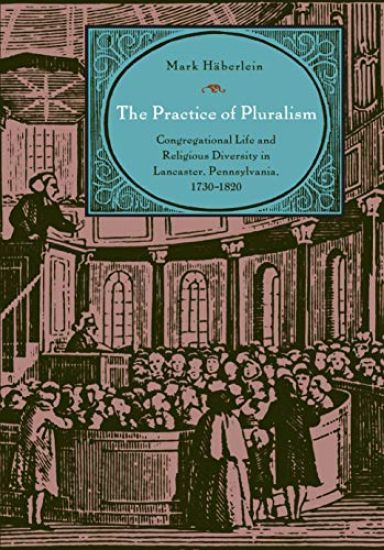
The clash of modernity and an Amish buggy might be the first image that comes to one’s mind when imagining Lancaster, Pennsylvania, today. But in the early to mid-eighteenth century, Lancaster stood apart as an active and religiously diverse, ethnically complex, and bustling city. On the eve of the American Revolution, Lancaster’s population had risen to nearly three thousand inhabitants; it stood as a center of commerce, industry, and trade. While the German-speaking population—Anabaptists as well as German Lutherans, Moravians, and German Calvinists—made up the majority, about one-third were English-speaking Anglicans, Catholics, Presbyterians, Quakers, Calvinists, and other Christian groups. A small group of Jewish families also lived in Lancaster, though they had no synagogue. Carefully mining historical records and documents, from tax records to church membership rolls, Mark Häberlein confirms that religion in Lancaster was neither on the decline nor rapidly changing; rather, steady and deliberate growth marked a diverse religious population.
The Fuggers of Augsburg

The Fuggers of Augsburg

Mark Haberlein

University of Virginia Press
2012
sidottu
As the wealthiest German merchant family of the sixteenth century, the Fuggers have attracted wide scholarly attention. In contrast to the other famous merchant family of the period, the Medici of Florence, however, no English-language work on them has been available until now. The Fuggers of Augsburg offers a concise and engaging overview that builds on the latest scholarly literature and the author's own work on sixteenth-century merchant capitalism. Mark Häberlein traces the history of the family from the weaver Hans Fugger's immigration to the imperial city of Augsburg in 1367 to the end of the Thirty Years' War in 1648. Because the Fuggers' extensive business activities involved long-distance trade, mining, state finance, and overseas ventures, the family exemplifies the meanings of globalisation at the beginning of the modern age. The book also covers the political, social, and cultural roles of the Fuggers: their patronage of Renaissance artists, the founding of the largest social housing project of its time, their support of Catholicism in a city that largely turned Protestant during the Reformation, and their rise from urban merchants to imperial counts and feudal lords. Häberlein argues that the Fuggers organised their social rise in a way that allowed them to be merchants and feudal landholders, burghers and noblemen at the same time. Their story therefore provides a window on social mobility, cultural patronage, religion, and values during the Renaissance and the Reformation.
The Practice of Pluralism

The Practice of Pluralism

Mark Häberlein

Pennsylvania State University Press
2009
sidottu
The clash of modernity and an Amish buggy might be the first image that comes to one’s mind when imagining Lancaster, Pennsylvania, today. But in the early to mid-eighteenth century, Lancaster stood apart as an active and religiously diverse, ethnically complex, and bustling city. On the eve of the American Revolution, Lancaster’s population had risen to nearly three thousand inhabitants; it stood as a center of commerce, industry, and trade. While the German-speaking population—Anabaptists as well as German Lutherans, Moravians, and German Calvinists—made up the majority, about one-third were English-speaking Anglicans, Catholics, Presbyterians, Quakers, Calvinists, and other Christian groups. A small group of Jewish families also lived in Lancaster, though they had no synagogue. Carefully mining historical records and documents, from tax records to church membership rolls, Mark Häberlein confirms that religion in Lancaster was neither on the decline nor rapidly changing; rather, steady and deliberate growth marked a diverse religious population.