Kirjojen hintavertailu. Mukana 12 657 676 kirjaa ja 12 kauppaa.
Kirjailija
Mark Harris
Kirjat ja teokset yhdessä paikassa: 59 kirjaa, julkaisuja vuosilta 1985-2027, suosituimpien joukossa Mark Harris. Vertaile teosten hintoja ja tarkista saatavuus suomalaisista kirjakaupoista.
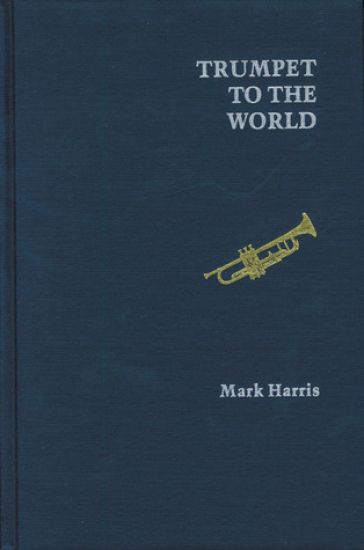
First published in 1946, Trumpet to the World can be seen as a landmark novel, rare for its profound rendering of a black man's experience in Jim Crow America and prophetic of the social changes to come in the next decade. Its protagonist, Willie Jim, could have been brutalized by his family's hard existence in Georgia, but he heads out early; could have been thoroughly demoralized by bigotry and discrimination in a hundred forms, but he learns to read and write and thinks for himself; could have been emotionally unfulfilled, but he learns to love in the midst of hate. After his marriage to a white woman, Willie Jim, caught up in the maelstrom of World War II, is sent to an army camp in the South, where his duty includes teaching English to other soldiers. A tragic event there compromises his future at the very moment a book he has written trumpets to the world his dream of social justice and universal brotherhood.
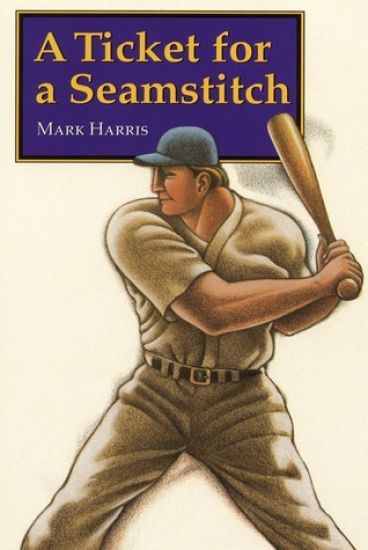
This is the third novel narrated by Henry Wiggen, a six-foot three-inch, 195-pound, left-handed pitcher for the New York Mammoths. Henry, who began as a rookie in The Southpaw and developed into a pro in Bang the Drum Slowly, is a mature veteran in A Ticket for a Seamstitch. A seamstress from "somewhere out West" writes to Henry, her hero, that she will be in New York to watch the Mammoths play on the Fourth of July. When she arrives in New York, both the married Henry and his pal, the very unmarried Thurston "Piney" Woods, are at a loss as to what to do with their visitor. The two men finally do the decent thing: they take the seamstress to the automat for dinner. In so doing, they both learn some things worth knowing, although the distraction undoubtedly affects their performance in the big game. In the essay "Easy Does It Not" Mark Harris describes the origins of this wonderfully comic novel.
On June 18 2023, the world held its breath as news broke of the Titan submersible's implosion, killing all five passengers as they descended to view the Titanic shipwreck. How could this happen? And who is to blame? A tightly coiled drama set against a vivid world that few have had a chance to experience, The Deep End weaves together heart-stopping storytelling, rigorous research and exclusive interviews with engineers, consultants and insiders to illuminate the high-stakes world of deep-sea exploration, and the broader implications for controlling the ocean's depths. This is a tale of innovation and risks, of unlikely success and deadly failures, all part of a race to control the riches of the Earth's oceans. The book also tells the human story behind the five people who tragically lost their lives on the Titan. Through interviews with friends, family and colleagues, Mark Harris brings their untold stories to life - from the passionate Titanic expert Paul-Henri Nargeolet to teenager Suleman Dawood, who overcame his fear of the submersible through his ambition to become the first person to solve a Rubix cube on the ocean floor. Finally, there is the lingering question of why the submersible exploded, and who is to blame. The Deep End is the first book to hunt for the real reason the Titan failed, why it matters, and what it means for humanity's future. This is a high-tech detective story about the limits of innovation, the dangers of big tech's 'move fast, break things' mentality, and the hunger to conquer our planet's last great frontier.
The Science of Global Warming Remediation examines the workings of a complex chemical system using concepts such as chemical kinetics, thermodynamics, and oxidation/reduction. It focuses on preventing environmental deterioration as well as using environmental chemistry for environmental cleanup or remediation. Further, it describes how to utilize mechanical, chemical, and biological methods to detoxify contaminated land or water. The book also considers how environmental legislation aims to modify human behavior so as to reduce or eliminate the environmental threats identified through science. Features: Presents multiple methods for water treatment Explains the physiological dangers of exposure to various toxic materials Illustrates the mechanisms of major partitioning systems and sinks for carbon dioxide Examines the mechanics of global warming and the potential long-term effects Provides step-by-step solutions to empower individuals to act locally
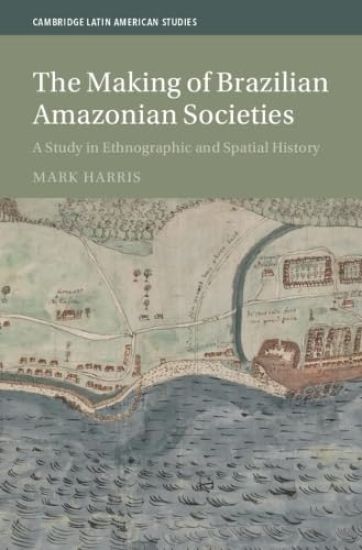
Amazonia presents the contemporary scholar with myriad challenges. What does it consist of, and what are its limits? In this interdisciplinary book, Mark Harris examines the formation of Brazilian Amazonian societies in the seventeenth and eighteenth centuries, focusing predominantly on the Eastern Amazon, what is today the states of Pará and Amapá in Brazil. His aim is to demonstrate how the region emerged through the activities and movements of Indigenous societies with diverse languages, cultures, individuals of mixed heritage, and impoverished European and African people from various nations. Rarely are these approaches and people examined together, but this comprehensive history insightfully illustrates that the Brazilian Amazon consists of all these communities and their struggles and highlights the ways the Amazon has been defended through partnership and alliance across ethnic identities.
Amazonia presents the contemporary scholar with myriad challenges. What does it consist of, and what are its limits? In this interdisciplinary book, Mark Harris examines the formation of Brazilian Amazonian societies in the seventeenth and eighteenth centuries, focusing predominantly on the Eastern Amazon, what is today the states of Pará and Amapá in Brazil. His aim is to demonstrate how the region emerged through the activities and movements of Indigenous societies with diverse languages, cultures, individuals of mixed heritage, and impoverished European and African people from various nations. Rarely are these approaches and people examined together, but this comprehensive history insightfully illustrates that the Brazilian Amazon consists of all these communities and their struggles and highlights the ways the Amazon has been defended through partnership and alliance across ethnic identities.
The Science of Global Warming Remediation examines the workings of a complex chemical system using concepts such as chemical kinetics, thermodynamics, and oxidation/reduction. It focuses on preventing environmental deterioration as well as using environmental chemistry for environmental cleanup or remediation. Further, it describes how to utilize mechanical, chemical, and biological methods to detoxify contaminated land or water. The book also considers how environmental legislation aims to modify human behavior so as to reduce or eliminate the environmental threats identified through science.Features: Presents multiple methods for water treatment Explains the physiological dangers of exposure to various toxic materials Illustrates the mechanisms of major partitioning systems and sinks for carbon dioxide Examines the mechanics of global warming and the potential long-term effects Provides step-by-step solutions to empower individuals to act locally
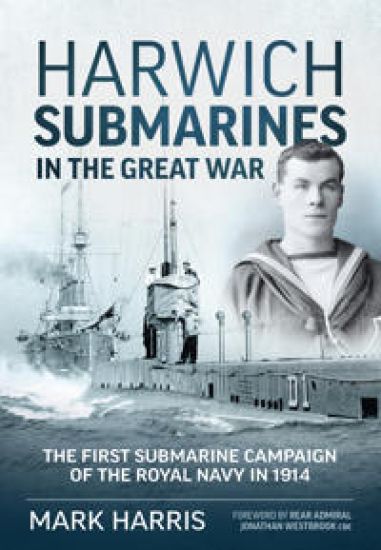
The authoritative story of the Royal Navy's first submarine campaign, told using new research. The Harwich Submarine Flotilla played a key role establishing British dominance in the North Sea at the beginning of the First World War. Letters, diaries, memoirs and combat reports of the participants are used to give a complete account. Much of this is in print for the first time. Foreword by Rear Admiral Jonathan Westbrook CBE, former Royal Navy Submariner. Written in collaboration with the Friends of the Royal Navy Submarine Museum, with profits from royalties contributing towards the work of the Museum. Both official and personal archive material is used to tell the story, sourced from British, German and French archives. The text is illustrated by charts and plans prepared using the patrol reports, war diaries and logs of the submarines and warships that took part.##The war experience of the participants is brought to life, giving a real insight into what it was like to fight in these early submarines, whilst also relating what really happened and the true significance of the events. The Flotilla had to battle not just the enemy, but also the hazards of mines, human frailties, mechanical failure and the weather. The story of every patrol in the 1914 campaign is told.##This campaign saw the first torpedo fired in action by a Royal Navy submarine, the first ship to be sunk and the first submarine to be lost in action. The commanders of the submarines were true pioneers, working out for the first time how to wage war with the latest technology of their age. Their patrols took submarine crews and commanders constantly onto the front line of the naval war to face a multitude of hazards. Many paid the ultimate price, with the Flotilla losing three submarines and almost all of their crews in this first campaign. Success brought the names of figures like Roger Keyes and Max Horton to prominence. The early story of the Flotilla is also the story of a pivotal point in their journey to become key figures of the Royal Navy in the twentieth century. For others, even those who would go on to great fame as submariners, such as Martin Nasmith, it would be a challenging start to their wartime careers.
Join David on a second amazing journey as he becomes deeply involved once again in a situation which is quite literally alien to him… Now recovered from his time travel adventure back to medieval Cambridge, David is still living in the university city of Cambridge and mostly retired from his investigative journalism. Although now married to Naomi - a woman from the ‘past’ - and with extraordinary twin children, he counts himself as being the same man that can search for the truth and is ready for the next big story. He knows all about the biblical ‘Exodus’ of the Israelites from centuries of slavery in the ancient Egypt of the Pharaohs. What he could never have imagined was being caught up in what he and others consider to be a ‘Second Exodus’ - from being 21st century slaves to a fear of persecution and worse - that would be seriously out of this world! Now he - and those others - resolve to take flight, on an equally astounding and unbelievable interplanetary voyage across the ‘Milky Way’ galaxy, from a perilous situation that could easily and ultimately give rise to another Holocaust!
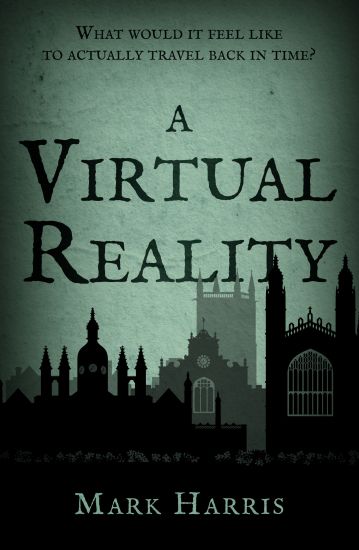
What would it feel like to actually travel back in time? How meaningful or dangerous could it be to embark on such a voyage? Where on earth might a suitable candidate and launch site be found? And when would be the chosen era for a journey to the past? Divorcee David, an early-retired journalist residing in the university city of Cambridge, can and will answer these intriguing questions as he is offered a unique and mind-blowing opportunity to travel back in time to medieval Cambridge - despite having to satisfy a requisite pre-condition that is, literally, quite alien to him. His journey will take him on a transit across the centuries; including encounters with two special women. David invites you to accompany him on this incredible, unpredictable and perilous exploit in what was, to him, a virtually real world. For some of those involved, the story would end tragically; for others, life and happiness will prevail. But who is destined for which ending...? Readers of time travel fiction will delight in this first person account that plays with the laws of physics and engages with the history of its characters. Take a seat in a time travel venture that will grip you until the surprising final pages. Praise for Mark Harris’ other works: “Mark Harris’ style makes for easy reading and comprehension. He paints the background to each story with a delicate, gentle, and at times humorous touch.” - D J Coppel, BJR “I enjoyed this book more than I could ever have thought possible.” - Reggie Ross, Belfast Jewish Recorder
Becoming an Outstanding Geography Teacher supports all geography teachers in offering a wide range of approaches to teaching and learning that will stimulate and engage students.Providing a variety of techniques for planning inspiring geography lessons, the book shows teachers how they can use current resources in a more innovative way to produce outstanding results. Chapters include sample lesson plans which demonstrate each technique with a step-by-step discussion of the development of the lessons, and have a strong focus on activating learning and supporting pupils on their individual learning journeys. The book covers all aspects of geography teaching, including:designing programmes of studydifferentiation questioningliteracy and numeracyteaching A Levelenquiry geographyfeedback and assessment.Packed full of strategies and activities that are easy to implement, Becoming an Outstanding Geography Teacher is essential reading for newly qualified and experienced geography teachers who want to ensure outstanding teaching and learning in their classrooms.
Becoming an Outstanding Geography Teacher supports all geography teachers in offering a wide range of approaches to teaching and learning that will stimulate and engage students.Providing a variety of techniques for planning inspiring geography lessons, the book shows teachers how they can use current resources in a more innovative way to produce outstanding results. Chapters include sample lesson plans which demonstrate each technique with a step-by-step discussion of the development of the lessons, and have a strong focus on activating learning and supporting pupils on their individual learning journeys. The book covers all aspects of geography teaching, including:designing programmes of studydifferentiation questioningliteracy and numeracyteaching A Levelenquiry geographyfeedback and assessment.Packed full of strategies and activities that are easy to implement, Becoming an Outstanding Geography Teacher is essential reading for newly qualified and experienced geography teachers who want to ensure outstanding teaching and learning in their classrooms.
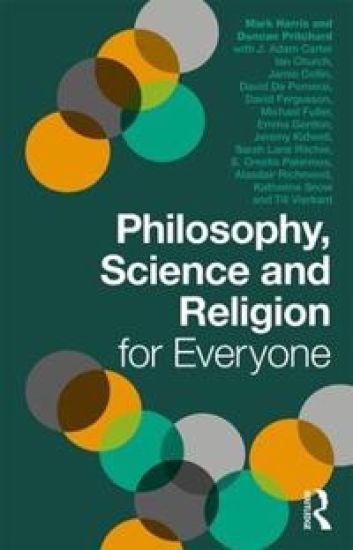
Philosophy, Science and Religion for Everyone brings together these great truth-seeking disciplines, and seeks to understand the ways in which they challenge and inform each other.Key topics and their areas of focus include:• Foundational Issues – why should anyone care about the science-and-religion debate? How do scientific claims relate to the truth? Is evolution compatible with design?• Faith and Rationality – can faith ever be rational? Are theism and atheism totally opposed? Is God hidden or does God simply not exist?• Faith and Science - what provides a better explanation for the origin of the universe—science or religion? Faith and physics: can they be reconciled? Does contemporary neuroscience debunk religious belief? Creationism and evolutionary biology - what constitutes science and what constitutes pseudo-science?• Practical Implications – is fundamentalism just a problem for religious people? What are the ethical implications of the science-and-religion debate? Do logic and religion mix?This book is designed to be used in conjunction with the free ‘Philosophy, Science and Religion’ MOOC (massive open online course) created by the University of Edinburgh, and hosted by the Coursera platform (www.coursera.org). This book is also highly recommended for anyone looking for a concise overview of this fascinating discipline.
Philosophy, Science and Religion for Everyone brings together these great truth-seeking disciplines, and seeks to understand the ways in which they challenge and inform each other.Key topics and their areas of focus include:• Foundational Issues – why should anyone care about the science-and-religion debate? How do scientific claims relate to the truth? Is evolution compatible with design?• Faith and Rationality – can faith ever be rational? Are theism and atheism totally opposed? Is God hidden or does God simply not exist?• Faith and Science - what provides a better explanation for the origin of the universe—science or religion? Faith and physics: can they be reconciled? Does contemporary neuroscience debunk religious belief? Creationism and evolutionary biology - what constitutes science and what constitutes pseudo-science?• Practical Implications – is fundamentalism just a problem for religious people? What are the ethical implications of the science-and-religion debate? Do logic and religion mix?This book is designed to be used in conjunction with the free ‘Philosophy, Science and Religion’ MOOC (massive open online course) created by the University of Edinburgh, and hosted by the Coursera platform (www.coursera.org). This book is also highly recommended for anyone looking for a concise overview of this fascinating discipline.
It's well into the first decade of the 21st century. Londoner Steve, a retired professional and a published fiction author in his fit early sixties, is on a creative journey to Berlin.