Kirjojen hintavertailu. Mukana 12 390 323 kirjaa ja 12 kauppaa.

Kirjailija

Mark Hillier

Kirjat ja teokset yhdessä paikassa: 9 kirjaa, julkaisuja vuosilta 2018-2025, suosituimpien joukossa Royal Flying Corps Combat Flying Log. Vertaile teosten hintoja ja tarkista saatavuus suomalaisista kirjakaupoista.

9 kirjaa

Kirjojen julkaisuhaarukka 2018-2025.

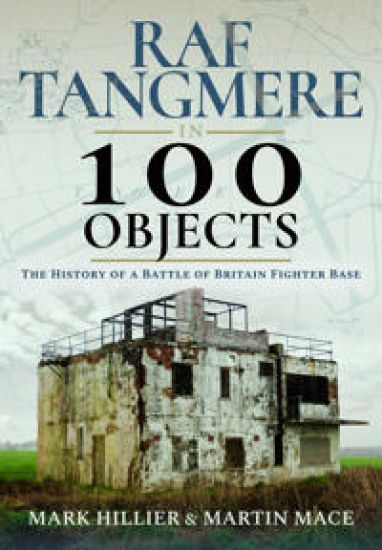
RAF Tangmere in 100 Objects

RAF Tangmere in 100 Objects

Mark Hillier; Martin Mace

Frontline Books
2025
sidottu
On 16 November 1916, Lieutenant Geoffrey Dorman took off from Shoreham in a Royal Aircraft Factory FE2b with the intention of heading West along the South Coast to the airfield at Gosport. Not long into the flight, however, a dense sea fog formed and as his engine was also ‘misbehaving’, Dorman decided ‘it would be best to try and land’. Spotting a suitable area of farmland, Lieutenant Dorman put his aircraft down near the West Sussex village of Tangmere. Evidently aware of what he had stumbled across, Dorman’s subsequent report on the incident included a suggestion that the site would be eminently suitable for an aerodrome. Within twelve months, construction had started – and so was born the legend of RAF Tangmere. Over the years that followed, Tangmere became one of the best known and strategically most important fighter stations in the United Kingdom. From its connections with the highly-polished air displays given at various RAF pageants in the 1920s and 1930s, through to numerous royal visits, or for its role in the post-war record-breaking speed flights or as a Cold War air-sea rescue base, Tangmere was a vital part of the nation’s defences. It is, however, for its service on the front line in the Second World War that Tangmere is best remembered. Not only was the airfield itself bombed and blitzed, its aircraft and pilots also found themselves in the thick of the fighting in the Battle of Britain, before turning to an increasingly offensive role whilst led by Wing Commander Douglas Bader. Operation Jubilee, the Combined Operations raid on Dieppe, and the D-Day landings in 1944 all required RAF Tangmere to play its part. As well as overt offensive sorties, Tangmere was involved in the secretive world of covert warfare, when, during the full moon periods, ‘A’ Flight of 161 (Special Duties) Squadron would move its Lysanders forward to Tangmere. As well as delivering SOE agents, wireless operators, wireless equipment and weapons to assist the Resistance, these aircraft often returned with agents, VIPs and even Allied escapers and evaders. In this highly-illustrated publication, the renowned aviation historian and author Mark Hillier explores the development and role of RAF Tangmere from 1916 until its closure in 1970, along with some of the fascinating individuals associated with it, through an intriguing collection of 100 objects.
Spitfire Groundcrew Under Fire

Spitfire Groundcrew Under Fire

Mark Hillier

PEN SWORD BOOKS LTD
2024
sidottu
So often it is daring, even dashing, exploits of the fighter pilots which attract the most interest. Theirs is, indisputably, the glory – but not theirs alone. For it is the groundcrew who kept the aircraft in the sky who deservedly share in that glory. The bond between pilots and their groundcrew was often an immensely powerful one. Each day they took to the sky the pilots put their lives in the hands of the fitters to keep their engines at maximum efficiency, the riggers who maintained the airframe and refuelled the aircraft, or the armourers who serviced the guns and loaded the bombs. The ground crew, the ‘Erks’, were only too aware of the responsibility they bore. Nothing could be overlooked. Everything had to be done correctly, often under enormous time pressures and far from ideal conditions. Those conditions included coming under attack from the enemy, as the title of this absorbing and unusual book indicates. It was at his first wartime posting of St Eval near Padstow in Cornwall that Joe Roddis first came under fire in July 1940. This, though, was a minor affair compared with what was to come. As the Battle of Britain grew in ferocious intensity, Joe’s squadron, No.234, moved to Middle Wallop – the groundcrew being flown in just as the airfield came under Luftwaffe attack. Joe was now firmly on the front-line, and his descriptions of the attacks inflicted upon Middle Wallop are detailed and exciting. Even more fascinating are his explanations of how each aircraft was prepared by the groundcrew, as they turned round the Spitfires as rapidly as possible to get them back into the air to beat off the enemy attackers. Under immense pressure, each function had to be carried out with great care and checked off before the aircraft could be released. The tension was immense. In September, the Battle of Britain having passed its peak, 234 Squadron returned to St Eval, where Joe remained until being posted to 485 (New Zealand) Squadron at RAF Driffield in March 1941. The squadron moved a number of times, to Leconfield, Redhill, Kenley and Kings Cliffe, while undertaking offensive operations across the Channel. It was eventually posted to Westhampnett where, among other tasks, it undertook night patrols. Joe’s squadron was heavily involved before and during the D-Day landings and he, and his fellow groundcrew, were shipped over to France to support the pilots as the fighting moved ever closer to Germany. It is in those months after the Normandy invasion that Joe writes more expansively, his story culminating in the Luftwaffe’s last futile throw of the dice – Operation Bodenplatte. There was, of course, a personal side to Joe’s life and a surprising post-war reunion adds a touch of heart-warming tenderness to a story well told. It is a story in which Joe personally faced death and destruction on at least nine occasions.
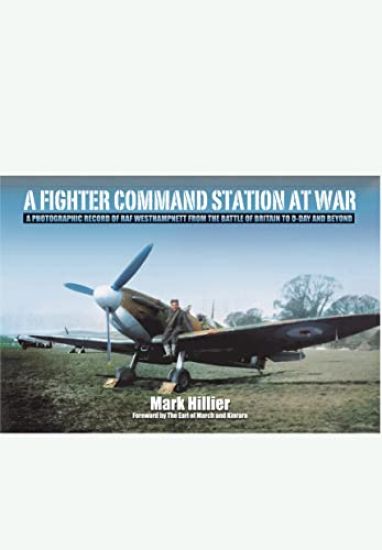
A Fighter Command Station at War

A Fighter Command Station at War

Mark Hillier

PEN SWORD BOOKS LTD
2023
nidottu
Situated close to the South Coast, on flat land to the north of Chichester in West Sussex, lies Goodwood Aerodrome. This pleasant rural airfield was once home to squadrons of Hurricanes, Spitfires and later Typhoons. RAF Westhampnett was at the forefront of the Battle of Britain as a satellite to the Sector (or controlling) Station of RAF Tangmere, part of 11 Group, which bore the brunt of the struggle for Britains survival in 1940. It became the base of Wing Commander Douglas Bader until he was shot down over France, as Fighter Command took the war to the enemy with operational sweeps over Occupied Europe. Those operations included the infamous Channel Dash which saw the escape of the German warships Scharnhorst and Gneisenau, and the Dieppe raid of 1942 which involved the largest aerial battle of the war up to that date. Westhampnetts squadrons also supported the D-Day landings and the subsequent Battle of Normandy. Packed with the largest collection of photographs of this airfield ever compiled, this illustrated publication provides a detailed history of the fighting as seen through the eyes of many of the pilots and ground crew. RAF Westhampnett brings to life those exciting but dangerous days of the Second World War through the words and photographs of those who were there.
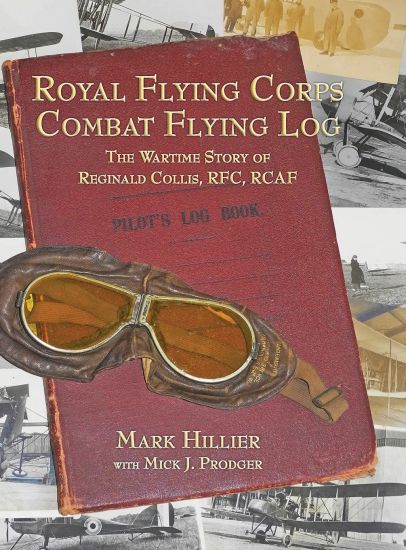
Royal Flying Corps Combat Flying Log

Royal Flying Corps Combat Flying Log

Mark Hillier

Elm Grove Publishing
2021
sidottu
Reginald Collis joined the newly formed Royal Flying Corps in June 1912. Trained initially as an Air Mechanic, he was quickly selected for flying training and took his first flight in January 1913, becoming only the third Air Mechanic and the 14th NCO in the RFC to receive Royal Aero Club certification. Collis knew and flew with a virtual Who's Who of aviation greats, including Trenchard, McCudden and Lanoe Hawker. He became an instructor, training many future aviation personalities, before being sent to France as a newly-commissioned second lieutenant with 6 Squadron in June 1915. Collis experienced aerial combat in the earliest days of the war, and recorded every "dogfight", "Archie" encounter and mechanical failure in great detail in his log book. One of the earliest known examples to have survived, Collis's unique flying log book is presented here in full, along with many historical photos, accompanied by extensive historical notes and meticulous research by well-known aviation author Mark Hillier.
Royal Flying Corps Kitbag

Royal Flying Corps Kitbag

Mark Hillier

Frontline Books
2020
sidottu
The Royal Flying Corps was formed by Royal Warrant on 13 April 1912, and came into being a month later when the Air Battalion was absorbed into the Military Wing of the new Corps in May. In the days following the outbreak of war in 1914, the programme for mobilization of the RFC was, in the main, successfully carried out. The first aircraft set out across the Channel on the morning of 13 August, taking off from Dover at 06.25 hours. The first pilot to land in France was Lieutenant H.D. Harvey-Kelly of No.2 Squadron. In due course, all four of the initial RFC squadrons deployed to the Western Front were ready for operations. They represented, noted the Official Historian of the RFC, the first organized national [air] force to fly to a war overseas'. As the Great War raged, the developments in military aviation were profound, not only in terms of aerial warfare but, as this book reveals, the uniforms and equipment the aircrew used. All the objects that a Royal Flying Corps pilot or airman was issued with for sorties over the Western Front during the First World War are explored in this book in high-definition colour photographs, detailing everything from the differing flying clothing, to headgear, personal weapons, gloves, goggles and early life preservers. Each item is fully described, and its purpose and use explained. Fly with the Royal Aircraft Factory B.E.2s and Sopwith Camels over the trenches and see what the RFC aircrew wore as they took on their German foe in what were the formative years of military aviation.
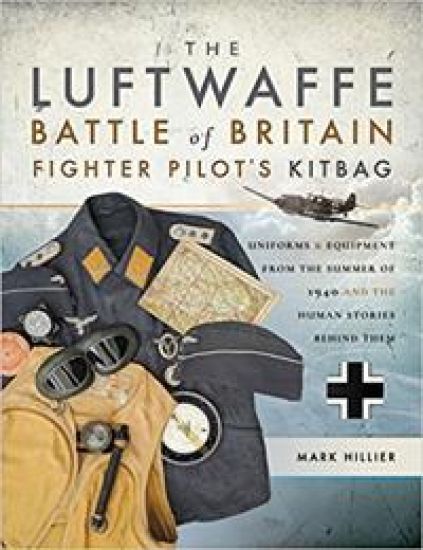
The Luftwaffe Battle of Britain Fighter Pilots' Kitbag
Reichsmarschall G ring told Hitler that it would take less than a month for his much-vaunted Luftwaffe to conquer the RAF and pave the way for the German invasion of Great Britain. His prediction was to prove disastrously wrong, but for four long months his pilots and aircrew fought for their lives in the skies above the UK. From their bases in continental Europe, the Luftwaffe s fighter pilots escorted the great bomber fleets that sought to destroy the RAF s airfields and installations, and tackled the Spitfires and Hurricanes deployed to defend Britain s towns and cities. Whilst much has been written on the titanic struggle for supremacy fought throughout the summer of 1940 and of the men and machines of both sides, little attention has been paid to what the pilots wore and carried with them in the air. All the objects that a Luftwaffe fighter pilot was issued with during the Battle of Britain are explored in this book in high-definition colour photographs, showing everything from the differing uniforms, to headgear, personal weapons, gloves, goggles, parachute packs and the essential life jacket. Each item is fully described and its purpose and use explained. Fly with the Messerschmitt Bf 109s and Bf 110s across the Channel and see what the Luftwaffe aircrew wore as they took on Fighter Command in what was justly called the Battle of Britain.
The RAF Battle of Britain Fighter Pilots' Kitbag
The scenes are familiar ones; the young Brylcream Boys sat at dispersal waiting for the haunting call of Scramble , lounging in their shirt sleeves and fur-lined boots, their leather flying helmets lying limp by their side. But what did the RAF fighter pilots of the Battle of Britain really wear, and what vital items would their kitbags have held? The casual air of the dashing pilots of Fighter Command in the Spitfire Summer of 1940 conceals a necessarily professional approach to their task of holding Hitler s Luftwaffe at bay. Therefore, each item of clothing and equipment they wore and carried had a role and a function, be it for warmth and comfort, communication, or for fighting and survival. All the objects that an RAF fighter pilot was issued with during the Battle of Britain are explored in this book in high-definition colour photographs, showing everything from the differing uniforms, to headgear, personal weapons, gloves, goggles, parachute packs and the essential Mae West life jacket. Each item is fully described and its purpose and use explained. Relive Britain s finest hour as never before through the actually clothing and accoutrements of The Few .
ISE Introduction to Management Science: A Modeling and Case Studies Approach with Spreadsheets
The Sixth edition of Introduction to Management Science focuses on business situations, including prominent non-mathematical issues, the use spreadsheets, and involves model formulation and assessment more than model structuring. The text has three key elements: modeling, case studies, and spreadsheets. In addition to examples, nearly every chapter includes one or two case studies patterned after actual applications to convey the whole process of applying management science.