Kirjojen hintavertailu. Mukana 12 595 353 kirjaa ja 12 kauppaa.

Kirjailija

Mark J. Johnson

Kirjat ja teokset yhdessä paikassa: 12 kirjaa, julkaisuja vuosilta 2009-2020, suosituimpien joukossa San Vitale in Ravenna and Octogonal Churches in Late Antiquity. Vertaile teosten hintoja ja tarkista saatavuus suomalaisista kirjakaupoista.

Mukana myös kirjoitusasut: Mark J Johnson

12 kirjaa

Kirjojen julkaisuhaarukka 2009-2020.

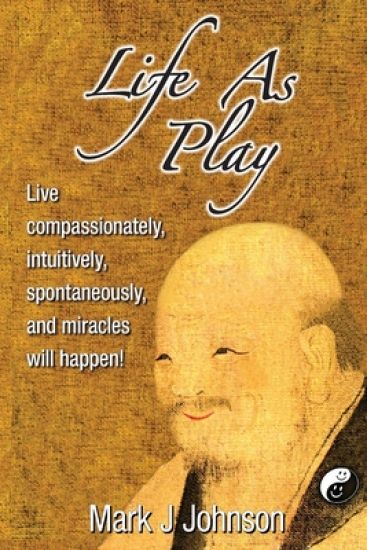
Life As Play

Life As Play

Mark J Johnson

DAO Publishing
2020
pokkari
Join Mark on his 40-year spiritual odyssey with some of the most fascinating spiritual teachers of the last half-century. His travels take him from the mountains of Pennsylvania to exotic temples in China and Tibet and eventually to the wild and dangerous hills of Malibu, California. Mark chronicles his ten-year training in an ashram in Florida, his year with a famous Zen Roshi in California and his intense 28-year apprenticeship to the powerful Daoist wizard he meets in China.The book is written from the perspective of a self-proclaimed enlightened being who insists that enlightenment and nature are both overrated. It covers many valuable topics: the importance of spontaneity and intuitive response; the power of love, presence and fearlessness; the role of chaos and paradox; the need for moderation and inner stillness; how to recognize an avatar; how to activate your meridians and auric bodies; Daoist sexual practices; the nine secrets to a life of Play; and more.The central message is that if an ordinary boy from Pennsylvania can learn to live in an abiding state of Play, then surely you can too. Mark will not rest until this book is in every motel room in the country.
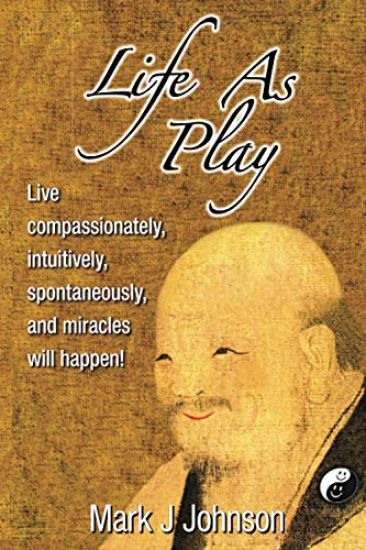
Life As Play

Life As Play

Mark J Johnson

DAO Publishing
2020
pokkari
NOTE: This is the latest full-color edition, published in 2021.This extraordinary journey is not limited to how playful life can be. It is a profound investigation into how to discover your innate divinity.So, join Mark on his 50-year spiritual odyssey with some of the most fascinating spiritual teachers of the last half-century. His travels take him from the mountains of Pennsylvania to exotic temples in China and Tibet and eventually to the wild and dangerous hills of Malibu, California.Mark chronicles his ten years training in an Advaita Vedanta center in Florida, then a year of visiting Suzuki Roshi in California just before the Roshi died. Then the Play began, with an intense 28-year apprenticeship to the powerful Daoist wizard he meets in Taiwan and convinces to come to the US.Mark learned many valuable self-healing techniques in their Malibu clinic: how to heal oneself with high-frequency energies available to everyone; how to utilize deep breathing techniques for clearing and integrating our subconscious; the power of love, compassion, spontaneity, intuition, and inner stillness; how to recognize an Avatar if you are lucky enough to meet one; and how to activate your acupuncture meridians and auric energies. There are chapters on Feng Shui, Daoist sexual practices, the nine secrets to a life of Play, and much more.The central message is that if an ordinary boy from central Pennsylvania can learn to live in an abiding state of Play, then surely you can too. And keep in mind that Mark will not rest until this book is in every hotel room in the world.
A Concise Introduction to Programming in Python
A Concise Introduction to Programming in Python, Second Edition provides a hands-on and accessible introduction to writing software in Python, with no prior programming experience required.The Second Edition was thoroughly reorganized and rewritten based on classroom experience to incorporate: A spiral approach, starting with turtle graphics, and then revisiting concepts in greater depth using numeric, textual, and image data Clear, concise explanations written for beginning students, emphasizing core principles A variety of accessible examples, focusing on key concepts Diagrams to help visualize new concepts New sections on recursion and exception handling, as well as an earlier introduction of lists, based on instructor feedbackThe text offers sections designed for approximately one class period each, and proceeds gradually from procedural to object-oriented design. Examples, exercises, and projects are included from diverse application domains, including finance, biology, image processing, and textual analysis. It also includes a brief "How-To" sections that introduce optional topics students may be interested in exploring.The text is written to be read, making it a good fit in flipped classrooms. Designed for either classroom use or self-study, all example programs and solutions to odd-numbered exercises (except for projects) are available at: http://www.central.edu/go/conciseintro/.
A Concise Introduction to Programming in Python
A Concise Introduction to Programming in Python, Second Edition provides a hands-on and accessible introduction to writing software in Python, with no prior programming experience required.The Second Edition was thoroughly reorganized and rewritten based on classroom experience to incorporate: A spiral approach, starting with turtle graphics, and then revisiting concepts in greater depth using numeric, textual, and image data Clear, concise explanations written for beginning students, emphasizing core principles A variety of accessible examples, focusing on key concepts Diagrams to help visualize new concepts New sections on recursion and exception handling, as well as an earlier introduction of lists, based on instructor feedbackThe text offers sections designed for approximately one class period each, and proceeds gradually from procedural to object-oriented design. Examples, exercises, and projects are included from diverse application domains, including finance, biology, image processing, and textual analysis. It also includes a brief "How-To" sections that introduce optional topics students may be interested in exploring.The text is written to be read, making it a good fit in flipped classrooms. Designed for either classroom use or self-study, all example programs and solutions to odd-numbered exercises (except for projects) are available at: http://www.central.edu/go/conciseintro/.
San Vitale in Ravenna and Octogonal Churches in Late Antiquity
This book represents the first complete study of the octagonal churches of Late Antiquity (ca. 300-600 C.E.). Starting with the origins of the type found in small funerary chapels of the fourth century, the book examines the physical and literary evidence for 35 churches of the type, which saw its culmination in the construction of the church of San Vitale in Ravenna, dedicated in 547. Few of these buildings remain standing; several are known from nineteenth-century reports or more recent excavations and others are known only from literary sources that mention or describe them. The study demonstrates the relative rarity of the type in this period and notes that most of these churches served a funerary or martyrium function, marking the sites of the death or burials of certain Christian martyrs. A few were erected as memorial structures, marking important Christian sites such as the birthplace of Jesus Christ at Bethlehem and the House of Peter in Capernaum. The exception is the octagon at Antioch known as the Great Church appears to have functioned as the cathedral of that city, Numerous architectural drawings and color photographs illustrate the churches. During the sixth century, some of these churches were retrofitted to house regular liturgical services and the new churches of that century were designed to house both martyr shrines and the standard liturgy. Attention is also given to the design process of these buildings, noting that their octagons are usually based on diameters of numbers of feet divisible by ten and proportional schemes based on simple ratios such as 2:1, 3:2, and 5:3. The chapter on San Vitale demonstrates how its design was based on these simple ratios and identifies the unit of measurement used in its construction as the Byzantine foot. The book is intended for scholars and students of Byzantine and Late Antique architecture, as well as for those interested in larger questions of Architectural History, Byzantine history, material culture, and religion.
A Concise Introduction to Data Structures using Java
A student-friendly text, A Concise Introduction to Data Structures Using Java takes a developmental approach, starting with simpler concepts first and then building toward greater complexity. Important topics, such as linked lists, are introduced gradually and revisited with increasing depth. More code and guidance are provided at the beginning, allowing students time to adapt to Java while also beginning to learn data structures. As students develop fluency in Java, less code is provided and more algorithms are outlined in pseudocode. The text is designed to support a second course in computer science with an emphasis on elementary data structures. The clear, concise explanations encourage students to read and engage with the material, while partial implementations of most data structures give instructors the flexibility to develop some methods as examples and assign others as exercises. The book also supplies an introductory chapter on Java basics that allows students who are unfamiliar with Java to quickly get up to speed. The book helps students become familiar with how to use, design, implement, and analyze data structures, an important step on the path to becoming skilled software developers.
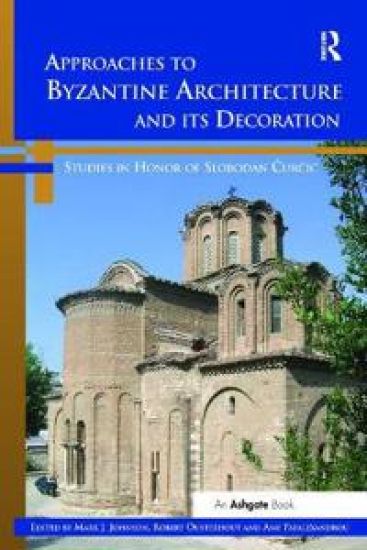
Approaches to Byzantine Architecture and its Decoration

Approaches to Byzantine Architecture and its Decoration

Mark J. Johnson; Amy Papalexandrou

Routledge
2017
nidottu
The fourteen essays in this collection demonstrate a wide variety of approaches to the study of Byzantine architecture and its decoration, a reflection of both newer trends and traditional scholarship in the field. The variety is also a reflection of Professor Curcic’s wide interests, which he shares with his students. These include the analysis of recent archaeological discoveries; recovery of lost monuments through archival research and onsite examination of material remains; reconsidering traditional typological approaches often ignored in current scholarship; fresh interpretations of architectural features and designs; contextualization of monuments within the landscape; tracing historiographic trends; and mining neglected written sources for motives of patronage. The papers also range broadly in terms of chronology and geography, from the Early Christian through the post-Byzantine period and from Italy to Armenia. Three papers examine Early Christian monuments, and of these two expand the inquiry into their architectural afterlives. Others discuss later monuments in Byzantine territory and monuments in territories related to Byzantium such as Serbia, Armenia, and Norman Italy. No Orthodox church being complete without interior decoration, two papers discuss issues connected to frescoes in late medieval Balkan churches. Finally, one study investigates the continued influence of Byzantine palace architecture long after the fall of Constantinople.
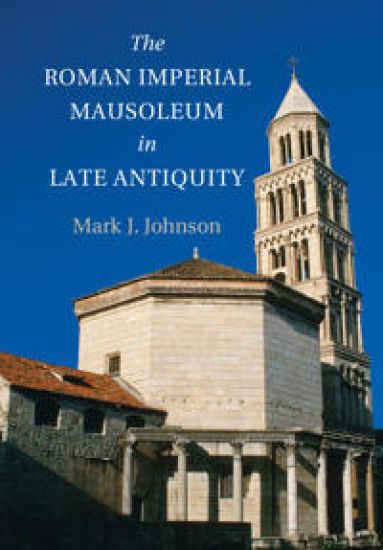
The Roman Imperial Mausoleum in Late Antiquity

The Roman Imperial Mausoleum in Late Antiquity

Mark J. Johnson

Cambridge University Press
2014
pokkari
This book is the first comprehensive study of the mausolea of the later Roman emperors. Constructed between c.AD 244 and 450 and bridging the transition from paganism to Christianity within the empire, these important buildings shared a common design, that of domed rotunda. Mark Johnson examines the symbolism and function of the mausolea, demonstrating for the first time that these monuments served as temples and shrines to the divinized emperors. Through an examination of literary sources and the archaeological record, he identifies which buildings were built as imperial tombs. Each building is examined to determine its place in the development of the type as well as for its unique features within the group. Recognizing the strong relationship between the mausolea built for pagan and Christian emperors, Johnson also analyzes their important differences.
A Concise Introduction to Data Structures using Java
A student-friendly text, A Concise Introduction to Data Structures Using Java takes a developmental approach, starting with simpler concepts first and then building toward greater complexity. Important topics, such as linked lists, are introduced gradually and revisited with increasing depth. More code and guidance are provided at the beginning, allowing students time to adapt to Java while also beginning to learn data structures. As students develop fluency in Java, less code is provided and more algorithms are outlined in pseudocode. The text is designed to support a second course in computer science with an emphasis on elementary data structures. The clear, concise explanations encourage students to read and engage with the material, while partial implementations of most data structures give instructors the flexibility to develop some methods as examples and assign others as exercises. The book also supplies an introductory chapter on Java basics that allows students who are unfamiliar with Java to quickly get up to speed. The book helps students become familiar with how to use, design, implement, and analyze data structures, an important step on the path to becoming skilled software developers.
The Byzantine Churches of Sardinia

The Byzantine Churches of Sardinia

Mark J. Johnson

Dr Ludwig Reichert
2013
sidottu
This book represents the first detailed study of Byzantine churches on the island of Sardinia. The buildings are described and analyzed in detail both individually and as a group. Many of these churches are cruciform in plan and possess a dome. The book includes an analysis of this plan type as used in Early Christian and Byzantine ecclesiastical architecture from the fourth to the sixth centuries, concluding that the Sardinian churches are datable to the early Byzantine period. Numerous architectural drawings and color photographs illustrate the churches.
Approaches to Byzantine Architecture and its Decoration

Approaches to Byzantine Architecture and its Decoration

Mark J. Johnson; Amy Papalexandrou

Ashgate Publishing Limited
2012
sidottu
The fourteen essays in this collection demonstrate a wide variety of approaches to the study of Byzantine architecture and its decoration, a reflection of both newer trends and traditional scholarship in the field. The variety is also a reflection of Professor Curcic’s wide interests, which he shares with his students. These include the analysis of recent archaeological discoveries; recovery of lost monuments through archival research and onsite examination of material remains; reconsidering traditional typological approaches often ignored in current scholarship; fresh interpretations of architectural features and designs; contextualization of monuments within the landscape; tracing historiographic trends; and mining neglected written sources for motives of patronage. The papers also range broadly in terms of chronology and geography, from the Early Christian through the post-Byzantine period and from Italy to Armenia. Three papers examine Early Christian monuments, and of these two expand the inquiry into their architectural afterlives. Others discuss later monuments in Byzantine territory and monuments in territories related to Byzantium such as Serbia, Armenia, and Norman Italy. No Orthodox church being complete without interior decoration, two papers discuss issues connected to frescoes in late medieval Balkan churches. Finally, one study investigates the continued influence of Byzantine palace architecture long after the fall of Constantinople.
The Roman Imperial Mausoleum in Late Antiquity

The Roman Imperial Mausoleum in Late Antiquity

Mark J. Johnson

Cambridge University Press
2009
sidottu
This book is the first comprehensive study of the mausolea of the later Roman emperors. Constructed between c.AD 244 and 450 and bridging the transition from paganism to Christianity within the empire, these important buildings shared a common design, that of domed rotunda. Mark Johnson examines the symbolism and function of the mausolea, demonstrating for the first time that these monuments served as temples and shrines to the divinized emperors. Through an examination of literary sources and the archaeological record, he identifies which buildings were built as imperial tombs. Each building is examined to determine its place in the development of the type as well as for its unique features within the group. Recognizing the strong relationship between the mausolea built for pagan and Christian emperors, Johnson also analyzes their important differences.