Kirjojen hintavertailu. Mukana 12 390 323 kirjaa ja 12 kauppaa.

Kirjailija

Mark J. Nelson

Kirjat ja teokset yhdessä paikassa: 5 kirjaa, julkaisuja vuosilta 2014-2025, suosituimpien joukossa Fort Bridger. Vertaile teosten hintoja ja tarkista saatavuus suomalaisista kirjakaupoista.

Mukana myös kirjoitusasut: Mark J Nelson

5 kirjaa

Kirjojen julkaisuhaarukka 2014-2025.

White Hat

White Hat

Mark J. Nelson

UNIVERSITY OF OKLAHOMA PRESS
2025
nidottu
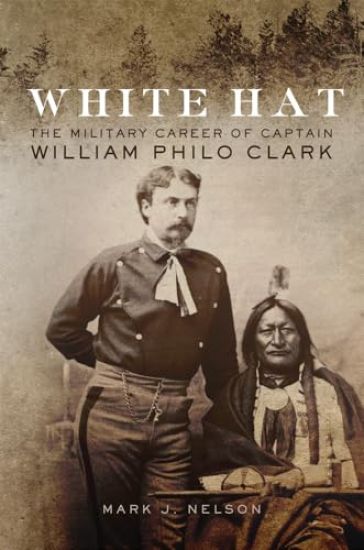
Best known for his role in the arrest and killing of Crazy Horse and for the book he wrote, The Indian Sign Language, Captain William Philo Clark (1845-1884) was one of the Old Army's renaissance men, by turns administrator, fighter, diplomat, explorer, and ethnologist. As such, Clark found himself at center stage during some of the most momentous events of the post-Civil War West: from Brigadier General George Crook's infamous 'Starvation March' to the Battle of Slim Buttes and the Dull Knife Fight, then to the attack against the Bannocks at Index Peak and Sitting Bull's final fight against the U.S. Army. Captain Clark's life story, here chronicled in full for the first time, is at once an introduction to a remarkable figure in the annals of nineteenth-century U.S. history, and a window on the exploits of the U.S. Army on the contested western frontier. White Hat follows Clark from his upbringing in New York State to his life as a West Point cadet, through his varied army posts on the northern plains, and finally to his stint in Lieutenant General Philip Sheridan's headquarters first in Chicago and later in Washington, D.C. Along the way, Mark J. Nelson sets the record straight on Clark's controversial relationship with Crazy Horse during the Lakota leader's time at Camp Robinson, Nebraska. His book also draws a detailed picture of Clark's service at Fort Keogh, Montana Territory, including what is arguably his greatest success - the securing of Northern Cheyenne leader Little Wolf's peaceful surrender. In telling Clark's story, White Hat illuminates the history of the nineteenth-century American military and the Great Plains, including the Grand Duke Alexis's buffalo hunt, the Great Sioux War, and the careers of Crook and Sheridan. Nelson's examination of Clark's early years in the army offers a rare look at the experiences of a staff officer stationed on the frontier and expands our view of the army, as well as the United States' westward march.
White Hat

White Hat

Mark J. Nelson

University of Oklahoma Press
2018
sidottu
Best known for his role in the arrest and killing of Crazy Horse and for the book he wrote, The Indian Sign Language, Captain William Philo Clark (1845-1884) was one of the Old Army's renaissance men, by turns administrator, fighter, diplomat, explorer, and ethnologist. As such, Clark found himself at center stage during some of the most momentous events of the post-Civil War West: from Brigadier General George Crook's infamous ""Starvation March"" to the Battle of Slim Buttes and the Dull Knife Fight, then to the attack against the Bannocks at Index Peak and Sitting Bull's final fight against the U.S. Army. Captain Clark's life story, here chronicled in full for the first time, is at once an introduction to a remarkable figure in the annals of nineteenth-century U.S. history, and a window on the exploits of the U.S. Army on the contested western frontier. White Hat follows Clark from his upbringing in New York State to his life as a West Point cadet, through his varied army posts on the northern plains, and finally to his stint in Lieutenant General Philip Sheridan's headquarters first in Chicago and later in Washington, D.C. Along the way, Mark J. Nelson sets the record straight on Clark's controversial relationship with Crazy Horse during the Lakota leader's time at Camp Robinson, Nebraska. His book also draws a detailed picture of Clark's service at Fort Keogh, Montana Territory, including what is arguably his greatest success - the securing of Northern Cheyenne leader Little Wolf's peaceful surrender. In telling Clark's story, White Hat illuminates the history of the nineteenth-century American military and the Great Plains, including the Grand Duke Alexis's buffalo hunt, the Great Sioux War, and the careers of Crook and Sheridan. Nelson's examination of Clark's early years in the army offers a rare look at the experiences of a staff officer stationed on the frontier and expands our view of the army, as well as the United States' westward march.
Procedural Content Generation in Games

Procedural Content Generation in Games

Noor Shaker; Julian Togelius; Mark J. Nelson

Springer International Publishing AG
2018
nidottu
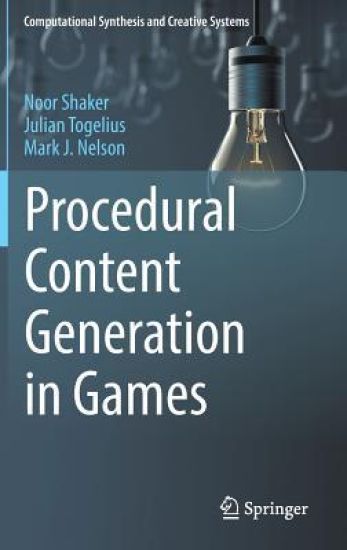
This book presents the most up-to-date coverage of procedural content generation (PCG) for games, specifically the procedural generation of levels, landscapes, items, rules, quests, or other types of content. Each chapter explains an algorithm type or domain, including fractal methods, grammar-based methods, search-based and evolutionary methods, constraint-based methods, and narrative, terrain, and dungeon generation. The authors are active academic researchers and game developers, and the book is appropriate for undergraduate and graduate students of courses on games and creativity; game developers who want to learn new methods for content generation; and researchers in related areas of artificial intelligence and computational intelligence.
Procedural Content Generation in Games

Procedural Content Generation in Games

Noor Shaker; Julian Togelius; Mark J. Nelson

Springer International Publishing AG
2016
sidottu
This book presents the most up-to-date coverage of procedural content generation (PCG) for games, specifically the procedural generation of levels, landscapes, items, rules, quests, or other types of content. Each chapter explains an algorithm type or domain, including fractal methods, grammar-based methods, search-based and evolutionary methods, constraint-based methods, and narrative, terrain, and dungeon generation. The authors are active academic researchers and game developers, and the book is appropriate for undergraduate and graduate students of courses on games and creativity; game developers who want to learn new methods for content generation; and researchers in related areas of artificial intelligence and computational intelligence.