Kirjojen hintavertailu. Mukana 12 126 363 kirjaa ja 12 kauppaa.

Kirjailija

Mark J. Rozell

Kirjat ja teokset yhdessä paikassa: 24 kirjaa, julkaisuja vuosilta 1992-2026, suosituimpien joukossa Federalism. Vertaile teosten hintoja ja tarkista saatavuus suomalaisista kirjakaupoista.

Mukana myös kirjoitusasut: Mark J Rozell

24 kirjaa

Kirjojen julkaisuhaarukka 1992-2026.

Federalism

Federalism

Mark J. Rozell; Clyde Wilcox

Oxford University Press Inc
2019
nidottu
Early Americans were suspicious of centralized authority and executive power. Casting away the yoke of England and its king, the founding fathers shared in this distrust as they set out to pen the Constitution. Weighing a need for consolidated leadership with a demand for states' rights, they established a large federal republic with limited dominion over the states, leaving most of the governing responsibility with the former colonies. With this dual system of federalism, the national government held the powers of war, taxation, and commerce, and the ability to pass the laws necessary to uphold these functions. Although the federal role has grown substantially since then, states and local governments continue to perform most of the duties in civil and criminal law, business and professional licensing, the management of infrastructure and public services: roads, schools, libraries, sanitation, land use and development, and etc. Despite the critical roles of state and local governments, there is little awareness-or understanding-of the nature and operations of the federal system. This Very Short Introduction provides a concise overview of federalism, from its origins and evolution to the key events and constitutional decisions that have defined its framework. Although the primary focus is on the United States, other federal systems, including Brazil, Canada, India, Germany, Russia, South Africa, Switzerland, and the EU, are addressed.
Interest Groups in American Campaigns: The New Face of Electioneering

Interest Groups in American Campaigns: The New Face of Electioneering

Mark J. Rozell; Clyde Wilcox; Michael M. Franz

Oxford University Press
2011
nidottu
In today's era of greatly divisive partisanship in Washington, interest groups have become increasingly powerful forces in U.S. politics. In races for the presidency, Congress, and state legislatures, these groups often help to elect--or reelect--candidates who support their causes and views. Now in its third edition, Interest Groups in American Campaigns: The New Face of Electioneering focuses on the key role that interest groups play in U.S. elections. Authors Mark J. Rozell, Clyde Wilcox, and Michael M. Franz present an extensive analysis based on interviews with interest group leaders, campaign finance filings, and election surveys. Opening with an introduction to the nature of our federal election system, they then examine how interest groups ally themselves with political parties and influence candidate nominations and party platforms. The authors also describe how interest groups interact with political candidates--by contributing money, goods, and services to campaigns--and with their own members and the broader electorate--through social networking, Tweeting, Internet advertising, television ads, direct mail, and phone calls. Throughout the book, diverse and compelling examples clearly illustrate how interest groups operate in the real world. Revised and updated, the third edition of Interest Groups in American Campaigns delves into the 2010 election campaign; recent reforms and campaign finance laws that have substantially changed the roles played by interest groups; and how these recent changes will affect the 2012 races for federal offices.
The Changing Political South

The Changing Political South

III Bullock; Jeremy D. Mayer; Susan A. MacManus; Mark J. Rozell

OXFORD UNIVERSITY PRESS INC
2024
nidottu
The phenomenal growth of minority populations in the U.S. South is quickly transforming the region's politics. Most political observers see the Democratic Party rising in the region, with increasingly Democratic-leaning women voters joining emergent populations of Asian and Latino voters and African American voters. Some argue that demography is destiny, and yet the analyses presented in The Changing Political South demonstrate little such certainty about the future competitiveness of the two major parties in the South. Authors Charles S. Bullock, III, Susan A. MacManus, Jeremy D. Mayer, and Mark J. Rozell substantiate the idea of strong and persistent Democratic leanings among Black voters and a majority of women. However, they find that the rising minority populations' votes are increasingly "up for grabs" by the two major parties. How the two parties fare in the future of Southern politics will be driven largely by their abilities to reach these new voters.
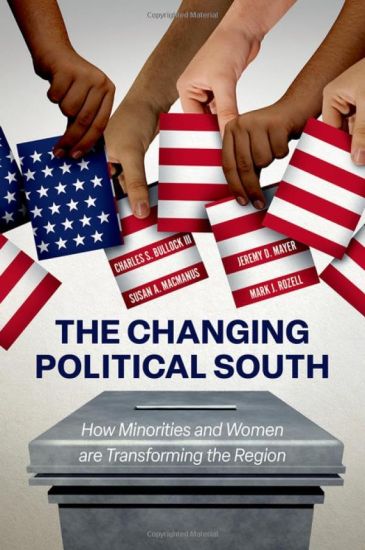
The Changing Political South

The Changing Political South

III Bullock; Jeremy D. Mayer; Susan A. MacManus; Mark J. Rozell

OXFORD UNIVERSITY PRESS INC
2024
sidottu
The phenomenal growth of minority populations in the U.S. South is quickly transforming the region's politics. Most political observers see the Democratic Party rising in the region, with increasingly Democratic-leaning women voters joining emergent populations of Asian and Latino voters and African American voters. Some argue that demography is destiny, and yet the analyses presented in The Changing Political South demonstrate little such certainty about the future competitiveness of the two major parties in the South. Authors Charles S. Bullock, III, Susan A. MacManus, Jeremy D. Mayer, and Mark J. Rozell substantiate the idea of strong and persistent Democratic leanings among Black voters and a majority of women. However, they find that the rising minority populations' votes are increasingly "up for grabs" by the two major parties. How the two parties fare in the future of Southern politics will be driven largely by their abilities to reach these new voters.
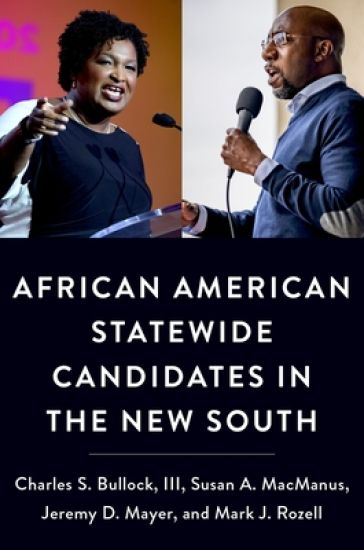
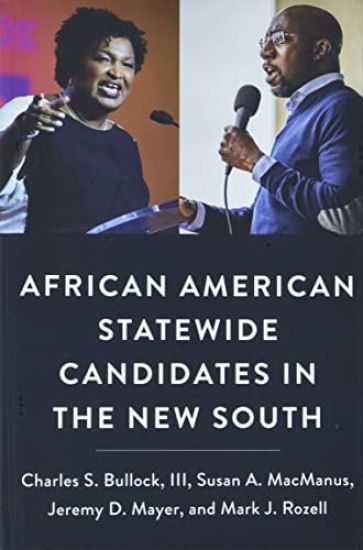
African American Statewide Candidates in the New South

African American Statewide Candidates in the New South

III Bullock; Susan A. MacManus; Jeremy D. Mayer; Mark J. Rozell

OXFORD UNIVERSITY PRESS INC
2022
nidottu
African American candidates for state and federal office in the United States face unique challenges, given the nation's complicated racial dynamics. To date, there have been only two elected African American governors in the country, the first elected in Virginia in 1989 and the second in Massachusetts in 2006. While Black candidates running statewide have been elected in increasing numbers in many areas of the country, there have been fewer successes in the US South. The relative lack of success in the South for Black candidates is puzzling given that, as a percentage of the population, the South has the highest concentration of African American citizens. This book examines the campaigns of Black statewide candidates in the South to untangle the factors that led to their electoral successes as well as the factors that continue to stymie positive electoral results. Looking at broader regional demographic and political trends, the authors project that the South is on the threshold of a major breakthrough for African American statewide candidates, who will have a substantial role in not only fundamentally changing the political dynamics of the region, but the nation as well. This change will be driven not only by Black candidates and voters, but a rising regional coalition of racial minority and white voters who are increasingly willing to vote for Black candidates.
African American Statewide Candidates in the New South

African American Statewide Candidates in the New South

III Bullock; Susan A. MacManus; Jeremy D. Mayer; Mark J. Rozell

OXFORD UNIVERSITY PRESS INC
2022
sidottu
African American candidates for state and federal office in the United States face unique challenges, given the nation's complicated racial dynamics. To date, there have been only two elected African American governors in the country, the first elected in Virginia in 1989 and the second in Massachusetts in 2006. While Black candidates running statewide have been elected in increasing numbers in many areas of the country, there have been fewer successes in the US South. The relative lack of success in the South for Black candidates is puzzling given that, as a percentage of the population, the South has the highest concentration of African American citizens. This book examines the campaigns of Black statewide candidates in the South to untangle the factors that led to their electoral successes as well as the factors that continue to stymie positive electoral results. Looking at broader regional demographic and political trends, the authors project that the South is on the threshold of a major breakthrough for African American statewide candidates, who will have a substantial role in not only fundamentally changing the political dynamics of the region, but the nation as well. This change will be driven not only by Black candidates and voters, but a rising regional coalition of racial minority and white voters who are increasingly willing to vote for Black candidates.
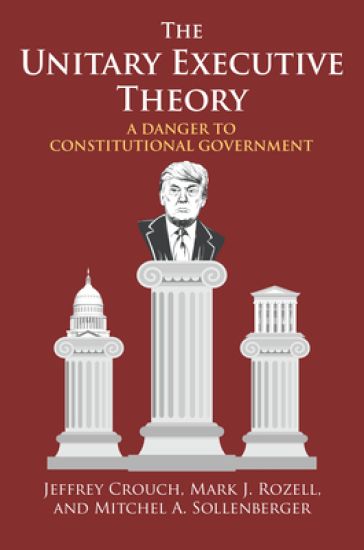
The Unitary Executive Theory

The Unitary Executive Theory

Jeffrey P. Crouch; Mark J. Rozell; Mitchel A. Sollenberger

University Press of Kansas
2020
nidottu
I have an Article II,' Donald Trump has announced, citing the US Constitution, 'where I have the right to do whatever I want as president.' Though this statement would have come as a shock to the framers of the Constitution, it fairly sums up the essence of 'the unitary executive theory.' This theory, which emerged during the Reagan administration and gathered strength with every subsequent presidency, counters the system of checks and balances that constrains a president's executive impulses. It also, the authors of this book contend, counters the letter and spirit of the Constitution.In their account of the rise of unitary executive theory over the last several decades, the authors refute the notion that this overweening view of executive power has been a common feature of the presidency from the beginning of the Republic. Rather, they show, it was invented under the Reagan Administration, got a boost during the George W. Bush administration, and has found its logical extension in the Trump administration. This critique of the unitary executive theory reveals it as a misguided model for understanding presidential powers. While its adherents argue that greater presidential power makes government more efficient, the results have shown otherwise. Dismantling the myth that presidents enjoy unchecked plenary powers, the authors advocate for principles of separation of powers - of checks and balances - that honor the Constitution and support the republican government its framers envisioned.A much-needed primer on presidential power, from the nation's founding through Donald Trump's impeachment, The Unitary Executive Theory: A Danger to Constitutional Government makes a robust and persuasive case for a return to our constitutional limits.
The Unitary Executive Theory

The Unitary Executive Theory

Jeffrey P. Crouch; Mark J. Rozell; Mitchel A. Sollenberger

University Press of Kansas
2020
sidottu
I have an Article II,' Donald Trump has announced, citing the US Constitution, 'where I have the right to do whatever I want as president.' Though this statement would have come as a shock to the framers of the Constitution, it fairly sums up the essence of 'the unitary executive theory.' This theory, which emerged during the Reagan administration and gathered strength with every subsequent presidency, counters the system of checks and balances that constrains a president's executive impulses. It also, the authors of this book contend, counters the letter and spirit of the Constitution.In their account of the rise of unitary executive theory over the last several decades, the authors refute the notion that this overweening view of executive power has been a common feature of the presidency from the beginning of the Republic. Rather, they show, it was invented under the Reagan Administration, got a boost during the George W. Bush administration, and has found its logical extension in the Trump administration. This critique of the unitary executive theory reveals it as a misguided model for understanding presidential powers. While its adherents argue that greater presidential power makes government more efficient, the results have shown otherwise. Dismantling the myth that presidents enjoy unchecked plenary powers, the authors advocate for principles of separation of powers - of checks and balances - that honor the Constitution and support the republican government its framers envisioned.A much-needed primer on presidential power, from the nation's founding through Donald Trump's impeachment, The Unitary Executive Theory: A Danger to Constitutional Government makes a robust and persuasive case for a return to our constitutional limits.
The Press And The Carter Presidency
This book is intended to open an inquiry into the role of political journalists as public teachers of the presidency. It examines national print reporting and commentary on one presidency and uncovers some of the underlying notions of leadership held by political journalists.
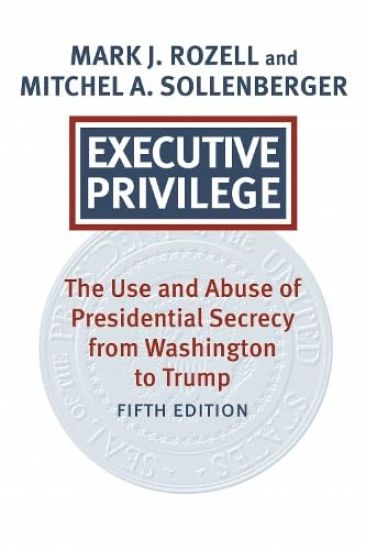
Executive Privilege

Executive Privilege

Mark J. Rozell; Mitchel A. Sollenberger

University Press of Kansas
2020
nidottu
Executive Privilege - called 'the definitive contemporary work on the subject' by the Journal of Politics - is widely considered the best in-depth history and analysis of executive privilege and its relation to the proper scope and limits of presidential power.This fourth edition is revised and updated to include the two Obama administrations and the first three years of the Trump administration. The new edition includes President Obama's failure to live up to the high expectations of his campaign promises, and, President Trump's controversies, including the investigations into Russian meddling in the 2016 election, the proposed addition of a citizenship question on the 2020 Census, and the ongoing inquiry into White House security clearances.'For an American people who (apparently) must be their president's keeper, this book is essential reading."" - Rhetoric & Public Affairs
Executive Privilege

Executive Privilege

Mark J. Rozell; Mitchel A. Sollenberger

University Press of Kansas
2020
sidottu
Executive Privilege - called 'the definitive contemporary work on the subject' by the Journal of Politics - is widely considered the best in-depth history and analysis of executive privilege and its relation to the proper scope and limits of presidential power.This fourth edition is revised and updated to include the two Obama administrations and the first three years of the Trump administration. The new edition includes President Obama's failure to live up to the high expectations of his campaign promises, and, President Trump's controversies, including the investigations into Russian meddling in the 2016 election, the proposed addition of a citizenship question on the 2020 Census, and the ongoing inquiry into White House security clearances.'For an American people who (apparently) must be their president's keeper, this book is essential reading."" - Rhetoric & Public Affairs
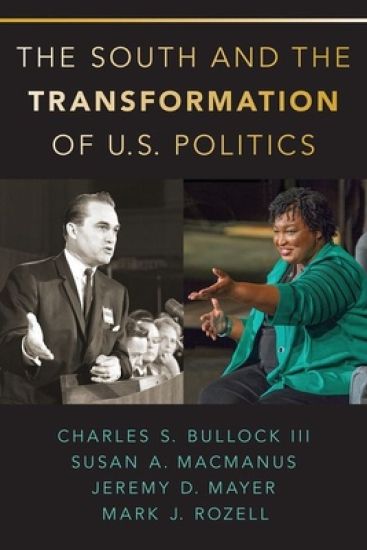
The South and the Transformation of U.S. Politics

The South and the Transformation of U.S. Politics

Charles S. Bullock; Susan A. MacManus; Jeremy D. Mayer; Mark J. Rozell

Oxford University Press Inc
2019
sidottu
A strong case can be made that the South has had the greatest impact of any region on the transformation of U.S. politics and government. Since 1968, we have seen the demise of the "solid (Democratic) South" and the rise of the Republican-dominated South; the rise of the largely southern white evangelical religious right movement; and demographic changes that have vastly altered the political landscape of the region and national politics. Overriding all of these changes is the major constant of southern politics: race. Since the 1990s, the Republican Party has dominated politics in the Southern United States. Race relations were a large factor in this shift that began about a half century ago, but nonetheless, race and demographic change are once again realigning party politics in the region, this time back toward an emergent Democratic Party. Membership in the Southern Democratic Party is majority African American, Latino, and Asian, and rapidly expanding with an influx of immigrants, primarily Latino. While race continues to shape politics in the region, population growth is, as this book argues, the major factor affecting politics in the South. In fact, the populations of Georgia, North Carolina, South Carolina, and Virginia have grown more rapidly than the population of the nation as a whole over the past half century--and each of these states has gained at least one seat in Congress. These growth states are the ones in which populations are diversifying, economies are surging, and Democrats are making headway. They, along with Florida and Texas, are also among the most competitive states with the largest numbers of Electoral College votes in the region. It is likely, therefore, that among the key battlegrounds for determining the presidency will be the southern states with the fastest growing populations. This will especially be the case once the Latino population in Texas mobilizes. This book describes and analyzes the ways in which demographic change has shaped politics in the South since the late 1960s and may enable the Democratic Party in the future to re-take politics in the region, and even shut out Republicans from the nation's highest office.
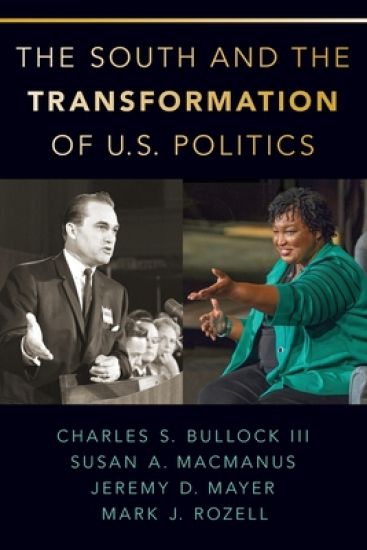
The South and the Transformation of U.S. Politics

The South and the Transformation of U.S. Politics

Charles S. Bullock; Susan A. MacManus; Jeremy D. Mayer; Mark J. Rozell

Oxford University Press Inc
2019
nidottu
A strong case can be made that the South has had the greatest impact of any region on the transformation of U.S. politics and government. Since 1968, we have seen the demise of the "solid (Democratic) South" and the rise of the Republican-dominated South; the rise of the largely southern white evangelical religious right movement; and demographic changes that have vastly altered the political landscape of the region and national politics. Overriding all of these changes is the major constant of southern politics: race. Since the 1990s, the Republican Party has dominated politics in the Southern United States. Race relations were a large factor in this shift that began about a half century ago, but nonetheless, race and demographic change are once again realigning party politics in the region, this time back toward an emergent Democratic Party. Membership in the Southern Democratic Party is majority African American, Latino, and Asian, and rapidly expanding with an influx of immigrants, primarily Latino. While race continues to shape politics in the region, population growth is, as this book argues, the major factor affecting politics in the South. In fact, the populations of Georgia, North Carolina, South Carolina, and Virginia have grown more rapidly than the population of the nation as a whole over the past half century--and each of these states has gained at least one seat in Congress. These growth states are the ones in which populations are diversifying, economies are surging, and Democrats are making headway. They, along with Florida and Texas, are also among the most competitive states with the largest numbers of Electoral College votes in the region. It is likely, therefore, that among the key battlegrounds for determining the presidency will be the southern states with the fastest growing populations. This will especially be the case once the Latino population in Texas mobilizes. This book describes and analyzes the ways in which demographic change has shaped politics in the South since the late 1960s and may enable the Democratic Party in the future to re-take politics in the region, and even shut out Republicans from the nation's highest office.
The Press And The Carter Presidency
This study is a revision of my doctoral dissertation written at the University of Virginia. As a student of the American presidency I became interested in how presidential leadership is defined, analyzed and assessed. Students of the presidency spend a great deal of time studying leadership theory and debating the merits of different measures of leadership "success." These students draw inspiration for their ideas from noted presidency scholars such as Edward S. Corwin, Clinton Rossiter, and Richard Neustadt.
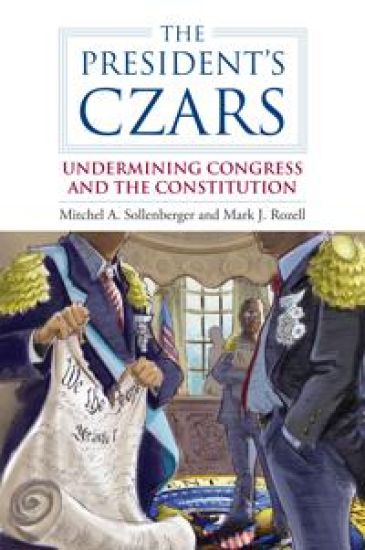
The President's Czars

The President's Czars

Mitchel A. Sollenberger; Mark J. Rozell

University Press of Kansas
2012
sidottu
Faced with crises that would challenge any president, Barack Obama authorised “pay czar” Kenneth Feinberg to oversee the $20 billion fund for victims of the BP oil spill and to establish—and enforce—executive pay guidelines for companies that received $700 billion in federal bailout money. Feinberg’s office comes with vastly expansive policy powers along with seemingly deep pockets; yet his position does not formally fit anywhere within our government’s constitutional framework. The very word “czar” seems inappropriate in a constitutional republic, but it has come to describe any executive branch official who has significant authority over a policy area, works independently of agency or Department heads, and is not confirmed by the Senate—or subject to congressional oversight. Mitchel Sollenberger and Mark Rozell provide the first comprehensive overview of presidential czars, tracing the history of the position from its origins through its initial expansion under FDR and its dramatic growth during the presidencies of George W. Bush and Barack Obama. The President’s Czars shows how, under pressure to act on the policy front, modern presidents have increasingly turned to these appointed officials, even though by doing so they violate the Appointments Clause and can also run into conflict with the non-delegation doctrine and the principle that a president cannot unilaterally establish offices without legislative support. Further, Sollenberger and Rozell contend that czars not only are ill-conceived but also disrupt a governing system based on democratic accountability. A sobering overview solidly grounded in public law analysis, this study serves as a counter-argument to those who would embrace an excessively powerful presidency, one with relatively limited constraints. Among other things, it proposes the restoration of accountability—starting with significant changes to Title 3 of the U.S. Code, which authorises the president to appoint White House employees “without regard to any other provision of law.” Ultimately, the authors argue that czars have generally not done a good job of making the executive branch bureaucracy more effective and efficient. Whatever utility presidents may see in appointing czars, Sollenberger and Rozell make a strong case that the overall damage to our constitutional system is great—and that this runaway practice has to stop. This book is part of the Studies in Government and Public Policy series.
The President's Czars

The President's Czars

Mitchel A. Sollenberger; Mark J. Rozell

University Press of Kansas
2012
nidottu
Faced with crises that would challenge any president, Barack Obama authorised “pay czar” Kenneth Feinberg to oversee the $20 billion fund for victims of the BP oil spill and to establish—and enforce—executive pay guidelines for companies that received $700 billion in federal bailout money. Feinberg’s office comes with vastly expansive policy powers along with seemingly deep pockets; yet his position does not formally fit anywhere within our government’s constitutional framework. The very word “czar” seems inappropriate in a constitutional republic, but it has come to describe any executive branch official who has significant authority over a policy area, works independently of agency or Department heads, and is not confirmed by the Senate—or subject to congressional oversight. Mitchel Sollenberger and Mark Rozell provide the first comprehensive overview of presidential czars, tracing the history of the position from its origins through its initial expansion under FDR and its dramatic growth during the presidencies of George W. Bush and Barack Obama. The President’s Czars shows how, under pressure to act on the policy front, modern presidents have increasingly turned to these appointed officials, even though by doing so they violate the Appointments Clause and can also run into conflict with the non-delegation doctrine and the principle that a president cannot unilaterally establish offices without legislative support. Further, Sollenberger and Rozell contend that czars not only are ill-conceived but also disrupt a governing system based on democratic accountability. A sobering overview solidly grounded in public law analysis, this study serves as a counter-argument to those who would embrace an excessively powerful presidency, one with relatively limited constraints. Among other things, it proposes the restoration of accountability—starting with significant changes to Title 3 of the U.S. Code, which authorises the president to appoint White House employees “without regard to any other provision of law.” Ultimately, the authors argue that czars have generally not done a good job of making the executive branch bureaucracy more effective and efficient. Whatever utility presidents may see in appointing czars, Sollenberger and Rozell make a strong case that the overall damage to our constitutional system is great—and that this runaway practice has to stop. This book is part of the Studies in Government and Public Policy series.
Interest Groups in American Campaigns

Interest Groups in American Campaigns

Mark J. Rozell; Clyde Wilcox; David Madland

CQ Press
2005
nidottu
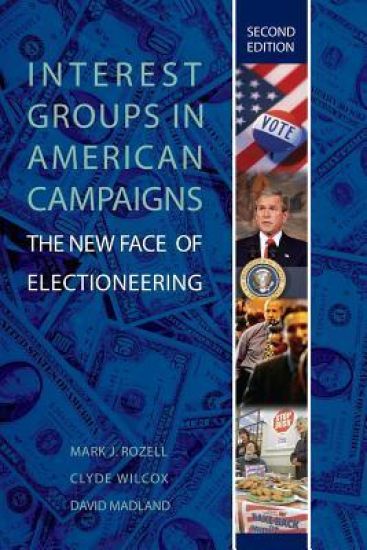
As witnessed in the 2004 elections, Americans feel the influence of interest groups today more than ever before. In races for the presidency, Congress, state legislatures, and even local school boards, interest groups help—in both major and minor ways—elect (or reelect) candidates who support their views. Interest Groups in American Campaigns is the only book to focus specifically on the role of interest groups in elections. Rozell, Wilcox, and Madland show that communication channels—from monetary donations to candidates and web pages for citizens—are the bedrock of interest group leverage on political parties, individual candidates, and voters.This second edition goes well beyond a straightforward update and spotlights the major changes in the way interest groups are now active in modern campaigns. Continuing the tradition of the first edition, the authors draw on interviews with interest group leaders, coverage of campaign finance filings, and election surveys in their extensive analysis.In addition to current data and updated examples and cases throughout the book, new coverage includes:the effects of the Bipartisan Campaign Reform Act of 2002, the first finance reform package in a generationthe rise of 527s in campaign advertising in light of campaign finance reform restrictionsthe successes and failures of George W. Bush and John Kerry to woo powerful interest groups
Power and Prudence

Power and Prudence

Ryan J. Barilleaux; Mark J. Rozell

Texas A M University Press
2004
sidottu
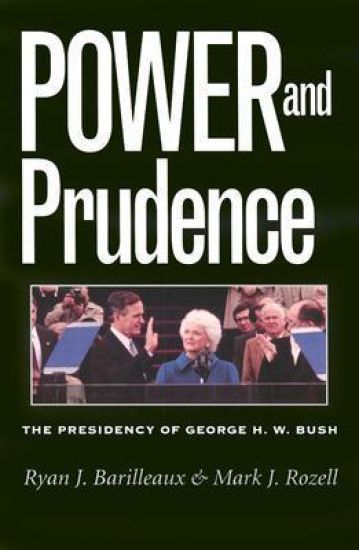
When George H. W. Bush took office in January 1989, he brought to the presidency an impressive resume. A former member of Congress, national party leader, CIA director, ambassador to China, and two-term vice president, he had the credentials and experience for a uniquely successful presidency. Less than four years later, the American electorate resoundingly proclaimed his administration a failure. Many pundits and scholars have echoed the voters' judgment. In a considered and balanced reassessment, Ryan J. Barilleaux and Mark J. Rozell ask whether the public and the pundits have applied the wrong criteria of presidential evaluation. Looking at the context in which Bush came into office, Barilleaux and Rozell argue that his strategy of incrementalism may indeed have been right for the times and any failure may have lain only in Bush's inability to convince the public of that. Moreover, the authors disagree with the common assessment that Bush pursued incrementalism only in domestic policy, arguing that it characterized his foreign policy as well. Power and Prudence is a study in presidential evaluation. It represents a challenge to the conventional wisdom that has developed on the first Bush administration and presents an important reinterpretation of the leadership of a poorly understood president. This thought-provoking analysis suggests that the circumstances of his presidency may have limited Bush's opportunities to articulate or achieve far-reaching policy objectives. These circumstances included the lack of an electoral mandate, Bush's succession to a very popular and ideological leader, his inheritance of a daunting budget deficit, and the situation of divided government. The authors' interpretation of the Bush administration is supported by interviews with members of Bush's White House staff and the limited archival record thus far opened to scholars. A detailed read into the workings of a contemporary presidency, Power and Prudence will appeal to presidential scholars as well as the politically minded reader.
George Washington and the Origins of the American Presidency

George Washington and the Origins of the American Presidency

William D. Pederson; Mark J. Rozell; Frank J. Williams

Praeger Publishers Inc
2000
sidottu
This essay collection is a retrospective analysis of the Washington administration's importance to the understanding of the modern presidency. Contemporary presidential scholarship gives little attention to the enormous impact that Washington's actions had on establishing the presidency. Most contemporary literature starts with 1933 and, although FDR's impact on the development of the modern institution of the presidency is undeniable, Washington's actions in office also established standards for practices that continue to this day.This analysis of the Washington presidency begins with an examination of Washington's leadership and its relevance to the modern presidency. The second group of essays looks at different aspects of presidential powers and the precedents established by the Washington administration. The third section examines Washington's press coverage, looking at the origins of Washington's image and the various myths in the press as well as the president's difficult relations with his contemporary press. A thoughtful and important corrective that will be of interest to scholars, students, and researchers involved with the American presidency and its history.