Kirjojen hintavertailu. Mukana 12 595 353 kirjaa ja 12 kauppaa.

Kirjailija

Mark Jamieson

Kirjat ja teokset yhdessä paikassa: 10 kirjaa, julkaisuja vuosilta 2017-2025, suosituimpien joukossa Somerset Traction. Vertaile teosten hintoja ja tarkista saatavuus suomalaisista kirjakaupoista.

10 kirjaa

Kirjojen julkaisuhaarukka 2017-2025.

Coaching Young People for Leadership

Coaching Young People for Leadership

Mark Jamieson

TAYLOR FRANCIS LTD
2025
sidottu
How to develop young people's leadership skills. A practical guide for anyone involved in nurturing, mentoring or educating young people or those interested in youth development.With the help of this book, coaches, teachers, and those working within youth organisations can apply new coaching techniques and ideas to support and fulfil the leadership potential of young people, exploring how to provide them with the skills to transition into adulthood and prepare them for leadership roles. This book introduces a three-stage coaching programme - authentication, development and ambition - as a framework for nurturing and developing young people. This book also draws on real-life case studies of leadership experiences at individual, community and societal levels as well as using reflective exercises to promote critical thinking.It emphasises the importance of acknowledging young people's roles in leadership and examines how to mentor future leaders by examining what current youth leadership looks like today and a vision for the future. It substantiates the claim that young people are an underused and underdeveloped leadership resource.
Coaching in the Classroom

Coaching in the Classroom

Mark Jamieson; Rachel Wood

TAYLOR FRANCIS LTD
2025
sidottu
A thought-provoking and engaging guide to coaching in an educational setting, demonstrating how to coach young people in the classroom and how to embed a coaching culture in schools.Aimed at teachers, school leaders and aspiring educators, Coaching in the Classroom reimagines the relationship between leadership coaching and education to maximise students' achievements and well-being. Drawing on the author’s experience and backed by rigorous research and theoretical underpinning, this book widens the scope of coaching in education. It’s no longer just about staff development but also about teachers working with young people.Based on a unique understanding of learning as a choice driven by curiosity, ambition and aspiration, the reader is guided how to integrate coaching and other innovative learning approaches such as team-based learning into an educational setting. Evidence is offered of the positive effect of coaching as a companion to conventional learning;enhancing academic achievementenriching the student experiencenurturing high achieversinspiring moderate performers with high potential, andre-engaging those who may be currently outside the academic mainstream.Well-crafted case studies help to promote critical thinking by inviting the reader to become involved, practically and intellectually in the application of new ideas and the conceptualisation of learning. These case studies illustrate the impact of coaching working in concert with pedagogical theories, to increase engagement, attendance, inclusion, and attainment as well as harnessing the hidden potential of future workers.
Coaching in the Classroom

Coaching in the Classroom

Mark Jamieson; Rachel Wood

TAYLOR FRANCIS LTD
2024
nidottu
A thought-provoking and engaging guide to coaching in an educational setting, demonstrating how to coach young people in the classroom and how to embed a coaching culture in schools.Aimed at teachers, school leaders and aspiring educators, Coaching in the Classroom reimagines the relationship between leadership coaching and education to maximise students' achievements and well-being. Drawing on the author’s experience and backed by rigorous research and theoretical underpinning, this book widens the scope of coaching in education. It’s no longer just about staff development but also about teachers working with young people.Based on a unique understanding of learning as a choice driven by curiosity, ambition and aspiration, the reader is guided how to integrate coaching and other innovative learning approaches such as team-based learning into an educational setting. Evidence is offered of the positive effect of coaching as a companion to conventional learning;enhancing academic achievementenriching the student experiencenurturing high achieversinspiring moderate performers with high potential, andre-engaging those who may be currently outside the academic mainstream.Well-crafted case studies help to promote critical thinking by inviting the reader to become involved, practically and intellectually in the application of new ideas and the conceptualisation of learning. These case studies illustrate the impact of coaching working in concert with pedagogical theories, to increase engagement, attendance, inclusion, and attainment as well as harnessing the hidden potential of future workers.
Coaching Young People for Leadership

Coaching Young People for Leadership

Mark Jamieson

TAYLOR FRANCIS LTD
2023
nidottu
How to develop young people's leadership skills. A practical guide for anyone involved in nurturing, mentoring or educating young people or those interested in youth development.With the help of this book, coaches, teachers, and those working within youth organisations can apply new coaching techniques and ideas to support and fulfil the leadership potential of young people, exploring how to provide them with the skills to transition into adulthood and prepare them for leadership roles. This book introduces a three-stage coaching programme - authentication, development and ambition - as a framework for nurturing and developing young people. This book also draws on real-life case studies of leadership experiences at individual, community and societal levels as well as using reflective exercises to promote critical thinking.It emphasises the importance of acknowledging young people's roles in leadership and examines how to mentor future leaders by examining what current youth leadership looks like today and a vision for the future. It substantiates the claim that young people are an underused and underdeveloped leadership resource.

British Rail from Sectorisation to Privatisation

British Rail from Sectorisation to Privatisation

Mark Jamieson

Amberley Publishing
2022
nidottu
How did the railways of Britain change from the uniformity of the 1970s to the kaleidoscope of twenty-first century rail operation? The answer is sectorisation, and Mark Jamieson's British Rail from Sectorisation to Privatisation explores this important but near-forgotten period in the recent history of British railways. In 1982 British Rail reorganised into five sectors, each responsible for different types of rail traffic: InterCity, Provincial Services, London and South East, Railfreight and Parcels. Sectorisation coincided with the 1980s explosion of brands, colours and logos and the railways soon followed suit, with many bright new liveries applied to trains old and new. But sectorisation wasn't just about liveries: a relentless focus on each sector's 'bottom line' exposed rail traffic that did not pay and led to the disappearance of many trains. InterCity trains to Blackpool, Stranraer and Shrewsbury ceased and the variety of wagonload freight was virtually destroyed. Carefully researched captions bring over 150 beautiful pictures to life, explaining how nearly 50 years of nationalised railways would come to an end as British Rail prepared for privatisation.
The Era of Rail Blue

The Era of Rail Blue

Mark Jamieson

Amberley Publishing
2022
nidottu
Return to the era when rail blue ruled supreme on the railways of Britain, when a wide variety of British-built trains operated from the highlands of Scotland, through the now vanished industrial north and midlands, through the Welsh valleys, across the suburban networks of the south-east, and through the picturesque West Country. In the dying days of British steam, the British Rail Design Research Unit in the 1960s introduced a modern new blue livery for diesel and electric locomotive;, blue and grey for coaching stock, blue for suburban stock, and the now iconic double-arrow symbol. Having lived through this lost era, Mark Jamieson provides a nostalgic and affectionate record of British Rail during the rail blue years. Illustrated throughout and with detailed captions, this is a comprehensive account of when the livery ruled the rails.
Somerset Traction

Somerset Traction

Mark Jamieson

Amberley Publishing
2019
nidottu
The main route to Devon and Cornwall passes through Somerset, with routes from Bristol and Westbury converging at Cogload Junction - 5 miles east of Taunton. To the south of the county is the former London & South Western Railway route from London Waterloo to Exeter via Yeovil Junction. Castle Cary on the section from Westbury to Taunton is the junction for the route to Yeovil Pen Mill, and southwards to Weymouth. The principal passenger train operator throughout the county is Great Western Railway (GWR), although Arriva CrossCountry runs a regular service to Exeter and Plymouth/Paignton/Penzance from the north. South West Trains solely operates the Waterloo to Exeter route, but has recently started to encroach on GWR territory by operating services to Yeovil and Weymouth from Salisbury via Warminster and Frome. In recent years freight traffic to the South West has become sparse, but Taunton still retains Fairwater Yard, to the west of the station, and is home to Network Rail’s High Output Renewals Train, which is operated by Freightliner Heavy Haul. Somerset is also home to the longest preserved railway in the country, the West Somerset Railway (WSR). Featuring previously unpublished images, Mark Jamieson illustrates the variety of traffic the county of Somerset has enjoyed over the years, from summer holiday trains to railtours and freight workings.
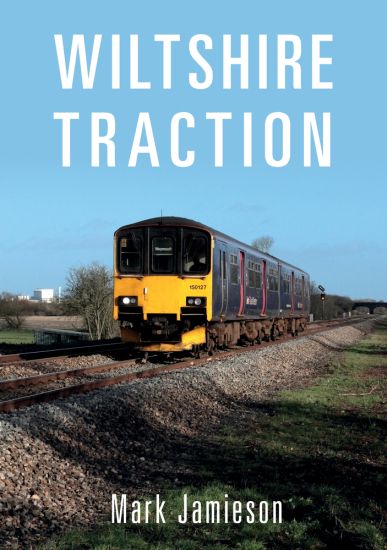
Wiltshire Traction

Wiltshire Traction

Mark Jamieson

AMBERLEY PUBLISHING
2018
nidottu
Bounded by the counties of Hampshire, Somerset, Berkshire, Dorset, Oxfordshire and Gloucestershire, the county of Wiltshire has several significant main line railway routes passing through it: to the north is the Great Western Main Line from London Paddington to South Wales; the Berks & Hants route from Reading to Westbury runs through the heart of the county, and westwards to Taunton; and to the south of the county the former London & South Western Railway route runs from London Waterloo to Exeter, while the cross-country route from Southampton to Bath cuts across the county from the south-east to the north-west. Wiltshire is also home to the Great Western Railway town of Swindon, although it is now sadly a shadow of its former past. Covering more than thirty years, these previously unpublished photos show the diverse workings and traction that have passed through the county, from the days of British Rail to the privatised railway of today.
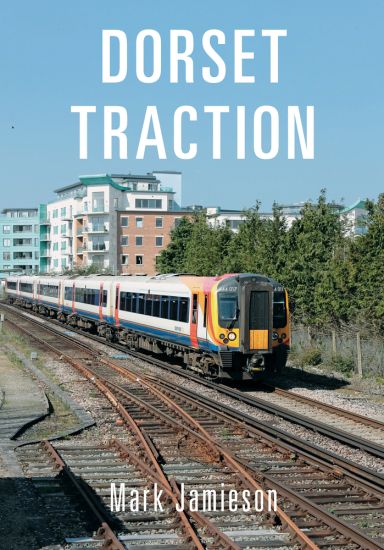
Dorset Traction

Dorset Traction

Mark Jamieson

Amberley Publishing
2017
nidottu
Dorset – where the South Coast meets the West Country. From golden sandy beaches to rolling hills, delightful seaside towns and idyllic country villages, Dorset has long been a popular destination for visitors. Although not a vast railway network, several main lines either cut through the county or finish there. The most famous line to have passed through this county is the now long-closed Somerset & Dorset Joint Railway from Bath to Bournemouth. Many other lines were also closed over the years; the branch lines to Lyme Regis, Bridport, Portland and Abbotsbury, and the Swanage branch from Wareham – all have been closed and lifted. The most recent closure has been that of the Weymouth Quay tramway, which saw its last train in 1999. Since the end of Southern steam in 1967, and into the modern traction era, Dorset has probably been synonymous with the Class 33/1 and 4TC operation between Bournemouth and Weymouth prior to the 1988 electrification west of Bournemouth. After twenty-one years of service, these in turn were replaced by the Class 442 Wessex Electrics until 2007 when the Siemens-built Class 444 and 450 Desiro units took over. The West of England route from Waterloo to Exeter lost its loco-hauled trains in June 1993 when the then new BREL Derby-built Class 159s came into service, and twenty-three years later they still work the same line they were intended for very reliably. The photographs chosen for this book, published for the first time, represent the traction Dorset has enjoyed over the years since the end of steam in 1967, and the landscape that they pass through.