Kirjojen hintavertailu. Mukana 12 657 676 kirjaa ja 12 kauppaa.

Kirjailija

Mark LeBar

Kirjat ja teokset yhdessä paikassa: 2 kirjaa, julkaisuja vuosilta 2013-2025, suosituimpien joukossa Just People. Vertaile teosten hintoja ja tarkista saatavuus suomalaisista kirjakaupoista.

2 kirjaa

Kirjojen julkaisuhaarukka 2013-2025.

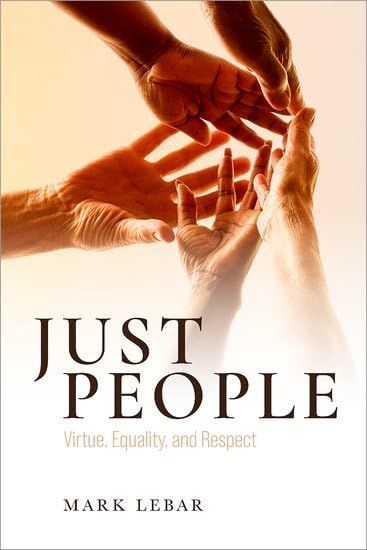
Just People

Just People

Mark LeBar

OXFORD UNIVERSITY PRESS INC
2025
sidottu
We often think of justice as a virtue that belong to states, societies, and institutions. It has not always been that way. Justice began as something between individual people, and only recently has its application to larger groups become predominant. In Just People, Mark LeBar makes a case for recovering the original priority of justice in and between individual people, as a virtue of character. The model for this virtue comes from Aristotle, whose own notion of the virtue of justice has notable shortcomings. Just People argues that we should understand justice in people as a matter of recognition of and respect for equal authority to obligate one another. That is, we should see one another as having equal capacity to obligate others through our persons and choices. This is a form of equality that is usually overlooked in discussions of equality, but here it is the cornerstone of justice, vindicating Aristotle's thought that justice is itself a matter of a kind of equality. LeBar rethinks a number of popular assumptions, including that we can make sense of justice in societies or institutions without thinking of the implications for our aspirations to be just people -- a thought that is long overdue. His book is a reformulation of justice, with the potential to fundamentally change the way we treat one another.

The Value of Living Well

The Value of Living Well

Mark LeBar

Oxford University Press Inc
2013
sidottu
Since the middle of the twentieth century, virtue ethics has enriched the range of philosophical approaches to normative ethics, often drawing on the work of the ancient Greeks, who offered accounts of the virtues that have become part of contemporary philosophical ethics. But these virtue ethical theories were situated within a more general picture of human practical rationality, one which maintained that to understand virtue we must appeal to what would make our lives go well. This feature of ethical theorizing has not become part of philosophical ethics, although the virtue theories dependent upon it have. This book is an attempt to bring eudaimonism into dialogue with contemporary philosophical work in ethical theory. It does not attempt to replicate the many contributions to normative ethics, in particular to thinking about the virtues. Instead, it attempts to contribute to metatethics - to thinking about what we are doing when we think about normative ethics. In particular, it attempts to contribute to contemporary philosophical debate on the nature of what is good for us, on what we have most reason to do, on what facts about both those ideas consist in, on the nature of values and value facts, and the nature of the reasons for respect for others we might have. Its aim is to mark off space in these debates where a way of thinking about ourselves and our agential, practical, natures as the ancients did can enrich our thinking about those deep and important questions. In this way the book makes a case for what we might call Virtue Eudaimonism.