Kirjojen hintavertailu. Mukana 12 595 353 kirjaa ja 12 kauppaa.
Kirjailija
Mark Levine
Kirjat ja teokset yhdessä paikassa: 29 kirjaa, julkaisuja vuosilta 1988-2026, suosituimpien joukossa Second Acts: Creating the Life You Really Want, Building the Career You Truly Desire. Vertaile teosten hintoja ja tarkista saatavuus suomalaisista kirjakaupoista.
Fire Your BossAnd Hire Yourself.Impossible? Not according to nationally bestselling author Stephen M. Pollan. As he says in this new and empowering book, "You don't have to accept your current work situation. You can be in control of your job and your stream of income, so you're never again subject to the whims, prejudices, moods, or circumstances of your so-called boss."In today's difficult work environment, gone are the days of finding satisfaction through your job, gone is the time when your job was secure, and gone are the days when your employer cared about you. This new environment requires new rules, and Pollan has provided surprisingly fresh and intriguing methods for finding "success" on the job.Pollan's bold and unique message begins with the idea that you must "fire your boss." By this he means you can no longer rely on your manager or your company for economic security. Instead, you must put yourself in charge of your working life. In this thought-provoking and counterintuitive career guide, Pollan presents a seven-step program and a series of exercises that give you the confidence, power, and will to achieve the life of your dreams.Once you have changed your mind-set and learned the new rules of the game, you can start the process of moving to a richer, more enriching, and more enjoyable life. And the best part about it? Your boss will love you for it.
Second Acts is a guide to reinventing your life. Whether you wish to change careers, move to a more desirable part of the country, start a business, write a novel, or drop everything to pursue a life dream, Stephen Pollan offers a powerful message ofhope and guidance that has benefited his own clients.Through a series of exercises, you will develop a comprehensive "script" for your second act--a step-by-step action plan that will lead you to the life you've always wanted.
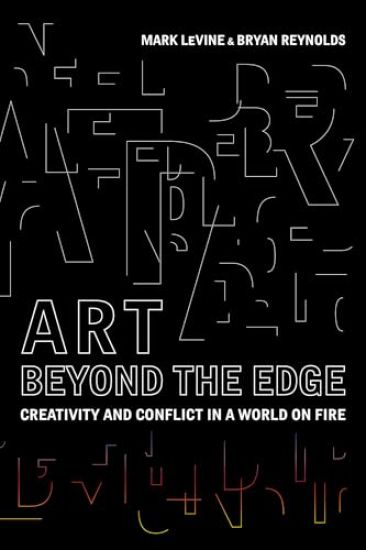
Art Beyond the Edge is not just a title: it's a designation, a call to action, and a means to achieve enduring impact. Reflecting over a quarter century of collaborative artistic production, research, and activism across five continents, this book is a field-breaking and era-defining exploration of art created during sociopolitical conflict and war, protests and calamities, and their aftermaths. With the goal of generating a critical theory that can meet the challenges of the twenty-first century, Mark LeVine and Bryan Reynolds propose a new and radical vocabulary, epistemological foundation, and praxiological roadmap for engagement with and in performance activism and political art. From Gaza to Chiapas, Baghdad to Kabul, the Niger Delta to the Congo River, the US to Ukraine, the authors establish an innovative matrix to analyze the conditions through which artistic production empowers struggles for freedom, dignity, and survival in a world on fire.
Art Beyond the Edge is not just a title: it's a designation, a call to action, and a means to achieve enduring impact. Reflecting over a quarter century of collaborative artistic production, research, and activism across five continents, this book is a field-breaking and era-defining exploration of art created during sociopolitical conflict and war, protests and calamities, and their aftermaths. With the goal of generating a critical theory that can meet the challenges of the twenty-first century, Mark LeVine and Bryan Reynolds propose a new and radical vocabulary, epistemological foundation, and praxiological roadmap for engagement with and in performance activism and political art. From Gaza to Chiapas, Baghdad to Kabul, the Niger Delta to the Congo River, the US to Ukraine, the authors establish an innovative matrix to analyze the conditions through which artistic production empowers struggles for freedom, dignity, and survival in a world on fire.
Throughout Sound Fury, poems by metaphysician Robert Herrick are refashioned into phantasmagorical oddities of likeness and difference. Figures from the fringes of popular imagination—Zane Grey, Robinson Crusoe, Porfirio Di´az—surface as cobbled-together avatars on the theme of identity. Brilliantly asserting the necessity of humane and resistant modes of speech against the vapid sounds and enforced silences of orthodoxy, Sound Fury finds the poet “Now, in our former state/ In our current one/ In stately procession,” venturing forth in a world “where things of questionable being go.”
In his iconic musical travelogue Heavy Metal Islam, Mark LeVine first brought the views and experiences of a still-young generation to the world. In We'll Play till We Die, he joins with this generation's leading voices to write a definitive history of the era, closing with a cowritten epilogue that explores the meanings and futures of youth music from North Africa to Southeast Asia. We'll Play till We Die dives into the revolutionary music cultures of the Middle East and larger Muslim world before, during, and beyond the waves of resistance that shook the region from Morocco to Pakistan. This sequel to Mark LeVine's celebrated Heavy Metal Islam shows how some of the world's most extreme music not only helped inspire and define region-wide protests, but also exemplifies the beauty and diversity of youth cultures throughout the Muslim world. Two years after Heavy Metal Islam was published in 2008, uprisings and revolutions spread like wildfire. The young people organizing and protesting on the streets—in dozens of cities from Casablanca to Karachi—included the very musicians and fans LeVine spotlighted in that book. We'll Play till We Die revisits the groundbreaking stories he originally explored, sharing what has happened to these musicians, their music, their politics, and their societies since then. The book covers a stunning array of developments, not just in metal and hip hop scenes, but with emo in Baghdad, mahraganat in Egypt, techno in Beirut, and more. LeVine also reveals how artists have used global platforms like YouTube and SoundCloud to achieve unprecedented circulation of their music outside corporate or government control. The first collective ethnography and biography of the post-2010 generation, We'll Play till We Die explains and amplifies the radical possibilities of music as a revolutionary force for change.
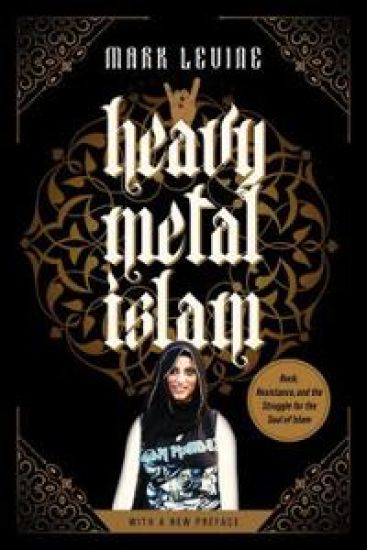
This updated reissue of Mark LeVine’s acclaimed, revolutionary book on sub- and countercultural music in the Middle East brings this groundbreaking portrait of the region’s youth cultures to a new generation. Featuring a new preface by the author in conversation with the band The Kominas about the problematic connections between extreme music and Islam. An eighteen-year-old Moroccan who loves Black Sabbath. A twenty-two-year-old rapper from the Gaza Strip. A young Lebanese singer who quotes Bob Marley’s “Redemption Song.” Heavy metal, punk, hip-hop, and reggae are each the music of protest, and are considered immoral by many in the Muslim world. As the young people and subcultures featured in Mark LeVine’s Heavy Metal Islam so presciently predicted, this music turned out to be the soundtrack of countercultures, uprisings, and even revolutions from Morocco to Pakistan. In Heavy Metal Islam, originally published in 2008, Mark LeVine explores the influence of Western music on the Middle East and North Africa through interviews with musicians and fans, introducing us to young people struggling to reconcile their religion with a passion for music and a thirst for change. The result is a revealing tour de force of contemporary cultures across the Muslim majority world through the region’s evolving music scenes that only a musician, scholar, and activist with LeVine’s unique breadth of experience could narrate. A New York Times Editor’s Pick when it was first published, Heavy Metal Islam is a surprising, wildly entertaining foray into a historically authoritarian region where music reveals itself to be a true democratizing force—and a groundbreaking work of scholarship that pioneered new forms of research in the region.
This updated reissue of Mark LeVine’s acclaimed, revolutionary book on sub- and countercultural music in the Middle East brings this groundbreaking portrait of the region’s youth cultures to a new generation. Featuring a new preface by the author in conversation with the band The Kominas about the problematic connections between extreme music and Islam. An eighteen-year-old Moroccan who loves Black Sabbath. A twenty-two-year-old rapper from the Gaza Strip. A young Lebanese singer who quotes Bob Marley’s “Redemption Song.” Heavy metal, punk, hip-hop, and reggae are each the music of protest, and are considered immoral by many in the Muslim world. As the young people and subcultures featured in Mark LeVine’s Heavy Metal Islam so presciently predicted, this music turned out to be the soundtrack of countercultures, uprisings, and even revolutions from Morocco to Pakistan. In Heavy Metal Islam, originally published in 2008, Mark LeVine explores the influence of Western music on the Middle East and North Africa through interviews with musicians and fans, introducing us to young people struggling to reconcile their religion with a passion for music and a thirst for change. The result is a revealing tour de force of contemporary cultures across the Muslim majority world through the region’s evolving music scenes that only a musician, scholar, and activist with LeVine’s unique breadth of experience could narrate. A New York Times Editor’s Pick when it was first published, Heavy Metal Islam is a surprising, wildly entertaining foray into a historically authoritarian region where music reveals itself to be a true democratizing force—and a groundbreaking work of scholarship that pioneered new forms of research in the region.
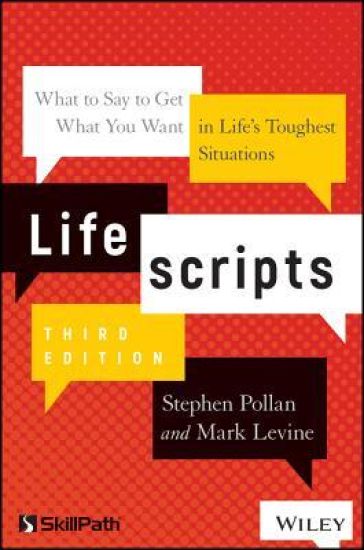
Expertly navigate any workplace conversation and come out on top When confronted with difficult situations in the workplace, many people are at a loss for words. That’s why New York Times bestselling authors Stephen M. Pollan and Mark Levine created Lifescripts: What to Say to Get What You Want in Life's Toughest Situations. Using two-color flowcharts, Lifescripts maps out 109 difficult conversations, guiding you through discussion openers and effective responses reach the desired result. This completely revised and updated edition includes nearly 50 new business-focused scripts covering everything from apologizing for a misdirected email to requesting better meeting manners. Inside, you’ll find scripts to fit any situation you’re confronting at work. Use the signature Lifescripts visual flowcharts to work your way through exactly how the conversation should go. Be it boosting employee morale or getting the raise you deserve, when the time comes, you’ll be prepared not only with the right words and phrases, but with the confidence you need to get what you want. Work your way through conversation scripts for terminations, performance reviews, negotiating job offers, asking for raises, and much moreLearn a unique set of icebreakers, pitches, questions, answers, and defenses for each difficult conversationEasily develop a winning conversational strategy using the signature visual flowcharts unique to LifescriptsGet strategic tips on attitude, timing, preparation, and behavior to help make any conversation a success This revised Third Edition of Lifescripts is here to help employees and managers communicate even more clearly and effectively. Whatever the situation, Lifescripts provides a road map to navigate the most perplexing, problematic dialogues for success.
The 25th-Anniversary Edition of DEBT, the National Poetry Series Winner and debut poetry collection by Mark Levine. With a new introduction by Srikanth Reddy. "The velocity of these poems will induce motion sickness in some readers, and exhilaration in others. But Levine's aerial acrobatics always return us, largely intact, to common ground. It might even be sacred ground. For all its existentialist pratfalls and murderous chicanery, Debt is a profoundly elegiac work, from its dedicatory epitaph to the final poem's darkling closure. Our heaviest debt, the most timeless poems remind us, is to the historical dead."--Srikanth Reddy, from the new introduction
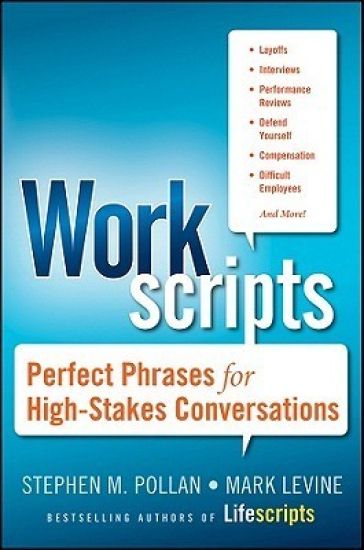
What to say in today's toughest workplace situations Whatever trust previously existed between employer and employee has been torn into millions of pink slips, thanks to the latest recession. As a result, the rules for how managers and employees can successfully communicate have been irrevocably changed. Whether you're a manager or employee, Workscripts explains what to say in life's toughest situations at work, including: • Negotiating severance • Performance reviews • Responding to a pay cut • Asking for a raise or promotion • Terminating a friend • Job interviews • Dealing with difficult bosses • And many more
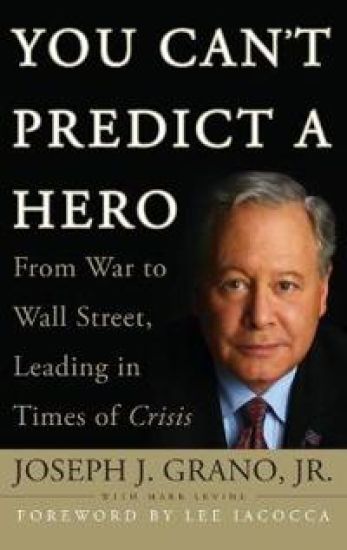
The unique story of Wall Street legend Joe Grano—six defining moments in courage, leadership, and determination that will inspire readers of every age, and at every stage in life From Vietnam to 9/11, from the market crash of '87 to today's financial crisis, Wall Street legend Joe Grano has weathered the most defining crises of the last forty years. Whether leading draftees through combat as a Green Beret in Vietnam, regrouping a team of brokers during the market crash of 1987, or working tirelessly to reopen Wall Street after the attacks on 9/11, Joe has served at the front lines of our nation's most defining moments, leading and even inspiring others when things seem at their darkest. Structured around six specific crises he faced in his life and career, You Can't Predict a Hero will describe how Grano was able to triumph over challenges both personal and professional. Whether teaching himself to walk again after sustaining crippling battle wounds, rising from his hardscrabble beginnings to become a top broker at Merrill Lynch, or shepherding the merger of PaineWebber and UBS, his experience has been hard-won and his perspective like no one else's. Through it all, Grano has learned to find the opportunity in any crisis, how to calm and inspire those he leads, and how to find the real solution to what can appear as an insurmountable problem. This dynamic book will inspire anyone looking to make sense of our rapidly changing world, and how to grow and even thrive through any challenge. Problems require solutions, and crisis creates true leaders. Joseph J. Grano, Jr. is Chairman and CEO of Centurion Holdings LLC, a company that advises private and public companies. From 2001-2004, Grano was Chairman of UBS Financial Services Inc. (formerly UBS PaineWebber). Having joined the company in 1988, Grano is credited for turning PaineWebber around and shepherding its merger with Swiss banking giant UBS. Grano began his career as a stock broker at Merrill Lynch, where he rose to various senior management positions over 16 years. A decorated war hero, Grano was chosen by the White House to be chairman of the President’s Homeland Security Advisory Council after 9/11, a position he held from 2002-2005. The recipient of countless awards for leadership, civic contributions, as well as honorary degrees, he is involved in a wide range of educational and philanthropic endeavors. He and his wife, Kathy, live in New Jersey. Mark Levine has written and collaborated on more than 30 books, including the best sellers Second Acts, Die Broke, and Lifescripts, as well as hundreds of magazine articles. He lives Ithaca, New York, and is a member of the Authors Guild.
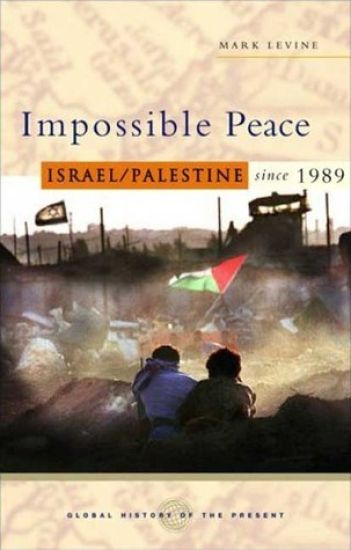
In 1993 luminaries from around the world signed the 'Oslo Accords' - a pledge to achieve lasting peace in the Holy Land - on the lawn of the White House. Yet things didn't turn out quite as planned. With over 1, 000 Israelis and close to four times that number of Palestinians killed since 2000, the Oslo process is now considered 'history'. Impossible Peace provides one of the first comprehensive analyses of that history. Mark LeVine argues that Oslo was never going to bring peace or justice to Palestinians or Israelis. He claims that the accords collapsed not because of a failure to live up to the agreements; but precisely because of the terms of and ideologies underlying the agreements. Today more than ever before, it's crucial to understand why these failures happened and how they will impact on future negotiations towards the 'final status agreement'. This fresh and honest account of the peace process in the Middle East shows how by learning from history it may be possible to avoid the errors that have long doomed peace in the region.
In 1993 luminaries from around the world signed the 'Oslo Accords' - a pledge to achieve lasting peace in the Holy Land - on the lawn of the White House. Yet things didn't turn out quite as planned. With over 1, 000 Israelis and close to four times that number of Palestinians killed since 2000, the Oslo process is now considered 'history'. Impossible Peace provides one of the first comprehensive analyses of that history. Mark LeVine argues that Oslo was never going to bring peace or justice to Palestinians or Israelis. He claims that the accords collapsed not because of a failure to live up to the agreements; but precisely because of the terms of and ideologies underlying the agreements. Today more than ever before, it's crucial to understand why these failures happened and how they will impact on future negotiations towards the 'final status agreement'. This fresh and honest account of the peace process in the Middle East shows how by learning from history it may be possible to avoid the errors that have long doomed peace in the region.
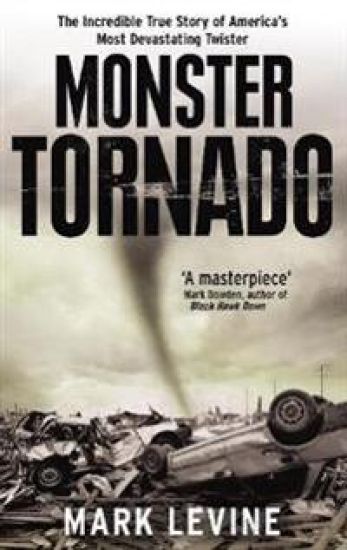
On April 3, 1974, over a sixteen-hour period, nature stepped forward with its display of mayhem, as an outbreak of 148 tornadoes descended on the US. The destruction wrought was horrifying. This title follows the path of a twin set of F5s - the rarest, and most deadly, category of tornado, and their impact on a cast of intertwined characters.
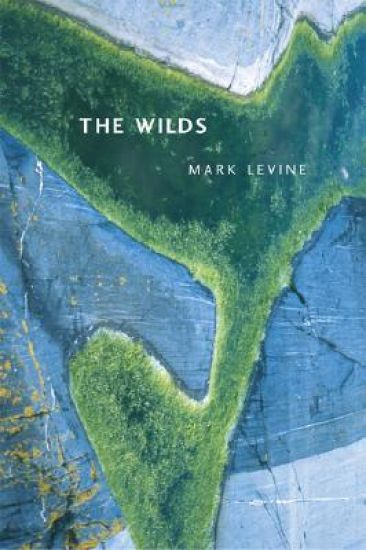
In his third book of poems, Mark Levine continues his exploration of the rhythms and forms of memory. "The Wilds" is set in the border regions between natural and cultivated states, childhood and adulthood, past and present. "We were boys," says the speaker of the opening poem, "boyish, almost girls. Left alone on the roof, we would have dwindled." Austere and lyrical, the music of these poems resonates with echoes of poetic tradition-Wyatt, Jonson, Milton, Eliot-yet is singularly modern.
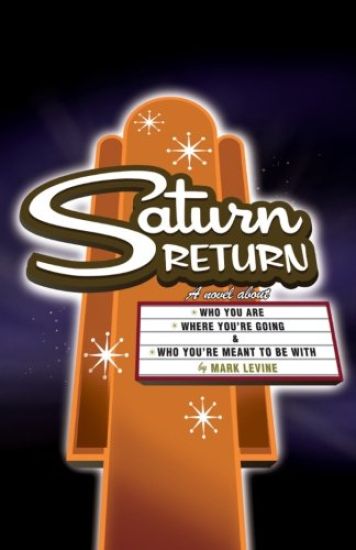
If you've ever wondered where your life was going, who you really are, and if that soul mate you've been waiting for is ever going to show up, chances are you've experienced your own Saturn Return. Don't believe in that "stuff"? Neither did Adam Winter until fate intervenes in his rut of a life (stuck in a career he hates; waking up with all the wrong women) in the form of an email from his first love, Zo , anxious to rekindle their teenage romance. Even though he hasn't seen her in 15 years, he knows this is the one. Adam's life starts to fall apart when he discovers that Zo may not have sent the email. To make matters worse, Adam's life really begins unraveling on the same day he learns that Zoe will not be returning to his life.or so he thinks. That night, an 80 year old organ player at a 50's style lounge changes his life forever. Like Adam, Jen Savin's life, while professionally brilliant, is personally a disaster. Jen's consumed by her career in academia, has never experienced real love and wonders whether she'll end up being the weird old lady with a yard full of cats. Adam and Jen embark on similar yet separate journeys of self-discovery. Whether or not their paths cross or are meant to cross is left to fate. Is life just a series of random moments that somehow seem connected or do certain people come into our lives and things happen to us for a reason?
This landmark book offers a truly integrated perspective for understanding the formation of Jewish and Palestinian Arab identities and relations in Palestine before 1948. Beginning with the late Ottoman period Mark LeVine explores the evolving history and geography of two cities: Jaffa, one of the oldest ports in the world, and Tel Aviv, which was born alongside Jaffa and by 1948 had annexed it as well as its surrounding Arab villages. Drawing from a wealth of untapped primary sources, including Ottoman records, Jaffa Shari'a court documents, town planning records, oral histories, and numerous Zionist and European archival sources, LeVine challenges nationalist historiographies of Jaffa and Tel Aviv, revealing the manifold interactions of the Jewish and Palestinian Arab communities that lived there. At the center of the book is a discussion of how Tel Aviv's self-definition as the epitome of modernity affected its and Jaffa's development and Jaffa's own modern pretenses as well. As he unravels this dynamic, LeVine provides new insights into how popular cultures and public spheres evolved in this intersection of colonial, modern, and urban space. He concludes with a provocative discussion of how these discourses affected the development of today's unified city of Tel Aviv-Yafo and, through it, Israeli and Palestinian identities within in and outside historical Palestine.