Kirjojen hintavertailu. Mukana 12 333 485 kirjaa ja 12 kauppaa.

Kirjailija

Mark Matthews

Kirjat ja teokset yhdessä paikassa: 26 kirjaa, julkaisuja vuosilta 2006-2025, suosituimpien joukossa In His Steps: Counting the Cost. Vertaile teosten hintoja ja tarkista saatavuus suomalaisista kirjakaupoista.

26 kirjaa

Kirjojen julkaisuhaarukka 2006-2025.

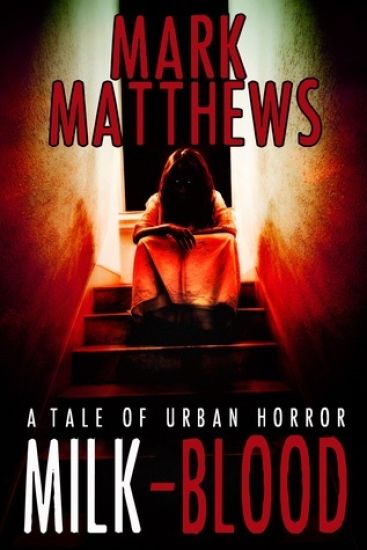
Milk-Blood

Milk-Blood

Mark Matthews

Wicked Run Press
2014
nidottu
Lilly is ten years old, living in poverty, born with a heart defect, and already addicted to heroin. Her mother is gone from her life, and there are rumors that she was killed by her father and buried near the abandoned house across the street. The house intrigues her, she can't stay away, and the monstrous homeless man who lives there has been trying to get Lilly to come inside. For her mother is there, buried in the back, and this homeless man is Lilly's true father, and both want their daughter back.
Activate 3 Teacher Handbook

Activate 3 Teacher Handbook

Simon Broadley; Mark Matthews; Victoria Stutt; Nicky Thomas

Oxford University Press
2014
nidottu
Activate is a new Key Stage 3 Science course for the 2014 curriculum, designed to support every student on their journey through Key Stage 3 to Key Stage 4 success. This teacher handbook provides full lesson suggestions that build maths, literacy and working scientifically skills vital for success in the new GCSEs, as well as full assessment guidance. This teacher handbook accompanies the Activate 3 student book, which takes a contextual approach to Biology, Chemistry and Physics with working scientifically integrated throughout. Packed full of ideas for Y9, it builds on content from the Key Stage 3 Programme of Study, helping to consolidate key concepts whilst continuing to prepare for Key Stage 4. Activate 3 provides plenty of practise at handling data, using maths and extended writing - all essential skills for Key Stage 4 success.
Droppers

Droppers

Mark Matthews

University of Oklahoma Press
2010
nidottu
Sex, drugs, and rock 'n' roll. In popular imagination, these words seem to capture the atmosphere of 1960s hippie communes. Yet when the first hippie commune was founded in 1965 outside Trinidad, Colorado, the goal wasn't one long party but rather a new society that integrated life and art. In Droppers, Mark Matthews chronicles the rise and fall of this utopian community, exploring the goals behind its creation and the factors that eventually led to its dissolution.Seeking refuge from enforced social conformity, the turmoil of racial conflict, and the Vietnam War, artist Eugene Bernofsky and other founders of Drop City sought to create an environment that would promote both equality and personal autonomy. These high ideals became increasingly hard to sustain, however, in the face of external pressures and internal divisions.In a rollicking, fast-paced style, Matthews vividly describes the early enthusiasm of Drop City's founders, as Bernofsky and his friends constructed a town in the desert literally using the ""detritus of society."" Over time, Drop City suffered from media attention, the distraction of visitors, and the arrival of new residents who didn't share the founders' ideals.Matthews bases his account on numerous interviews with Bernofsky and other residents as well as written sources. Explaining Drop City in the context of the counterculture's evolution and the American tradition of utopian communities, he paints an unforgettable picture of a largely misunderstood phenomenon in American history.
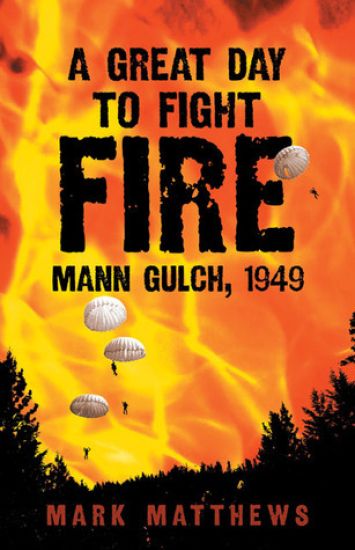
A Great Day to Fight Fire

A Great Day to Fight Fire

Mark Matthews

University of Oklahoma Press
2009
nidottu
Mann Gulch, Montana, 1949. Sixteen men ventured into hell to fight a raging wildfire; only three came out alive. Searing the fire into the nation's consciousness, Norman Maclean chronicled the Mann Gulch tragedy in his award-winning book Young Men and Fire. Still, the silence of the victims' families robbed Maclean's account of an essential personal dimension. Shifting the focus from the fire to the men who fought it, Mark Matthews now provides that perspective.Not until 1999 - the fiftieth anniversary of the fire - did people begin to talk openly about Mann Gulch. Matthews has garnered those thoughts to reveal how devastating the fire was to the firefighters' family members, coworkers, and friends. In retelling the story of Mann Gulch, he draws on the testimony of the three survivors - including never-before-published insights from the last living member of the team - and interviews with former smoke jumpers of that era. The result is a moment-by-moment, heart-stopping re-creation of events.The Mann Gulch tragedy provoked the Forest Service to develop safety equipment and training programs, but fighting wildfires is still a perilous job.Matthews' stirring account renews our respect for one of nature's primal forces. A heartbreakingly human story, it still haunts a firefighting community - and keeps today's firefighters forever on guard.
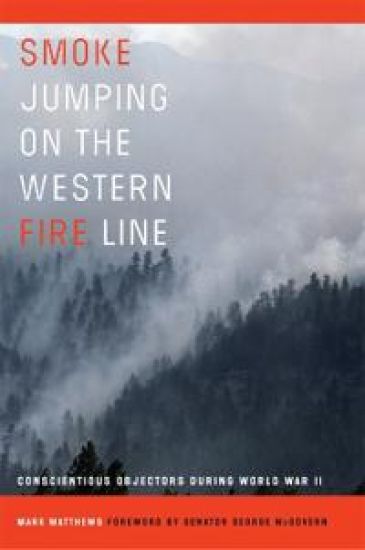
Smoke Jumping on the Western Fire Line

Smoke Jumping on the Western Fire Line

Mark Matthews; George McGovern

University of Oklahoma Press
2006
sidottu
During the Vietnam era, conscientious objectors received both sympathy and admiration from many Americans. It was not so during World War II. The pacifists who chose to sit out that war - some 72,000 men - were publicly derided as ""yellowbellies"" or extreme cowards. After all, why would anyone refuse to fight against fascism in ""the good war""?This book tells the story of one important group of World War II conscientious objectors: the men who volunteered for Civilian Public Service as U.S. Forest Service smoke jumpers. Based in Missoula, Montana, the experimental smoke-jumping program began in 1939, but before the project could expand, the war effort drained available manpower. In 1942, the Civilian Public Service volunteers stepped in. Smoke jumping soon became the Forest Service's first line of defense against wildfires in the West.Drawing on extensive interviews with World War II conscientious objectors and original documents from the period, Matthews vividly recreates the individual stories of Civilian Public Service smoke jumpers. He also assesses their collective contribution to the development of western wildfire management. By revealing an unknown dimension of American pacifism, Smoke Jumping on the Western Fire Line fills a gap in World War II history and restores the reputation of the brave men who, even in the face of public ostracism, held true to their beliefs and served their country with honor.