Kirjailija
Mark Newman
Kirjat ja teokset yhdessä paikassa: 37 kirjaa, julkaisuja vuosilta 1988-2024, suosituimpien joukossa Heather and the Golden Stallion. Vertaile teosten hintoja ja tarkista saatavuus suomalaisista kirjakaupoista.
37 kirjaa
Kirjojen julkaisuhaarukka 1988-2024.
A history and tour of this exceptionally beautiful designed landscape in North Yorkshire. Dubbed "the Wonder of the North" in 1732, the National Trust's Fountains Abbey and Studley Royal Estate (now a World Heritage Site) encompasses one of the largest, most magnificent and beautiful designed landscapes ever created. This richly illustrated volume charts the landscape's history from the first arrival of prehistoric hunters, via medieval monasticism, the Dissolution of the monasteries, eighteenth-century aestheticism and scandal, and the first ages of mass tourism, to the present day. At the heart of the story lies the rise and fall of England's largest Cistercian monastery and how that shaped the origins of the Aislabie family's breathtaking gardens. Their Studley Royalwas at the forefront of every emergent landscape gardening fashion between 1670 and 1800. The book also describes the dramatic history of the family and the monumental scale of their achievements in this field, extending over many dozens of square miles of North Yorkshire - far beyond the limits of the garden as it is seen today (reduced to serve the more limited needs of Victorian day-trippers). The Wonder of the North brings social and garden history together with archaeology to reveal Fountains Abbey and Studley Royal - too often seen as "just" a ruined medieval monastery - as one of the world's greatest artistic creations. Mark Newman has been the National Trust's archaeological adviser for Fountains Abbey and Studley Royal estate since 1988. He was also resident there, living in Fountains Hall from 1988-1995.
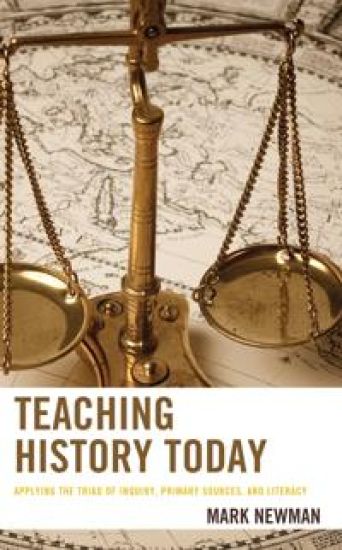
The methods of teaching history in grades 6-12 have changed over the last few years to be more interactive and collaborative. More and more, teaching and learning revolves around an essential triad of inquiry, primary sources, and literacy in a collaborative classroom environment. Teaching History Today is about placing inquiry, primary sources, and literacy foundations of history instruction front and center in the education of preservice history teacher candidates and in-service classroom history teachers. By focusing on these major components of teaching and learning, readers can learn how to organize the massive amount of historical content into effective units. They can see how to integrate the learning of content with the development of skills. And they can gain expertise into how and why to engage students collaboratively in the learning process.
Teaching Social Studies to Multilingual Learners in High School
Mark Newman; Xiaoning Chen
BLOOMSBURY PUBLISHING PLC
2021
sidottu
Teaching Social Studies to Multilingual Learners in High School: Connecting Inquiry and Visual Literacy to Promote Progressive Learning explores effective strategies for teaching studies to diverse learners. The centerpiece is a visual literacy framework that integrates inquiry, primary source analysis, and visual literacy to provide a progressive learning sequence to meet the varied needs of learners. The visual literacy framework brings together related aspects of progressive, sequential learning into a cohesive whole. It has an adaptable structure that allows teachers to customize learning activities to meet individual student needs. The progressive learning sequence has varied modes of learning that help teachers move students from basic to proficient to advanced levels of support.The book is organized into two related parts. The first three chapters provide important content and context on social studies, multilingual learner education, and the visual literacy framework. The remaining chapters discuss civics, U.S. history, world history, geography, and economics and social sciences. Each chapter defines the subject area, briefly traces its development as a high school subject over time, and then offers classroom exercises for using the visual literacy framework in these disciplines. The exercises are plotted so that differing levels of the visual literacy framework are explored throughout the book.
Teaching Social Studies to Multilingual Learners in High School
Mark Newman; Xiaoning Chen
BLOOMSBURY PUBLISHING PLC
2021
nidottu
Teaching Social Studies to Multilingual Learners in High School: Connecting Inquiry and Visual Literacy to Promote Progressive Learning explores effective strategies for teaching studies to diverse learners. The centerpiece is a visual literacy framework that integrates inquiry, primary source analysis, and visual literacy to provide a progressive learning sequence to meet the varied needs of learners. The visual literacy framework brings together related aspects of progressive, sequential learning into a cohesive whole. It has an adaptable structure that allows teachers to customize learning activities to meet individual student needs. The progressive learning sequence has varied modes of learning that help teachers move students from basic to proficient to advanced levels of support.The book is organized into two related parts. The first three chapters provide important content and context on social studies, multilingual learner education, and the visual literacy framework. The remaining chapters discuss civics, U.S. history, world history, geography, and economics and social sciences. Each chapter defines the subject area, briefly traces its development as a high school subject over time, and then offers classroom exercises for using the visual literacy framework in these disciplines. The exercises are plotted so that differing levels of the visual literacy framework are explored throughout the book.
Teaching Social Studies to Multilingual Learners in Middle School
Xiaoning Chen; Mark Newman
BLOOMSBURY PUBLISHING PLC
2021
nidottu
Teaching Social Studies to Multilingual Learners in Middle School: Connecting Inquiry and Visual Literacy to Promote Progressive Learning explores effective strategies for teaching social studies to multilingual learners. The centerpiece is a visual literacy framework that integrates inquiry, primary source analysis, and visual literacy to provide a progressive learning sequence to meet the varied needs of learners. The visual literacy framework brings together related aspects of progressive, sequential learning into a cohesive, coherent whole. It has an adaptable structure that allows teachers to customize learning activities to meet individual student needs. The progressive learning sequence has varied modes of learning that help teachers move students from basic to proficient to advanced levels of support.This book is organized into two related parts. The first three chapters provide important content and context on social studies, multilingual learner education, and the visual literacy framework. The remaining chapters discuss U.S. history, world history, geography, and civics/government. Each chapter defines the subject area, briefly traces its development as a middle school subject over time, and offers classroom exercises on using the visual literacy framework in these disciplines. The exercises are plotted so that differing levels of the visual literacy framework are explored throughout the book.
Teaching Social Studies to Multilingual Learners in Middle School
Xiaoning Chen; Mark Newman
BLOOMSBURY PUBLISHING PLC
2021
sidottu
Teaching Social Studies to Multilingual Learners in Middle School: Connecting Inquiry and Visual Literacy to Promote Progressive Learning explores effective strategies for teaching social studies to multilingual learners. The centerpiece is a visual literacy framework that integrates inquiry, primary source analysis, and visual literacy to provide a progressive learning sequence to meet the varied needs of learners. The visual literacy framework brings together related aspects of progressive, sequential learning into a cohesive, coherent whole. It has an adaptable structure that allows teachers to customize learning activities to meet individual student needs. The progressive learning sequence has varied modes of learning that help teachers move students from basic to proficient to advanced levels of support.This book is organized into two related parts. The first three chapters provide important content and context on social studies, multilingual learner education, and the visual literacy framework. The remaining chapters discuss U.S. history, world history, geography, and civics/government. Each chapter defines the subject area, briefly traces its development as a middle school subject over time, and offers classroom exercises on using the visual literacy framework in these disciplines. The exercises are plotted so that differing levels of the visual literacy framework are explored throughout the book.
This book anchors the social studies as the central unifying force for young children. Teachers use the inquiry process to foster child development of social skills and citizenship ideals in their first classroom experiences. Curriculum is built starting with children’s natural curiosity to foster literacy in all its form—speaking, listening, reading, writing. Along the way, young children acquire knowledge and academic skills in civics, economics, geography and history. Shown throughout are ways to promote social learning, self-concept development, social skills and citizenship behaviors. Featured here are individually appropriate and culturally relevant developmental practices. Considered are the importance of family collaboration and funds of knowledge children bring to early care and education. Contributors to this edition bring expertise from bilingual, early education, literacy, special education and the social studies. Beginning with citizenship and community building the authors consider all aspects of teaching young children leading to a progression of capacity to engage civically in school and community.
A housing estate is in shock following a child's disappearance. A girl and her invisible friend go their separate ways. A father and a son bond over Post-It notes. A single father and his daughter have different approaches to the disappearance of their dog. A father finds his way to coax his agoraphobic son back out into the world.My Fence is Electric and Other Stories is a collection of award-winning short stories looking at those moments in life that fizz with the electric intensity of change.
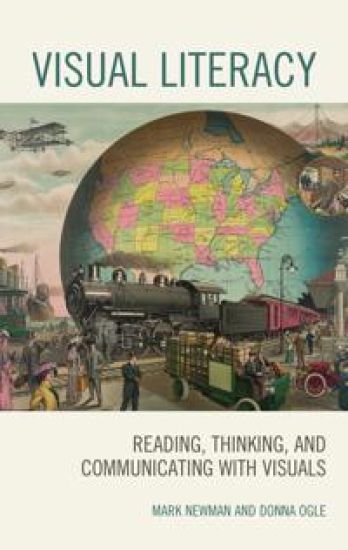
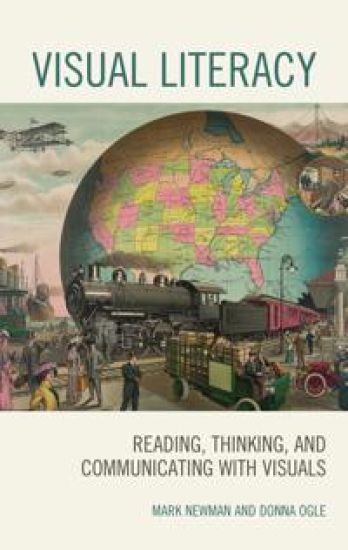
Visual Literacy examines how teachers can use visuals to improve learning for all students. It provides teachers with a foundation in visual literacy, defined as the ability to read, think, and communicate with visually presented information. Results of studies of students’ using visual information indicate that most students are clearly lacking in the tools needed to use visuals effectively. The book orients teachers to visual literacy and the world of visuals. It discusses various classroom tested strategies and activities for all students, including second language learners, and students with special needs. Stressing visual literacy skills helps students understand a visual more deeply so they can master the content they are learning. Teachers will learn to employ a literacy triad of reading, thinking, and communicating to aid students in their study of visuals. First, they inquire into the visual, reading it for content and context, including assessing the authenticity of the document. Second, they think about the document by analyzing, interpreting, and evaluating it to come up with answers to their inquiry. Graphic organizers help students decipher the content and understand the meaning of the visual document, connecting it to prior and future instruction. Third, they communicate their findings using visuals.
Mark Newman draws on a vast range of archives and many interviews to uncover for the first time the complex response of African American and white Catholics across the South to desegregation. In the late nineteenth and first half of the twentieth century, the southern Catholic Church contributed to segregation by confining African Americans to the back of white churches and to black-only schools and churches. However, in the twentieth century, papal adoption and dissemination of the doctrine of the Mystical Body of Christ, pressure from some black and white Catholics, and secular change brought by the civil rights movement increasingly led the Church to address racial discrimination both inside and outside its walls. Far from monolithic, white Catholics in the South split between a moderate segregationist majority and minorities of hard-line segregationists and progressive racial egalitarians. While some bishops felt no discomfort with segregation, prelates appointed from the late 1940s onward tended to be more supportive of religious and secular change. Some bishops in the peripheral South began desegregation before or in anticipation of secular change while elsewhere, especially in the Deep South, they often tied changes in the Catholic churches to secular desegregation. African American Catholics were diverse and more active in the civil rights movement than has often been assumed. While some black Catholics challenged racism in the Church, many were conflicted about the manner of Catholic desegregation generally imposed by closing valued black institutions. Tracing its impact through the early 1990s, Newman reveals how desegregation shook congregations but seldom brought about genuine integration.
Heather and the Golden Stallion
Mark Newman
Createspace Independent Publishing Platform
2018
nidottu
This is the moving story of a young girl and a wild horse set in modern day Wyoming and Montana. It begins with the wilderness birth of a foal and follows his life through one adventure after another, including encounters in Yellowstone Park with bears, wolves, moose, and waterfalls.
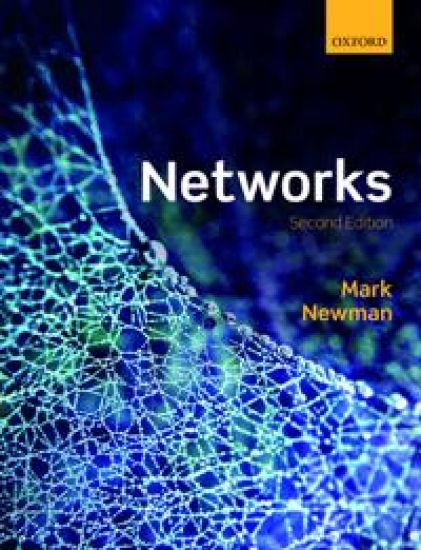
The study of networks, including computer networks, social networks, and biological networks, has attracted enormous interest in the last few years. The rise of the Internet and the wide availability of inexpensive computers have made it possible to gather and analyze network data on an unprecedented scale, and the development of new theoretical tools has allowed us to extract knowledge from networks of many different kinds. The study of networks is broadly interdisciplinary and central developments have occurred in many fields, including mathematics, physics, computer and information sciences, biology, and the social sciences. This book brings together the most important breakthroughs in each of these fields and presents them in a coherent fashion, highlighting the strong interconnections between work in different areas. Topics covered include the measurement of networks; methods for analyzing network data, including methods developed in physics, statistics, and sociology; fundamentals of graph theory; computer algorithms; mathematical models of networks, including random graph models and generative models; and theories of dynamical processes taking place on networks.
Provides a concise up-to-date introduction to and overview of black nationalism in American historyThis analytical introduction assesses contrasting definitions of black nationalism in America, thereby providing an overview of its development and varied manifestations across two centuries. Its aim is to evaluate historiographical debates and synthesize a broad range of scholarship, much of it published since the beginning of the new millennium. However, unlike some of that work, this book offers a critical perspective that avoids advocacy or condemnation of black nationalism by examining major black nationalist thinkers, leaders and organizations as well as discussing some lesser-known groups and figures, the nature of black nationalism's appeal and the position of women in and their contributions to black nationalism.Key FeaturesConsiders divergent definitions of black nationalism, providing an understanding of the nature of black nationalismOutlines historiography with an up-to-date assessment of key debates and leading scholarshipConsiders continuity, encouraging discussion of whether black nationalism was essentially unchanging or reflective of particular historical circumstancesLooks beyond leading figures to understand how, why and when black nationalism gained support
Anesthesiology, Third Edition
David Longnecker; Mark Newman; Warren Zapol; Warren Sandberg; Sean Mackey
McGraw-Hill Inc.,US
2017
sidottu
The gold-standard text in anesthesiology – from the field’s brightest, most respected mindsDoody's Core Titles for 2024 & 2022!Written by an internationally known team of experts, Anesthesiology, Third Edition provides a 360-degree view of the field, covering all the anesthetic considerations from preoperative preparation through postoperative care, and the full breadth of anesthesia practice, including pain medicine and critical care medicine. Presented in full color and updated to capture the latest breakthroughs and advances, Anesthesiology is designed to provide the practitioner with an authoritative single-source reference that spans the full spectrum of anesthesia practice. Much more than a how-to manual of anesthetic techniques, Anesthesiology, Third Edition presents an accessible compilation of concepts and principles that affirms its status as the cornerstone text in anesthesiology. This edition emphasizes important trends in both the specialty and healthcare in general. These trends include team-based anesthesia care, the remarkable growth of pain medicine practice, and the expanded need for clinicians who are skilled in the practice of critical care medicine. Features:Four new pain medicine chapters, plus an expanded section on anesthetic considerations and perioperative management of co-existing diseaseKey Points and Key References encapsulate must-know information and guide you to important articles for further researchBalanced presentations present clinical information, practical clinical procedures, and the molecular and scientific foundations of anesthesia practiceEssential for residents and students preparing for initial certification, and for practitioners preparing for recertification
Geography as Inquiry invites teachers and learners to explore geography in exciting ways, across key concepts, connected to history and the social sciences, reestablishing its place in the social studies and history curriculum.