Kirjojen hintavertailu. Mukana 12 595 353 kirjaa ja 12 kauppaa.

Kirjailija

Mark Pelling

Kirjat ja teokset yhdessä paikassa: 8 kirjaa, julkaisuja vuosilta 2003-2014, suosituimpien joukossa Adaptation to Climate Change. Vertaile teosten hintoja ja tarkista saatavuus suomalaisista kirjakaupoista.

8 kirjaa

Kirjojen julkaisuhaarukka 2003-2014.

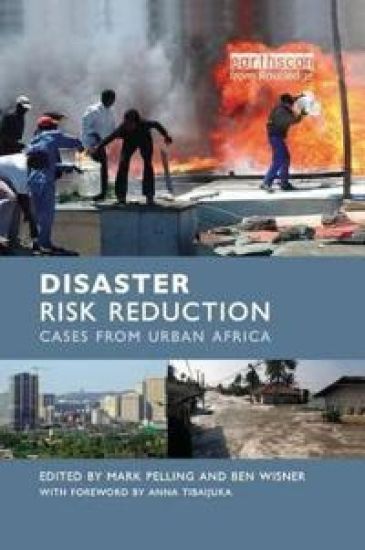
Disaster Risk Reduction

Disaster Risk Reduction

Mark Pelling; Ben Wisner

Routledge
2014
nidottu
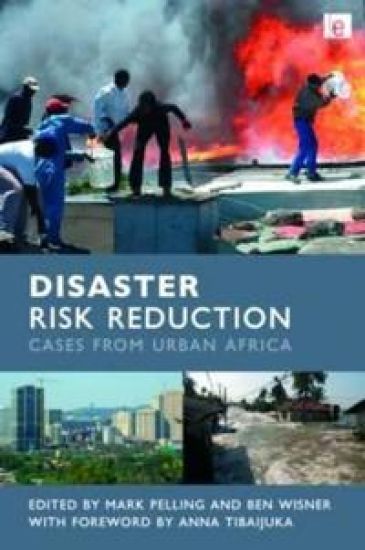
Published with ProVention Consortium, UNDP and UN-Habitat 'This excellent book is essential reading for those concerned with urban risk and its reduction in Africa, the most rapidly urbanizing region of the world.' Professor Jo Beall, Development Studies Institute, London School of Economics 'At last a book that recognizes the impacts of disasters on Africa's 350 million urban dwellers, including the many disasters that get overlooked and go unrecorded. But also a book that, through careful case studies, shows what creates disaster risk and what local measures can be taken to address it.' David Satterthwaite, International Institute for Environment and Development (IIED). 'This innovative volume combines the latest conceptualisations of urban disaster risk and vulnerability with case studies from across the African continent on how existing and innovative information can inform efforts to address the problems. Coverage ranges from the major catastrophes of news headlines to small, everyday disasters with which poor urban residents have to cope in their survival strategies. Written by international authorities and local specialists, this extremely useful book should find a place in the hands of academics and practitioners alike.' Professor David Simon, Department of Geography, Royal Holloway, University of London This is a one-of-a-kind book packed with original research and offering an innovative way of thinking about the reduction of risk in rapidly urbanizing cities across the globe. It is a must-have for professionals, researchers and policy makers. The book addresses four inter-related themes critical for urban risk reduction: environment; livehood; urban governance and the generation of urban risks. Its focus is on Africa, the most rapidly urbanizing world region, but it illustrates global processes. Part one reviews development, urbanization and disaster risk in Africa as a whole, identifies state-of-the-art practices and policies for building urban resilience and provides a tool kit for urban risk reduction. It also presents a powerful conceptual framework to analyse and compare disaster risk and resilience in different cities and communities. Part two presents detailed case studies from Algeria, Ghana, Senegal, Kenya, Tanzania and South Africa illustrating vulnerability to hazards ranging from earthquake to shack fire, environmental health hazards, traffic hazards and flooding. Part three looks to the future and outlines a vision for a safer urban Africa based on achieving gains in human security through inclusive governance and investment in the creative capacities of Africa's urban dwellers. With foreword by Anna Tibaijuka, Executive Director, UN-HABITAT
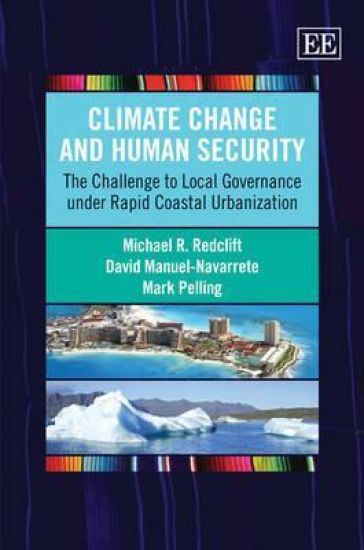
Climate Change and Human Security

Climate Change and Human Security

Michael R. Redclift; David Manuel-Navarette; Mark Pelling

Edward Elgar Publishing Ltd
2011
sidottu
The challenge presented by climate change is by its nature, global. The populations of the Mexican Caribbean, the focus of this book, are faced by everyday decisions not unlike those in the urban North. The difference is that for the people of the Mexican Caribbean, evidence of the effects of climate change, including hurricanes, is very familiar to them. This important study documents the choices and risks of people who are powerless to change the economic development model which is itself forcing climate change.The book examines the Mexican Caribbean coast and explores the wider issues of managing climate change in vulnerable areas of the tropics. It also points to the inability to integrate development thinking into climate change adaptation. The authors suggest that failures in local governance - the transparency of state actions, and the local populations lack of effective power - represents a greater threat to adaptation than the absence of technical capacity in vulnerable areas.Using local case studies of communities, fishing villages and tourist destinations, this well-researched book will appeal to international students and academics working on climate change and professionals in development, conservation and tourism industries.Contents: 1. Introduction; 2. The Dynamics of Coastal Urbanisation; 3. Nature and Space in the 'Discovery' of the Mexican Caribbean; 4. The Development of Mass Tourism in Mexico; 5. Human Security and Governance; 6. Governance as Process: the Evolution of 'Power Spheres' and Climate Change; 7. Lived Experiences on the Coast: Holbox and Mahahual; 8. Conclusion
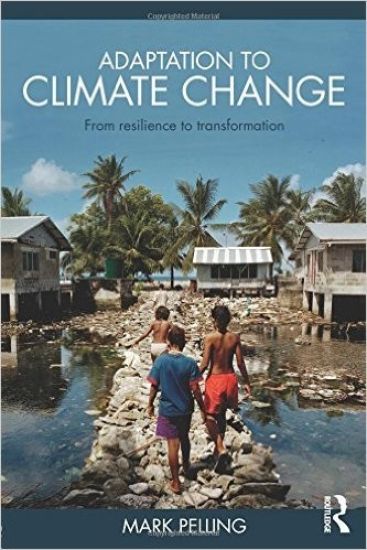
Adaptation to Climate Change

Adaptation to Climate Change

Mark Pelling

Routledge
2010
sidottu
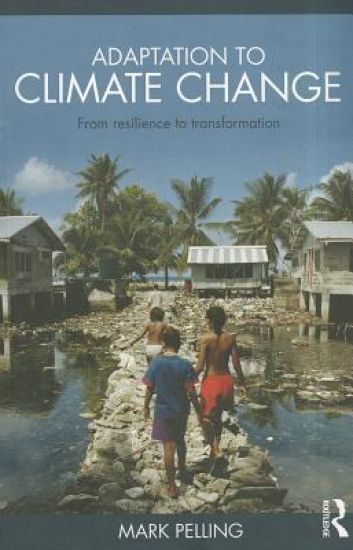
The impacts of climate change are already being felt. Learning how to live with these impacts is a priority for human development. In this context, it is too easy to see adaptation as a narrowly defensive task – protecting core assets or functions from the risks of climate change. A more profound engagement, which sees climate change risks as a product and driver of social as well as natural systems, and their interaction, is called for. Adaptation to Climate Change argues that, without care, adaptive actions can deny the deeper political and cultural roots that call for significant change in social and political relations if human vulnerability to climate change associated risk is to be reduced. This book presents a framework for making sense of the range of choices facing humanity, structured around resilience (stability), transition (incremental social change and the exercising of existing rights) and transformation (new rights claims and changes in political regimes). The resilience-transition-transformation framework is supported by three detailed case study chapters. These also illustrate the diversity of contexts where adaption is unfolding, from organizations to urban governance and the national polity. This text is the first comprehensive analysis of the social dimensions to climate change adaptation. Clearly written in an engaging style, it provides detailed theoretical and empirical chapters and serves as an invaluable reference for undergraduate and postgraduate students interested in climate change, geography and development studies.
Adaptation to Climate Change

Adaptation to Climate Change

Mark Pelling

Routledge
2010
nidottu
The impacts of climate change are already being felt. Learning how to live with these impacts is a priority for human development. In this context, it is too easy to see adaptation as a narrowly defensive task – protecting core assets or functions from the risks of climate change. A more profound engagement, which sees climate change risks as a product and driver of social as well as natural systems, and their interaction, is called for. Adaptation to Climate Change argues that, without care, adaptive actions can deny the deeper political and cultural roots that call for significant change in social and political relations if human vulnerability to climate change associated risk is to be reduced. This book presents a framework for making sense of the range of choices facing humanity, structured around resilience (stability), transition (incremental social change and the exercising of existing rights) and transformation (new rights claims and changes in political regimes). The resilience-transition-transformation framework is supported by three detailed case study chapters. These also illustrate the diversity of contexts where adaption is unfolding, from organizations to urban governance and the national polity. This text is the first comprehensive analysis of the social dimensions to climate change adaptation. Clearly written in an engaging style, it provides detailed theoretical and empirical chapters and serves as an invaluable reference for undergraduate and postgraduate students interested in climate change, geography and development studies.
Disaster Risk Reduction

Disaster Risk Reduction

Mark Pelling; Ben Wisner

Earthscan Ltd
2008
sidottu
Published with ProVention Consortium, UNDP and UN-Habitat 'This excellent book is essential reading for those concerned with urban risk and its reduction in Africa, the most rapidly urbanizing region of the world.' Professor Jo Beall, Development Studies Institute, London School of Economics 'At last a book that recognizes the impacts of disasters on Africa's 350 million urban dwellers, including the many disasters that get overlooked and go unrecorded. But also a book that, through careful case studies, shows what creates disaster risk and what local measures can be taken to address it.' David Satterthwaite, International Institute for Environment and Development (IIED). 'This innovative volume combines the latest conceptualisations of urban disaster risk and vulnerability with case studies from across the African continent on how existing and innovative information can inform efforts to address the problems. Coverage ranges from the major catastrophes of news headlines to small, everyday disasters with which poor urban residents have to cope in their survival strategies. Written by international authorities and local specialists, this extremely useful book should find a place in the hands of academics and practitioners alike.' Professor David Simon, Department of Geography, Royal Holloway, University of London This is a one-of-a-kind book packed with original research and offering an innovative way of thinking about the reduction of risk in rapidly urbanizing cities across the globe. It is a must-have for professionals, researchers and policy makers. The book addresses four inter-related themes critical for urban risk reduction: environment; livehood; urban governance and the generation of urban risks. Its focus is on Africa, the most rapidly urbanizing world region, but it illustrates global processes. Part one reviews development, urbanization and disaster risk in Africa as a whole, identifies state-of-the-art practices and policies for building urban resilience and provides a tool kit for urban risk reduction. It also presents a powerful conceptual framework to analyse and compare disaster risk and resilience in different cities and communities. Part two presents detailed case studies from Algeria, Ghana, Senegal, Kenya, Tanzania and South Africa illustrating vulnerability to hazards ranging from earthquake to shack fire, environmental health hazards, traffic hazards and flooding. Part three looks to the future and outlines a vision for a safer urban Africa based on achieving gains in human security through inclusive governance and investment in the creative capacities of Africa's urban dwellers. With foreword by Anna Tibaijuka, Executive Director, UN-HABITAT
The Vulnerability of Cities

The Vulnerability of Cities

Mark Pelling

Earthscan Ltd
2003
nidottu
Focusing on cities in the global South, this book examines which factors determine how vulnerable a city is to disasters, and how resilient it will be in recovering from them. The book includes a range of detailed studies.
Natural Disaster and Development in a Globalizing World
The number of humanitarian disasters triggered by a natural hazard has doubled every decade since the 1960s. At the same time, the global economic growth rate per capita is twice its 1960s value. Does this mean economic growth is independent of the impacts of natural disaster? Natural Disaster and Development in a Globalizing World is the first book to acknowledge the full implications of globalization for disaster and development. The contributors to this book fully examine: global processes and how they might affect disaster risk at the global scale. links between international issues - such as diplomatic relations, the growth of non-governmental organizations and the health of the international insurance industry - and disaster riskthe interaction of these large scale forces with local conditions through case study analysis of individual disaster events.In his revealing work, author Pelling makes clear the links between global scale processes and local experiences of disaster, and underlies the difficulty of attributing blame for individual disasters on specific global pressures. He argues that action to reduce disaster must be coordinated at the local, national and global scales and that there is a need for greater integration across the physical and social sciences. In this context, the human rights agenda is seen as a way of moving disaster reduction efforts forward.
Natural Disaster and Development in a Globalizing World
The number of humanitarian disasters triggered by a natural hazard has doubled every decade since the 1960s. At the same time, the global economic growth rate per capita is twice its 1960s value. Does this mean economic growth is independent of the impacts of natural disaster? Natural Disaster and Development in a Globalizing World is the first book to acknowledge the full implications of globalization for disaster and development. The contributors to this book fully examine: global processes and how they might affect disaster risk at the global scale. links between international issues - such as diplomatic relations, the growth of non-governmental organizations and the health of the international insurance industry - and disaster riskthe interaction of these large scale forces with local conditions through case study analysis of individual disaster events.In his revealing work, author Pelling makes clear the links between global scale processes and local experiences of disaster, and underlies the difficulty of attributing blame for individual disasters on specific global pressures. He argues that action to reduce disaster must be coordinated at the local, national and global scales and that there is a need for greater integration across the physical and social sciences. In this context, the human rights agenda is seen as a way of moving disaster reduction efforts forward.