Kirjojen hintavertailu. Mukana 12 459 402 kirjaa ja 12 kauppaa.

Kirjailija

Mark Richard

Kirjat ja teokset yhdessä paikassa: 23 kirjaa, julkaisuja vuosilta 1990-2025, suosituimpien joukossa When Truth Gives Out. Vertaile teosten hintoja ja tarkista saatavuus suomalaisista kirjakaupoista.

23 kirjaa

Kirjojen julkaisuhaarukka 1990-2025.

Meanings as Species

Meanings as Species

Mark Richard

Oxford University Press
2021
nidottu
Mark Richard presents an original picture of meaning according to which a word's meaning is analogous to the biological lineages we call species. His primary thesis is that a word's meaning - in the sense of what one needs to track in order to be a competent speaker - is the collection of assumptions its users make in using it and expect their hearers to recognize as being made. Meaning is something that is spread across a population, inherited by each new generation of speakers from the last, and typically evolving in so far as what constitutes a meaning changes in virtue of the interactions of speakers with their (linguistic and social) environment. Meanings as Species develops and defends the analogy between the biological and the linguistic, and includes a discussion of the senses in which the processes of meaning change are and are not like evolution via natural selection. Richard argues that thinking of meanings as species supports Quine's insights about analyticity without rendering talk about meaning theoretically useless. He also discusses the relations between meaning as what the competent speaker knows about her language, meaning as the determinant of reference and truth conditions, and meaning qua what determines what sentence uses say. This book contains insightful discussions of a wide range of topics in the philosophy of language, including: relations between meaning and philosophical analysis, the project of 'conceptual engineering', the senses in which meaning is and is not compositional, the degree to which to which referential meaning is indeterminate, and what such indeterminacy might tells us about propositional attitudes like belief and assertion.
Meanings as Species

Meanings as Species

Mark Richard

Oxford University Press
2019
sidottu
Mark Richard presents an original picture of meaning according to which a word's meaning is analogous to the biological lineages we call species. His primary thesis is that a word's meaning - in the sense of what one needs to track in order to be a competent speaker - is the collection of assumptions its users make in using it and expect their hearers to recognize as being made. Meaning is something that is spread across a population, inherited by each new generation of speakers from the last, and typically evolving in so far as what constitutes a meaning changes in virtue of the interactions of speakers with their (linguistic and social) environment. Meanings as Species develops and defends the analogy between the biological and the linguistic, and includes a discussion of the senses in which the processes of meaning change are and are not like evolution via natural selection. Richard argues that thinking of meanings as species supports Quine's insights about analyticity without rendering talk about meaning theoretically useless. He also discusses the relations between meaning as what the competent speaker knows about her language, meaning as the determinant of reference and truth conditions, and meaning qua what determines what sentence uses say. This book contains insightful discussions of a wide range of topics in the philosophy of language, including: relations between meaning and philosophical analysis, the project of 'conceptual engineering', the senses in which meaning is and is not compositional, the degree to which to which referential meaning is indeterminate, and what such indeterminacy might tells us about propositional attitudes like belief and assertion.
Truth and Truth Bearers

Truth and Truth Bearers

Mark Richard

Oxford University Press
2015
sidottu
This book collects nine seminal essays by Mark Richard published between 1980 and 2014, alongside four new essays and an introduction that puts the essays in context. Each essay is an attempt, in one way or another, to understand the idea of a proposition. Part I discusses whether the objects of thought and assertion can change truth value over time. Part II develops and defends a relativist view of the objects of assertion and thought; it includes discussions of the nature of disagreement, moral relativism, and responds to important objections to relativism. It also explores the idea that thoughts and assertions may be neither true nor false. Part III discusses issues having to do with relations between sentential and propositional structure. Among the topics discussed in Part III are the semantics of quotation, 'mixed quotation', opacity, philosophical analysis and propositional structure, and the semantics of demonstratives and clausal complements.
Context and the Attitudes

Context and the Attitudes

Mark Richard

Oxford University Press
2015
nidottu
Context and the Attitudes collects thirteen seminal essays by Mark Richard on semantics and propositional attitudes. These essays develop a nuanced account of the semantics and pragmatics of our talk about such attitudes, an account on which in saying what someone thinks, we offer our words as a 'translation' or representation of the way the target of our talk represents the world. A broad range of topics in philosophical semantics and the philosophy of mind are discussed in detail, including: contextual sensitivity; pretense and semantics; negative existentials; fictional discourse; the nature of quantification; the role of Fregean sense in semantics; 'direct reference' semantics; de re belief and the contingent a priori; belief de se; intensional transitives; the cognitive role of tense; and the prospects for giving a semantics for the attitudes without recourse to properties or possible worlds. Richard's extensive, newly written introduction gives an overview of the essays. The introduction also discusses attitudes realized by dispositions and other non-linguistic cognitive structures, as well as the debate between those who think that mental and linguistic content is structured like the sentences that express it, and those who see content as essentially unstructured.
Context and the Attitudes

Context and the Attitudes

Mark Richard

Oxford University Press
2013
sidottu
Context and the Attitudes collects thirteen seminal essays by Mark Richard on semantics and propositional attitudes. These essays develop a nuanced account of the semantics and pragmatics of our talk about such attitudes, an account on which in saying what someone thinks, we offer our words as a 'translation' or representation of the way the target of our talk represents the world. A broad range of topics in philosophical semantics and the philosophy of mind are discussed in detail, including: contextual sensitivity; pretense and semantics; negative existentials; fictional discourse; the nature of quantification; the role of Fregean sense in semantics; 'direct reference' semantics; de re belief and the contingent a priori; belief de se; intensional transitives; the cognitive role of tense; and the prospects for giving a semantics for the attitudes without recourse to properties or possible worlds. Richard's extensive, newly written introduction gives an overview of the essays. The introduction also discusses attitudes realized by dispositions and other non-linguistic cognitive structures, as well as the debate between those who think that mental and linguistic content is structured like the sentences that express it, and those who see content as essentially unstructured.
When Truth Gives Out

When Truth Gives Out

Mark Richard

Oxford University Press
2010
nidottu
Is the point of belief and assertion invariably to think or say something true? Is the truth of a belief or assertion absolute, or is it only relative to human interests? Most philosophers think it incoherent to profess to believe something but not think it true, or to say that some of the things we believe are only relatively true. Common sense disagrees. It sees many opinions, such as those about matters of taste, as neither true nor false; it takes it as obvious that some of the truth is relative. Mark Richard's accessible book argues that when it comes to truth, common sense is right, philosophical orthodoxy wrong. The first half of the book examines connections between the performative aspects of talk (what we do when we speak), our emotions and evaluations, and the conditions under which talk and thought qualifies as true or false. It argues that the performative and expressive sometimes trump the semantic, making truth and falsity the wrong dimension of evaluation for belief or assertion. Among the topics taken up are: racial slurs and other epithets; relations between logic and truth; the status of moral and ethical talk; vagueness and the liar paradox. The book's second half defends the idea that much of everyday thought and talk is only relatively true or false. Truth is inevitably relative, given that we cannot work out in advance how our concepts will apply to the world. Richard explains what it is for truth to be relative, rebuts standard objections to relativism, and argues that relativism is consistent with the idea that one view can be objectively better than another. The book concludes with an account of matters of taste and of how it is possible for divergent views of such matters to be equally valid, even if not true or false. When Truth Gives Out will be of interest not only to philosophers who work on language, ethics, knowledge, or logic, but to any thoughtful person who has wondered what it is, or isn't, for something to be true.
When Truth Gives Out

When Truth Gives Out

Mark Richard

Oxford University Press
2008
sidottu
Is the point of belief and assertion invariably to think or say something true? Is the truth of a belief or assertion absolute, or is it only relative to human interests? Most philosophers think it incoherent to profess to believe something but not think it true, or to say that some of the things we believe are only relatively true. Common sense disagrees. It sees many opinions, such as those about matters of taste, as neither true nor false; it takes it as obvious that some of the truth is relative. Mark Richard's accessible book argues that when it comes to truth, common sense is right, philosophical orthodoxy wrong. The first half of the book examines connections between the performative aspects of talk (what we do when we speak), our emotions and evaluations, and the conditions under which talk and thought qualifies as true or false. It argues that the performative and expressive sometimes trump the semantic, making truth and falsity the wrong dimension of evaluation for belief or assertion. Among the topics taken up are: racial slurs and other epithets; relations between logic and truth; the status of moral and ethical talk; vagueness and the liar paradox. The book's second half defends the idea that much of everyday thought and talk is only relatively true or false. Truth is inevitably relative, given that we cannot work out in advance how our concepts will apply to the world. Richard explains what it is for truth to be relative, rebuts standard objections to relativism, and argues that relativism is consistent with the idea that one view can be objectively better than another. The book concludes with an account of matters of taste and of how it is possible for divergent views of such matters to be equally valid, even if not true or false. When Truth Gives Out will be of interest not only to philosophers who work on language, ethics, knowledge, or logic, but to any thoughtful person who has wondered what it is, or isn't, for something to be true.
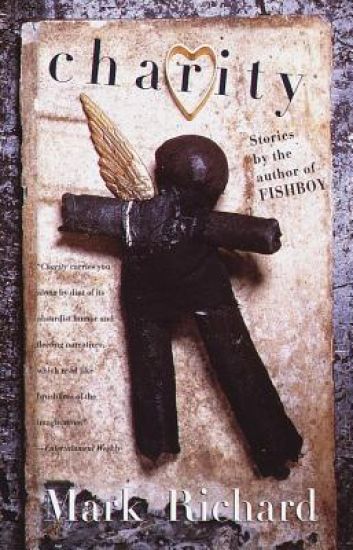
Charity

Charity

Mark Richard

Anchor Books
1999
nidottu
With Charity, Mark Richard again secures the distinction of poet laureate of the orphaned poor, the broken, the deceived, and the unrelieved. In stylistic brilliance, he renders their conditions with grace and compassion, and redeems and transports their tragedy with wicked humor.In the much-anthologized "The Birds for Christmas," two hospitalized boys beg a night nurse to let them watch Hitchcock's classic thriller film on television, believing it will relieve their Yuletide loneliness. "Gentleman's Agreement" is a classic father-son story of fear and the violence of love. In "Memorial Day," a bayou boy learns the lessons of living from Death himself, a fortune cookie-eating phantom who claims to be "a people person." From charity ward to outrageous beach bungalow, Richard visits the overlooked corners of America, making them unforgettably visible.Richard has been rightly compared to Faulkner for his language and to Flannery O'Connor for his stark moral vision, but his force and sensibility remain his own. Charity is a powerful reading experience, a true accomplishment in an already stunning literary career. "Richard's original voices invite you into a world that's both sad and surreal, and always worth the stay."--Kirkus, starred review"Indisputably a master of words...."--Publishers Weekly"There are few writers today whose use of language is as sure, whose dialogue is as quirky, funny and true as Mark Richard's."--The Wall Street Journal"A book of memorable language and moral power. Mark Richard sees far into the hearts of the lost and voiceless people who seem to be everywhere among us, awaiting recognition."--Tom McGuane"You feel a wonderful physical mind in the work of Mark Richard...I love his work."--Barry Hannah
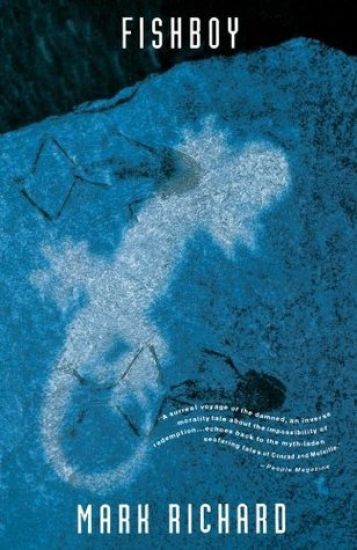
Fishboy

Fishboy

Mark Richard

Bantam Doubleday Dell Publishing Group
1994
pokkari
In the brilliant idiom of a modern Melville or Conrad, an odyssey of discovery by a bold and outrageous talent--the PEN/Hemingway Award--winning author of The Ice At The Bottom Of The World.
All We Need is a Pair of Pliers

All We Need is a Pair of Pliers

Mark Richard; June Gaston

Morgan James Publishing llc
2021
pokkari
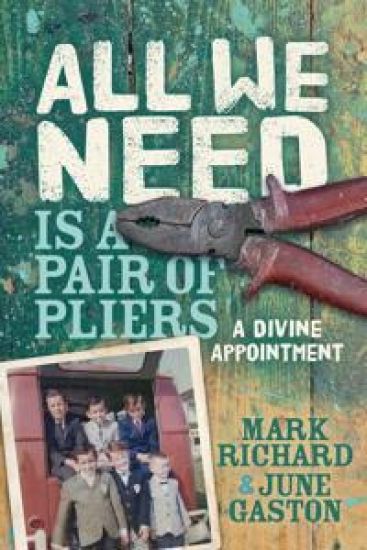
All We Need is a Pair of Pliers is the amazing story of how God took the life of a man who was in rebellion and changed the world of so many, one precious soul at a time. Mark Richard’s parents divorced in his early teens, and he and his brothers grew up with no parental supervision. He struggled with undiagnosed learning disabilities which led to failures in school. Eventually, this led to his rebellion in the days of the hippy culture and drugs. Throughout it all, Mark always sought something “more” in his life. Miraculously, God got his attention and he was saved. Mark was totally unqualified for the ministry that God planned for him. If he would have taken others’ advice, he would have never driven the first trailer load of wheelchairs to Guatemala in 1988 – this was dangerous and total reckless faith. Fortunately, that act of obedience led to another trip, and another, to eventually become The Beeline which is an incredible ministry that has impacted hundreds of thousands. Within All We Need is a Pair of Pliers, shows how Mark developed a platform, The Beeline, that is a game-changer for the millions of people worldwide who need an appropriate wheelchair. Throughout its pages, readers learn that all they need to say is, “You know what, I think God can use me!”.