

Kirjailija
Mark Robinson
Kirjat ja teokset yhdessä paikassa: 32 kirjaa, julkaisuja vuosilta 1995-2025, suosituimpien joukossa Developing Multiprofessional Teamwork for Integrated Children's Services: Research, Policy, Practice. Vertaile teosten hintoja ja tarkista saatavuus suomalaisista kirjakaupoista.
32 kirjaa
Kirjojen julkaisuhaarukka 1995-2025.


Lessons at the University of Vile are strict! With a timetable designed to refine the skills of grabbing, snatching, pushing, shoving, surreptitious tripping and not-paying-attention, pupils must strive to hone their bad manners, poor personal hygiene and repulsive habits. Graduation depends on pupils demonstrating their monstrosity at all times. Those who don't meet the grade are destined for things far worse - disqualification and quick enrolment at the dreaded Academy of Manners! With a revolting cast of nasties, brought to life by Sarah Horne's scratchy illustrations, this mischievous picture book demonstrates that perhaps life's not so great when spent solely in the pursuit of vileness
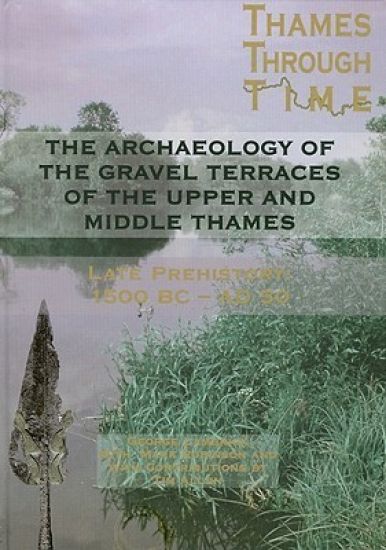
The Archaeology of the Gravel Terraces of the Upper and Middle Thames
George Lambrick; Mark Robinson; Anne Dodd
Oxford University School of Archaeology
2009
sidottu
In common with other volumes in the Thames Through Time series, this account of the Thames Valley in the millennium and a half before the Roman conquest seeks to examine change in human society from a thematic point of view. The geographical and chronological framework for this volume is established in Chapters 1 and 2, but thereafter we have tried to get away from the traditional, somewhat artificial pigeon-holes of 'periods' 'ages' 'eras' and 'phases' to look much harder at how change in human society actually works. In a period when the 20th century has come to dominate secondary school history and much popular TV, the notion that the first foundations of modern society can be traced back more than 3000 years may seem a rather surprising proposition. But some fundamental patterns of settlement and landuse, political boundaries, human impact on the environment, and even the specific use and form of a few places can be traced back to late prehistoric times despite millennia of subsequent change - even though otherwise we may now have very little in common with those remote ancestors. Exploring these issues on a thematic basis should help us to gain a better understanding of how human society evolves and also of how people have altered their natural environment, providing a better long term perspective on what we are doing to the planet.
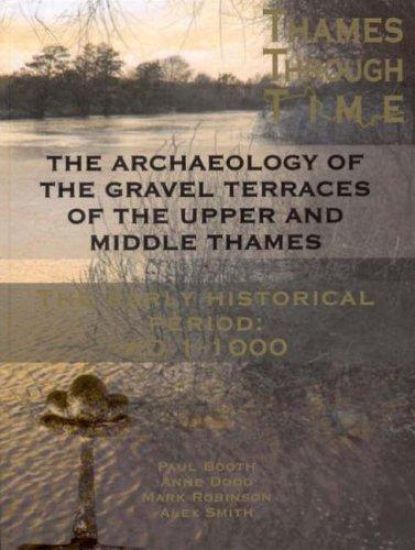
The Archaeology of the Gravel Terraces of the Upper and Middle Thames
Booth Paul; Dodd Anne; Mark Robinson; Alexander Smith
Oxford University School of Archaeology
2007
Sidottu
The gravel terraces of the river Thames have revealed a wealth of archaeological information about the evolution of the landscape of the region, the development of the settlement pattern, and past human occupation. Much of this has come to light in the course of gravel quarrying, which has been so extensive that the Thames Valley now provides one of the richest resources of archaeological data in the country. This volume provides an up to date overview of the archaeological evidence from the valley for the late Iron Age, Roman and Anglo-Saxon periods, broadly speaking the first millennium AD. The area studied in detail comprises the Upper Thames Valley, from the source of the river to the Goring Gap, and the Middle Thames Valley, from the Goring Gap to the start of the tidal zone at Teddington Lock. A summary of evidence for the character of the river and the vegetation and environment of its floodplain is followed by a detailed account of the evolving settlement pattern as currently understood from archaeological evidence. The authors then consider what archaeology can reveal about the late Iron Age, Roman and Anglo-Saxon populations of the valley, and their changing lifestyles, culture, identities and beliefs. This is followed by a review of the evidence for production, trade, transport and communication, and the archaeology of power and politics. The volume concludes with a discussion of the state of knowledge today and its limitations, and emerging themes and problem areas for future research.
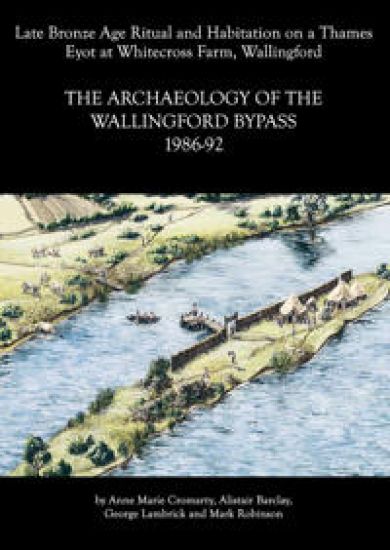
Archaeology of the Wallingford Bypass, 1986-92
Cromarty Anne Marie; Barclay Alistair; Lambrick George; Mark Robinson
Oxford University School of Archaeology
2006
Sidottu
The site at Whitecross Farm, including timber structures located on the edge of the eyot, and a substantial midden and occupation deposit has been securely radiocarbon-dated to the late Bronze Age. The late Bronze Age artefact assemblages are suggestive of a high-status site, with a range of domestic and ritual activities represented. The bank of the Grim's Ditch earthwork was found to have preserved evidence of earlier settlement, dating to the Neolithic and Bronze Age, and a sequence of cultivation, including ard marks and 'cord-rig' cultivation ridges. Pottery and radiocarbon analysis dated the earthwork to the end of the late Iron Age or the early Roman period. A multi-period settlement, consisting of pits, a waterhole, postholes, gullies and field systems, was identified at Bradford's Brook, Cholsey. The main periods represented are late Bronze Age and Romano-British, while a small quantity of Saxon pottery indicates limited Saxon activity. A large pit containing late Bronze Age pottery, a cattle skull, waterlogged wood and plant remains, a complete loomweight and flint flakes has been interpreted as a waterhole. A series of radiocarbon dates were obtained for deposits within this feature. All three sites are discussed individually as well as within their local, regional and national contexts. Chapter 7 provides an overall discussion of later Bronze Age themes that have arisen through the excavation and analysis of these sites.
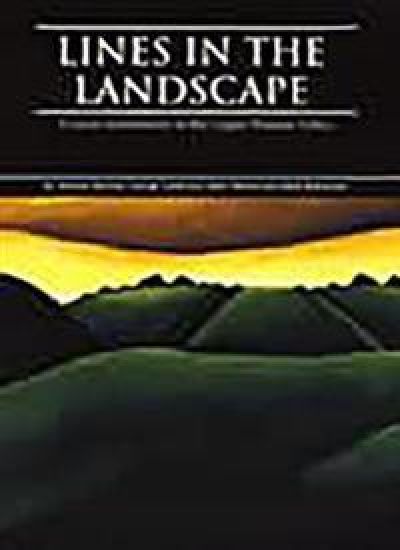
Lines in the Landscape
Alistair Barclay; George Lambrick; John Moore; Mark Robinson
Oxford University School of Archaeology
2003
sidottu
The Upper Thames Valley is an important area for prehistoric monuments and has one of the highest concentrations of cursuses, distinctive linear or elongated earthworks, in Britain. In the 1980s the Oxford Archaeological Unit along with the Abingdon Area Archaeological and Historical Society had the opportunity to extensively investigate one of these sites at Drayton. This site has produced many significant results for our present understanding of the date, construction and use of cursus monuments on the lowland river gravels of Britain. This volume reports on the excavations at Drayton, and includes an account of small-scale excavations undertaken at the Lechlade cursus by OAU and Lance and Faith Vatcher. It also provides a gazetteer of known cursus monuments in the Upper Thames Valley.
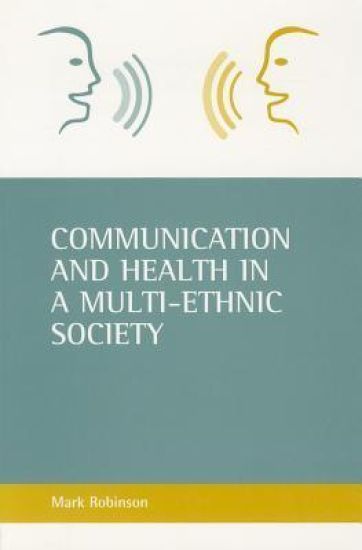
Communication and cultural diversity have become key focus areas as the health service engages with goals of health improvement and equity. This timely and unique book provides a rigorous and challenging review of recent research, with a particular focus on health communication interventions concerning service users who may lack fluency in English. The book shows that meeting the needs of all health service users, including disadvantaged groups, depends on both structures and processes of communication. This book will prove invaluable to healthcare professionals and medical students, academics, practitioners, service managers and policy makers concerned with improving health services for minority ethnic groups.

21 Ways to Create Healthy, Happy and Motivated Employee!
Mark Robinson
Universal Publishers
2001
pokkari
American business is awakening to the growing importance of its "human capital"-the capabilities, knowledge,experience, wellness, and full potential of its people. In today's increasingly knowledge-based economy, some companies have begun to realize that solutions lie in optimizing their return on investments in employee health by increasing worker productivity. Yet many employers do not realize the relationship of their employees' health to corporate performance. While striving to contain the rising medical costs that put them at a disadvantage against global competitors, they are missing the competitive advantage to be gained from investing wisely in the health-and thereby, the productivity-of their work force. This book was written to help employers create healthy, happy and motivated employees. You will gain the following benefits from this book: 1) increase your understanding of the vital connection between employees' health and their performance, and 2) suggest strategies by which treating employee health as an investment can lead to greater business success.
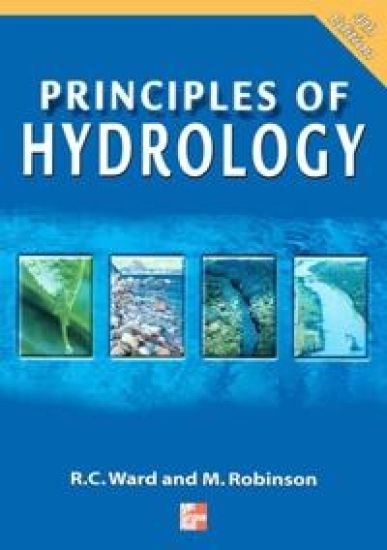
This book takes a non mathematical looks at the principles and processes of hydrology. Now in its fourth edition, this well established book preserves the essential structure, clarity and style which have ensured its continued international popularity over more than three decades. However the book has been revised and fully updated to take into account new research and developments in the subject and the changing role of hydrology in the modern world. The thematic treatment of the main phases of the hydrological cycle i.e. precipitation, interception, evaporation, subsurface water and stream flow, has been retained, together with the chapter on water quality. A final, synthesising chapter has been reinstated by popular demand, together with a broader spectrum of case studies and examples. A selection of problems and exercises has also been included at the end of each chapter.

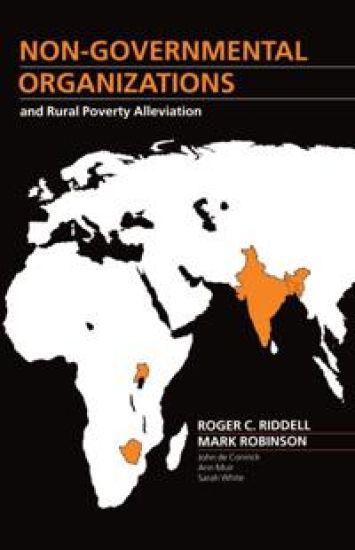
Non-Governmental Organizations and Rural Poverty Alleviation
Mark Robinson; Roger C. Riddell
Oxford University Press
1995
sidottu
There has been considerable interest in recent years in the ability of non-governmental organisations to work with the rural poor in developing countries in order to improve their quality of life and economic status through the provision of credit, skills training, and other inputs for income-generation programmes. This book brings together the results of 16 evaluations in 4 countries (Bangladesh, India, Uganda, and Zimbabwe) to provide a detailed assessment of the contribution that NGOs make to rural poverty alleviation. The results indicate that NGO projects are successful when they build in a high degree of participation, when the staff are committed to the goals of the project, and when they are managed by strong and competent leaders. Many of the projects studied contributed to increases in income and welfare. However, not all projects were successful, contrary to received wisdom about the efficacy of NGO interventions. many failed to reach the very poorest, most were costly to implement, and few of the projects demostrated an ability to continue once external funding was withdrawn. These findingd provide string support for viewing NGOs as a mechanism for helping to reduce rural poverty, but also demonstrate that many of the interventions are isolated or one-off. The impact of NGOs could be heightened by increasing the size of the intervention, encouraging greater cooperation among NGOs, and by fostering closer cooperation with governments. This study will make an impact in the development community, and its conclusions will help shape NGO and poverty agendas in the coming years. The book will appeal to all those concerned with rural development, NGOs, and development programmes.