Kirjojen hintavertailu. Mukana 12 277 942 kirjaa ja 12 kauppaa.

Kirjailija

Mark Rowlands

Kirjat ja teokset yhdessä paikassa: 32 kirjaa, julkaisuja vuosilta 1999-2025, suosituimpien joukossa Koirien onni. Vertaile teosten hintoja ja tarkista saatavuus suomalaisista kirjakaupoista.

32 kirjaa

Kirjojen julkaisuhaarukka 1999-2025.

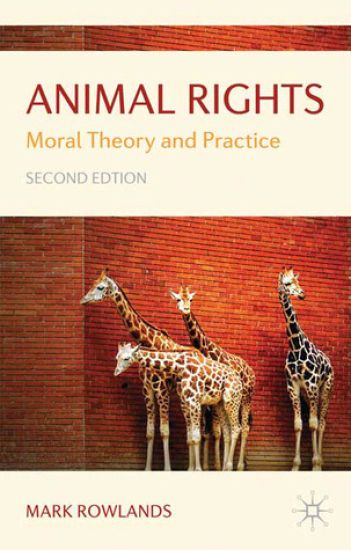
Animal Rights

Animal Rights

Mark Rowlands

Palgrave Macmillan
2009
nidottu
In this 2nd edition the author has substantially revised his book throughout, updating the moral arguments and adding a chapter on animal minds. Importantly, rather than being a polemic on animal rights, this book is also a considered and imaginative evaluation of moral theory as explored through the issue of animal rights.
Fame

Fame

Mark Rowlands

Acumen Publishing Ltd
2008
nidottu
One of the most distinctive cultural phenomena of recent years has been the rise and rise of fame. In this book, Mark Rowlands argues that our obsession with fame has transformed it. Fame was once associated with excellence or achievement in some or other field of endeavour. But today we are obsessed with something that is, in effect, quite different: fame unconnected with any discernible distinction, fame that allows a person to be famous simply for being famous. This book shows why this new fame is simultaneously fascinating and worthless. To understand this new form of fame, Rowlands maintains, we have to engage in an extensive philosophical excavation that takes us back to a dispute that began in ancient Greece between Plato and Protagoras, and was carried on in a remarkable philosophical experiment that began in eighteenth-century France. Somewhat like contestants on a reality TV show, today we find ourselves, unwittingly, playing out the consequences of this experiment.
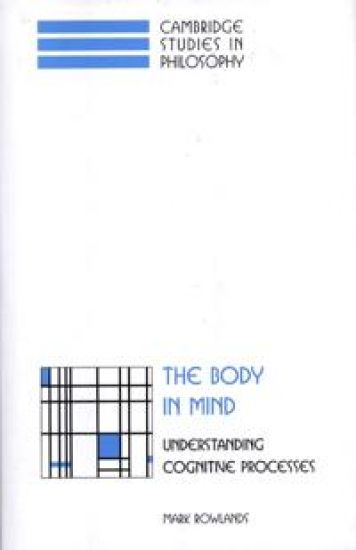
The Body in Mind

The Body in Mind

Mark Rowlands

Cambridge University Press
2008
pokkari
In this book, Mark Rowlands challenges the Cartesian view of the mind as a self-contained monadic entity, and offers in its place a radical externalist or environmentalist model of cognitive processes. Cognition is not something done exclusively in the head, but fundamentally something done in the world. Drawing on both evolutionary theory and a detailed examination of the processes involved in perception, memory, thought and language use, Rowlands argues that cognition is, in part, a process whereby creatures manipulate and exploit relevant objects in their environment. It is not simply an internal process of information processing; equally significantly, it is an external process of information processing. This innovative book provides a foundation for an unorthodox but increasingly popular view of the nature of cognition.
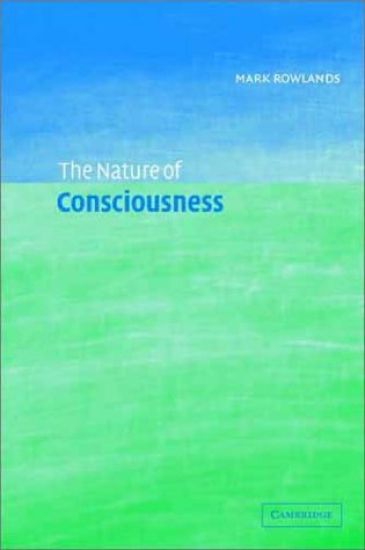
The Nature of Consciousness

The Nature of Consciousness

Mark Rowlands

Cambridge University Press
2007
pokkari
In The Nature of Consciousness, Mark Rowlands develops an innovative account of the nature of phenomenal consciousness, one that has significant consequences for attempts to find a place for it in the natural order. The most significant feature of consciousness is its dual nature: consciousness can be both the directing of awareness and that upon which awareness is directed. Rowlands offers a clear and philosophically insightful discussion of the main positions in this fast-moving debate, and argues that the phenomenal aspects of conscious experience are aspects that exist only in the directing of experience towards non-phenomenal objects, a theory that undermines reductive attempts to explain consciousness in terms of what is not conscious. His book will be of interest to a wide range of readers in the philosophy of mind and language, psychology and cognitive science.
Philosopher At The End Of The Universe
It's Plato, it's Hume, Baudrillard and the concept of the Nietzschean superman!' Keanu Reeves on The MatrixThe Philosopher at the End of the Universe allows anyone to understand basic philosophical concepts from the comfort of their armchair, through the plots and characters of spectacular blockbusting science-fiction movies.
Externalism

Externalism

Mark Rowlands

Acumen Publishing Ltd
2003
nidottu
It is commonly held that our thoughts, beliefs, desires and feelings - the mental phenomena that we instantiate - are constituted by states and processes that occur inside our head. The view known as externalism, however, denies that mental phenomena are internal in this sense. The mind is not purely in the head. Mental phenomena are hybrid entities that straddle both internal state and processes and things occurring in the outside world. The development of externalist conceptions of the mind is one of the most controversial, and arguably one of the most important, developments in the philosophy of mind in the second half of the twentieth century. Yet, despite its significance most recent work on externalism has been highly technical, clouding its basic ideas and principles. Moreover, very little work has been done to locate externalism within philosophical developments in both analytic and continental traditions. In this book, Mark Rowlands aims to remedy both these problems and present for the reader a clear and accessible introduction to the subject grounded in wider developments in the history of philosophy. Rowlands shows that externalism has significant and respectable historical roots that make it much more important than a specific eruption that occurred in late twentieth-century analytic philosophy.
Externalism

Externalism

Mark Rowlands

Acumen Publishing Ltd
2003
sidottu
It is commonly held that our thoughts, beliefs, desires and feelings - the mental phenomena that we instantiate - are constituted by states and processes that occur inside our head. The view known as externalism, however, denies that mental phenomena are internal in this sense. The mind is not purely in the head. Mental phenomena are hybrid entities that straddle both internal state and processes and things occurring in the outside world. The development of externalist conceptions of the mind is one of the most controversial, and arguably one of the most important, developments in the philosophy of mind in the second half of the twentieth century. Yet, despite its significance most recent work on externalism has been highly technical, clouding its basic ideas and principles. Moreover, very little work has been done to locate externalism within philosophical developments in both analytic and continental traditions. In this book, Mark Rowlands aims to remedy both these problems and present for the reader a clear and accessible introduction to the subject grounded in wider developments in the history of philosophy. Rowlands shows that externalism has significant and respectable historical roots that make it much more important than a specific eruption that occurred in late twentieth-century analytic philosophy.
Animals Like Us

Animals Like Us

Mark Rowlands

Verso Books
2002
nidottu
Foot and Mouth and Mad Cow Disease are but two of the results of treating animals as commodities, subject only to commercial constraints and ignoring all natural and moral considerations. Chickens hanging by their necks on conveyor belts, caged pigs covered in sores, bloated dead sheep with their legs in the air, mutilated dogs waiting to die after undergoing horrendous experiments in the name of science or just product testing-these are some of the images that illustrate the indifference of a consumerist society to the suffering of animals. Few are willing to recognize that the packaged sanitized supermarket meat that materializes on their dinner tables every day is the result of an industrial process involving unimaginable pain and suffering. We would be horrified if our pets were harmed, yet every day we eat animals that have been tortured and executed.Mark Rowlands claims that it is simply unjust to harm animals. A conscious sentient beings, biologically continuous with humans, they have interests that cannot simply be disregarded. Using simple principles of justice, he argues that animals have moral rights, and examines the consequences of this claim in the contexts of vegetarianism, animal experimentation, zoos and hunting, and animal rights activism.
The Nature of Consciousness

The Nature of Consciousness

Mark Rowlands

Cambridge University Press
2001
sidottu
In The Nature of Consciousness, Mark Rowlands develops an innovative account of the nature of phenomenal consciousness, one that has significant consequences for attempts to find a place for it in the natural order. The most significant feature of consciousness is its dual nature: consciousness can be both the directing of awareness and that upon which awareness is directed. Rowlands offers a clear and philosophically insightful discussion of the main positions in this fast-moving debate, and argues that the phenomenal aspects of conscious experience are aspects that exist only in the directing of experience towards non-phenomenal objects, a theory that undermines reductive attempts to explain consciousness in terms of what is not conscious. His book will be of interest to a wide range of readers in the philosophy of mind and language, psychology and cognitive science.
The Body in Mind

The Body in Mind

Mark Rowlands

Cambridge University Press
1999
sidottu
In this book, Mark Rowlands challenges the Cartesian view of the mind as a self-contained monadic entity, and offers in its place a radical externalist or environmentalist model of cognitive processes. Cognition is not something done exclusively in the head, but fundamentally something done in the world. Drawing on both evolutionary theory and a detailed examination of the processes involved in perception, memory, thought and language use, Rowlands argues that cognition is, in part, a process whereby creatures manipulate and exploit relevant objects in their environment. It is not simply an internal process of information processing; equally significantly, it is an external process of information processing. This innovative book provides a foundation for an unorthodox but increasingly popular view of the nature of cognition.