Kirjojen hintavertailu. Mukana 12 390 323 kirjaa ja 12 kauppaa.

Kirjailija

Mark Russinovich

Kirjat ja teokset yhdessä paikassa: 10 kirjaa, julkaisuja vuosilta 2012-2022, suosituimpien joukossa Zero Day: A Jeff Aiken Novel. Vertaile teosten hintoja ja tarkista saatavuus suomalaisista kirjakaupoista.

10 kirjaa

Kirjojen julkaisuhaarukka 2012-2022.

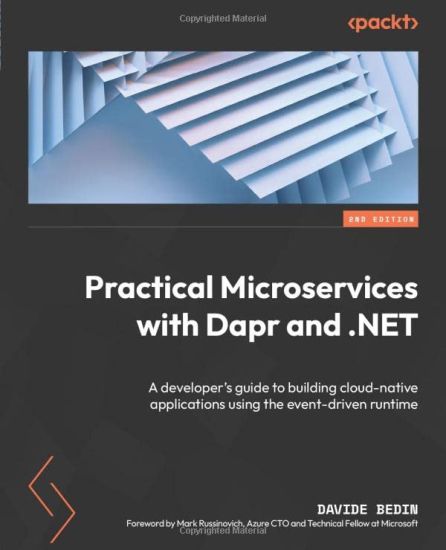
Practical Microservices with Dapr and .NET

Practical Microservices with Dapr and .NET

Davide Bedin; Mark Russinovich

PACKT PUBLISHING LIMITED
2022
nidottu
Use the innovative, highly portable event-driven distributed application runtime to simplify building resilient and scalable microservices for cloud and edge applications.Purchase of the print or Kindle book includes a free eBook in the PDF format.Key FeaturesBuild resilient, stateless, and stateful microservice applications that run on the cloud and edgeOvercome common issues in distributed systems, such as low latency and scaling, using any language and frameworkLearn how to expose and operate Dapr applications with multiple optionsBook DescriptionThis second edition will help you get to grips with microservice architectures and how to manage application complexities with Dapr in no time. You'll understand how Dapr simplifies development while allowing you to work with multiple languages and platforms. Following a C# sample, you'll understand how Dapr's runtime, building blocks, and software development kits (SDKs) help you to simplify the creation of resilient and portable microservices.Dapr provides an event-driven runtime that supports the essential features you need for building microservices, including service invocation, state management, and publish/subscribe messaging. You'll explore all of those in addition to various other advanced features with this practical guide to learning Dapr. With a focus on deploying the Dapr sample application to an Azure Kubernetes Service cluster and to the Azure Container Apps serverless platform, you'll see how to expose the Dapr application with NGINX, YARP, and Azure API Management.By the end of this book, you'll be able to write microservices easily by implementing industry best practices to solve problems related to distributed systems.What you will learnUse Dapr to create services, invoking them directly and via pub/subDiscover best practices for working with microservice architecturesLeverage the actor model to orchestrate data and behaviorExpose API built with Dapr applications via NGINX and Azure API ManagementUse Azure Kubernetes Service to deploy a sample applicationMonitor Dapr applications using Zipkin, Prometheus, and GrafanaScale and load test Dapr applications on KubernetesGet to grips with Azure Container Apps as you combine Dapr with a serverless platformWho this book is forThis book is for developers looking to explore and implement microservices architectures in Dapr applications using .NET examples. Whether you are new to microservices or have knowledge of this architectural approach and want to get hands-on experience using Dapr, you'll find this book useful. Familiarity with .NET will help you to understand the C# samples and code snippets used in the book.
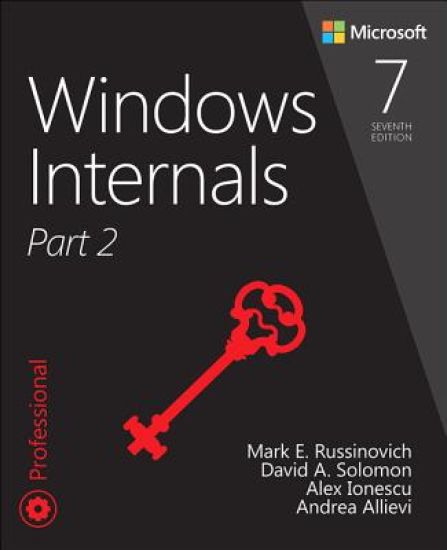
Windows Internals, Part 2

Windows Internals, Part 2

Andrea Allievi; Alex Ionescu; Mark Russinovich; David Solomon

Addison Wesley
2022
nidottu
The definitive guide to modern Windows internals: new coverage of virtualization, file systems, boot, security, and more. For advanced computing professionals, this is the definitive up-to-date guide to how Windows core components behave “under the hood.” Using it, experienced developers can build more powerful and scalable software, administrators can debug complex system and performance problems, and security researchers can harden their systems. This Seventh Edition is fully updated through the May 2021 (21H1/2104) updates to Windows 10 and Windows Server (2022, 2019, and 2016). It adds extensive content on Hyper-V, plus fully rewritten chapters on the boot process, new storage technologies, and Windows system and management mechanisms. As always, it delivers unparalleled insight based on insider access to Microsoft source code, with hands-on experiments using the latest debugging tools to show you Windows’ internal behaviors firsthand. With Windows 11 introducing new user interface design elements that build upon the same core technologies as Windows 10, readers will be well-prepared for this new chapter of computing. Leading Windows insiders help you: • Discover system mechanisms for serving device drivers and applications, including ALPC, Object Manager, synchronization, WNF, WoW64, and the processor execution model • Explore underlying hardware architecture, including trap processing, segmentation, and side channel vulnerabilities • Understand Windows virtualization, and how virtualization-based security (VBS) protects against OS vulnerabilities • Delve into key management and configuration mechanisms, including the Registry, Windows services, WMI, and Task Scheduling • Explore diagnostic services such as Event Tracing for Windows (ETW) and DTrace • Learn how the cache manager and file system drivers interact to provide reliable support for files, directories, and disks, including on Persistent Memory (NVDIMM) DAX devices. • Understand NTFS, ReFS, and other Windows file systems • Review Windows startup/shutdown operations, and OS components involved in boot flow • Analyze UEFI-based Secure Boot, Measured Boot, and Secure Launch About This Book • For experienced programmers, architects, software quality and performance specialists, administrators, security practitioners, and support professionals • Assumes you are a Windows power user
Practical Microservices with Dapr and .NET

Practical Microservices with Dapr and .NET

Davide Bedin; Mark Russinovich

Packt Publishing Limited
2020
nidottu
Use the new, enticing, and highly portable event-driven runtime to simplify building resilient and scalable microservices for cloud and edge applicationsKey FeaturesBuild resilient, stateless, and stateful microservice applications that run on the cloud and edgeSolve common distributed systems such as low latency and scaling using any language and frameworkUse real-time and proactive monitoring tools to support a reliable and highly available systemBook DescriptionOver the last decade, there has been a huge shift from heavily coded monolithic applications to finer, self-contained microservices. Dapr is a new, open source project by Microsoft that provides proven techniques and best practices for developing modern applications. It offers platform-agnostic features for running your applications on public cloud, on-premises, and even on edge devices. This book will help you get to grips with microservice architectures and how to manage application complexities with Dapr in no time. You'll understand how Dapr offers ease of implementation while allowing you to work with multiple languages and platforms. You'll also understand how Dapr's runtime, services, building blocks, and software development kits (SDKs) help you to simplify the creation of resilient and portable microservices. Dapr provides an event-driven runtime that supports the essential features you need to build microservices, including service invocation, state management, and publish/subscribe messaging. You'll explore all of those in addition to various other advanced features with this practical guide to learning Dapr. By the end of this book, you'll be able to write microservices easily using your choice of language or framework by implementing industry best practices to solve problems related to distributed systems.What you will learnUse Dapr to create services, invoking them directly and via pub/subDiscover best practices for working with microservice architecturesLeverage the actor model to orchestrate data and behaviorUse Azure Kubernetes Service to deploy a sample applicationMonitor Dapr applications using Zipkin, Prometheus, and GrafanaScale and load test Dapr applications on KubernetesWho this book is forThis book is for developers looking to explore microservices architectures and implement them in Dapr applications using examples on Microsoft .NET Core. Whether you are new to microservices or have knowledge of this architectural approach and want to get hands-on experience in using Dapr, you’ll find this book useful. Familiarity with .NET Core will help you to understand the C# samples and code snippets used in the book.
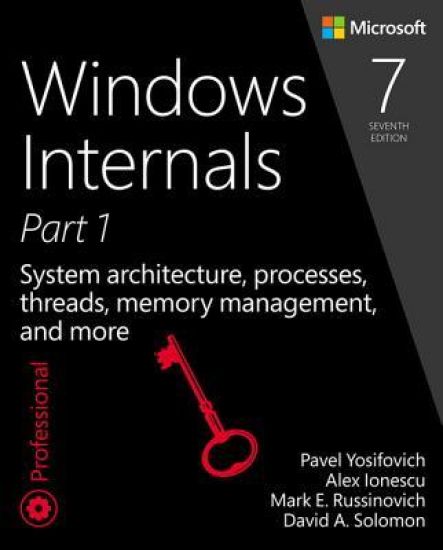
Windows Internals

Windows Internals

Pavel Yosifovich; Mark Russinovich; David Solomon; Alex Ionescu

Microsoft Press,U.S.
2017
nidottu
The definitive guide–fully updated for Windows 10 and Windows Server 2016 Delve inside Windows architecture and internals, and see how core components work behind the scenes. Led by a team of internals experts, this classic guide has been fully updated for Windows 10 and Windows Server 2016. Whether you are a developer or an IT professional, you’ll get critical, insider perspectives on how Windows operates. And through hands-on experiments, you’ll experience its internal behavior firsthand–knowledge you can apply to improve application design, debugging, system performance, and support. This book will help you: · Understand the Window system architecture and its most important entities, such as processes and threads · Examine how processes manage resources and threads scheduled for execution inside processes · Observe how Windows manages virtual and physical memory · Dig into the Windows I/O system and see how device drivers work and integrate with the rest of the system · Go inside the Windows security model to see how it manages access, auditing, and authorization, and learn about the new mechanisms in Windows 10 and Server 2016
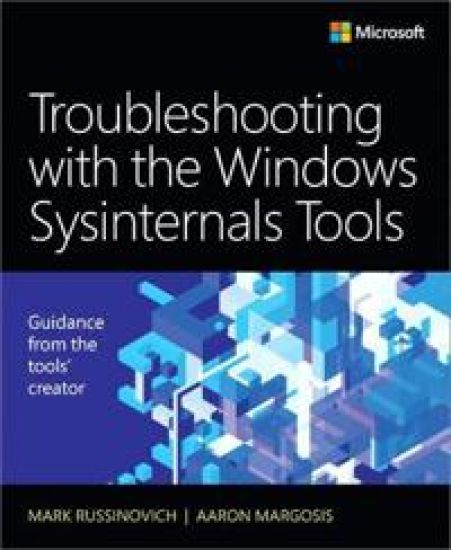
Troubleshooting with the Windows Sysinternals Tools

Troubleshooting with the Windows Sysinternals Tools

Mark Russinovich; Aaron Margosis

Microsoft Press,U.S.
2016
nidottu
Optimize Windows system reliability and performance with Sysinternals IT pros and power users consider the free Windows Sysinternals tools indispensable for diagnosing, troubleshooting, and deeply understanding the Windows platform. In this extensively updated guide, Sysinternals creator Mark Russinovich and Windows expert Aaron Margosis help you use these powerful tools to optimize any Windows system’s reliability, efficiency, performance, and security. The authors first explain Sysinternals’ capabilities and help you get started fast. Next, they offer in-depth coverage of each major tool, from Process Explorer and Process Monitor to Sysinternals’ security and file utilities. Then, building on this knowledge, they show the tools being used to solve real-world cases involving error messages, hangs, sluggishness, malware infections, and much more. Windows Sysinternals creator Mark Russinovich and Aaron Margosis show you how to: Use Process Explorer to display detailed process and system informationUse Process Monitor to capture low-level system events, and quickly filter the output to narrow down root causesList, categorize, and manage software that starts when you start or sign in to your computer, or when you run Microsoft Office or Internet ExplorerVerify digital signatures of files, of running programs, and of the modules loaded in those programsUse Autoruns, Process Explorer, Sigcheck, and Process Monitor features that can identify and clean malware infestationsInspect permissions on files, keys, services, shares, and other objectsUse Sysmon to monitor security-relevant events across your networkGenerate memory dumps when a process meets specified criteriaExecute processes remotely, and close files that were opened remotelyManage Active Directory objects and trace LDAP API callsCapture detailed data about processors, memory, and clocksTroubleshoot unbootable devices, file-in-use errors, unexplained communication, and many other problemsUnderstand Windows core concepts that aren’t well-documented elsewhere
Zero Day: A Jeff Aiken Novel

Zero Day: A Jeff Aiken Novel

Mark Russinovich

MACMILLAN AUDIO
2015
cd
An airliner's controls abruptly fail mid-flight over the Atlantic. An oil tanker runs aground in Japan when its navigational system suddenly stops dead. Hospitals everywhere have to abandon their computer databases when patients die after being administered incorrect dosages of their medicine. In the Midwest, a nuclear power plant nearly becomes the next Chernobyl when its cooling systems malfunction. At first, these random computer failures seem like unrelated events. But Jeff Aiken, a former government analyst who quit in disgust after witnessing the gross errors that led up to 9/11, thinks otherwise. Jeff fears a more serious attack targeting the United States computer infrastructure is already under way. And as other menacing computer malfunctions pop up around the world, some with deadly results, he realizes that there isn't much time if he hopes to prevent an international catastrophe. Written by a global authority on cyber security, Zero Day presents a chilling "what if" scenario that, in a world completely reliant on technology, is more than possible today---it's a cataclysmic disaster just waiting to happen.
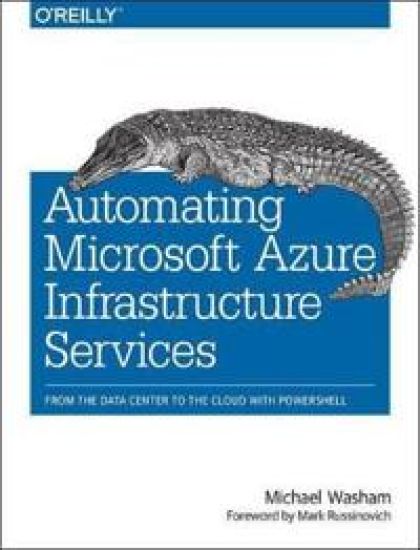
Automating Microsoft Azure Infrastructure Services

Automating Microsoft Azure Infrastructure Services

Michael Washam; Mark Russinovich

O'Reilly Media, Inc, USA
2014
nidottu
Get valuable tips and techniques for automating your cloud deployments with Azure PowerShell cmdlets, and learn how to provision Azure services on the fly. In this hands-on guide, Microsoft cloud technology expert Michael Washam shows you how to automate various management tasks and deploy solutions that are both complex and at scale. By combining the native automation capabilities of PowerShell with Azure Infrastructure Services, these powerful cmdlets enable you to create and configure virtual machines with ease. You'll learn how to take advantage of these technologies to build complete virtual networks. If you have experience with PowerShell and Azure, you're ready to get started. Install and authenticate cmdlets to set up your environment Create and update virtual machines with Azure platform images Manage network endpoints, access control lists, and IP addresses Use cmdlets to manage and configure virtual machine storage Automate Azure virtual networks with hybrid technologies such as site-to-site, point-to-site, and ExpressRoute Dive into advanced virtual machine provisioning capabilities and management techniques Learn tips and tricks for deleting or moving virtual machines within (or out of) your subscription
Trojan Horse

Trojan Horse

Mark Russinovich

St. Martin's Griffin
2014
nidottu
The West is under its greatest threat yet in Mark Russinovich's Trojan Horse. A revolutionary, invisible computer virus that alters data without leaving a trace--more sophisticated than any seen before--has been identified within the computers of the United Nations, roiling international politics. Cybersecurity analysts Jeff Aiken and Daryl Haugen are summoned to root it out and discover its source. As the virus penetrates Western intelligence, and the terrifying truth about its creator is revealed, Jeff and Daryl find themselves in a desperate race to reverse it as the fate of both East and West hangs in the balance.
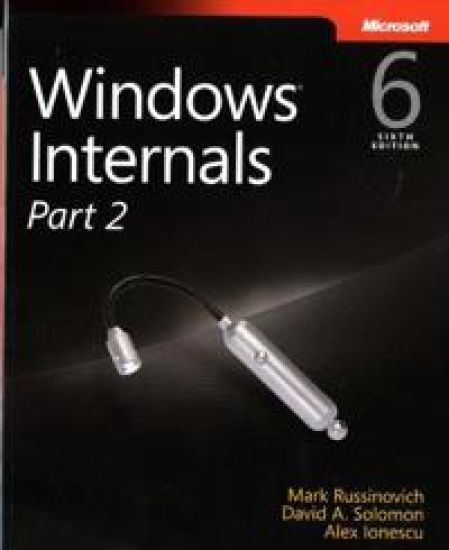
Windows Internals, Part 2

Windows Internals, Part 2

Mark Russinovich; David Solomon; Alex Ionescu

Microsoft Press,U.S.
2012
nidottu
Delve inside Windows architecture and internals—and see how core components work behind the scenes. Led by three renowned internals experts, this classic guide is fully updated for Windows 7 and Windows Server 2008 R2—and now presents its coverage in two volumes. As always, you get critical insider perspectives on how Windows operates. And through hands-on experiments, you’ll experience its internal behavior firsthand—knowledge you can apply to improve application design, debugging, system performance, and support. In Part 2, you’ll examine: Core subsystems for I/O, storage, memory management, cache manager, and file systemsStartup and shutdown processesCrash-dump analysis, including troubleshooting tools and techniques
Zero Day

Zero Day

Mark Russinovich; Howard A Schmidt

Saint Martin's Griffin,U.S.
2012
nidottu
Over the Atlantic, an airliner's controls suddenly stop reacting. In Japan, an oil tanker runs aground when its navigational system fails. And in the Midwest, a nuclear power plant nearly becomes the next Chernobyl. At first, these computer failures seem unrelated. But Jeff Aiken, a former government analyst who saw the mistakes made before 9/11, fears that there may be a more serious attack coming. And he soon realizes that there isn't much time if he hopes to stop an international disaster.