Kirjojen hintavertailu. Mukana 12 595 353 kirjaa ja 12 kauppaa.

Kirjailija

Mark Rylance

Kirjat ja teokset yhdessä paikassa: 9 kirjaa, julkaisuja vuosilta 2012-2025, suosituimpien joukossa Francis Bacon’s Contribution to Shakespeare. Vertaile teosten hintoja ja tarkista saatavuus suomalaisista kirjakaupoista.

9 kirjaa

Kirjojen julkaisuhaarukka 2012-2025.

Francis Bacon’s Contribution to Shakespeare

Francis Bacon’s Contribution to Shakespeare

Barry R. Clarke; Mark Rylance

Routledge
2019
nidottu
Francis Bacon's Contribution to Shakespeare advocates a paradigm shift away from a single-author theory of the Shakespeare work towards a many-hands theory. Here, the middle ground is adopted between competing so-called Stratfordian and alternative single-author conspiracy theories. In the process, arguments are advanced as to why Shakespeare’s First Folio (1623) presents as an unreliable document for attribution, and why contemporary opinion characterised Shakspere [his baptised name] as an opportunist businessman who acquired the work of others. Current methods of authorship attribution are critiqued, and an entirely new Rare Collocation Profiling (RCP) method is introduced which, unlike current stylometric methods, is capable of detecting multiple contributors to a text. Using the Early English Books Online database, rare phrases and collocations in a target text are identified together with the authors who used them. This allows a DNA-type profile to be constructed for the possible contributors to a text that also takes into account direction of influence. The method brings powerful new evidence to bear on crucial questions such as the author of the Groats-worth of Witte (1592) letter, the identifiable hands in 3 Henry VI, the extent of Francis Bacon’s contribution to Twelfth Night and The Tempest, and the scheduling of Love’s Labour’s Lost at the 1594–5 Gray’s Inn Christmas revels for which Bacon wrote entertainments. The treatise also provides detailed analyses of the nature of the complaint against Shakspere in the Groats-worth letter, the identity of the players who performed The Comedy of Errors at Gray’s Inn in 1594, and the reasons why Shakspere could not have had access to Virginia colony information that appears in The Tempest. With a Foreword by Sir Mark Rylance, this meticulously researched and penetrating study is a thought-provoking read for the inquisitive student in Shakespeare Studies.
The Marriage of Heaven and Hell

The Marriage of Heaven and Hell

William Blake; Juliet Rylance; Mark Rylance

Tate Publishing
2025
sidottu
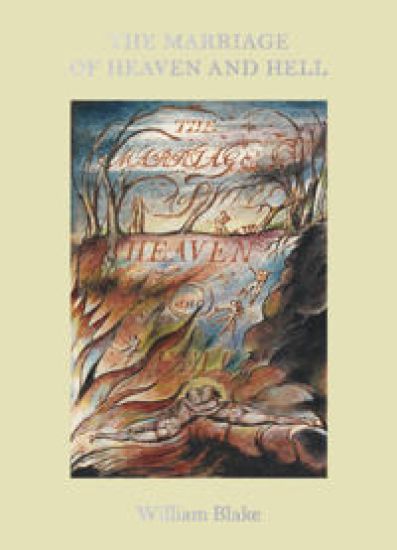
Among the beautiful and striking illuminated books etched and printed by William Blake, The Marriage of Heaven and Hell stands out. Written in 1790 at the beginning of the French Revolution, it represents Blake’s first attempt to create a new system of art, poetry and philosophy, declaring himself on the side of the devils in a world that was being turned upside down. While perhaps lesser known than his Songs of Innocence and of Experience, it has strong echoes throughout pop culture, and is arguably more influential on later generations of writers, thinkers and even musicians, from Aldous Huxley drawing on it as a key text to opening the doors of perception, which in turn gave The Doors their name, through to figures as diverse as Salman Rushdie, Benjamin Britten, Olga Tokarczuk and Keith Haring. Blake’s writing and art immediately draws the reader into a fantastical and surrealist landscape, where the protagonist converses with angels who have thrown their lot in with revolutionary hell, or chats with prophets and devils about the nature of God, the universe and everything. ?The gloriously illustrated edition, which opens with a poem, and takes the form of prose thereafter, is both a spirited satire on religion and morality, and expresses Blake's essential wisdom and philosophy. Produced as a beautiful facsimile, with a new, illuminating introduction, this is a special and thought-provoking gift book.
The Marriage of Heaven and Hell

The Marriage of Heaven and Hell

William Blake; Juliet Rylance; Mark Rylance

Tate Publishing
2025
sidottu
Among the beautiful and striking illuminated books etched and printed by William Blake, The Marriage of Heaven and Hell stands out. Written in 1790 at the beginning of the French Revolution, it represents Blake’s first attempt to create a new system of art, poetry and philosophy, declaring himself on the side of the devils in a world that was being turned upside down. While perhaps lesser known than his Songs of Innocence and of Experience, it has strong echoes throughout pop culture, and is arguably more influential on later generations of writers, thinkers and even musicians, from Aldous Huxley drawing on it as a key text to opening the doors of perception, which in turn gave The Doors their name, through to figures as diverse as Salman Rushdie, Benjamin Britten, Olga Tokarczuk and Keith Haring. Blake’s writing and art immediately draws the reader into a fantastical and surrealist landscape, where the protagonist converses with angels who have thrown their lot in with revolutionary hell, or chats with prophets and devils about the nature of God, the universe and everything. ?The gloriously illustrated edition, which opens with a poem, and takes the form of prose thereafter, is both a spirited satire on religion and morality, and expresses Blake's essential wisdom and philosophy. Produced as a beautiful facsimile, with a new, illuminating introduction, this is a special and thought-provoking gift book.
Francis Bacon’s Contribution to Shakespeare

Francis Bacon’s Contribution to Shakespeare

Barry R. Clarke; Mark Rylance

Routledge
2019
sidottu
Francis Bacon's Contribution to Shakespeare advocates a paradigm shift away from a single-author theory of the Shakespeare work towards a many-hands theory. Here, the middle ground is adopted between competing so-called Stratfordian and alternative single-author conspiracy theories. In the process, arguments are advanced as to why Shakespeare’s First Folio (1623) presents as an unreliable document for attribution, and why contemporary opinion characterised Shakspere [his baptised name] as an opportunist businessman who acquired the work of others. Current methods of authorship attribution are critiqued, and an entirely new Rare Collocation Profiling (RCP) method is introduced which, unlike current stylometric methods, is capable of detecting multiple contributors to a text. Using the Early English Books Online database, rare phrases and collocations in a target text are identified together with the authors who used them. This allows a DNA-type profile to be constructed for the possible contributors to a text that also takes into account direction of influence. The method brings powerful new evidence to bear on crucial questions such as the author of the Groats-worth of Witte (1592) letter, the identifiable hands in 3 Henry VI, the extent of Francis Bacon’s contribution to Twelfth Night and The Tempest, and the scheduling of Love’s Labour’s Lost at the 1594–5 Gray’s Inn Christmas revels for which Bacon wrote entertainments. The treatise also provides detailed analyses of the nature of the complaint against Shakspere in the Groats-worth letter, the identity of the players who performed The Comedy of Errors at Gray’s Inn in 1594, and the reasons why Shakspere could not have had access to Virginia colony information that appears in The Tempest. With a Foreword by Sir Mark Rylance, this meticulously researched and penetrating study is a thought-provoking read for the inquisitive student in Shakespeare Studies.
Nice Fish

Nice Fish

Mark Rylance; Louis Jenkins

Samuel French Ltd
2018
pokkari
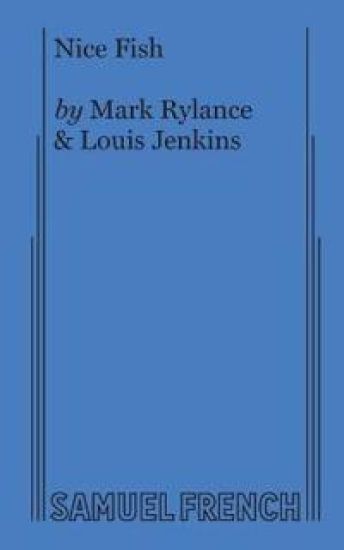
On a frozen Minnesota lake the ice is beginning to creak and groan. It's the end of the fishing season and two old friends are out on the ice angling for something big; something down there that is pure need. Something that might just swallow them whole. InNice Fish celebrated actor Mark Rylance draws on his own teenage years in the American Midwest in a unique collaboration with critically-acclaimed Minnesotan contemporary prose poet Louis Jenkins.
Nice Fish

Nice Fish

Mark Rylance; Louis Jenkins

Grove Press / Atlantic Monthly Press
2017
pokkari
On a frozen Minnesota lake, the ice is beginning to creak and groan. It's the end of the fishing season and on the frostbitten, unforgiving landscape, two friends are out on the ice, angling for something big, something down there that, had it the wherewithal, could swallow them whole. With the existentialism of a Beckett two-hander but set in the icy and folksy depths of the Midwest, Nice Fish is a unique and portrayal of a friendship forged out of boredom, bad jokes, and an ability to wait for a really nice fish. Nice Fish premiered at the American Repertory Theater in Cambridge Massachusetts, directed by Claire van Campen, and played to rave reviews in a sold-out extended run in New York in February 2016 at St. Ann's Warehouse, starring Academy Award-winning actor Mark Rylance and Louis Jenkins. The play transferred to London for a run in the West End at the Harold Pinter Theater, beginning November 2016.
Nice Fish

Nice Fish

Mark Rylance; Louis Jenkins

Nick Hern Books
2016
pokkari
On a frozen Minnesota lake, the ice is beginning to creak and groan. It's the end of the fishing season, and two old friends are out on the ice, angling for something big; something down there that is pure need. Something that might just swallow them whole. In Nice Fish, celebrated actor Mark Rylance draws on his own teenage years in the American Midwest, in a unique collaboration with critically acclaimed Minnesotan contemporary prose poet Louis Jenkins and the whole company. This sublimely playful, profound and very funny play transferred direct from a sell-out run in New York to the Harold Pinter Theatre, London, in 2016, in a production directed by Claire van Kampen and starring Rylance and Jim Lichtscheidl.
Speaking the Speech

Speaking the Speech

Giles Block; Mark Rylance

Nick Hern Books
2013
nidottu
Why does Shakespeare write in the way he does? And how can actors and directors get the most out of his incomparable plays? In Speaking the Speech, Giles Block – ‘Master of the Words’ at Shakespeare’s Globe – sets out to answer these two simple questions. The result is the most authoritative, most comprehensive book yet written on speaking Shakespeare’s words. Throughout the book, the author subjects Shakespeare’s language to rigorous examination, illuminating his extraordinary ability to bring his characters to life by a simple turn of phrase, a breath or even a pause. Block shows how we can only fully understand these characters, and the meaning of the plays, by speaking the words out loud. Drawing on characters from across all of Shakespeare’s plays – and looking in detail at Macbeth, The Winter’s Tale, Hamlet, The Merchant of Venice and Much Ado About Nothing – Block covers everything the actor needs to know, including: the essential distinctions between prose, rhymed verse and unrhymed verse, and the different strategies to be used when speaking them; the difference between ‘you’ and ‘thou’; Shakespeare’s use of silence; and the vital importance of paying attention to Shakespeare’s ‘original’ punctuation. Speaking the Speech is a book for actors and directors who want to improve their understanding of Shakespeare’s language in order to speak it better. It is also a fascinating read for anyone who wants to deepen their appreciation of Shakespeare’s language and the way it comes to life when spoken aloud. ‘We call Giles our ‘Text Guru’ at the Globe, partly in jest, and partly out of respect for the depth of his knowledge, the gentleness of his teaching, and the sudden illuminations he can throw across a play. If this book can afford even a small part of the pleasure and insight Giles can provide in person, then it will be a great asset.’ Dominic Dromgoole, Artistic Director, Shakespeare’s Globe ‘Giles deepened my love for Shakespeare and for the way we all speak. I trust you will have a similar experience reading his book.’ Mark Rylance, from his Foreword
I Am Shakespeare

I Am Shakespeare

Mark Rylance

Nick Hern Books
2012
pokkari
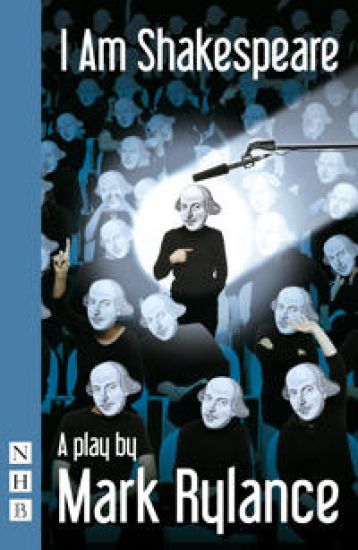
A fascinating, witty and characteristically exuberant dramatic exploration of the Shakespeare authorship debate. Is it possible that the son of an illiterate tradesman, from a small market town in Warwickshire, could have written the greatest dramatic works the world has ever seen? It’s a question that has puzzled scholars, theatre practitioners and theatregoers for many years. The philosopher, Francis Bacon; the Earl of Oxford, Edward de Vere; and Mary Sidney, Countess of Pembroke: all of them have been put forward as the real author of the plays. But why would they hide behind an anonymous actor? Who was the real Bard of Stratford? Why should we care? Mark Rylance is one of a number of leading actors who seriously question the idea that William Shakespeare was the man behind the thirty-seven plays that have moved, inspired and amazed generations. First performed at the Minerva Theatre, Chichester, in 2007, and subsequently on tour, Rylance’s provocative play introduces us to four candidates and their respective claims – whilst asking fundamental questions about what makes a genius, and why it all matters anyway.