Kirjojen hintavertailu. Mukana 12 657 676 kirjaa ja 12 kauppaa.
Kirjailija
Mark S. Smith
Kirjat ja teokset yhdessä paikassa: 21 kirjaa, julkaisuja vuosilta 1997-2024, suosituimpien joukossa The Pilgrimage Pattern in Exodus. Vertaile teosten hintoja ja tarkista saatavuus suomalaisista kirjakaupoista.
This festschrift honors Aloysius Fitzgerald, F.S.C. The essays largely reflect the honoree's interests in the poetic and prophetic material of the Hebrew Bible and the ancient Near Eastern context of that material. The volume includes an introduction by Joseph Jensen, O.S.B. and the following articles: Leslie J, Hoppe, O.ftM., "Vengeance and Forgiveness: The Two Faces of Psalm 79" (pp. 1-22); Mark S. Smith, "The Poetics of Exodus 15 and Its Position in the Book" (pp. 23-34); Susan F. Mathews, "The Power to Endure and Be Transformed: Sun and Moon Imagery in Joel and Revelation 6" (pp. 35-49); Gregory J. Polan, O.S.B., "Zion, the Glory of the Holy One of Israel: A Literary Analysis of Isaiah 60" (pp. 50-71); Maribeth Howell, O.P., "A Closer Look: Isaiah 35:110" (pp. 72-80); Mark D. Futato, "Sense Relations in the 'Rain' Domain of the Old Testament" (pp. 81-94); John J. Ferrie, Jr., "Singing in the Rain: A Meteorological Image in Isaiah 42:10-12" (pp. 95-104); Irene Nowell, O.S.B., "Psalm 88: A Lesson in Lament" (pp. 105-18); Dale Launderville, O.S.B., "Anti-monarchical Ideology in Israel in Light of Mesopotamian Parallels" (pp. 119-28); Edward G. Mathews, Jr., "Water in the First Creation Account of Genesis I in the Commentary on Genesis of Ephrem the Syrian" (pp. 129-44); Deirdre Dempsey, "The Verb Syntax of the Idol Passage of Isaiah 44:9-20" (pp. 145-56); Alice Ogden Bellis, "The New Exodus in Jeremiah 50:33-38" (pp. 157-68); Lawrence Boadt, C.S.P., "Re-Examining a Preexilic Redaction of Isaiah 1-39" (pp. 169-90).
This groundbreaking volume presents a new translation of the text and detailed interpretation of almost every word or phrase in the book of Judges, drawing from archaeology and iconography, textual versions, biblical parallels, and extrabiblical texts, many never noted before. Archaeology also serves to show how a story of the Iron II period employed visible ruins to narrate supposedly early events from the so-called period of the Judges. The synchronic analysis for each unit sketches its characters and main themes, as well as other literary dynamics. The diachronic, redactional analysis shows the shifting settings of units as well as their development, commonly due to their inner-textual reception and reinterpretation. The result is a remarkably fresh historical-critical treatment of 1:1-10:5.
While many Christians recognize the abiding value of the Old Testament as God's Word they stay away from studying it because they see it as a difficult and forbidding subject. In this completely revised and expanded edition of God’s Word to Israel Joseph Jensen incorporates the latest scholarship using a combination of the historical, literary, and thematic approaches to present a unified treatment—one that with even a modest degree of effort will produce rich rewards.By selecting the most important matters, rather than attempting to cover every aspect of the Old Testament message, Jensen has given them the space and emphasis they deserve.
For centuries, the Garden of Eden story has been a cornerstone for the Christian doctrine of the Fall and original sin. In recent years, many scholars have disputed this understanding of Genesis 3 because it has no words for sin, transgression, disobedience, or punishment. Instead, it is about how the human condition came about. Yet the picture is not so simple. The Genesis of Good and Evil examines how the idea of the Fall developed in Jewish tradition on the eve of Christianity. In the end, the Garden of Eden is a rich study of humans in relation to God that leaves open many questions. One such question is, Does Genesis 3, 4, and 6, taken together, support the Christian doctrine of original sin? Smiths well-informed, close reading of these chapters concludes that it does. In this book, he addresses the many mysterious matters of the Garden story and invites readers to explore questions of their own.
The Idea of Nicaea in the Early Church Councils examines the role that appeals to Nicaea (both the council and its creed) played in the major councils of the mid-fifth century. It argues that the conflict between rival construals of Nicaea, and the struggle convincingly to arbitrate between them, represented a key dynamic driving--and unsettling--the conciliar activity of these decades. Mark S. Smith identifies a set of inherited assumptions concerning the role that Nicaea was expected to play in orthodox discourse--namely, that it possessed unique authority as a conciliar event, and sole sufficiency as a credal statement. The fundamental dilemma was thus how such shibboleths could be persuasively reaffirmed in the context of a dispute over Christological doctrine that the resources of the Nicene Creed were inadequate to address, and how the convening of new oecumenical councils could avoid fatally undermining Nicaea's special status. Smith examines the articulation of these contested ideas of 'Nicaea' at the councils of Ephesus I (431), Constantinople (448), Ephesus II (449), and Chalcedon (451). Particular attention is paid to the role of conciliar acta in providing carefully-shaped written contexts within which the Nicene Creed could be read and interpreted. This study proposes that the capacity of the idea of 'Nicaea' for flexible re-expression was a source of opportunity as well as a cause of strife, allowing continuity with the past to be asserted precisely through adaptation and modification, and opening up significant new paths for the articulation of credal and conciliar authority. The work thus combines a detailed historical analysis of the reception of Nicaea in the proceedings of the fifth-century councils, with an examination of the complex delineation of theological 'orthodoxy' in this period. It also reflects more widely on questions of doctrinal development and ecclesial reception in the early church.
The issue of how to represent God is a concern both ancient and contemporary. In this wide-ranging and authoritative study, renowned biblical scholar Mark Smith investigates the symbols, meanings, and narratives in the Hebrew Bible, Ugaritic texts, and ancient iconography, which attempt to describe deities in relation to humans. Smith uses a novel approach to show how the Bible depicts God in human and animal forms—and sometimes both together. Mediating between the ancients’ theories and the work of modern thinkers, Smith’s boldly original work uncovers the foundational understandings of deities and space.
Warfare exerts a magnetic power, even a terrible attraction, in its emphasis on glory, honor, and duty. In order to face the terror of war, it is necessary to face how our biblical traditions have made it attractive -- even alluring. In this book Mark Smith undertakes an extensive exploration of -poetic heroes- across a number of ancient cultures in order to understand the attitudes of those cultures toward war and warriors. Smith examines the Iliad and the Gilgamesh; Ugaritic poems commemorating Baal, Aqhat, and the Rephaim; and early biblical poetry, including the battle hymn of Judges 5 and the lament of David over Saul and Jonathan in 2 Samuel 1. Smith's Poetic Heroes analyzes the importance of heroic poetry in early Israel and its disappearance after the time of David, building on several strands of scholarship in archaeological research, poetic analysis, and cultural reconstruction.
Walter Cardinal Kasper has written, “It is time, it is the right time, to speak of God.” This book invites readers to use their God-given ability to work through important questions that many people have about God today: Why is God so angry in the Bible? Is the biblical God male or female (or what)? Who is Satan? Why do people suffer? By exploring the Bible’s answers to these and other biblical questions, people can come to understand better their living and loving God.
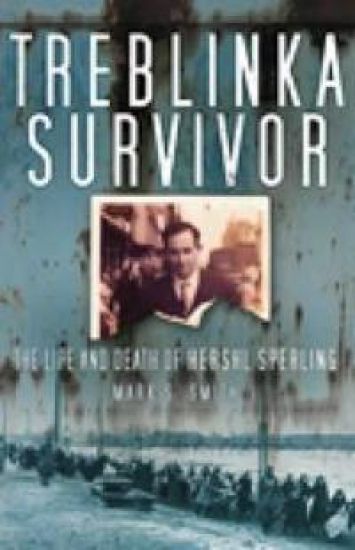
More than 800,000 people entered Treblinka, and fewer than seventy came out. Hershl Sperling was one of them. He escaped. Why then, fifty years later, did he jump to his death from a bridge in Scotland? The answer lies in a long-forgotten, published account of the Treblinka death camp, written by Hershl Sperling himself in the months after liberation and discovered in his briefcase after his suicide. It is reproduced here for the first time. In Treblinka Survivor, Mark S. Smith traces the life of a man who survived five concentration camps, and what he had to do to achieve this. Hershl's story, which takes the reader through his childhood in a small Polish town to the bridge in faraway Scotland, is testament to the lasting torment of those very few who survived the Nazis' most efficient and gruesome death factory. The author personally follows in his subject's footsteps from Klobuck, to Treblinka, to Glasgow.
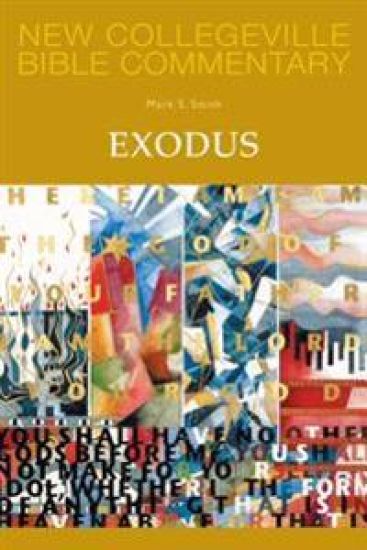
So resounding is its message that echoes of the Exodus are heard throughout the Old and New Testaments and the present. Exodus names and terms permeate our biblical and liturgical vocabularies: Pharaoh, Moses, Aaron, burning bush, I AM," plagues, Passover, manna, Ten Commandments, forty days and forty nights, Ark of the Covenant. The Exodus experience, indeed, is central to both Jewish and Christian traditions. Exodus is, as Mark Smith reminds us, not only an ancient text but also "today's story, calling readers to work against oppression and to participate in a covenant relationship with one another and God." With Smith as their experienced guide, readers are able to march through this basic book of the Bible with textual difficulties solved and stacked up like a wall to their right and left, just as the Israelites "marched on dry land through the midst of the sea with the water like a wall to their right and to their left" (14:29). Undoubtedly, when finished, readers will be closer to the Promised Land than when they started.Mark S. Smith is Skirbal Professor of Bible and Ancient Near Eastern Studies at New York University. He has served as visiting professor at the University of Pennsylvania, the Hebrew University in Jerusalem, and the Pontifical Biblical Institute in Rome. Smith was elected vice president of the Catholic Biblical Association in 2009."
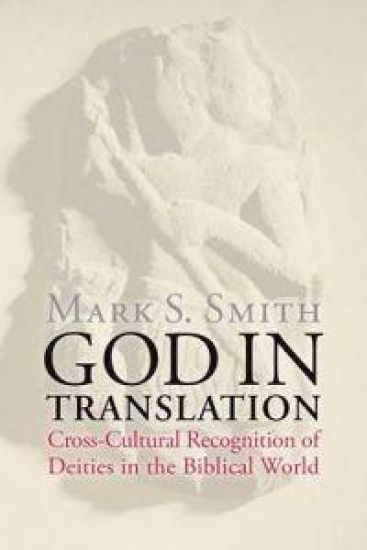
The Hebrew Bible has long been understood as condemning foreign deities. While many biblical texts do condemn other deities, many other passages show how early Israelites sometimes accepted the reality of deities worshiped by other peoples. Looking closely both at relevant biblical texts and at their cultural contexts, Mark S. Smith demonstrates that the biblical attitude toward other deities is not uniformly negative, as is commonly supposed. He traces the historical development of Israel's -one-god worldview, - linking it to the rise of the surrounding Mesopotamian empires. Smith's study also produces evidence undermining a common modern assumption among historians of religion that polytheism is tolerant while monotheism is prone to intolerance and violence. Drawing both on ancient sources and on modern, theoretical approaches, Smith's God in Translation masterfully reveals the complexity of attitudes in ancient Israel toward foreign deities and makes a case for an ecumenism based on respect for local traditions and not based on a western notion of universal religion.
More than 800,000 people entered Treblinka, and fewer than seventy came out. Hershl Sperling was one of them. He escaped. Why then, fifty years later, did he jump to his death from a bridge in Scotland? The answer lies in a long-forgotten, published account of the Treblinka death camp, written by Hershl Sperling himself in the months after liberation and discovered in his briefcase after his suicide. It is reproduced here for the first time. In Treblinka Survivor, Mark S. Smith traces the life of a man who survived five concentration camps, and what he had to do to achieve this. Hershl's story, which takes the reader through his childhood in a small Polish town to the bridge in faraway Scotland, is testament to the lasting torment of those very few who survived the Nazis' most efficient and gruesome death factory. The author personally follows in his subject's footsteps from Klobuck, to Treblinka, to Glasgow.
For many readers, Genesis 1-2 is simply the biblical account of creation. But ancient Israel could speak of creation in different ways, and the cultures of the ancient near east provided an even richer repertoire of creation myths. Mark S. Smith explores the nuances of what would become the premiere creation account in the Hebrew Bible and the serene priestly theology that informed it. That vision of an ordered cosmos, Smith argues, is evidence of the emergence of a mystical theology among priests in post-exilic Israel, and the placement of Genesis 1-2 at the beginning of Israel's great epic is their sustained critique of the theology of divine conflict that saturated ancient near eastern creation myths. Smith's treatment of Genesis 1 provides rich historical and theological insights into the biblical presentation of creation and the Creator.
Mark S. Smith charts the many cases of deities recognized across cultures in the Late Bronze Age, Ancient Israel and early Judaism and the New Testament. This cross-cultural recognition took place in identifications or equations of deities of different cultures (for example, in lists of deities), and in representations of different deities of various cultures acting together (e.g., deities of different cultures serving as guarantors of and witnesses to international treaties). The context of 'translatability of deities' in the Late Bronze Age and Iron Age Israel supported international political relations. In the Iron Age, the worldview of regional deities on par with one another lost its intelligibility in the face of Neo-Assyrian empire ideology. In turn, Israel expressed its worldview of a single god powerful over all. As a result, biblical writers and scribes engaged in a sophisticated hermeneutics to mediate between older expressions of translatability embedded within its emergent monotheistic expressions. The Greco-Roman period witnessed an explosion in the types and genres of cross-cultural discourse about deities, and as a result, Jewish authors and some New Testament sources responded to this sort of discourse, sometimes negatively and at other times quite positively. Engagement with other cultures helped Israel come to understand its god.
This insightful work examines the variety of ways that collective memory, oral tradition, history, and history writing intersect. Integral to all this are the ways in which ancient Israel was shaped by the monarchy, the Babylonian exile, and the dispersions of Judeans and the ways in which Israel conceptualized and interacted with the divine-Yahweh as well as other deities.
As the bible tells us, ancient Israel's neighbours worshipped a wide variety of gods. It is now widely accepted that the Israelites' God, Yahweh, must have originated as one among these many, before assuming the role of the one true God of monotheism. Mark Smith here seeks to discover more precisely what was meant by "divinity" in the ancient near-East, and how these concepts apply to Yahweh. Part One of the book offers a detailed examination of the deities of ancient Ugarit, known to us from the largest surviving group of relevant extra-biblical texts. In Part Two, Smith looks closely at four classic problems associated with four Ugaritic deities, and considers how they affect our understanding of Yahweh. At the end of the book he returns to the question of Israelite monotheism, seeking to discover what religious issues it addressed and why it made sense at the time of its emergence. He argues that within the Bible, monotheism is not a separate "stage" of religion but rather represents a kind of rhetoric reinforcing Israel's exclusive relation with its deity.
There is still much disagreement over the origins and development of Israelite religion. Mark Smith sets himself the task of reconstructing the cult of Yahweh, the most important deity in Israel's early religion, and tracing the transformation of that deity into the sole god - the development of monotheism. Smith argues that Israelite religion owed much to the beliefs and practices of its neighbours, notably the religion of Canaan and that early conflicts over religious practice led to differentiation within the Israel's religion. This second edition includes a new preface and foreword which updates the 1990 edition.
As the Bible tells us, ancient Israel's neighbours worshipped a wide variety of Gods. It is now widely accepted that the Israelites' God, Yahweh, must have originated as among these many, before assuming the role of the one true God of monotheism. Mark Smith here seeks to discover more precisely what was meant by 'divinity' in the ancient near-East, and how these concepts apply to Yahweh. Part One of the book offers a detailed examination of the deities of ancient Ugarit, known to us from the large surviving group of relevant extra-biblical texts. In Part Two, Smith looks closely at four classic problems associated with four Ugaritic deities, and considers how they affect our understanding of Yahweh. At the end of the book he returns to the question of Israelite monotheism, seeking to discover what religious issues it addressed, and why it made sense at the time of its emergence. He argues that within the Bible, monotheism is not a separate 'stage' of religion but rather represents a kind of rhetoric reinforcing Israel's exclusive relation with its deity.