Kirjojen hintavertailu. Mukana 12 595 353 kirjaa ja 12 kauppaa.

Kirjailija

Mark S. Young

Kirjat ja teokset yhdessä paikassa: 6 kirjaa, julkaisuja vuosilta 2014-2024, suosituimpien joukossa Human Factors Models for Aviation Accident Analysis and Prevention. Vertaile teosten hintoja ja tarkista saatavuus suomalaisista kirjakaupoista.

Mukana myös kirjoitusasut: Mark S Young

6 kirjaa

Kirjojen julkaisuhaarukka 2014-2024.

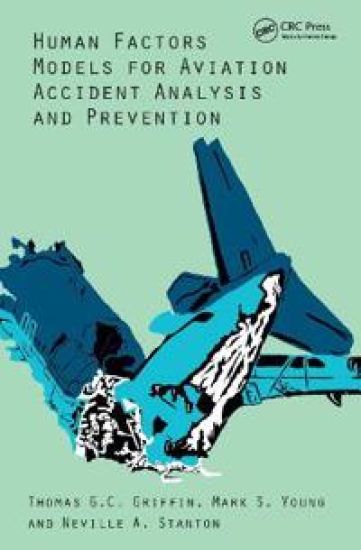
Human Factors Models for Aviation Accident Analysis and Prevention

Human Factors Models for Aviation Accident Analysis and Prevention

Thomas G.C. Griffin; Mark S. Young; Neville A. Stanton

TAYLOR FRANCIS LTD
2024
nidottu
The investigation and modelling of aviation accident causation is dominated by linear models. Aviation is, however, a complex system and as such suffers from being artificially manipulated into non-complex models and methods. This book addresses this issue by developing a new approach to investigating aviation accident causation through information networks. These networks centralise communication and the flow of information as key indicators of a system’s health and risk. This holistic approach focuses on the system environment, the activity that takes place within it, the strategies used to conduct this activity, the way in which the constituent parts of the system (both human and non-human) interact and the behaviour required. Each stage of this book identifies and expands upon the potential of the information network approach, maintaining firm focus on the overall health of a system. The book’s new model offers many potential developments and some key areas are studied in this research. Through the centralisation of barriers and information nodes the method can be applied to almost any situation. The application of Bayesian mathematics to historical data populations provides scope for studying error migration and barrier manipulation. The book also provides application of these predictions to a flight simulator study for the purposes of validation. Beyond this it also discusses the applicability of the approach to industry. Through working with a legacy airline the methods discussed are used as the basis for a new and prospective safety management system.
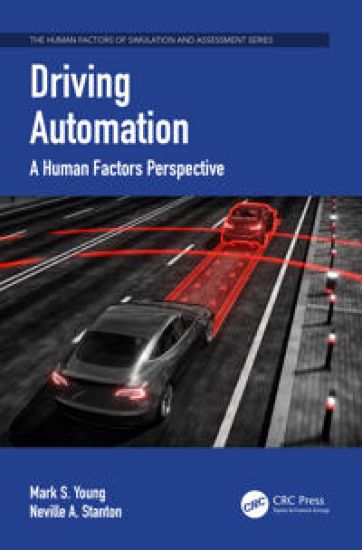
Driving Automation

Driving Automation

Mark S. Young; Neville A. Stanton

TAYLOR FRANCIS LTD
2024
nidottu
The technology behind self-driving cars is being heavily promulgated as the solution to a variety of transport problems including safety, congestion, and impact on the environment. This text examines the key role that human factors plays in driving forward future vehicle automation in a way that realizes the benefits while avoiding the pitfalls.Driving Automation: A Human Factors Perspective addresses a range of issues related to vehicle automation beyond the 'can we' to 'how should we'. It covers important topics including mental workload and malleable attentional resources theory, effects of automation on driver performance, in-vehicle interface design, driver monitoring, eco-driving, responses to automation failure, and human-centred automation.The text will be useful for graduate students and professionals in diverse areas such as ergonomics/human factors, automobile engineering, industrial engineering, mechanical engineering, and health and safety.
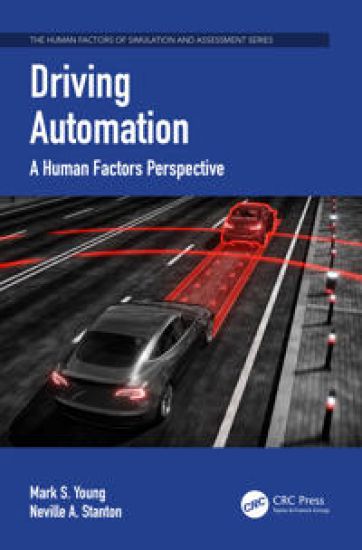
Driving Automation

Driving Automation

Mark S. Young; Neville A. Stanton

TAYLOR FRANCIS LTD
2023
sidottu
The technology behind self-driving cars is being heavily promulgated as the solution to a variety of transport problems including safety, congestion, and impact on the environment. This text examines the key role that human factors plays in driving forward future vehicle automation in a way that realizes the benefits while avoiding the pitfalls.Driving Automation: A Human Factors Perspective addresses a range of issues related to vehicle automation beyond the 'can we' to 'how should we'. It covers important topics including mental workload and malleable attentional resources theory, effects of automation on driver performance, in-vehicle interface design, driver monitoring, eco-driving, responses to automation failure, and human-centred automation.The text will be useful for graduate students and professionals in diverse areas such as ergonomics/human factors, automobile engineering, industrial engineering, mechanical engineering, and health and safety.
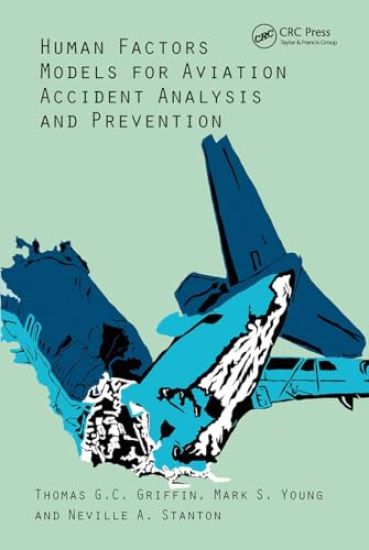
Human Factors Models for Aviation Accident Analysis and Prevention

Human Factors Models for Aviation Accident Analysis and Prevention

Thomas G.C. Griffin; Mark S. Young; Neville A. Stanton

CRC Press
2015
sidottu
The investigation and modelling of aviation accident causation is dominated by linear models. Aviation is, however, a complex system and as such suffers from being artificially manipulated into non-complex models and methods. This book addresses this issue by developing a new approach to investigating aviation accident causation through information networks. These networks centralise communication and the flow of information as key indicators of a system’s health and risk. This holistic approach focuses on the system environment, the activity that takes place within it, the strategies used to conduct this activity, the way in which the constituent parts of the system (both human and non-human) interact and the behaviour required. Each stage of this book identifies and expands upon the potential of the information network approach, maintaining firm focus on the overall health of a system. The book’s new model offers many potential developments and some key areas are studied in this research. Through the centralisation of barriers and information nodes the method can be applied to almost any situation. The application of Bayesian mathematics to historical data populations provides scope for studying error migration and barrier manipulation. The book also provides application of these predictions to a flight simulator study for the purposes of validation. Beyond this it also discusses the applicability of the approach to industry. Through working with a legacy airline the methods discussed are used as the basis for a new and prospective safety management system.
Guide to Methodology in Ergonomics

Guide to Methodology in Ergonomics

Neville A. Stanton; Mark S. Young; Catherine Harvey

CRC Press Inc
2014
nidottu
Packed with illustrations and practical examples, Guide to Methodology in Ergonomics: Designing for Human Use, Second Edition provides a concise introduction to ergonomics methods in a straightforward manner that helps you conduct an ergonomics analysis of a product in development. It details the execution of 12 ergonomics methods that can be applied to the design of any type of product or interface. The authors stress the role of ergonomics in reducing device interaction time and user error while improving user satisfaction and device usability.See What’s in the New Edition: Four case studiesAddition of another co-authorExamples that reflect current technologyInformation on Critical Path Analysis (CPA)The authors highlight where ergonomics methods fit in the design process and how to select a method appropriate for your purpose. They describe each method, supplying an overview, instructions on how to carry out an analysis, a mini bibliography, pros and cons, one or more examples, and a flow chart. They then rate each method for reliability/validity, resources, usability, and efficacy. The book then examines data from studies on training, reliability, and validity, and presents an equation that enables you to calculate approximately the financial benefits of using each method.Based on research and expertise, the book gives you the freedom to be adventurous when choosing methods and the foundation to choose the method that fits the task at hand. Written by experts, it also helps you hone your skills and put the craft of ergonomics into practice.