Kirjojen hintavertailu. Mukana 12 595 353 kirjaa ja 12 kauppaa.

Kirjailija

Mark Sedgwick

Kirjat ja teokset yhdessä paikassa: 11 kirjaa, julkaisuja vuosilta 2004-2026, suosituimpien joukossa New Religious Movements in Islam. Vertaile teosten hintoja ja tarkista saatavuus suomalaisista kirjakaupoista.

11 kirjaa

Kirjojen julkaisuhaarukka 2004-2026.

New Religious Movements in Islam

New Religious Movements in Islam

Mark Sedgwick

Cambridge University Press
2026
sidottu
New Religious Movements (NRMs) have emerged periodically from the formative period of Islam to the present day. This Element considers a representative sample, organized by chronological period and then by type. In earlier periods, particular features of Islam either encouraged or discouraged the emergence of NRMs. Modernity brought new conditions that led to new types of NRM, the focus of this Element. Initially, NRMs arose in resistance to modernity or in support of it. Then came NRMs adjusted to the age of mass modernity. The Element also examines Western NRMs of Islamic origin or coloring. All these NRMs are understood in terms of their relationship with the dominant religious community, the host society, and political authority, as well as the novelty of their beliefs and practice.
New Religious Movements in Islam

New Religious Movements in Islam

Mark Sedgwick

Cambridge University Press
2026
pokkari
New Religious Movements (NRMs) have emerged periodically from the formative period of Islam to the present day. This Element considers a representative sample, organized by chronological period and then by type. In earlier periods, particular features of Islam either encouraged or discouraged the emergence of NRMs. Modernity brought new conditions that led to new types of NRM, the focus of this Element. Initially, NRMs arose in resistance to modernity or in support of it. Then came NRMs adjusted to the age of mass modernity. The Element also examines Western NRMs of Islamic origin or coloring. All these NRMs are understood in terms of their relationship with the dominant religious community, the host society, and political authority, as well as the novelty of their beliefs and practice.
Den heliga ordningen: Radikalhögerns rötter i filosofisk mys
Många stod undrande när Steve Bannon, Trumps chefsideolog, plötsligt och utan vidare förklaring refererade till den radikale 1900-talsfilosofen Julius Evola i ett tal. Plötsligt antyddes en oväntat stark koppling mellan Trumps stab och en beryktat dunkel världsåskådning: Den filosofiska Traditionalismen. På senare tid har Traditionalismen börjat dyka upp i sammanhang kopplade till den radikala högern, men tankegodset går långt tillbaka. I grunden finns den så kallade perennialismen (Philosophia perennis), vars centrala idé är att alla religioner utgår från en gemensam kärna. Det finns en helig ordning som bara kan förstås av de verkligt djupsinniga tänkarna, även om dess inflytande kan sippra ut till allmänheten. Låter det dunkelt? Det är det också. Mark Sedgwick har med sin mångåriga forskning lyckats belysa en av världens mer ljusskygga antimodernistiska rörelser. För en bredare publik kartlägger han här Traditionalismens samröre med alltifrån hinduiska kastsystem på 1600-talet, modern sufism, den högerradikala kritiken mot modernitet och Jordan B. Peterson – den digitala erans Traditionalist.
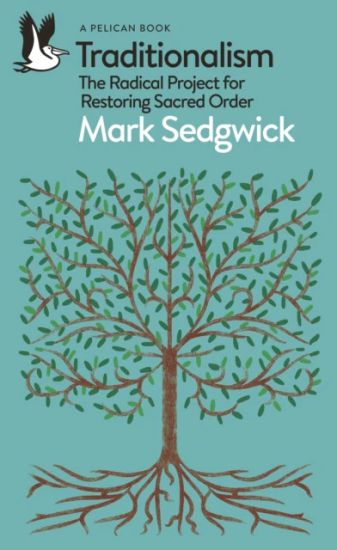
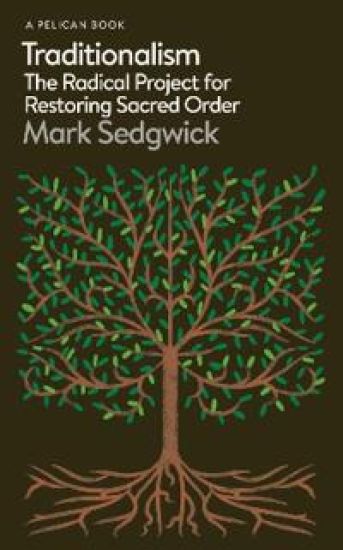
Traditionalism

Traditionalism

Mark Sedgwick

PENGUIN BOOKS LTD
2025
nidottu
The definitive guide to Traditionalism: the world's least-known major philosophy, but one that is essential for understanding our past, present and futureTraditionalism is founded on ancient teachings that, its followers argue, have been handed down from time immemorial, forming a basis of the sacred order that must be defended from modernity and the disorder it brings. It has been used to encourage respect for the environment, compose great music and reduce hostility between followers of different religions.But Traditionalism has applied to darker causes: from the election of Donald Trump to fascist movements and even terrorism. How has Traditionalism been so influential for so long, yet so little acknowledged and understood? Its followers have never aimed to reach the masses and have sought to affect the world quietly. In this book, the first of its kind for a wide audience, Traditionalism's history, ideas and profound impact are laid out, shining a light onto this shadowy world and the thought of its three founders, René Guénon, Julius Evola and Frithjof Schuon.Once you understand Traditionalism, you will see its influence everywhere.
Traditionalism: The Radical Project for Restoring Sacred Order
From a leading expert comes an intellectual history and analysis of Traditionalism, one of the least known and most influential philosophies that continues to impact politics today Traditionalism is a shadowy philosophy that has influenced much of the twentieth century and beyond: from the far-right to the environmental movement, from Sufi shaykhs and their followers to Trump advisor and right-wing provocateur Steve Bannon. It is a worldview that rejects modernity and instead turns to mystical truth and tradition as its guide. Mark Sedgwick, one of the world's leading scholars of Traditionalism, presents a major new analysis, pulling back the curtain on the foundations of Traditionalist philosophy, its major proponents--Ren Gu non, Julius Evola, and Frithjof Schuon--and their thought. One of Traditionalism's fundamental pillars is perennialism, the idea that beneath all the different forms of religion there lies one single timeless and esoteric tradition. A second is the view that everything is getting worse, rather than better, over time, leading to the Traditionalist critique of modernity. Sedgwick details Traditionalism's unique ideas about self-realization, religion, politics, and many other spheres. Traditionalism provides an expansive guide to this important school of thought--one that is little-known and even less understood--and shows how pervasive these ideas have become.
Western Sufism

Western Sufism

Mark Sedgwick

Oxford University Press Inc
2016
sidottu
Western Sufism is sometimes dismissed as a relatively recent "new age" phenomenon, but in this book, Mark Sedgwick argues that it actually has very deep roots, both in the Muslim world and in the West. In fact, although the first significant Western Sufi organization was not established until 1915, the first Western discussion of Sufism was printed in 1480, and Western interest in some of the ideas that are central to Sufi thought goes back to the thirteenth century. Sedgwick starts with the earliest origins of Western Sufism in late antique Neoplatonism and early Arab philosophy, and traces later origins in repeated intercultural transfers from the Muslim world to the West, in the thought of the European Renaissance and Enlightenment, and in the intellectual and religious ferment of the nineteenth century. He then follows the development of organized Sufism in the West from 1915 until 1968, the year in which the first Western Sufi order based not on the heritage of the European Middle Ages, Renaissance and Enlightenment, but rather on purely Islamic models, was founded. Later developments in this and other orders are also covered. Western Sufism shows the influence of these origins, of thought both familiar and less familiar: Neoplatonic emanationism, perennialism, pantheism, universalism, and esotericism. Western Sufism, then, is the product not of the new age but of Islam, the ancient world, and centuries of Western religious and intellectual history. Drawing on sources from antiquity to the internet, Mark Sedgwick demonstrates that the phenomenon of Western Sufism not only draws on centuries of intercultural transfers, but is also part of a long-established relationship between Western thought and Islam that can be productive, not confrontational.
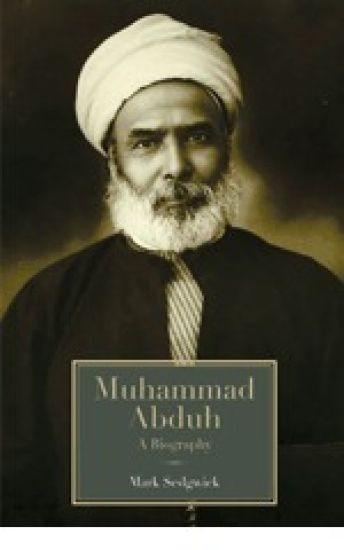
Muhammad Abduh

Muhammad Abduh

Mark Sedgwick

Oneworld Publications
2009
sidottu
Muhammad Abduh (1849-1905) is widely regarded as the founder of Islamic modernism. Egyptian jurist, religious scholar and political activist, he sought to synthesise Western and Islamic cultural values. Arguing that Islam is essentially rational and fluid, Abduh maintained that it had been stifled by the rigid structures implemented in the generations since Muhammad and his immediate followers. In this absorbing biography, Mark Sedgwick examines whether Abduh revived true Islam or instigated its corruption.
Against the Modern World

Against the Modern World

Mark Sedgwick

Oxford University Press Inc
2009
nidottu
Against the Modern World is the first history of Traditionalism, an important yet surprisingly little-known twentieth-century anti-modern movement. Comprising a number of often secret but sometimes very influential religious groups in the West and in the Islamic world, it affected mainstream and radical politics in Europe and the development of the field of religious studies in the United States, touching the lives of many individuals. French writer Rene Guénon rejected modernity as a dark age and sought to reconstruct the Perennial Philosophy - the central truths behind all the major world religions. Guénon stressed the urgent need for the West's remaining spiritual and intellectual elite to find personal and collective salvation in the surviving vestiges of ancient religious traditions. A number of disenchanted intellectuals responded to his call. In Europe, America, and the Islamic world, Traditionalists founded institutes, Sufi brotherhoods, Masonic lodges, and secret societies. Some attempted unsuccessfully to guide Fascism and Nazism along Traditionalist lines; others later participated in political terror in Italy. Traditionalist ideas were the ideological cement for the alliance of anti-democratic forces in post-Soviet Russia, and in the Islamic world entered the debate about the relationship between Islam and modernity. Although its appeal in the West was ultimately limited, Traditionalism has wielded enormous influence in religious studies, through the work of such Traditionalists as Ananda Coomaraswamy, Huston Smith, Mircea Eliade, and Seyyed Hossein Nasr.
Islam & Muslims

Islam & Muslims

Mark Sedgwick

Intercultural Press
2006
pokkari
The need to understand Islam and Muslims has never been greater, both because of conflicts that dominate the news and because of the increasing presence of Muslims in Western societies. There are hundreds of books that introduce the Western reader to Islam, and dozens of books that explore various Muslim societies (usually Arab ones). Islam & Muslims is the first to bring together both, explaining Islam in theory and in practice across the diverse Muslim world. Readers learn not just what Islam says about everything from the nature of God to marriage to prayer to politics, but also how individual Muslims (traditional or modern, devout or barely observant) apply teachings in everyday life.
Against the Modern World

Against the Modern World

Mark Sedgwick

Oxford University Press Inc
2004
sidottu
Against the Modern World is the first history of Traditionalism, an influential yet surprisingly little-known twentieth century anti-modernist movement. Involving a number of important, yet often secret, religious groups in the West and Islamic world, it affected mainstream and radical politics in Europe and religious studies in the United States. Emerging from the 'discovery' in the West of non-Western religious writings, at a time in the nineteeth century when progressive intellectuals had lost faith in the ability of Christianity to deliver religious and spiritual truth, it was fuelled by the widespread religious scepticism that followed World War I. It found its voice in Rene Guenon, a French writer who rejected modernity as a dark age, and sought to reconstruct the Perennial Philosophy - the fundamental truth uniting all the world's religions. Mark Sedgwick reveals how this pervasive intellectual movement helped shape major events in twentieth century religious life, politics and scholarship - all the while remaining invisible to outsiders.