Kirjojen hintavertailu. Mukana 12 390 323 kirjaa ja 12 kauppaa.

Kirjailija

Mark Shucksmith

Kirjat ja teokset yhdessä paikassa: 4 kirjaa, julkaisuja vuosilta 2009-2024, suosituimpien joukossa Rethinking Rural Studies. Vertaile teosten hintoja ja tarkista saatavuus suomalaisista kirjakaupoista.

4 kirjaa

Kirjojen julkaisuhaarukka 2009-2024.

Rethinking Rural Studies

Rethinking Rural Studies

David L. Brown; Mark Shucksmith

EDWARD ELGAR PUBLISHING LTD
2024
sidottu
Rethinking Rural Studies presents an explicitly trans-disciplinary perspective on rural social science. David L. Brown and Mark Shucksmith identify emerging issues and research avenues on the topic, highlighting opportunities for rural studies to contribute towards greater collective wellbeing.This timely book moves away from a binary division of rural and urban to posit that rural and urban areas are closely interrelated through social, economic, demographic and environmental processes. The authors emphasize the central role that power plays in structuring vulnerabilities and opportunities, and indicate the emerging possibilities caused by greater rural agency. Ultimately they argue that this is a critical time to rethink rural studies, asking how and what rural studies can contribute towards better rural futures.Written in an accessible style, this book is an invigorating read for scholars of sociology, human geography, planning and urban studies and population studies. The sustained focus on how social science research can promote social and spatial justice and equality also makes this an important read for those studying inequality.
Rural Poverty Today

Rural Poverty Today

Mark Shucksmith; Jayne Glass; Polly Chapman; Jane Atterton

Bristol University Press
2023
sidottu
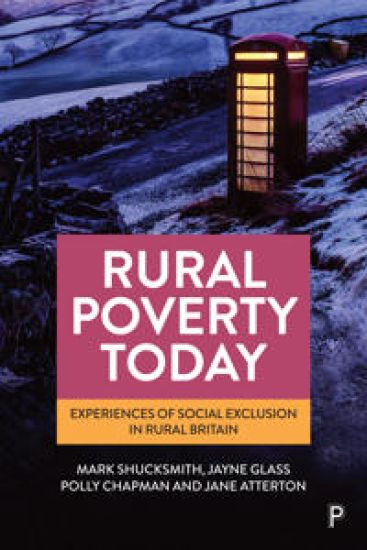
Poverty is perceived as an urban problem, yet many in rural Britain also experience hardship. This book explores how and why people in rural areas experience and negotiate poverty and social exclusion. It examines the role of societal processes, individual circumstances, sources of support (markets; state; voluntary organisations; family and friends) and the role of place. It concludes that the UK’s welfare system is poorly adapted to rural areas, with the COVID-19 pandemic, Brexit and cutbacks exacerbating pressures. Voluntary organisations increasingly fill gaps in support left by the state. Invaluable to those in policy and practice, the book recommends a combination of person-based and place-based approaches to tackle rural poverty.
Comparing Rural Development

Comparing Rural Development

Arnar Árnason; Mark Shucksmith

Routledge
2016
nidottu
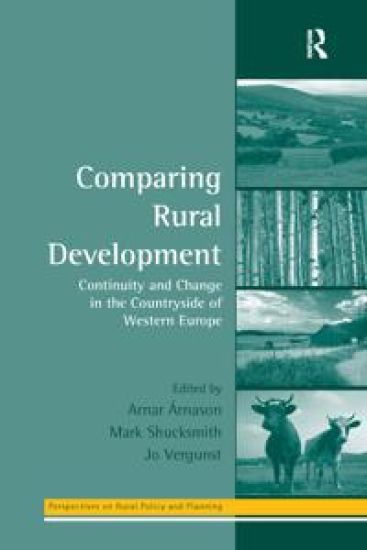
At a time when there is major reorientation of rural economies in Europe, and the emergence of new possibilities both for governance and for conflict, this book brings together a group of leading academics in the fields of geography, sociology and anthropology to examine how such changes are taking place in the west of Europe. It describes, analyses and theorises the role of networks and social capital in rural development in six countries: Finland, Ireland, Italy, Norway, Scotland and Sweden, and addresses the tension between studying 'local' rural development and the 'globalized' nature of modern economies and societies. An approach to networks and social capital is used as a way of drawing attention to the non-economic dimensions of rural development and society. The book stresses that the links between society and economics are of key importance.
Comparing Rural Development

Comparing Rural Development

Arnar Árnason; Mark Shucksmith

Ashgate Publishing Limited
2009
sidottu
At a time when there is major reorientation of rural economies in Europe, and the emergence of new possibilities both for governance and for conflict, this book brings together a group of leading academics in the fields of geography, sociology and anthropology to examine how such changes are taking place in the west of Europe. It describes, analyses and theorises the role of networks and social capital in rural development in six countries: Finland, Ireland, Italy, Norway, Scotland and Sweden, and addresses the tension between studying 'local' rural development and the 'globalized' nature of modern economies and societies. An approach to networks and social capital is used as a way of drawing attention to the non-economic dimensions of rural development and society. The book stresses that the links between society and economics are of key importance.