Kirjojen hintavertailu. Mukana 12 595 353 kirjaa ja 12 kauppaa.

Kirjailija

Mark Solms

Kirjat ja teokset yhdessä paikassa: 21 kirjaa, julkaisuja vuosilta 1997-2027, suosituimpien joukossa The Emotional Foundations of Personality. Vertaile teosten hintoja ja tarkista saatavuus suomalaisista kirjakaupoista.

21 kirjaa

Kirjojen julkaisuhaarukka 1997-2027.

The Emotional Foundations of Personality

The Emotional Foundations of Personality

Kenneth L. Davis; Jaak Panksepp; Mark Solms

WW Norton Co
2018
sidottu
This book presents the wealth of scientific evidence that our personality emerges from evolved primary emotions shared by all mammals. Yes, your dog feels love—and many other things too. These subcortically generated emotions bias our actions, alter our perceptions, guide our learning, provide the basis for our thoughts and memories, and become regulated over the course of our lives. Understanding personality development from the perspective of mammals is a groundbreaking approach and one that sheds new light on the ways in which we as humans respond to life events, both good and bad. Jaak Panksepp, famous for discovering laughter in rats and for creating the field of affective neuroscience, died in April 2017. This book forms part of his lasting legacy and impact on a wide range of scientific and humanistic disciplines. It will be essential reading for anyone trying to understand how we act in the world and the world’s impact on us.
The Only Cure

The Only Cure

Mark Solms

ORION PUBLISHING CO
2027
pokkari
Once dismissed as unscientific, psychoanalytic therapy is proving to be among our most effective medical treatments of any kind - outperforming psychiatric drugs and rivalling vaccines in its power to prevent and heal. Why does it work so well? Perhaps because one of the most controversial figures in psychology was right all along. Neuroscience now confirms much of what Sigmund Freud conjectured over a century ago: our deepest struggles stem, not from chemical imbalances, but from buried memories and unconscious conflicts that no pill can touch. Using enthralling case studies and cutting-edge brain science, pioneering neuroscientist Mark Solms makes the case that psychoanalysis should resume its position as our master theory of the mind. Yet modern research also reveals where Freud got important things wrong. Could correcting these errors make therapy even more effective? As psychiatric diagnoses soar and standard treatments continue to fail many patients, The Only Cure offers a revolutionary hope: a real science of healing, rooted in the radical idea that our suffering arises from truths we haven't yet faced.
The Only Cure

The Only Cure

Mark Solms

ORION PUBLISHING CO
2026
sidottu
'Solms' vital work has never ignored the lived, felt experience of human beings. His ideas look a lot like the future to me' - SIRI HUSTVEDTDismissed for years as a soft, unquantifiable substitute for real medicine, evidence is now piling up that therapy - psychoanalytic therapy in particular - is one of the most powerful treatments that we possess for illness of any kind. Vastly more effective than almost all psychiatric drugs, it is as reliable against a plethora of mental complaints as the HPV vaccine is at preventing cervical cancer. But why does it work so well?The model of the human mind that is now emerging from the frontiers of neuroscience turns out (to the dismay of many scientists) to confirm much of what Sigmund Freud, the father of psychoanalysis, conjectured more than a century ago. Could it be that therapy works because Freudian theory, with its underworlds of murky desire and unconscious fantasy, is largely true? Long relegated to the status of pseudoscience, psychoanalysis could now be poised to resume its position as our master theory of the mind. Join the pioneering neuropsychologist Mark Solms on a revelatory inquiry into the essence of mental sickness and health. In this dazzling synthesis, Freud's original vision turns out to be just the thing to plug the void at the centre of contemporary psychiatry. What news could be more welcome, amid a mental health crisis, than that the cure has been in our possession all along - so long as we can commit to the treatment we really need?
Skrytyj istochnik soznanija.V poiskakh prirody subektivnogo opyta
V novoj knige Mark Solms predstavljaet revoljutsionnuju teoriju, soglasno kotoroj soznanie obuslovleno chuvstvami. Ego porozhdaet ne tolko kora golovnogo mozga, otvechajuschaja za intellekt i vysshie psikhicheskie funktsii, no takzhe bolee drevnjaja chast mozga, gde zarozhdajutsja emotsii. Kora stanovitsja nositelem soznanija lish nastolko, naskolko ee vozbuzhdaet stvol mozga. Eto i est tot samyj "skrytyj istochnik". Avtor svjazyvaet voedino elementarnuju fiziku zhivogo, novejshie dostizhenija vychislitelnoj i affektivnoj nejrobiologii, statisticheskuju fiziku, termodinamiku i printsip svobodnoj energii Karla? Fristona, a takzhe tonkosti subektivnogo opyta, kotorymi traditsionno zanimalsja psikhoanaliz. Pristalnoe vnimanie on udeljaet subektivnomu opytu soten patsientov s nevrologicheskimi rasstrojstvami, nabljudenie za kotorymi pozvolilo priblizitsja k bolee polnomu ponimaniju raboty mozga.Perevodchik Elifjorova Marija
The Hidden Spring: A Journey to the Source of Consciousness
For Mark Solms, one of the boldest thinkers in contemporary neuroscience, discovering how consciousness comes about has been a lifetime's quest. Scientists consider it the "hard problem" because it seems an impossible task to understand why we feel a subjective sense of self and how it arises in the brain.Venturing into the elementary physics of life, Solms has now arrived at an astonishing answer. In The Hidden Spring, he brings forward his discovery in accessible language and graspable analogies.Solms is a frank and fearless guide on an extraordinary voyage from the dawn of neuropsychology and psychoanalysis to the cutting edge of contemporary neuroscience, adhering to the medically provable. But he goes beyond other neuroscientists by paying close attention to the subjective experiences of hundreds of neurological patients, many of whom he treated, whose uncanny conversations expose much about the brain's obscure reaches.Most importantly, you will be able to recognize the workings of your own mind for what they really are, including every stray thought, pulse of emotion, and shift of attention. The Hidden Spring will profoundly alter your understanding of your own subjective experience.
The Hidden Spring

The Hidden Spring

Mark Solms

Profile Books Ltd
2022
pokkari
'Nobody bewitched by these mysteries can afford to ignore the solution proposed by Mark Solms' - Oliver Burkeman, Guardian 'A remarkable book. It changes everything' - Brian Eno How does the mind connect to the body? Why does it feel like something to be us? For one of the boldest thinkers in neuroscience, solving this puzzle has been a lifetime's quest. Now at last, the man who discovered the brain mechanism for dreaming appears to have made a breakthrough. The very idea that a solution is at hand may seem outrageous. Isn't consciousness intangible, beyond the reach of science? Yet Mark Solms shows how misguided fears and suppositions have concealed its true nature. Stick to the medical facts, pay close attention to the eerie testimony of hundreds of neurosurgery patients, and a way past our obstacles reveals itself. Join Solms on a voyage into the extraordinary realms beyond. More than just a philosophical argument, The Hidden Spring will forever alter how you understand your own experience. There is a secret buried in the brain's ancient foundations: bring it into the light and we fathom all the depths of our being.
The Hidden Spring

The Hidden Spring

Mark Solms

WW Norton Co
2021
sidottu
For Mark Solms, one of the boldest thinkers in contemporary neuroscience, discovering how consciousness comes about has been a lifetime's quest. He has now arrived at an astonishing answer. While sticking closely to the medical facts, Solms proves to be a frank and fearless guide on an extraordinary voyage from the dawn of psychoanalysis to the cutting edge of contemporary neuroscience. He introduces you to neurological patients whose uncanny conversations reveal much about the brain's obscure reaches. Venturing into the elementary physics of life, he finds surprising confirmation of some of Sigmund Freud's most provocative insights. Most importantly, you will be able to recognize the workings of your own mind for what they really are, including every stray thought, pulse of emotion, and shift of attention. More than a philosophical argument, the Free Energy theory will profoundly alter your understanding of your own subjective experience.
The Brain and the Inner World

The Brain and the Inner World

Mark Solms; Oliver Turnbull

Routledge
2019
sidottu
This work is an eagerly awaited account of this momentous and ongoing revolution, elaborated for the general reader by two pioneers of the field. The book takes the nonspecialist reader on a guided tour through the exciting new discoveries, pointing out along the way how old psychodynamic concepts are being forged into a new scientific framework fo
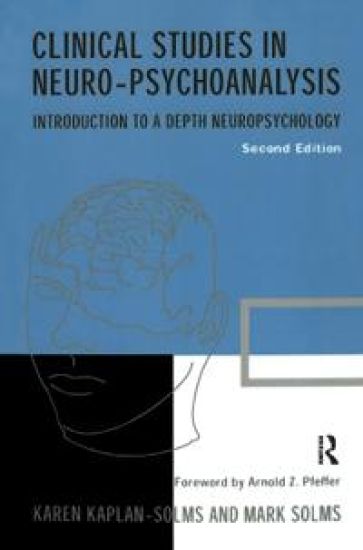
Clinical Studies in Neuro-psychoanalysis

Clinical Studies in Neuro-psychoanalysis

Karen Kaplan-Solms; Mark Solms

Routledge
2019
sidottu
When the first edition of Clinical studies in Neuro-Psychoanalysis was published in 2000, it was hailed as a turning point in psychoanalytic research. It is now relied on as a model for the integration of neuroscience and psychoanalysis. It won the NAAP's Gradiva Award for Best Book of the Year 2000 (Science Category) and Mark Solms rec
The Feeling Brain

The Feeling Brain

Mark Solms

Routledge
2019
sidottu
This book focuses on the matter of neuropsychoanalysis. It shows how the neuropsychoanalytic approach makes it possible to begin to locate within the tissues of the brain some of the metapsychological abstractions that Sigmund Freud derived from his work with purely psychiatric disorders.
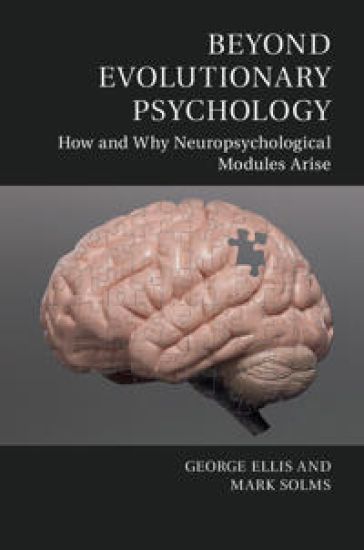
Beyond Evolutionary Psychology

Beyond Evolutionary Psychology

George Ellis; Mark Solms

Cambridge University Press
2017
pokkari
The nature/nurture question is an age-old problem. Beyond Evolutionary Psychology deals with the relation between culture, evolution, psychology and emotion, based both in the underlying biology, determined by our evolutionary heritage, and in the interaction of our brain with the physical, ecological and social environment, based in the key property of brain plasticity. Ellis and Solms show how the brain structures that underlie cognition and behaviour relate to each other through developmental processes guided by primary emotional systems. This makes very clear which brain modules are innate or 'hard-wired', and which are 'soft-wired' or determined through environmental interactions. The key finding is that there can be no innate cognitive modules in the neocortex, as this is not possible on both developmental and genetic grounds; in particular there can be no innate language acquisition device. This is essential reading for students and scholars of evolutionary psychology and evolutionary biology.
Beyond Evolutionary Psychology

Beyond Evolutionary Psychology

George Ellis; Mark Solms

Cambridge University Press
2017
sidottu
The nature/nurture question is an age-old problem. Beyond Evolutionary Psychology deals with the relation between culture, evolution, psychology and emotion, based both in the underlying biology, determined by our evolutionary heritage, and in the interaction of our brain with the physical, ecological and social environment, based in the key property of brain plasticity. Ellis and Solms show how the brain structures that underlie cognition and behaviour relate to each other through developmental processes guided by primary emotional systems. This makes very clear which brain modules are innate or 'hard-wired', and which are 'soft-wired' or determined through environmental interactions. The key finding is that there can be no innate cognitive modules in the neocortex, as this is not possible on both developmental and genetic grounds; in particular there can be no innate language acquisition device. This is essential reading for students and scholars of evolutionary psychology and evolutionary biology.
The Neuropsychology of Dreams

The Neuropsychology of Dreams

Mark Solms

Psychology Press Ltd
2015
nidottu
In this book, Mark Solms chronicles a fascinating effort to systematically apply the clinico-anatomical method to the study of dreams. The purpose of the effort was to place disorders of dreaming on an equivalent footing with those of other higher mental functions such as the aphasias, apraxias, and agnosias. Modern knowledge of the neurological organization of human mental functions was grounded upon systematic clinico-anatomical investigations of these functions under neuropathological conditions. It therefore seemed reasonable to assume that equivalent research into dreaming would provide analogous insights into the cerebral organization of this important but neglected function. Accordingly, the main thrust of the study was to identify changes in dreaming that are systematically associated with focal cerebral pathology and to describe the clinical and anatomical characteristics of those changes. The goal, in short, was to establish a nosology of dream disorders with neuropathological significance. Unless dreaming turned out to be organized in a fundamentally different way than other mental functions, there was every reason to expect that this research would cast light on the cerebral organization of the normal dream process.
The Feeling Brain

The Feeling Brain

Mark Solms

Karnac Books
2015
nidottu
This book focuses on the matter of neuropsychoanalysis. It shows how the neuropsychoanalytic approach makes it possible to begin to locate within the tissues of the brain some of the metapsychological abstractions that Sigmund Freud derived from his work with purely psychiatric disorders.
Schriften des Sigmund-Freud-Instituts.

Schriften des Sigmund-Freud-Instituts.

Mark Solms

Vandenhoeck Ruprecht GmbH Co KG
2010
nidottu
Die psychoanalytische Arbeit mit neurologisch geschädigten Patienten hat einige Besonderheiten zu beachten. Menschen etwa mit einem Schlaganfall in der rechten Hirnhälfte erleiden häufig eine Lähmung der linken Extremitäten und somit eine motorische Behinderung. Typischerweise können diese Patienten einen Neglect zeigen: Sie blenden die Wahrnehmungen aus dem linken Gesichtsfeld aus - sie nehmen nur die Hälfte der Welt wahr, obwohl sie subjektiv den Eindruck haben, die Welt wäre so vollständig wie immer. Ebenso findet sich bei ihnen oft das Phänomen der Anosognosie: Sie sind der festen Überzeugung, sie seien gar nicht halbseitig gelähmt. Diese Phänomene sind fër Psychoanalytiker von besonderem Interesse, da sie an psychische Abwehrformen wie etwa die Verleugnung erinnern, die aus der psychoanalytischen Arbeit mit neurologisch nicht beeinträchtigten Patienten bekannt sind. Die Autoren gehen der Frage nach, inwieweit sich eine Hirnschädigung auf die Ich-Funktionen der Person auswirkt und welche Konsequenzen sie fër die Persönlichkeit des Patienten hat. Anhand von psychoanalytischen Krankengeschichten wird gezeigt, wie sich unterschiedliche organische Veränderungen in der Psyche des Patienten und im therapeutischen Prozess bemerkbar machen. Das Anliegen des Buches ist es, Ergebnisse aus der Zusammenarbeit von Psychoanalyse und Neurowissenschaften nutzbar zu machen.
Hierarchien in Gehirn, Geist und Verhalten

Hierarchien in Gehirn, Geist und Verhalten

Gerald Wiest; Mark Solms

SPRINGER VERLAG GMBH
2009
sidottu
Mit einem Vorwort von Mark Solms Das Buch beschreibt die theoretischen Grundlagen und die Phänomenologie eines hierarchischen Funktions- und Organisationsprinzips, das sich in verschiedenen Konzepten des Gehirns und des Geistes widerspiegelt. Nach diesen Vorstellungen wird neurale und mentale Funktion als Resultat hierarchischer Überlagerungen verstanden, die Kennzeichen ontogenetischer und phylogenetischer Entwicklung sind. Das Modell impliziert eine Kontrolle von untergeordneten durch übergeordnete Elemente, sodass eine Störung in dieser Organisation neue Interpretationsmöglichkeiten neuromentaler und psychopathologischer Phänomene bietet. Hierarchische Prinzipien finden sich in Konzepten der Neurologie, der Neuroethologie und Psychoanalyse, sowie in der Theorie der Mikrogenese. Durch Miteinbeziehen evolutionärer und hierarchischer Aspekte in Erklärungsmodelle des menschlichen Geistes und Verhaltens, kontrastiert dieser Ansatz mit den modularen Konzepten der kognitiven Neurowissenschaft.
Brain and the Inner World

Brain and the Inner World

Mark Solms

Other Press LLC
2003
nidottu
The Brain and the Inner World is an eagerly-awaited account of a momentous revolution. Subjective mental states like consciousness, emotion, and dreaming were once confined to the realm of philosophy, psychoanalysis, and the human sciences. These topics now assume center stage in leading neuroscientific laboratories around the world. This shift has produced an explosion of new insights into the natural laws that govern our inner life. By two pioneers in the field, The Brain and the Inner World guides us through the exciting new discoveries, showing how old psychodynamic concepts are being forged into a scientific framework for understanding subjective experience. It is not that the mind is reduced to neurobiology. Rather, thanks to neurobiology, we are free to believe in the power of the mind. The neurosciences will soon be able to argue with Plato, Descartes, James, Freud, and Lacan about the mysterious connections between emotions, experience, will, reason, and creativity.
The Brain and the Inner World

The Brain and the Inner World

Mark Solms

Karnac Books
2002
nidottu
This work is an eagerly awaited account of this momentous and ongoing revolution, elaborated for the general reader by two pioneers of the field. The book takes the nonspecialist reader on a guided tour through the exciting new discoveries, pointing out along the way how old psychodynamic concepts are being forged into a new scientific framework for understanding subjective experience - in health and disease.