

Kirjailija
Mark T. Mulder
Kirjat ja teokset yhdessä paikassa: 9 kirjaa, julkaisuja vuosilta 2015-2026, suosituimpien joukossa American Christians and Poverty Myths. Vertaile teosten hintoja ja tarkista saatavuus suomalaisista kirjakaupoista.
Mukana myös kirjoitusasut: Mark T Mulder
9 kirjaa
Kirjojen julkaisuhaarukka 2015-2026.

The Church Must Grow or Perish: Robert H. Schuller and the Business of American Christianity
Mark T. Mulder; Gerardo Marti
William B. Eerdmans Publishing Company
2025
nidottu

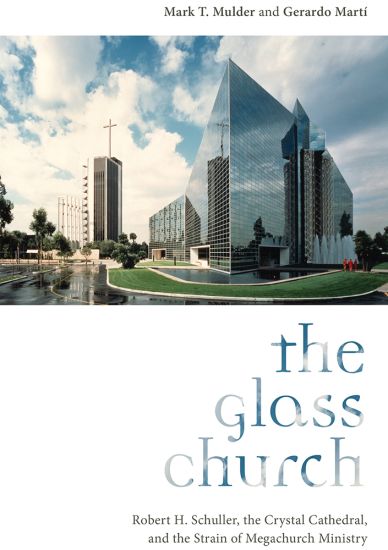
Robert H. Schuller’s ministry—including the architectural wonder of the Crystal Cathedral and the polished television broadcast of Hour of Power—cast a broad shadow over American Christianity. Pastors flocked to Southern California to learn Schuller’s techniques. The President of United States invited him sit prominently next to the First Lady at the State of the Union Address. Muhammad Ali asked for the pastor’s autograph. It seemed as if Schuller may have started a second Reformation. And then it all went away. As Schuller’s ministry wrestled with internal turmoil and bankruptcy, his emulators—including Rick Warren, Bill Hybels, and Joel Osteen— nurtured megachurches that seemed to sweep away the Crystal Cathedral as a relic of the twentieth century. How did it come to this?Certainly, all churches depend on a mix of constituents, charisma, and capital, yet the size and ambition of large churches like Schuller’s Crystal Cathedral exert enormous organizational pressures to continue the flow of people committed to the congregation, to reinforce the spark of charismatic excitement generated by high-profile pastors, and to develop fresh flows of capital funding for maintenance of old projects and launching new initiatives. The constant attention to expand constituencies, boost charisma, and stimulate capital among megachurches produces an especially burdensome strain on their leaders. By orienting an approach to the collapse of the Crystal Cathedral on these three core elements—constituency, charisma, and capital—The Glass Church demonstrates how congregational fragility is greatly accentuated in larger churches, a notion we label megachurch strain, such that the threat of implosion is significantly accentuated by any failures to properly calibrate the inter-relationship among these elements.
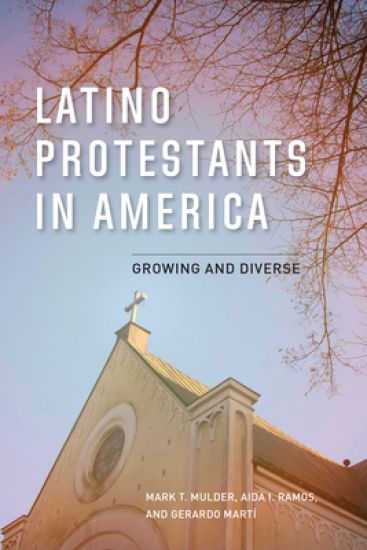
Latino Protestants in America
Mark T. Mulder; Aida I. Ramos; Gerardo Martí
Rowman Littlefield
2021
nidottu
Latino Protestantism is growing rapidly in the United States. Researchers estimate that by 2030 half of all Latinos in America will be Protestant. This remarkable growth is not just about numbers. The rise of Latino Protestants will impact the changing nature of American politics, economics, and religion. Latino Protestants in America takes readers inside the numbers to highlight the many reasons Latino Protestants are growing as well as the diversity of this group.The book brings together the best existing scholarship on this group with original research to offer a nuanced picture of Latino Protestants in America, from worship practices to political engagement. The narrative helps readers move beyond misconceptions about Latino religion and offers a window into the diverse ways that religion plays out in real life. Latino Protestants in America is an essential resource for anyone interested in the beliefs and practices of this group, as well as the implications for its growth and areas for further study.
Robert H. Schuller’s ministry—including the architectural wonder of the Crystal Cathedral and the polished television broadcast of Hour of Power—cast a broad shadow over American Christianity. Pastors flocked to Southern California to learn Schuller’s techniques. The President of United States invited him sit prominently next to the First Lady at the State of the Union Address. Muhammad Ali asked for the pastor’s autograph. It seemed as if Schuller may have started a second Reformation. And then it all went away. As Schuller’s ministry wrestled with internal turmoil and bankruptcy, his emulators—including Rick Warren, Bill Hybels, and Joel Osteen— nurtured megachurches that seemed to sweep away the Crystal Cathedral as a relic of the twentieth century. How did it come to this?Certainly, all churches depend on a mix of constituents, charisma, and capital, yet the size and ambition of large churches like Schuller’s Crystal Cathedral exert enormous organizational pressures to continue the flow of people committed to the congregation, to reinforce the spark of charismatic excitement generated by high-profile pastors, and to develop fresh flows of capital funding for maintenance of old projects and launching new initiatives. The constant attention to expand constituencies, boost charisma, and stimulate capital among megachurches produces an especially burdensome strain on their leaders. By orienting an approach to the collapse of the Crystal Cathedral on these three core elements—constituency, charisma, and capital—The Glass Church demonstrates how congregational fragility is greatly accentuated in larger churches, a notion we label megachurch strain, such that the threat of implosion is significantly accentuated by any failures to properly calibrate the inter-relationship among these elements.
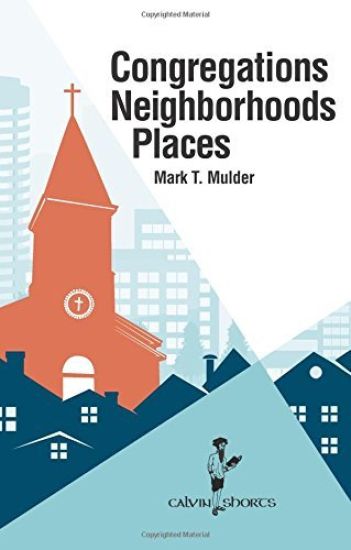
Congregational community engagement is so widespread in the United States that it is best described as a congregational norm. Both congregational leaders and attenders, in fact, expect to be involved in community activities simply as a matter of course. Moreover, people in need assume aid from congregations is natural and normal. Beyond that, most congregations want to be involved in their communities--they see neighborhood participation as a natural product of their mission. And congregational social activity also tends to spur other action: studies show that individuals who attend congregations in which there is a strong and clear priority on community care are more likely than others to be civically engaged outside the congregation. In other words, congregational activity has ripple effects that are hard to even measure. Congregations interested in community engagement, though, should prepare to accurately assess both their limits and capacities in addressing community issues. There exists no step-by-step formula for congregational engagement that simply translates to all communities/neighborhoods. This book, however, offers a brief overview to stimulate congregational thinking about community engagement in a manner that includes insights regarding social science and local context.
Latino Protestants in America
Mark T. Mulder; Aida I. Ramos; Gerardo Martí
Rowman Littlefield
2017
sidottu
Latino Protestantism is growing rapidly in the United States. Researchers estimate that by 2030 half of all Latinos in America will be Protestant. This remarkable growth is not just about numbers. The rise of Latino Protestants will impact the changing nature of American politics, economics, and religion. Latino Protestants in America takes readers inside the numbers to highlight the many reasons Latino Protestants are growing as well as the diversity of this group. The book brings together the best existing scholarship on this group with original research to offer a nuanced picture of Latino Protestants in America, from worship practices to political engagement. The narrative helps readers move beyond misconceptions about Latino religion and offers a window into the diverse ways that religion plays out in real life. Latino Protestants in America is an essential resource for anyone interested in the beliefs and practices of this group, as well as the implications for its growth and areas for further study.
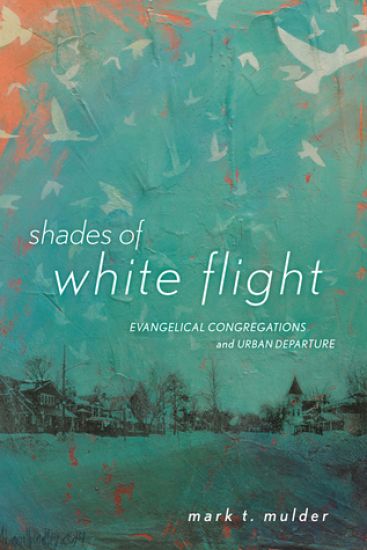
Since World War II, historians have analyzed a phenomenon of “white flight” plaguing the urban areas of the northern United States. One of the most interesting cases of “white flight” occurred in the Chicago neighborhoods of Englewood and Roseland, where seven entire church congregations from one denomination, the Christian Reformed Church, left the city in the 1960s and 1970s and relocated their churches to nearby suburbs. In Shades of White Flight, sociologist Mark T. Mulder investigates the migration of these Chicago church members, revealing how these churches not only failed to inhibit white flight, but actually facilitated the congregations’ departure. Using a wealth of both archival and interview data, Mulder sheds light on the forces that shaped these midwestern neighborhoods and shows that, surprisingly, evangelical religion fostered both segregation as well as the decline of urban stability. Indeed, the Roseland and Englewood stories show how religion—often used to foster community and social connectedness—can sometimes help to disintegrate neighborhoods. Mulder describes how the Dutch CRC formed an insular social circle that focused on the local church and Christian school—instead of the local park or square or market—as the center point of the community. Rather than embrace the larger community, the CRC subculture sheltered themselves and their families within these two places. Thus it became relatively easy—when black families moved into the neighborhood—to sell the church and school and relocate in the suburbs. This is especially true because, in these congregations, authority rested at the local church level and in fact they owned the buildings themselves. Revealing how a dominant form of evangelical church polity—congregationalism—functioned within the larger phenomenon of white flight, Shades of White Flight lends new insights into the role of religion and how it can affect social change, not always for the better.
Since World War II, historians have analyzed a phenomenon of “white flight” plaguing the urban areas of the northern United States. One of the most interesting cases of “white flight” occurred in the Chicago neighborhoods of Englewood and Roseland, where seven entire church congregations from one denomination, the Christian Reformed Church, left the city in the 1960s and 1970s and relocated their churches to nearby suburbs. In Shades of White Flight, sociologist Mark T. Mulder investigates the migration of these Chicago church members, revealing how these churches not only failed to inhibit white flight, but actually facilitated the congregations’ departure. Using a wealth of both archival and interview data, Mulder sheds light on the forces that shaped these midwestern neighborhoods and shows that, surprisingly, evangelical religion fostered both segregation as well as the decline of urban stability. Indeed, the Roseland and Englewood stories show how religion—often used to foster community and social connectedness—can sometimes help to disintegrate neighborhoods. Mulder describes how the Dutch CRC formed an insular social circle that focused on the local church and Christian school—instead of the local park or square or market—as the center point of the community. Rather than embrace the larger community, the CRC subculture sheltered themselves and their families within these two places. Thus it became relatively easy—when black families moved into the neighborhood—to sell the church and school and relocate in the suburbs. This is especially true because, in these congregations, authority rested at the local church level and in fact they owned the buildings themselves. Revealing how a dominant form of evangelical church polity—congregationalism—functioned within the larger phenomenon of white flight, Shades of White Flight lends new insights into the role of religion and how it can affect social change, not always for the better.