Kirjojen hintavertailu. Mukana 12 237 160 kirjaa ja 12 kauppaa.
Kirjailija
Mark Turner
Kirjat ja teokset yhdessä paikassa: 43 kirjaa, julkaisuja vuosilta 1989-2026, suosituimpien joukossa The Political Economy of Kidnapping. Vertaile teosten hintoja ja tarkista saatavuus suomalaisista kirjakaupoista.
Gain a solid understanding of the principles of trigonometry and how these concepts apply to real life with McKeague/Turner’s TRIGONOMETRY. The book presents contemporary concepts in brief, manageable sections using current, detailed examples and interesting applications. Captivating illustrations such as cycling, the Ferris wheel, and the human cannonball show trigonometry in action. Unique Historical Vignettes offer a fascinating glimpse at how many of the central ideas in trigonometry began. The text is easy to read, and important theorems and definitions are boxed so they can be quickly identified for study purposes.
Why are we so innovative? Where do new ideas come from? Why are human beings so exceptionally good at innovation, leaving other species mentally in the dust? How can we hold onto new ideas once they are formed? This book explores the claim that the human spark, the source of innovation and the origin of ideas, was an advance that occurred in a particular kind of mental operation, which Turner calls blending. Blending is our ability to take two ideas or more and create a new idea from the "blend." And what is so fascinating is how human beings are able to engage in blending almost without effort and usually unconsciously. It appears to be second nature to us, how we live and breathe in the course of processing information and ideas. Human beings are profoundly different from all other species in this ability. While many species can do what we cannot-fly, run amazingly fast, see in the dark--only human beings can innovate. Beginning somewhere in the Paleolithic Age, everything changed in the course of human events. Before that, we were a bunch of large mammals. After that, we were poised to take over the world. Turner makes the controversial and provocative claim that what made human advances possible was the ability to engage in the virtuosity of blending, which is everywhere apparent in our cultural record-in our creations and innovations--it is the origin of our ideas. Turner's theory of blending is featured in Jonah Lehrer's bestselling book, Imagine, and this book will be the first to lay out this theory in detail for a lay audience and academics tackling the nature of the human brain and the fascinating puzzle of what it means to be human.
This fully revised edition of the same authors' Governance, Administration and Development is the ideal introduction to public management and the policy process in developing countries. With a new chapter on issues of law and order, it also covers current debates on civil society, aid and intervention, and the relationship of states and markets.
This fully revised edition of the same authors' Governance, Administration and Development is the ideal introduction to public management and the policy process in developing countries. With a new chapter on issues of law and order, it also covers current debates on civil society, aid and intervention, and the relationship of states and markets.
A must-have for naturalists and plant lovers in the Pacific NorthwestTrees and Shrubs of the Pacific Northwest is a comprehensive field guide to commonly found woody plants in the region. It features introductory chapters on the native landscape and plant entries that detail the family, scientific and common name, flowering seasons, and size. This must-have guide is for hikers, nature lovers, plant geeks, and anyone who wants to know more about the many plants of the Pacific Northwest. ·Includes photographs and descriptions of 568 species of woody plants ·Covers Oregon, Washington, northern California, and British Columbia ·Introductory chapters discuss the ecoregions, habitats, and microhabitats of the Pacific Northwest ·User-friendly organization by leaf type
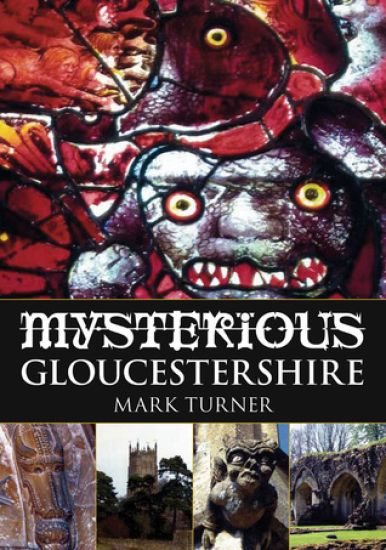
This richly illustrated A-Z of Gloucestershire's towns and villages contains manifold mysteries of every kind. There are many places in the region that might be termed mysterious, from crumbling manor houses, castles and ruins to ancient woods and trackways where standing stones and tombstones lie forgotten. This volume explores them all. Added to this are reports of hauntings and ghostly activity, sightings of UFOs and mysterious creatures, and the occasional appearance of crop circles; in a more sinister vein, several particularly gruesome murders from the past are recounted, all of which remain unsolved. These events have, over time, become part of the area’s folklore. Mark Turner, whose previous titles include Curious Cotswolds, presents a fascinating collection of inexplicable events that will delight residents and visitors alike. No one with an interest in the darker side of Gloucestershire’s history should leave home without it.
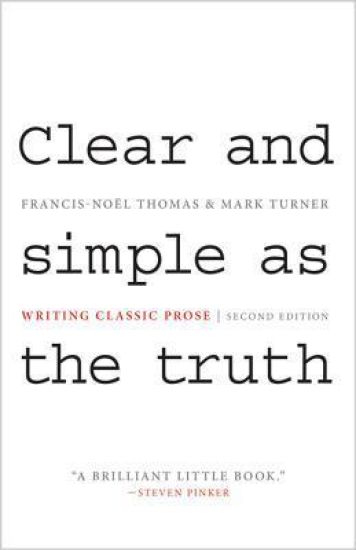
For more than a decade, Clear and Simple as the Truth has guided readers to consider style not as an elegant accessory of effective prose but as its very heart. Francis-Noel Thomas and Mark Turner present writing as an intellectual activity, not a passive application of verbal skills. In classic style, the motive is truth, the purpose is presentation, the reader and writer are intellectual equals, and the occasion is informal. This general style of presentation is at home everywhere, from business memos to personal letters and from magazine articles to student essays. Everyone talks about style, but no one explains it. The authors of this book do; and in doing so, they provoke the reader to consider style, not as an elegant accessory of effective prose, but as its very heart. At a time when writing skills have virtually disappeared, what can be done? If only people learned the principles of verbal correctness, the essential rules, wouldn't good prose simply fall into place? Thomas and Turner say no. Attending to rules of grammar, sense, and sentence structure will no more lead to effective prose than knowing the mechanics of a golf swing will lead to a hole-in-one. Furthermore, ten-step programs to better writing exacerbate the problem by failing to recognize, as Thomas and Turner point out, that there are many styles with different standards. The book is divided into four parts. The first, "Principles of Classic Style," defines the style and contrasts it with a number of others. "The Museum" is a guided tour through examples of writing, both exquisite and execrable. "The Studio," new to this edition, presents a series of structured exercises. Finally, "Further Readings in Classic Prose" offers a list of additional examples drawn from a range of times, places, and subjects. A companion website, classicprose.com, offers supplementary examples, exhibits, and commentary, and features a selection of pieces written by students in courses that used Clear and Simple as the Truth as a textbook.
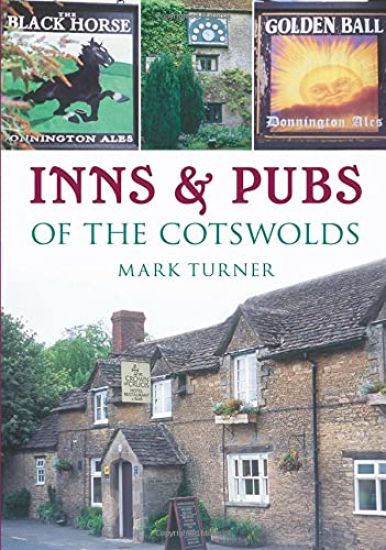
This A-Z covering Gloucestershire, Oxfordshire, Warwickshire and Worcestershire is a delightful tour around the most interesting pubs in the area. Taking in all manner of establishments such as the Coach and Horses, an old village pub in Longborough, to the White Hart Royal Hotel, a sixteenth-century inn in Moreton-on-Marsh, the author visits a huge variety of pubs that have made the Cotswolds the delightful area they are today. It is sure to appeal to those who live in the Cotswolds and also to visitors wishing to tour the area's charming pubs.
This major introductory text written by 3 leading names in the field provides an accessible overview of the challenges faced in overcoming global poverty and inequality in the 21st century. Through an in-depth assessment of development theory and practice, the authors set out to advance two key arguments: the first being the importance of historically contextualizing contemporary developmental problems in order to assess policy proposals; and the second that inequality matters, and how this notion has continually remained a central feature of development debates from colonial times to present day. Ideal for undergraduate students taking development modules as part of political science and international relations degrees, this engaging text proves to be essential reading when exploring the impacts of development on today's international political economy. With each chapter covering inequalities from all different angles, the authors clearly outline the impact of models such as globalization and neoliberalism, as well as offering alternative views on the challenges posed by the UN's Millennium Development Goals. Also available is a companion website with extra features to accompany the text, please take a look by clicking below - https://he.palgrave.com/companion/Greig-Challenging-Global-Inequality/
This major introductory text written by three leading names in the field provides an accessible overview of the challenges faced in overcoming global poverty and inequality in the twenty-first century. Through an in-depth assessment of development theory and practice, the authors set out to advance two key arguments: the first being the importance of historically contextualizing contemporary developmental problems in order to assess policy proposals; and the second that inequality matters, and how this notion has continually remained a central feature of development debates from colonial times to present day. Ideal for undergraduate students taking development modules as part of Political Science and International Relations degrees, this engaging text proves to be essential reading when exploring the impacts of development on today's international political economy. With each chapter covering inequalities from all different angles, the authors clearly outline the impact of models such as globalization and neoliberalism, as well as offering alternative views on the challenges posed by the UN's Millennium Development Goals.Also available is a companion website with extra features to accompany the text, please take a look by clicking below - https://he.palgrave.com/companion/Greig-Challenging-Global-Inequality/
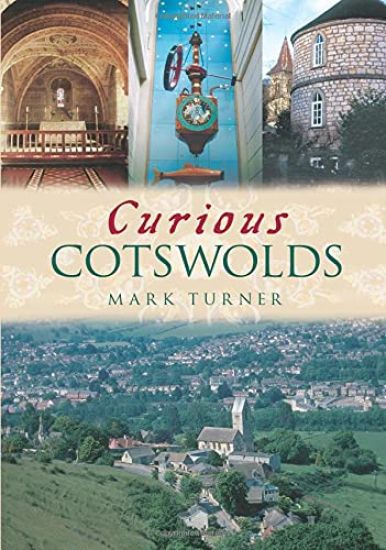
Curious Cotswolds takes the reader on a tour of the area, looking at the history, archaeology and curiosities of the Cotswolds. The author, a former Cotswolds policeman, describes points of interest to be found in the towns, villages and hamlets of the region, looking at Cheltenham and North; Cirencester, Stroud and South; Worcestershire and Warwickshire; and Oxfordshire.This historical guide offers a fascinating insight into the Cotswolds and will delight visitors and residents alike.
Featuring more than 1240 stunning color photographs, this comprehensive field guide will remain a trusted, authoritative trailside reference for years to come. It describes and illustrates 1220 commonly encountered species, both native and nonnative, including perennials, annuals, and shrubs. Encompassing the Pacific Northwest from southern British Columbia to northern California, from the coast to the mountains and high desert, this handy book is perfect for hikers, naturalists, native plant enthusiasts, and anyone wishing to learn about the amazingly diverse wildflowers of the region. Organized by flower color and shape, and including a range map for each flower described, it is as user-friendly as it is informative.
In its first two decades, much of cognitive science focused on such mental functions as memory, learning, symbolic thought, and language acquisition - the functions in which the human mind most closely resembles a computer. But humans are more than computers, and the cutting-edge research in cognitive science is increasingly focused on the more mysterious, creative aspects of the mind. The Way We Think is a landmark synthesis that exemplifies this new direction. The theory of conceptual blending is already widely known in labouratories throughout the world this book is its definitive statement. Gilles Fauconnier and Mark Turner argue that all learning and all thinking consist of blends of metaphors based on simple bodily experiences. These blends are then themselves blended together into an increasingly rich structure that makes up our mental functioning in modern society. A child's entire development consists of learning and navigating these blends. The Way We Think shows how this blending operates how it is affected by (and gives rise to) language, identity, and concept of category and the rules by which we use blends to understand ideas that are new to us. The result is a bold, exciting, and accessible new view of how the mind works.
Our understanding of the nature and processing of figurative language is central to several important issues in cognitive science, including the relationship of language and thought, how we process language, and how we comprehend abstract meaning. Over the past fifteen years, many traditional theories on these issues have been challenged on the basis of figurative language research. This research has prompted such fundamental questions as: is metaphor primarily a function of thought, or is it merely a matter of language? Why do we prefer to speak metaphorically in everyday conversation, rather than literally? Is metaphor the only vehicle through which we can understand abstract concepts? What role do cultural and social factors play in our comprehension of figurative language? Points on these and related questions will be raised and argued by the book's authors in an integrative look at the role of non-literal language in cognition form investigators who vary widely in their theoretical and philosophical views.
Our understanding of the nature and processing of figurative language is central to several important issues in cognitive science, including the relationship of language and thought, how we process language, and how we comprehend abstract meaning. Over the past fifteen years, many traditional theories on these issues have been challenged on the basis of figurative language research. This research has prompted such fundamental questions as: is metaphor primarily a function of thought, or is it merely a matter of language? Why do we prefer to speak metaphorically in everyday conversation, rather than literally? Is metaphor the only vehicle through which we can understand abstract concepts? What role do cultural and social factors play in our comprehension of figurative language? Points on these and related questions will be raised and argued by the book's authors in an integrative look at the role of non-literal language in cognition form investigators who vary widely in their theoretical and philosophical views.
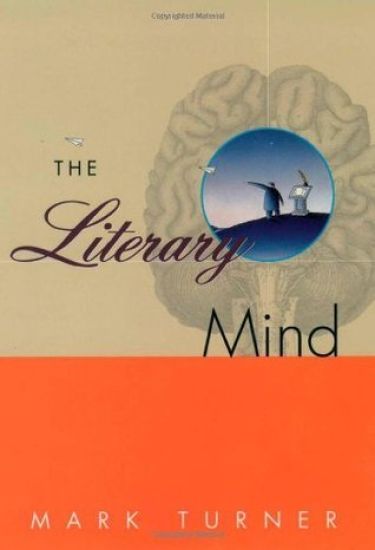
Mark Turner makes the revolutionary claim that the basic issue for cognitive science is the nature of literary thinking. Using tools of modern linguistics, the recent work of neuroscientists, and literary masterpieces from Shakespeare, Homer, and Dante, Turner explains how story and projection are fundamental to everyday thought.