Kirjojen hintavertailu. Mukana 12 595 353 kirjaa ja 12 kauppaa.

Kirjailija

Mark V. Arena

Kirjat ja teokset yhdessä paikassa: 31 kirjaa, julkaisuja vuosilta 1995-2023, suosituimpien joukossa The Technology Promotion and Protection Decision Tool. Vertaile teosten hintoja ja tarkista saatavuus suomalaisista kirjakaupoista.

Mukana myös kirjoitusasut: Mark V Arena

31 kirjaa

Kirjojen julkaisuhaarukka 1995-2023.

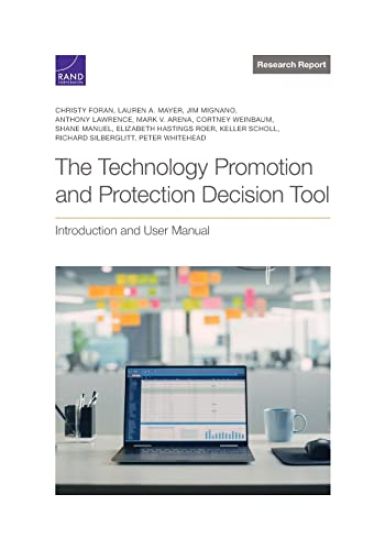
The Technology Promotion and Protection Decision Tool

The Technology Promotion and Protection Decision Tool

Christy Foran; Lauren A Mayer; Jim Mignano; Anthony Lawrence; Mark V Arena; Cortney Weinbaum; Shane Manuel; Elizabeth Hastings Roer; Keller Scholl; Richard Silberglitt; N Peter Whitehead

RAND Corporation
2023
pokkari
The U.S. government has developed hundreds of approaches to promote and protect critical technologies and their associated industrial base, and the sheer number and diversity of these programs, policies, and initiatives present a logistical challenge for the U.S. Department of Defense (DoD). The authors of this report describe a tool designed to help DoD decisionmakers--upon discovering a risk or vulnerability to a critical technology--quickly and effectively determine relevant approaches to mitigate the problem.
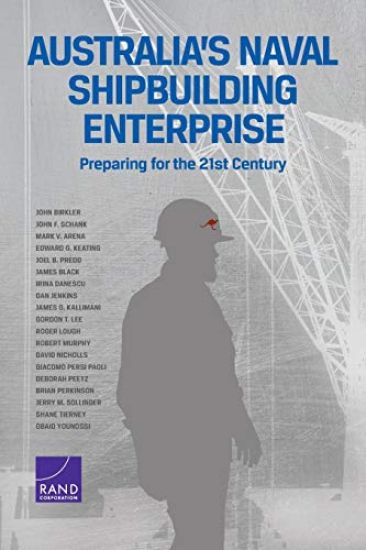
Australia's Naval Shipbuilding Enterprise

Australia's Naval Shipbuilding Enterprise

John Birkler; John F. Schank; Mark V. Arena; Edward G. Keating; Joel B. Predd; James Black; Irina Danescu; Dan Jenkins; James G. Kallimani; Gordon T. Lee; Roger Lough; Robert Murphy; David Nicholls; Deborah Peetz; Brian Perkinson; Jerry M. Sollinger; Shane Tierney; Obaid Younossi

RAND
2015
pokkari
To prepare for its next Defence White Paper, Australia is examining an enterprise-level naval shipbuilding plan. To support this effort, RAND researchers explore the feasibility of Australia sustaining a domestic naval shipbuilding industry compared with buying ships from foreign shipbuilders. The authors outline the complex consequences and trade-offs of both options.
Management Perspectives Pertaining to Root Cause Analyses of Nunn-Mccurdy Breaches

Management Perspectives Pertaining to Root Cause Analyses of Nunn-Mccurdy Breaches

Mark V. Arena; Irv Blickstein; Abby Doll; Jeffrey A. Drezner; Megan McKErnan; Charles Nemfakos; Jerry M. Sollinger; John Birkler; Gordon T. Lee; Brian McInnis; Carter C. Price; Erin York

RAND
2014
pokkari
The authors explore defense contractor motivations and identify mechanisms that might more closely align those incentives with Department of Defense goals. They also analyze major defense acquisition programs to determine if it is possible to identify programs that might incur a future Nunn-McCurdy breach by reviewing a number of acquisition programs that have incurred breaches and analyzing them for common characteristics.
Management Perspectives Pertaining to Root Cause Analyses of Nunn-Mccurdy Breaches

Management Perspectives Pertaining to Root Cause Analyses of Nunn-Mccurdy Breaches

Mark V. Arena; Irv Blickstein; Abby Doll; Jeffrey A. Drezner; Jennifer Kavanagh; Daniel F. McCaffrey; Megan McKErnan; Charles Nemfakos; Jerry M. Sollinger; Daniel Tremblay; Carolyn Wong

RAND
2013
pokkari
The authors investigate whether the tenure of program managers contributes to Nunn-McCurdy breaches. They also examine the existing decentralized systems used to track cost growth to determine whether additional guidance and control are needed to make acquisition category II programs performance more transparent. Finally, they investigate whether key assumptions, so-called framing assumptions, could be useful risk management tools.
Learning from Experience

Learning from Experience

John F. Schank; Cesse Ip; Kristy N. Kamarck; Robert E. Murphy; Mark V. Arena; Frank W. Lacroix; Gordon T. Lee

RAND
2012
nidottu
This volume presents a set of lessons learned from Australia's Collins submarine program that could help inform future program managers. Collins was the first submarine built in Australia. RAND investigated how operational requirements were set for the Collins class; explored the acquisition, contracting, design, and build processes that the program employed; and assessed the activities surrounding integrated logistics support for the class.
Learning from Experience

Learning from Experience

John F. Schank; Frank W. Lacroix; Robert E. Murphy; Mark V. Arena; Gordon T. Lee

RAND
2012
nidottu
The United States, the United Kingdom, and Australia asked the RAND Corporation to develop a set of lessons learned from previous submarine programs that could help inform future program managers. This volume presents an overview of five submarine programs in the three countries - the UK's Astute program; the U.S. Navy's Ohio, Seawolf, and Virginia programs; and Australia's Collins program - and identifies lessons that apply to all of them.
Learning from Experience

Learning from Experience

John F. Schank; Frank W. Lacroix; Robert E. Murphy; Cesse Ip; Mark V. Arena; Gordon T. Lee

RAND
2012
nidottu
This volume presents a set of lessons learned from the United Kingdom's Astute submarine program that could help inform future program managers. Designing and building a submarine requires careful management and oversight and a delegation of roles and responsibilities that recognizes which party - the shipbuilder or the government - is best positioned to manage risks.
Learning from Experience

Learning from Experience

John F. Schank; Cesse Ip; Frank W. Lacroix; Robert E. Murphy; Mark V. Arena; Kristy N. Kamarck; Gordon T. Lee

RAND
2012
nidottu
The U.S. Navy asked the RAND Corporation to develop a set of lessons learned from previous submarine programs that could help inform future program managers. This volume presents lessons from three U.S. submarine programs. The RAND team looked at how the programs were managed, the issues that affected management decisions, and the outcomes of those decisions. An overarching lesson from the three programs is the importance of program stability. One-liner: This volume presents an overview of lessons learned from three U.S. Navy submarine programs that could help inform future program managers.
Assessing Bid Protests of U.S. Department of Defense Procurements

Assessing Bid Protests of U.S. Department of Defense Procurements

Mark V Arena; Brian Persons; Irv Blickstein

RAND
2018
nidottu
Bid protests have been a feature of the U.S. defense acquisition environment for decades. In recent years, the bid protest process has come under increased scrutiny. In response, the National Defense Authorization Act for Fiscal Year 2017 called for a "comprehensive study on the prevalence and impact of bid protests on DoD acquisitions," including the systematic collection and analysis of the characteristics of bid protests and their outcomes.
Joint Precision Approach and Landing System Nunn-Mccurdy Breach Root Cause Analysis and Portfolio Assessment Metrics for DOD Weapons Systems

Joint Precision Approach and Landing System Nunn-Mccurdy Breach Root Cause Analysis and Portfolio Assessment Metrics for DOD Weapons Systems

Jennifer Kavanagh; Megan McKErnan; Kathryn Connor; Abby Doll; Jeffrey A. Drezner; Kristy N. Kamarck; Katherine Pfrommer; Mark V. Arena; Irv Blickstein; William Shelton; Jerry M. Sollinger

RAND
2015
pokkari
The report contains two analyses. First, the authors examine the cause of a Nunn-McCurdy unit cost breach of the Joint Precision Approach and Landing System Inc. 1A major defense acquisition program. Second, they document a methodology to assess the performance of an acquisition portfolio. The methodology included identifying objectives, selecting data and metrics, and analyzing visualizations of portfolio performance.
Keeping Major Naval Ship Acquisitions on Course

Keeping Major Naval Ship Acquisitions on Course

John F. Schank; Mark V. Arena; Kristy N. Kamarck; Gordon T. Lee; John Birkler; Robert E. Murphy; Roger Lough

RAND
2015
pokkari
This study provides a program overview of acquisition options available for the Commonwealth of Australia s next generation naval surface combatant and identifies internal and external factors that can influence a major ship acquisition program. The authors address questions relating to available ship design and build options; various phases, options, and decisions; and aspects that can contribute to the success of an acquisition program."
DOD and Commercial Advanced Waveform Developments and Programs with Nunn-Mccurdy Breaches

DOD and Commercial Advanced Waveform Developments and Programs with Nunn-Mccurdy Breaches

Mark V. Arena; Irv Blickstein; Daniel Gonzales; Sarah Harting; Jennifer Lamping Lewis; Michael McGee; Megan McKErnan; Charles Nemfakos; Jan Osburg; Rena Rudavsky; Jerry M. Sollinger

RAND
2014
pokkari
The report presents the results of two studies: The first compares the capabilities and development approaches used in the Joint Tactical Radio System wideband networking waveform and the commercial long-term evolution waveform, and the second analyzes military acquisition programs that have exceeded certain cost thresholds more than once.
Implications of an Air Force Budget Downturn on the Aircraft Industrial Base
The U.S. Air Force is facing a number of challenges as a result of the current defense budget downturn along with the uncertainty of its timing and magnitude. RAND examined the challenge of modernizing the Air Force s aircraft fleet while trying to sustain the industrial base with limited funding, considering six budget strategies for aircraft procurement: from a new high-tech fleet to sustaining and modifying the existing one."
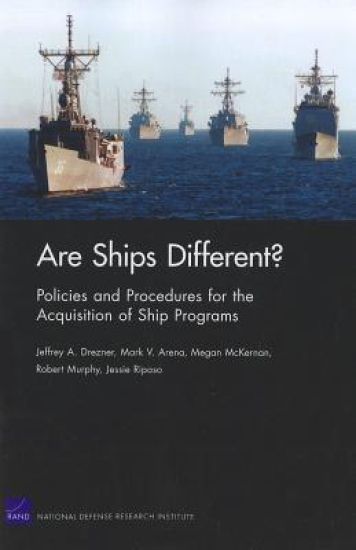
Are Ships Different? Policies and Procedures for the Acquisition Ofship Programs

Are Ships Different? Policies and Procedures for the Acquisition Ofship Programs

Jeffrey A. Drezner; Mark V. Arena; Megan McKErnan; Robert Murphy; Jessie Riposo

RAND
2011
pokkari
Department of Defense policies, procedures, and organizations for program management and oversight of defense acquisition programs do not align well with shipbuilding. Ship acquisition programs have characteristics that deviate from the normal framework in significant ways, resulting in disconnects and some confusion. The authors examine these differences and suggest policies that can better account for them.
From Marginal Adjustments to Meaningful Change

From Marginal Adjustments to Meaningful Change

John Birkler; Mark V. Arena; Irv Blickstein; Jeffrey A. Drezner; Susan M. Gates

RAND
2011
pokkari
Defense acquisition is one of the most urgent issues that the Department of Defense faces today. In an effort to provide the department and the nation with guidance on defense acquisition challenges, the authors present detailed proposals to improve defense acquisition through initiatives focused on competition, novel systems, risk management, organizational factors, prototyping, and the acquisition workforce.
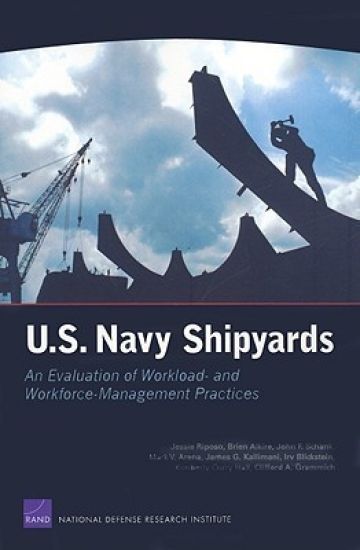
U.S. Navy Shipyards

U.S. Navy Shipyards

Jessie Riposo; Brien Alkire; John F Schank; Mark V Arena; James G Kallimani

RAND
2009
pokkari
RAND investigated cost-effective workforce-management strategies, alternative workload allocations, and the relevant best practices of comparable organizations to assist the Navy in managing the public shipyards. The Navy uses many practices common in other organizations, but reducing planned levels of overtime and increasing the permanent journeyman staff at the public shipyards could cost-effectively hedge against future workload growth.
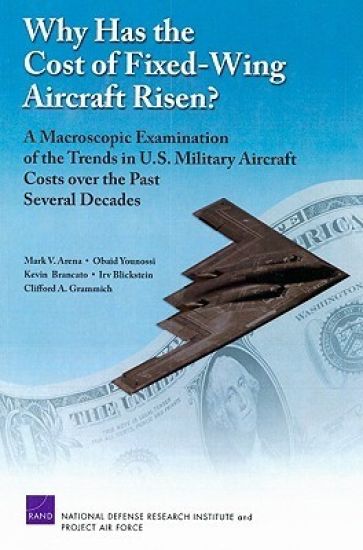
Why Has the Cost of Fixed-wing Aircraft Risen?

Why Has the Cost of Fixed-wing Aircraft Risen?

Mark V. Arena; Obaid Younossi; Kevin Brancato; Irv Blickstein; Clifford A. Grammich

RAND
2008
pokkari
This report explores why, in recent decades, military fixed-wing aircraft costs have escalated beyond the rates of commonly used inflation indices, examining both economy-driven factors that the Services cannot control and customer-driven ones that they can. The authors found that this trend of cost increases is true for all types of aircraft
Sources of Weapon System Cost Growth

Sources of Weapon System Cost Growth

Joseph G. Bolten; Robert S. Leonard; Mark V. Arena; Obaid Younossi; Jerry M. Sollinger

RAND
2008
pokkari
This analysis uses data from Selected Acquisition Reports to determine the causes of cost growth in 35 mature major defense acquisition programs. Four major sources of growth are identified: errors in estimation and scheduling, decisions by the government, financial matters, and miscellaneous. The analysis shows that more than two-thirds of cost growth (measured as simple averages) is caused by decisions, most of which involve quantity changes, requirements growth, and schedule changes.Cost growth in major weapon-systems programs results from errors in estimation and scheduling, government decisions, financial matters, and miscellaneous sources, with decisions involving changes in requirements, quantities, and production schedules the dominant cause.