Kirjojen hintavertailu. Mukana 12 595 353 kirjaa ja 12 kauppaa.

Kirjailija

Mark V. Tushnet

Kirjat ja teokset yhdessä paikassa: 10 kirjaa, julkaisuja vuosilta 1994-2025, suosituimpien joukossa Free Speech Beyond Words. Vertaile teosten hintoja ja tarkista saatavuus suomalaisista kirjakaupoista.

10 kirjaa

Kirjojen julkaisuhaarukka 1994-2025.

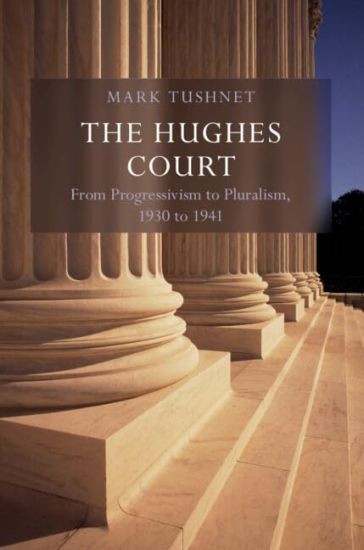
The Hughes Court: Volume 11

The Hughes Court: Volume 11

Mark V. Tushnet

Cambridge University Press
2025
pokkari
The Hughes Court: From Progressivism to Pluralism, 1930 to 1941 describes the closing of one era in constitutional jurisprudence and the opening of another. This comprehensive study of the Supreme Court from 1930 to 1941 – when Charles Evans Hughes was Chief Justice – shows how nearly all justices, even the most conservative, accepted the broad premises of a Progressive theory of government and the Constitution. The Progressive view gradually increased its hold throughout the decade, but at its end, interest group pluralism began to influence the law. By 1941, constitutional and public law was discernibly different from what it had been in 1930, but there was no sharp or instantaneous Constitutional Revolution in 1937 despite claims to the contrary. This study supports its conclusions by examining the Court's work in constitutional law, administrative law, the law of justiciability, civil rights and civil liberties, and statutory interpretation.
The Hughes Court: Volume 11

The Hughes Court: Volume 11

Mark V. Tushnet

Cambridge University Press
2022
sidottu
The Hughes Court: From Progressivism to Pluralism, 1930 to 1941 describes the closing of one era in constitutional jurisprudence and the opening of another. This comprehensive study of the Supreme Court from 1930 to 1941 – when Charles Evans Hughes was Chief Justice – shows how nearly all justices, even the most conservative, accepted the broad premises of a Progressive theory of government and the Constitution. The Progressive view gradually increased its hold throughout the decade, but at its end, interest group pluralism began to influence the law. By 1941, constitutional and public law was discernibly different from what it had been in 1930, but there was no sharp or instantaneous Constitutional Revolution in 1937 despite claims to the contrary. This study supports its conclusions by examining the Court's work in constitutional law, administrative law, the law of justiciability, civil rights and civil liberties, and statutory interpretation.
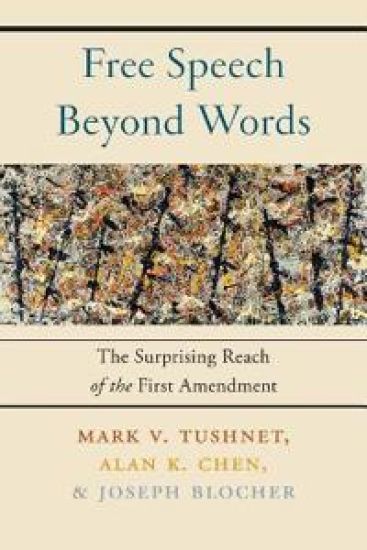
Free Speech Beyond Words

Free Speech Beyond Words

Mark V. Tushnet; Alan K. Chen; Joseph Blocher

New York University Press
2020
pokkari
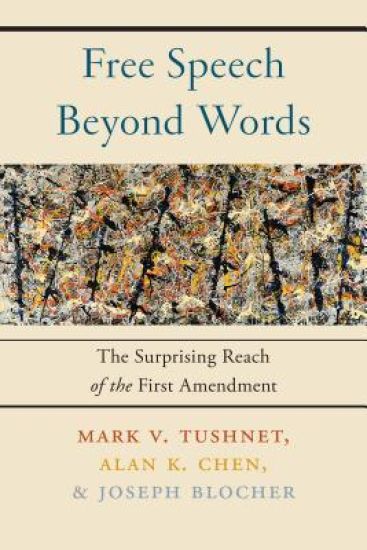
A look at First Amendment coverage of music, non-representational art, and nonsense The Supreme Court has unanimously held that Jackson Pollock's paintings, Arnold Schöenberg's music, and Lewis Carroll's poem "Jabberwocky" are "unquestionably shielded" by the First Amendment. Nonrepresentational art, instrumental music, and nonsense: all receive constitutional coverage under an amendment protecting "the freedom of speech," even though none involves what we typically think of as speech—the use of words to convey meaning. As a legal matter, the Court's conclusion is clearly correct, but its premises are murky, and they raise difficult questions about the possibilities and limitations of law and expression. Nonrepresentational art, instrumental music, and nonsense do not employ language in any traditional sense, and sometimes do not even involve the transmission of articulable ideas. How, then, can they be treated as "speech" for constitutional purposes? What does the difficulty of that question suggest for First Amendment law and theory? And can law resolve such inquiries without relying on aesthetics, ethics, and philosophy? Comprehensive and compelling, this book represents a sustained effort to account, constitutionally, for these modes of "speech." While it is firmly centered in debates about First Amendment issues, it addresses them in a novel way, using subject matter that is uniquely well suited to the task, and whose constitutional salience has been under-explored. Drawing on existing legal doctrine, aesthetics, and analytical philosophy, three celebrated law scholars show us how and why speech beyond words should be fundamental to our understanding of the First Amendment.
Free Speech Beyond Words

Free Speech Beyond Words

Mark V. Tushnet; Alan K. Chen; Joseph Blocher

New York University Press
2017
sidottu
A look at First Amendment coverage of music, non-representational art, and nonsense The Supreme Court has unanimously held that Jackson Pollock's paintings, Arnold Schöenberg's music, and Lewis Carroll's poem "Jabberwocky" are "unquestionably shielded" by the First Amendment. Nonrepresentational art, instrumental music, and nonsense: all receive constitutional coverage under an amendment protecting "the freedom of speech," even though none involves what we typically think of as speech—the use of words to convey meaning. As a legal matter, the Court's conclusion is clearly correct, but its premises are murky, and they raise difficult questions about the possibilities and limitations of law and expression. Nonrepresentational art, instrumental music, and nonsense do not employ language in any traditional sense, and sometimes do not even involve the transmission of articulable ideas. How, then, can they be treated as "speech" for constitutional purposes? What does the difficulty of that question suggest for First Amendment law and theory? And can law resolve such inquiries without relying on aesthetics, ethics, and philosophy? Comprehensive and compelling, this book represents a sustained effort to account, constitutionally, for these modes of "speech." While it is firmly centered in debates about First Amendment issues, it addresses them in a novel way, using subject matter that is uniquely well suited to the task, and whose constitutional salience has been under-explored. Drawing on existing legal doctrine, aesthetics, and analytical philosophy, three celebrated law scholars show us how and why speech beyond words should be fundamental to our understanding of the First Amendment.
Out of Range: Why the Constitution Can't End the Battle Over Guns
Few constitutional disputes maintain as powerful a grip on the public mind as the battle over the Second Amendment. The National Rifle Association and gun-control groups struggle unceasingly over a piece of the political landscape that no candidate for the presidency--and few for Congress--can afford to ignore. But who's right? Will it ever be possible to settle the argument? In Out of Range, one of the nation's leading legal scholars takes a calm, objective look at this bitter debate. Mark V. Tushnet brings to this book a deep expertise in the Constitution, the Supreme Court, and the role of the law in American life. He breaks down the different positions on the Second Amendment, showing that it is a mistake to stereotype them. Tushnet's exploration is honest and nuanced; he finds the constitutional arguments finely balanced, which is one reason the debate has raged for so long. Along the way, he examines various experiments in public policy, from both sides, and finds little clear evidence for the practical effectiveness of any approach to gun safety and prosecution. Of course, he notes, most advocates of the right to keep and bear arms agree that it should be subject to reasonable regulation. Ultimately, Tushnet argues, our view of the Second Amendment reflects our sense of ourselves as a people. The answer to the debate will not be found in any holy writ, but in our values and our vision of the nation. This compact, incisive examination offers an honest and thoughtful guide to both sides of the argument, pointing the way to solutions that could calm, if not settle, this bitter dispute.
The Regulatory and Administrative State

The Regulatory and Administrative State

Lisa Heinzerling; Mark V. Tushnet

Oxford University Press Inc
2006
sidottu
The casebook introduces students to the reasons for regulation, the ways in which regulation can go awry, the choice of legal institutions, the choice of regulatory instruments, and the art of statutory interpretation. The book uses several substantive subject areas as recurring themes, all involving the regulation of risk. The primary market for this casebook are law students taking a course on the Regulatory State; a secondary market may be found in schools of public policy.
Slave Law in the American South

Slave Law in the American South

Mark V. Tushnet

University Press of Kansas
2003
nidottu
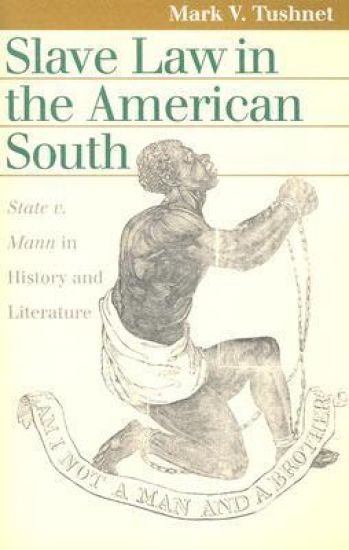
Tying together legal, historical, social, political and literary strands to show how the law itself was implicated in the persistence of slavery, this work sheds new light on slavery and Southern history, as it probes the conscience of a troubled jurist incapable of fully transcending his times.
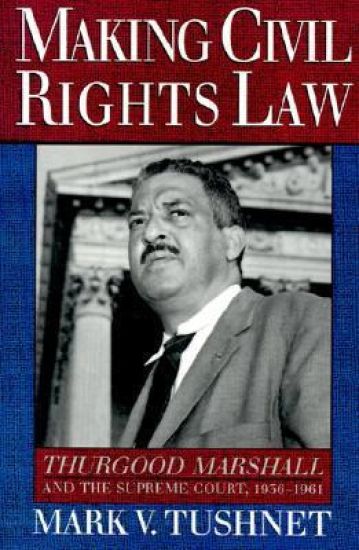
Making Civil Rights Law

Making Civil Rights Law

Mark V. Tushnet

Oxford University Press Inc
1996
nidottu
From the 1930s to the early 1960s civil rights law was made primarily through constitutional litigation. Before Rosa Parks could ignite a Montgomery Bus Boycott, the Supreme Court had to strike down the Alabama law which made segregated bus service required by law; before Martin Luther King could march on Selma to register voters, the Supreme Court had to find unconstitutional the Southern Democratic Party's exclusion of African-Americans; and before the March on Washington and the Civil Rights Act of 1964, the Supreme Court had to strike down the laws allowing for the segregation of public graduate schools, colleges, high schools, and grade schools. Making Civil Rights Law provides a chronological narrative history of the legal struggle, led by Thurgood Marshall and the NAACP Legal Defense Fund, that preceded the political battles for civil rights. Drawing on interviews with Thurgood Marshall and other NAACP lawyers, as well as new information about the private deliberations of the Supreme Court, Tushnet tells the dramatic story of how the NAACP Legal Defense Fund led the Court to use the Constitution as an instrument of liberty and justice for all African-Americans. He also offers new insights into how the justices argued among themselves about the historic changes they were to make in American society. Making Civil Rights Law provides an overall picture of the forces involved in civil rights litigation, bringing clarity to the legal reasoning that animated this "Constitutional revolution", and showing how the slow development of doctrine and precedent reflected the overall legal strategy of Thurgood Marshall and the NAACP.
Remnants of Belief

Remnants of Belief

Louis Michael Seidman; Mark V. Tushnet

Oxford University Press Inc
1996
nidottu
Designed as a supplement for constitutional law courses and seminars, Seidman and Tushnet use examples drawn from the popular press, public discussion and law articles to show how and why constitutional debate has evolved into the political conundrum it's become.
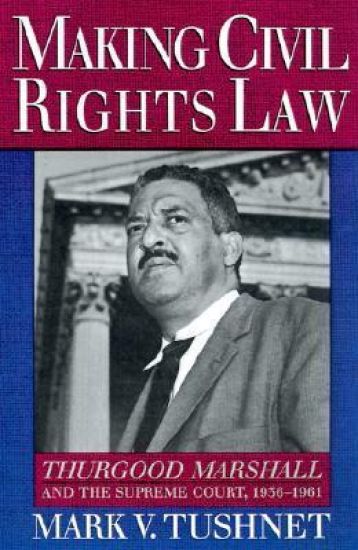
Making Civil Rights Law

Making Civil Rights Law

Mark V. Tushnet

Oxford University Press Inc
1994
sidottu
From the 1930s to the early 1960s civil rights law was made primarily through constitutional litigation. Before Rosa Parks could ignite a Montgomery Bus Boycott, the Supreme Court had to strike down the Alabama law which made segregated bus service required by law; before Martin Luther King could march on Selma to register voters, the Supreme Court had to find unconstitutional the Southern Democratic Party's exclusion of African-Americans; and before the March on Washington and the Civil Rights Act of 1964, the Supreme Court had to strike down the laws allowing for the segregation of public graduate schools, colleges, high schools, and grade schools. Making Civil Rights Law provides a chronological narrative history of the legal struggle, led by Thurgood Marshall and the NAACP Legal Defense Fund, that preceded the political battles for civil rights. Drawing on interviews with Thurgood Marshall and other NAACP lawyers, as well as new information about the private deliberations of the Supreme Court, Tushnet tells the dramatic story of how the NAACP Legal Defense Fund led the Court to use the Constitution as an instrument of liberty and justice for all African-Americans. He also offers new insights into how the justices argued among themselves about the historic changes they were to make in American society. Making Civil Rights Law provides an overall picture of the forces involved in civil rights litigation, bringing clarity to the legal reasoning that animated this "Constitutional revolution", and showing how the slow development of doctrine and precedent reflected the overall legal strategy of Thurgood Marshall and the NAACP.