Kirjojen hintavertailu. Mukana 12 595 353 kirjaa ja 12 kauppaa.
Kirjailija
Mark Winterbottom
Kirjat ja teokset yhdessä paikassa: 10 kirjaa, julkaisuja vuosilta 2001-2019, suosituimpien joukossa Approaches to Learning and Teaching Whole Series Pack (12 Titles). Vertaile teosten hintoja ja tarkista saatavuus suomalaisista kirjakaupoista.
NRICH; Lauren Harris; Paul Ellis; Keely Laycock; Mark Winterbottom; James De Winter; Andrew Gillespie; Helen Rees-Bidder; Margaret Cooze; Simon Armitage; Peter Thomas; Tony Cotton; Rachel Logan; Andrew Flint; Stuart Jack
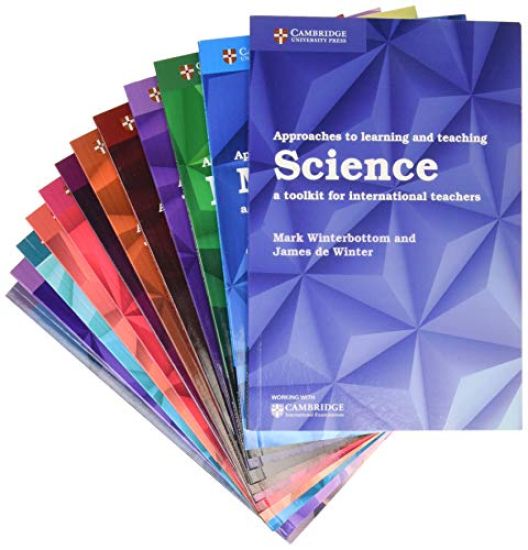
A subject-specific guide for teachers to supplement professional development and provide resources for lesson planning. This Whole Series pack includes all 12 subject titles. These books are subject-specific guides for international teachers, to supplement teacher learning and provide practical resources for lesson planning. Approaches to learning and teaching considers the local and global contexts when planning and teaching an international syllabus. The titles present ideas in the context of subject and with practical examples that help put theory into context. In addition, each title is accompanied by a variety of practical online tools for lesson planning and provides lesson ideas that can be downloaded from our companion website and used immediately in the classroom.
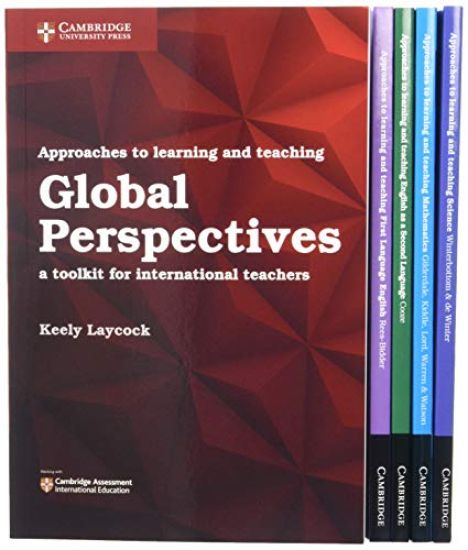
A subject-specific guide for teachers to supplement professional development and provide resources for lesson planning. This Core Subject pack includes 5 subject titles: Science, Mathematics, First Language English, English as a second language and Global Perspectives. These books are subject-specific guides for international teachers, to supplement teacher learning and provide practical resources for lesson planning. Approaches to learning and teaching considers the local and global contexts when planning and teaching an international syllabus. In addition, each title is accompanied by a variety of practical online tools for lesson planning and provides lesson ideas that can be downloaded from our companion website and used immediately in the classroom.
A subject-specific guide for teachers to supplement professional development and provide resources for lesson planning. Approaches to learning and teaching Science is the result of close collaboration between Cambridge University Press and Cambridge International Examinations. Considering the local and global contexts when planning and teaching an international syllabus, the title presents ideas for Science with practical examples that help put theory into context. Teachers can download online tools for lesson planning from our website. This book is ideal support for those studying professional development qualifications or international PGCEs.
Please note this book is suitable for any student studying: Exam board: OCR Level: GCSE (9-1) Subject: Biology First teaching: September 2016 First exams: June 2018 Twenty First Century Science is a motivating and engaging way to study science at GCSE. These resources will prepare students both for progression to further study of science and to be scientifically minded and informed citizens. The Twenty First Century Science suite will: - Develop students' abilities to critically evaluate data and information, by examining evidence and the arguments that link evidence to conclusions - Link science to issues relevant to all students and to the experiences of everyday life - Develop students' understanding of the concepts and models that scientists use to explain the world - Develop students' hands-on scientific skills and their understanding of experimental work in developing scientific explanations - Built on research and evidence-based principles, these Twenty First Century Science resources have been developed alongside the specifications, with close collaboration between OCR, the University of York Science Education Group, and Oxford University Press. Student Books feature: - Content fully matched to the 2016 specifications, presented in interesting and engaging contexts - Differentiation for all abilities in the form of Higher and Foundation books - Integrated maths support throughout - Exam preparation and practical support throughout summary and review questions, worked examples, and plenty of practice and synoptic questions.
Please note this book is suitable for any student studying: Exam board: OCR Level: GCSE (9-1) Subject: Biology First teaching: September 2016 First exams: June 2018 Twenty First Century Science is a motivating and engaging way to study science at GCSE. These resources will prepare students both for progression to further study of science and to be scientifically minded and informed citizens. The Twenty First Century Science suite will: - Develop students' abilities to critically evaluate data and information, by examining evidence and the arguments that link evidence to conclusions - Link science to issues relevant to all students and to the experiences of everyday life - Develop students' understanding of the concepts and models that scientists use to explain the world - Develop students' hands-on scientific skills and their understanding of experimental work in developing scientific explanations. Built on research and evidence-based principles, these Twenty First Century Science resources have been developed alongside the specifications, with close collaboration between OCR, the University of York Science Education Group, and Oxford University Press. Student Books feature: - Content fully matched to the new 2016 OCR Twenty First Century Science GCSE Science (9-1) specifications, presented in interesting and engaging contexts - Differentiation for all abilities in the form of Higher and Foundation books - Integrated maths support throughout - Exam preparation and practical support throughout - Summary and review questions, worked examples, and plenty of practice and synoptic questions.
Exam Board: OCR Level: A level Subject: Science / Biology First teaching: September 2015 First exams: June 2017 An ActiveBook is included with every Student Book, giving your students easy online access to the content in the Student Book. They can make it their own with notes, highlights and links to their wider reading. Perfect for supporting work and revision activities. Student Book 1 supports a standalone AS course and provides the first year of a two-year A level course; Student Books 1 and 2 together support the full A level course. A cumulative approach to learning constantly builds on what has previously been taught. The chapter openers highlight prior learning requirements and link to future learning. The required maths skills are highlighted at the start of each chapter providing opportunities for students to check understanding and remedy gaps. Bigger spreads require students to read real-life material that’s relevant to the course and use knowledge in new contexts. Accompanying questions require students to analyse how scientists write, think critically and consider issues. Preparing for your exams sections highlight the key differences between preparing for an AS and full A level exam. Practice question spreads provide opportunities for students to regularly check their understanding using questions written in the style of the new exams from day one.
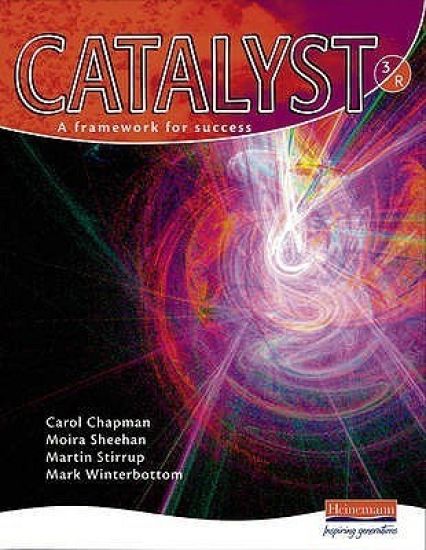
As well as following the QCA Scheme of Work order, Catalyst Pupil Books provide you with a stimulating way to teach the five key scientific ideas from the Framework: cells, forces, particles, energy and interdependence. Red Pupil Books extend mainstream to higher-ability pupils, helping them to achieve their very best.
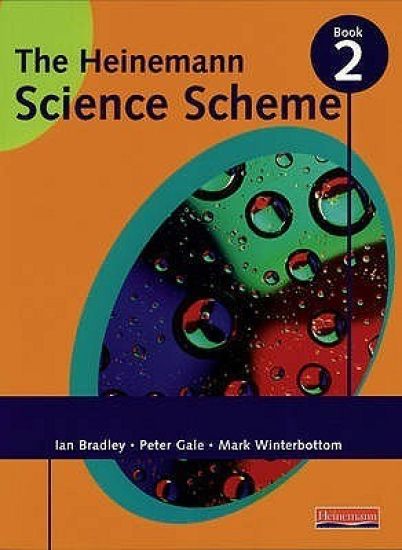
The "Heinemann Science Scheme" offers an approach to the QCA's Scheme of Work. Teacher's resource packs provide support with lesson planning, with each chapter matching the Scheme of Work, and in-built assessment. This is a single textbook for Year 8
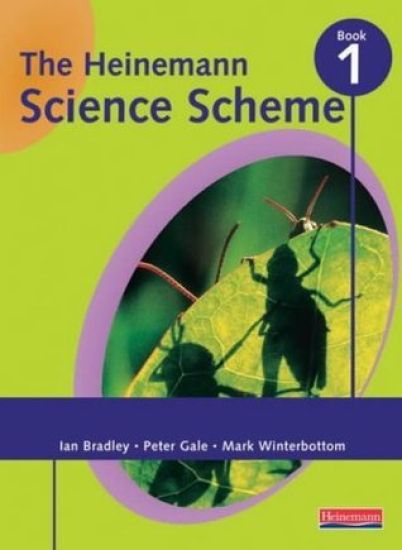
The "Heinemann Science Scheme" offers an approach to the QCA's Scheme of Work. Teacher's resource packs provide support with lesson planning, with each chapter matching the Scheme of Work, and in-built assessment. The scheme aims to improve on the Scheme of Work by building in progression and a comprehensive revision programme to help prepare pupils for their National Tests. It also aims to make the Scheme of Work accessible to all pupils. The scheme builds on what students already know, following on from the Scheme of Work at Key Stages 1 and 2. It takes into account what pupils already know at the start of Key Stage 3 and builds from there. The "Heinemann Science Scheme" is also designed to build on the literacy and numeracy work pupils have done in primary schools.