
Kirjailija
Mark Zuehlke
Kirjat ja teokset yhdessä paikassa: 25 kirjaa, julkaisuja vuosilta 1992-2023, suosituimpien joukossa On to Victory. Vertaile teosten hintoja ja tarkista saatavuus suomalaisista kirjakaupoista.
25 kirjaa
Kirjojen julkaisuhaarukka 1992-2023.
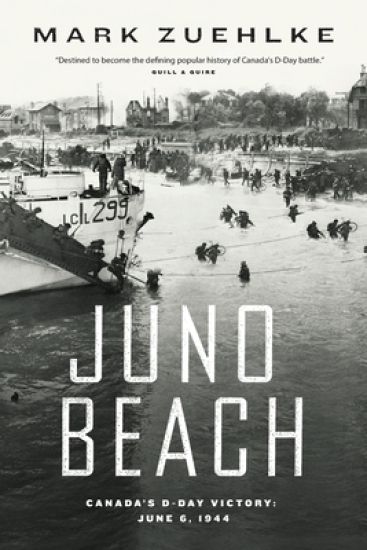
On June 6, 1944 the greatest armada in history stood off Normandy and the largest amphibious invasion ever began as 107,000 men aboard 6,000 ships pressed toward the coast. Among this number were 18,000 Canadians, who were to land on a five-mile long stretch of rocky ledges fronted by a wide expanse of sand. Code named Juno Beach. Here, sheltered inside concrete bunkers and deep trenches, hundreds of German soldiers waited to strike the first assault wave with some ninety 88-millimetre guns, fifty mortars, and four hundred machine guns. A four-foot-high sea wall ran across the breadth of the beach and extending from it into the surf itself were ranks of tangled barbed wire, tank and vessel obstacles, and a maze of mines.Of the five Allied forces landing that day, they were scheduled to be the last to reach the sand. Juno was also the most exposed beach, their day's objectives eleven miles inland were farther away than any others, and the opposition awaiting them was believed greater than that facing any other force. At battle's end one out of every six Canadians in the invasion force was either dead or wounded. Yet their grip on Juno Beach was firm.

Holding Juno: Canada's heroic defence of the D-Day beaches, June 7-12, 1944
Mark Zuehlke
Douglas McIntyre
2023
pokkari
As June 6, 1944 passed into history, the Allied battle to hold onto the French soil won on D-Day began. Six miles inland from Juno Beach, 3rd Canadian Infantry Division had advanced, at great cost in lives, farther than any other Allied division. But for all the horror endured on June 6, every soldier digging in on this front line knew worse was yet to come, for the Allied toehold on the Normandy coast was extremely tenuous, and out in the darkness beyond no man's land the fury of the 12th SS (Hitlerjugend) Panzer Division was massing, intent on throwing the invaders back into the sea. For six days, the outcome hung in the balance as the Canadians and fanatical Hitler Youth engaged in a close-quarters battle neither side could afford to lose.Renowned military historian Mark Zuehlke follows up his best-selling Juno Beach with a dramatic retelling of this all-or-nothing battle that decided the fate of the Normandy invasion.

On July 4, 1944, the 3rd Canadian Infantry Division won the village of Carpiquet but not the adjacent airfield. Instead of a speedy victory, the men faced a bloody fight. The Canadians advanced relentlessly against Hitler's finest armoured divisions, at a great cost in bloodshed. Initially, only the 3rd Division was involved, but in a couple of weeks two other Canadian divisions -- 2nd Infantry and 4th Armoured -- along with a Polish division and several British divisions came together as First Canadian Army.While their generals wrangled and planned, the soldiers fought within a narrow landscape extending a mere 21 miles from Caen to Falaise. The Canadians won a two-day battle for Verri res Ridge starting on July 21, costing them 1,500 casualties. More bloody battles followed, until finally, on August 21, the narrowing gap that had been developing at Falaise closed when American and Canadian troops shook hands. The German army in Normandy had been destroyed, only 18,000 of about 400,000 men escaping. The Allies suffered 206,000 casualties, of which 18,444 were Canadians.
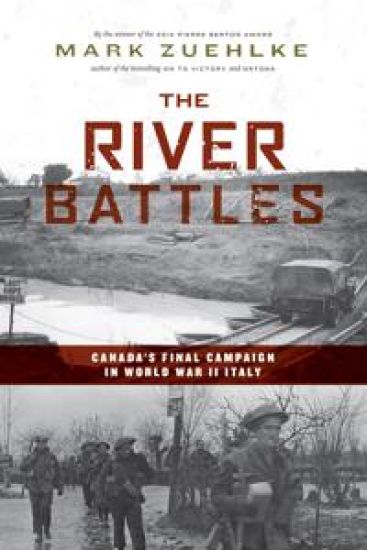
The Canadians called it the Promised Land. In late September 1944, the Emilia-Romagna plain before I Canadian Corps stretched to the far horizon--a deceptively wide-open space where the tanks could run free. Throughout British Eighth Army, hopes ran high that once it entered the plain, the Germans could be driven from Italy. As soon as the advance began, however, the plain's true nature was revealed: the land was criss-crossed by rivers, canals and drainage ditches over which all bridges had been demolished. With higher command urging haste, the Canadians entered a long and nightmarish series of battles to win crossings over each waterway, whose high banks provided the Germans with perfect defensive positions. Early fall rains caused rivers to spill their banks and transformed the countryside into the worst quagmire the soldiers had ever seen. More than five months of battle followed, with weeks of hard fighting required to advance from one river to the next. Each month, conditions only worsened, and the casualty rates rose appallingly. As their comrades fell one by one, most soldiers sought merely to survive. Doing that much required every measure of stamina, courage and fighting skill they possessed. The fifth and final Canadian Battle Series volume set in Italy, The River Battles tells the story of this campaign's last and hardest months. In riveting detail and with his trademark "you-are-there" style, Mark Zuehlke shines a light on this forgotten chapter of Canada's World War II experience.
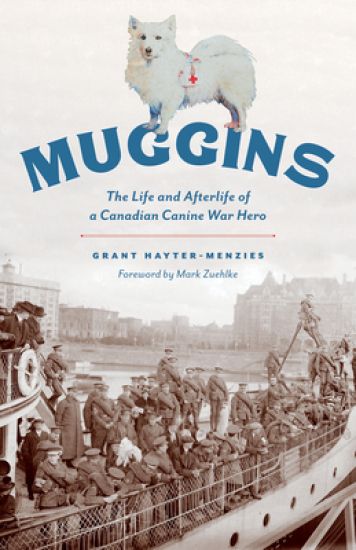
The unusual and moving tale of Muggins, a famed fundraising dog who became a mascot of the Canadian Red Cross during the First World War.Born in 1913 in the home of a millionaire philanthropist, Muggins was a purebred Spitz, a sharp-eared, sharp-nosed, fluffy-tailed sort of dog most often seen in the lap of a lady of leisure. But Muggins defied the odds, rising to unlikely fame during the First World War, when he became Victoria, BC's most diminutive fundraiser. He was taught to wander through downtown during the war with two change donation boxes tied to his back, and ultimately collected the equivalent of $250,000 for charities and causes including the Red Cross, the Blue Cross, food for poor children and prisoners of war, victims of Jewish pogroms, to name a few.During his short life, Muggins visited ferries and freight liners stopping in Victoria. He appeared in photos with the Prince of Wales and with famous Canadian general Sir Arthur Currie, among other celebrated admirers. He was also a favourite of the rank and file, helping cheer up wounded soldiers at Esquimalt Military Hospital. Muggins was made an honourary first lieutenant by the United States military for his service raising funds in Seattle. And he was so loved by departing soldiers he was more than once nearly taken along to the theatre of war.Based on valuable documents, memorabilia, newspaper and newsreel accounts of Muggins's brief but brilliant career, this book tackles the difficult question of human use of animals in war, at home and on the battlefield. It explores how crucial animals, specifically dogs, have been to wounded veterans recovering from physical and emotional damage--both in Muggins's lifetime and now.

The Gothic Line: Canada's Month of Hell in World War II Italy
Mark Zuehlke
Douglas and McIntyre (2013) Ltd.
2021
pokkari
In this third volume of his critically acclaimed trilogy tracing Canada's involvement in World War II's Italian campaign, Mark Zuehlke vividly recounts the Battle of the Gothic Line. The line was meant to be impregnable, a final fortified position that would enable the battered German divisions to bring the Allied advance up Italy's boot to a decisive halt. On August 25, 1944, it fell to the soldiers of I Canadian Corps to spearhead the British Eighth Army's attempt to rip a hole in the line. For the next twenty-eight days, the men of 1st Canadian Infantry Division and 5th Canadian Armoured Division slugged their way through a rugged killing ground in the most costly battle of the campaign. The Gothic Line portrays the horror, the fear, the courage, and ultimately the glory that Canadians won on this remote battlefield.
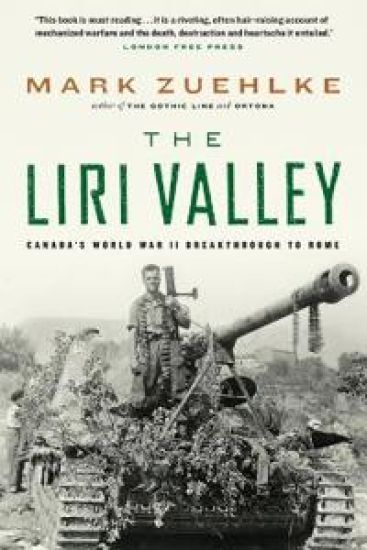
For the Allied armies fighting their way up the Italian boot in early 1944, Rome was the prize that could be won through one of the greatest offensives of the war. The Liri Valley was a long, flat corridor through miles of rugged mountains. At one end stood the formidable Monte Cassino, at the other, Rome. In May 1944, I Canadian Corps drove up this valley toward the Italian capital, facing the infamous "Hitler Line" a bastion of concrete bunkers fronted by wide swaths of tangled barbed wire, minefields, and "Tobruk" weapon pits. The ensuing battle resulted in Canada's single bloodiest day of the Italian Campaign. But the sacrifice of young Canadians during the twenty-four days of relentless combat it took to clear the valley paved the way for the Allies to take Rome.
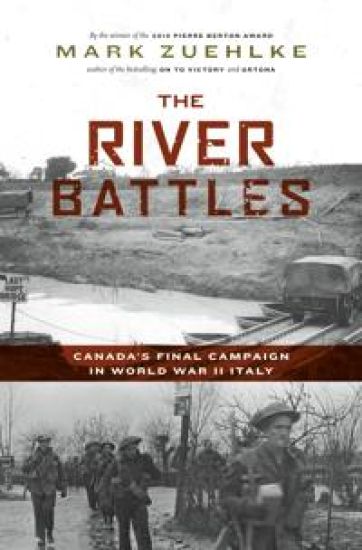
The story of I Canadian Corps’s crossing of the Emilia-Romagna plain, in the thirteenth instalment of the bestselling Canadian Battle Series.The Canadians called it the Promised Land. In late September 1944, the Emilia-Romagna plain before I Canadian Corps stretched to the far horizon—a deceptively wide-open space where the tanks could run free. Throughout British Eighth Army, hopes ran high that once it entered the plain, the Germans could be driven from Italy. As soon as the advance began, however, the plain’s true nature was revealed: the land was criss-crossed by rivers, canals and drainage ditches over which all bridges had been demolished. With higher command urging haste, the Canadians entered a long and nightmarish series of battles to win crossings over each waterway, whose high banks provided the Germans with perfect defensive positions. Early fall rains caused rivers to spill their banks and transformed the countryside into the worst quagmire the soldiers had ever seen. More than five months of battle followed, with weeks of hard fighting required to advance from one river to the next. Each month, conditions only worsened, and the casualty rates rose appallingly. As their comrades fell one by one, most soldiers sought merely to survive. Doing that much required every measure of stamina, courage and fighting skill they possessed. The fifth and final Canadian Battle Series volume set in Italy, The River Battles tells the story of this campaign’s last and hardest months. In riveting detail and with his trademark “you-are-there” style, Mark Zuehlke shines a light on this forgotten chapter of Canada’s World War II experience.
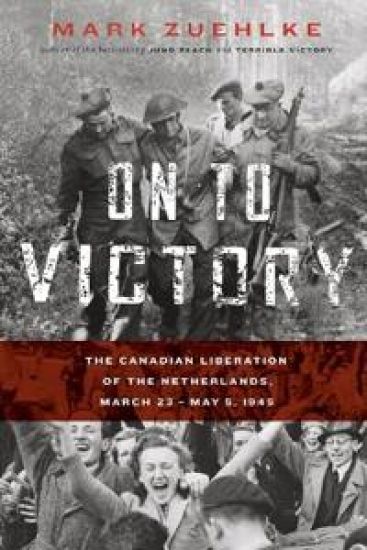
On to Victory: The Canadian Liberation of the Netherlands, March 23-May 5, 1945
Mark Zuehlke
Douglas and McIntyre (2013) Ltd.
2020
pokkari
BOOK EIGHT in the Canadian Battle Series.On to Victory is the little-told story of the tense final days of World War II, remembered in the Netherlands as "the sweetest of springs," which saw the country's liberation from German occupation. The Liberation Campaign, a series of fierce, desperate battles during the last three months of the war, was bittersweet. A nation's freedom was won and the war concluded, but these final hostilities cost Canada 6,298 casualties, including 1,482 dead. With his trademark "you are there" style that draws upon official records, veteran memories, and a keen understanding of the combat experience, Mark Zuehlke brings to life this concluding chapter in the story of Canada in World War II.Published to coincide with the 65th anniversary of Canada's dramatic liberation of Holland. May 4, 2010, will mark the 65th anniversary of the end of the fighting for Canada's army and the conclusion of the Netherlands' liberation. Major events of remembrance, both here and in the Netherlands, will celebrate this milestone.
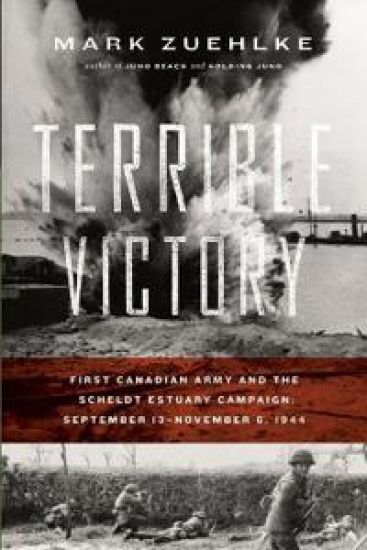
Terrible Victory: First Canadian Army and the Scheldt Estuary Campaign: September 13 - November 6, 1944
Mark Zuehlke
Douglas and McIntyre (2013) Ltd.
2020
pokkari

A masterful retelling one of the major victories of Canadian troops over the German army's elite division during WWII. In one blood-soaked, furious week of fighting, from December 20 to December 27, 1943, the 1st Canadian Infantry Division took the town of Ortona, Italy, from elite German paratroopers ordered to hold the medieval port town at all costs. Infantrymen serving in the Loyal Edmonton Regiment and the Seaforth Highlanders, supported by tankers of the Three Rivers Regiment, moved from house to house in hand-to-hand combat amid heavy shelling and wrested the town from the grip of the fierce German defenders. Getting into Ortona had been a battle of its own. Ortona, the pearl of the Adriatic, stands on a promontory impregnable from three sides, with seacliffs on the north and east, and a deep ravine on the west. The Canadian infantrymen, drawn from virtually every corner of Canada, attacked from the south under the command of Major-General Chris Vokes, fighting across narrow gullies, mud-choked vineyards and olive groves, into the narrow streets of Ortona itself. When the vicious battle was over, 2605 Canadians were dead or wounded. But the town that had become known as "Little Stalingrad" was now in Allied hands.

When environmental warrior Ira Connaught turns up hanging by the neck from an ancient rainforest cedar overlooking the wasteland of a clear-cut on Clayoquot Sound, everyone seems content to declare his death a suicide. The tree spiker won't be missed by loggers, Tofino's RCMP detachment, or by many environmentalists who applauded his goals but condemned his tactics. For reluctant community coroner Elias McCann, Ira's death looks increasingly like a murder. Elias is no forensic pathologist, no doctor. A quirk in BC law enables anyone of good community standing to be appointed local coroner. But RCMP Sergeant Gary Danchuk does not believe that Elias meets even the quirk in the law. Danchuk remains convinced - against all evidence - that McCann murdered his wife, Merriam, two years earlier in order to clear the way for his love affair with Vhanna Chan. Hands Like Clouds is the first in a series of mysteries revolving around the troubled life of Elias McCann, son of a remittance man and local coroner.


When the corpse of a girl known only as Sparrow is found wrapped in barbed wire on a storm-swept beach, community coroner Elias McCann must investigate the sadistic killing. Suspects abound in The Family, a gaggle of homeless youths led by a grizzled veteran of Canada's mean streets. But menace also seems to lurk around the neglected property that so fascinated Sparrow before her death. The property is slated for transformation into a seaside resort by a developer who seems intent on acquiring all of Tofino -- and Elias's girlfriend, Vhanna Chan. To find the killer Elias must first unravel the mystery of Sparrow's past.
During the winter of 1944--45 the Allies desperately sought a strategy for Germany's quick defeat. From the Swiss border to the North Sea, hundreds of thousands of soldiers in trenches and dugouts suffered through the bitterest European winter in 50 years, while their generals debated and schemed in the war rooms. In this grim environment, First Canadian Army engaged in deadly patrols behind the German lines and fought costly skirmishes to gain control of small patches of contested ground. After much debate, the Allied high command decided that First Canadian Army would launch the pivotal offensive to win the war -- an attack against the Rhineland. Winning this land would give them a launching point for driving into Germany's heartland. On February 8, 1945, First Canadian Army launched Operation Veritable. Advancing on the heels of the greatest artillery bombardment yet fired by the western Allies, thousands of Canadian and British troops advanced into an inferno of battle. Infantrymen were forced to fight relentlessly, alone and often at close quarters, for 38 grueling days.Their story is one largely lost to the common national history of World War II -- Forgotten Victory gives this important legacy back to Canadians.

As part of Operation Husky 2013, a group of Canadians walked this route to honour the memory of the nation's soldiers who fought in Sicily seventy years earlier and whose sacrifice has been largely forgotten. Under a searing sun, with Mount Etna's soaring heights always in the distance, a small contingent of marchers trekked each day along winding country roads for between 15 and 35 kilometres to reach the outskirts of a small town or village. Here they were joined by a pipe band, which led them to the skirl of bagpipes in a parade into the community's heart to be met by hundreds of cheering and applauding Sicilians. Before each community's war memorial a service of remembrance for both the Canadian and Sicilian war dead followed. Each day also brought the marchers closer to their final destination--Agira Canadian War Cemetery where 490 of the 562 Canadian soldiers who fell during the course of Operation Husky in 1943 are buried. On July 30--after twenty gruelling days--the marchers were joined here by almost a thousand Canadians and Italians.All joined to conduct a profoundly emotional ceremony of remembrance that ended with one person standing before each headstone and answering the roll call on that soldier's behalf. Mark Zuehlke, author of the award-winning Canadian Battle Series, was one of the Operation Husky 2013 marchers. He uses this arduous and poignant task as a focal point for a contemplative look at the culture of remembrance and the experience of war.

During the winter of 1944--45, the western Allies desperately sought a strategy that would lead to Germany's quick defeat. After much rancorous debate, the Allied high command decided that First Canadian Army would launch the pivotal offensive to win the war--an attack against the Rhineland, an area of Germany on the west bank of the Rhine. Winning this land would give them a launching point for crossing the river and driving into Germany's heartland. This was considered the road to victory. For those who fought, the names of battlegrounds such as Moyland Wood and the Hochwald Gap would forever call up memories of uncommon heroism, endurance and tragic sacrifice. Their story is one largely lost to the common national history of World War II. Forgotten Victory gives this important legacy back to Canadians.
The ninth book in the Canadian Battle Series, Breakout from Juno, is the first dramatic chronicling of Canada's pivotal role throughout the entire Normandy Campaign following the D-Day landings. On July 4, 1944, the 3rd Canadian Infantry Division won the village of Carpiquet but not the adjacent airfield. Instead of a speedy victory, the men faced a bloody fight. The Canadians advanced relentlessly at a great cost in bloodshed. Within 2 weeks the 2nd Infantry and 4th Armoured divisions joined coming together as the First Canadian Army. The soldiers fought within a narrow landscape extending a mere 21 miles from Caen to Falaise. They won a two-day battle for Verrieres Ridge starting on July 21, after 1,500 casualties. More bloody battles followed, until finally, on August 21, the narrowing gap that had been developing at Falaise closed when American and Canadian troops shook hands. The German army in Normandy had been destroyed, only 18,000 of about 400,000 men escaping. The Allies suffered 206,000 casualties, of which 18,444 were Canadians. Breakout from Juno is a story of uncommon heroism, endurance and sacrifice by Canada's World War II volunteer army and pays tribute to Canada's veterans.