Kirjojen hintavertailu. Mukana 12 476 403 kirjaa ja 12 kauppaa.
Kirjailija
Marko Sarstedt
Kirjat ja teokset yhdessä paikassa: 19 kirjaa, julkaisuja vuosilta 2012-2026, suosituimpien joukossa Partial Least Squares Structural Equation Modeling (PLS-SEM) Using R. Vertaile teosten hintoja ja tarkista saatavuus suomalaisista kirjakaupoista.
Onlinehändler haben in den letzten Jahren massiv an Popularität gewonnen und dadurch weite Teile des stationären Handels in eine existenzielle Krise gestürzt. Um gegenüber dem Onlinehandel bestehen zu können, müssen stationäre Geschäfte sich ihres einzigartigen Potenzials zur Ansprache nicht-digitalisierbarer Kundenbedürfnisse bewusst werden und Verkaufsumgebungen in Orte des Erlebnisses sowie der Entdeckung verwandeln. Ein wesentlicher Baustein hierfür ist die gezielte Schaffung sensorischer Erfahrungen, welche zum Eintreten und Verweilen in der Verkaufsumgebung motivieren.Aber wie? Um diese Frage zu beantworten, verschafft dieser Band der Reihe „Science meets Practice“ Einblicke in die neuesten Forschungsergebnisse aus dem sensorischen Marketing zum Sehen, Hören und Riechen. Die Autoren beschreiben die teils überraschenden Effekte sensorischer Eindrücke auf das Konsumentenverhalten und geben klare Empfehlungen für die Marketingpraxis. Die zweite Auflage deckt die neuesten Forschungsergebnisse zum multisensorischen Marketing in Verkaufsumgebungen, wie z. B. den Einsatz von Technologien im Einzelhandel, ab und enthält zudem neue Fallstudien.
Online retailers have gained massive popularity in recent years, plunging large parts of brick-and-mortar retail into an existential crisis. In order to survive in times of growing online retail, brick-and-mortar retailers must become aware of their unique potential to address non-digitizable consumer needs and transform retail environments into places of experience and discovery. A key building block for achieving this aim lies in the creation of sensory experiences that motivate consumers to enter and linger in stationary retail environments. But how? To answer this question, this volume provides insights into the latest research results from sensory marketing on vision, sound, and scent. The authors describe the sometimes surprising effects of sensory cues on consumer behavior and provide clear recommendations for marketing practice. The second edition comes with an advanced coverage of various topics such as technology use in retail environments and includes new case studies.
Online retailers have gained massive popularity in recent years, plunging large parts of brick-and-mortar retail into an existential crisis. In order to survive in times of growing online retail, brick-and-mortar retailers must become aware of their unique potential to address non-digitizable consumer needs and transform retail environments into places of experience and discovery. A key building block for achieving this aim lies in the creation of sensory experiences that motivate consumers to enter and linger in stationary retail environments. But how? To answer this question, this volume provides insights into the latest research results from sensory marketing on vision, sound, and scent. The authors describe the sometimes surprising effects of sensory cues on consumer behavior and provide clear recommendations for marketing practice. The second edition comes with an advanced coverage of various topics such as technology use in retail environments and includes new case studies.
Eines Tages ist es so weit: Der Nachwuchs steht ins Haus und damit eine Reihe von Planungsproblemen. Ein sozialverträglicher Name und ein Kinderwagen mit maximaler sozialer Anerkennung müssen gefunden werden. Nach der Geburt wird es nicht einfacher! Wie viele Windeln muss ich vorrätig halten? Wie bestimme ich die kürzeste Kinderwagentour zwischen Bäckerei, Spielplatz, Apotheke, Supermarkt und Drogeriemarkt? Viele Unwägbarkeiten machen das Elterndasein anstrengend. Aber das muss nicht sein! Dieses Buch schafft Abhilfe. Marko Sarstedt analysiert wichtige Planungsprobleme des elterlichen Alltags mit betriebswirtschaftlichen Methoden und trägt in der 4. Auflage mit einem neuen Beitrag zum Einschlafmanagement und Hinweisen zur Nutzung von ChatGPT weiter zur Maximierung der elterlichen Zufriedenheit bei: Karriereoptimierte Namenswahl mit Name Concept MapsKinderwagenkonfiguration mit der Choice-based Conjoint AnalyseKrippenauswahl mit dem Scoring-ModellKinderzimmereinrichtung mit der NetzplantechnikBabyphone-Kauf mit der Two-step ClusteranalyseText Mining von BabyratgebernWindelbestandsmanagementMake-or-Buy BabybreiEinschlafmanagement mit der logistischen RegressionNächtliches Aufstehmanagement mit MarkovkettenWellness-Planung mit der deterministischen SimulationKinderwagentourenplanung mit genetischen AlgorithmenSitzordnungsplanung bei der Taufe mit AmeisenalgorithmenPrognose von Spielplatzfreundschaften mit der NetzwerkanalyseKofferraum-Tetris mit der Branch-and-Bound-Methode
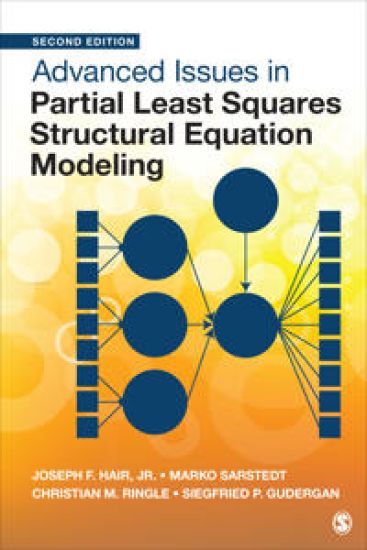
The Second Edition of Advanced Issues in Partial Least Squares Structural Equation Modeling offers a straightforward and practical guide to PLS-SEM for users ready to go further than the basics of A Primer on Partial Least Squares Structural Equation Modeling, Third Edition. Even in this advanced guide, the authors have limited the emphasis on equations, formulas, and Greek symbols, and instead rely on detailed explanations of the fundamentals of PLS-SEM and provide general guidelines for understanding and evaluating the results of applying the method. A single study on corporate reputation features as an example throughout the book, along with a single software package (SmartPLS 4.0) to provide a seamless learning experience. The approach of this book is based on the authors’ many years of conducting research and teaching methodology courses, including developing the SmartPLS software. The preparation of the book, especially this new edition, is based on the authors’ desire to communicate the PLS-SEM method to a much broader audience from management and marketing to engineering, geography, medicine, political and environmental sciences, psychology, and beyond. The Second Edition includes a new chapter on the necessary condition analysis (NCA) and covers the most recent developments in PLS-SEM, with detailed guidelines for estimating and validating higher-order constructs and nonlinear effects as well as more insights on multigroup and latent class analyses using FIMIX-PLS and PLS-POS. The book is aimed at researchers and practitioners who seek to gain comprehensive knowledge of more advanced PLS-SEM methods.
Online retailers have gained massive popularity in recent years, plunging large parts of brick-and-mortar retail into an existential crisis. In order to survive in times of growing online retail, brick-and-mortar retailers must become aware of their unique potential to address non-digitizable consumer needs and transform retail environments into places of experience and discovery. A key building block for achieving this aim lies in the creation of sensory experiences that motivate consumers to enter and linger in stationary retail environments.But how? To answer this question, this volume provides insights into the latest research results from sensory marketing on vision, sound, and scent. The authors describe the sometimes surprising effects of sensory cues on consumer behavior and provide clear recommendations for marketing practice. Readers of this book have access to videos via a dedicated app: simply download the SN More Media appfree of charge, scan a link with the play button and immediately play the video on your smartphone or tablet.
Onlinehändler haben in den letzten Jahren massiv an Popularität gewonnen und dadurch weite Teile des stationären Handels in eine existenzielle Krise gestürzt. Um gegenüber dem Onlinehandel bestehen zu können, müssen stationäre Geschäfte sich ihres einzigartigen Potenzials zur Ansprache nicht-digitalisierbarer Kundenbedürfnisse bewusstwerden und Verkaufsumgebungen in Orte des Erlebnisses sowie der Entdeckung verwandeln. Ein wesentlicher Baustein hierfür ist die gezielte Schaffung sensorischer Erfahrungen, welche zum Eintreten und Verweilen in der Verkaufsumgebung motivieren.Aber wie? Um diese Frage zu beantworten, verschafft dieser Band der Reihe „Science meets Practice“ Einblicke in die neuesten Forschungsergebnisse aus dem sensorischen Marketing zum Sehen, Hören und Riechen. Die Autoren beschreiben die teils überraschenden Effekte sensorischer Eindrücke auf das Konsumentenverhalten und geben klare Empfehlungen für die Marketingpraxis. Video per App: einfach dieSN More Media App kostenfrei herunterladen, einen Link mit dem Play-Button scannen und sofort das Video auf Smartphone oder Tablet ausspielen.Der InhaltNeueste Forschungsergebnisse zu Multisensorik im EinzelhandelKonkrete Hinweise, wie visuelle, auditive und olfaktorische Reize wirkenLow hanging fruits: Wie kann die sensorische Verkaufsumgebung unmittelbar und mit Hilfe einfacher Anpassungen verbessert werden?High hanging fruits: Wie sollte eine multisensorisch abgestimmte Umgebung aussehen, um eine maximale Wirkung zu erreichen?Videos mit Experteninterviews
Die Einführung und insbesondere die Skalierung von KI erfordert sowohl im Marketing als auch im Gesamtunternehmen einen grundlegenden Veränderungsprozess. Damit dieser gelingen kann, müssen der organisatorische Rahmen und in der Folge die Ablauf- und Aufbauorganisation angepasst werden. Zudem muss der CMO einen pragmatischen Weg finden, erste Erfahrungen beim Einsatz von KI zu gewinnen und mit Hilfe der daraus abgeleiteten Erkenntnisse, den Transformationsprozess im Gesamtunternehmen zu unterstützen. In diesem Band der Reihe "Science meets Practice" werden die wesentlichen Handlungsfelder für einen CMO wie die Gestaltung der KI-Narrative, des KI-Organismus sowie der KI-Kompetenzen erläutert.Video per App: einfach die SN More Media App kostenfrei herunterladen, einen Link mit dem Play-Button scannen und sofort das Video auf Smartphone oder Tablet ausspielen.Der InhaltBeschreibung der neuen Rahmenbedingungen des Marketings, bedingt durch Markt, Wettbewerb und TechnologieEinführung in das Konzept der KIDiskussion von Barrieren und Erfolgsfaktoren bei der Adaption von KIBeschreibung eines Gestaltungsrahmens für die Neuausrichtung der Ablauf- und Aufbauorganisation im Marketing in einer KI-geprägten UmweltKonkrete Handlungsempfehlungen für die Einführung von KI in Ihrer Marketingorganisation Videos mit Experteninterviews
Strukturgleichungsmodelle stellen das Standardinstrument zur empirischen Prüfung von hypothetisierten Beziehungen zwischen theoretischen Konstrukten (latenten Variablen) dar. Das Buch zeichnet den gesamten Prozess der Strukturgleichungsmodellierung von der Konzeptualisierung theoretischer Konstrukte über die Spezifikation von Messmodellen, die Reliabilitäts- und Validitätsprüfung mittels konfirmatorischer Faktorenanalyse bis hin zur Prüfung von kausalen Wirkungshypothesen auf Basis der Kovarianzstrukturanalyse sowie der Partial Least Squares-Pfadmodellierung nach.Die einzelnen Analysen werden so erläutert, dass geringstmögliche mathematische Vorkenntnisse erforderlich sind. Alle Arbeitsschritte werden an einem durchgehenden Fallbeispiel unter Verwendung von SPSS, AMOS und SmartPLS veranschaulicht. Zu allen Arbeitsschritten werden klare Anwendungsempfehlungen sowie Hinweise zum Umgang mit unerwarteten Analyseergebnissen gegeben. Die Verwendung der jeweiligen Software wird ausführlich durch Screenshots erläutert. Für die 3. Auflage wurde das Buch umfassend überarbeitet, um die jüngsten methodischen Entwicklungen abzudecken. Besonderer Fokus wurde auf die Ausführungen zur PLS-Pfadmodellierung und Darstellung alternativer Schätzverfahren der Kausalanalyse gelegt. Das Angebot wurde zudem um digitale Lernkarten (Flashcards) erweitert, welche es dem Leser ermöglichen, das Wissen aus dem Buch zu vertiefen.Die ZielgruppenDas Buch richtet sich an Studierende und Lehrende in Master- und Doktorandenprogrammen sowie an Anwender aus der Unternehmens- und insbesondere Marktforschungspraxis. Es ist von besonderem Nutzen für alle, die Wirkungshypothesen zwischen latenten Variablen empirisch prüfen möchten. Das Fallbeispiel ist so allgemein gehalten, dass der Anwender die Analysen leicht auf spezifische Fragen und Probleme in seinen jeweiligen Anwendungsfeldern übertragen kann.Über dieInternetseite www.strukturgleichungsmodellierung.de haben die Leserinnen und Leser Zugriff auf alle im Buch verwendeten Datensätze und Analyseskripte sowie weitere Serviceleistungen.
Partial least squares structural equation modeling (PLS-SEM) has become a standard approach for analyzing complex inter-relationships between observed and latent variables. Researchers appreciate the many advantages of PLS-SEM such as the possibility to estimate very complex models and the method’s flexibility in terms of data requirements and measurement specification. This practical open access guide provides a step-by-step treatment of the major choices in analyzing PLS path models using R, a free software environment for statistical computing, which runs on Windows, macOS, and UNIX computer platforms. Adopting the R software’s SEMinR package, which brings a friendly syntax to creating and estimating structural equation models, each chapter offers a concise overview of relevant topics and metrics, followed by an in-depth description of a case study. Simple instructions give readers the “how-tos” of using SEMinR to obtain solutions and document their results. Rules ofthumb in every chapter provide guidance on best practices in the application and interpretation of PLS-SEM.
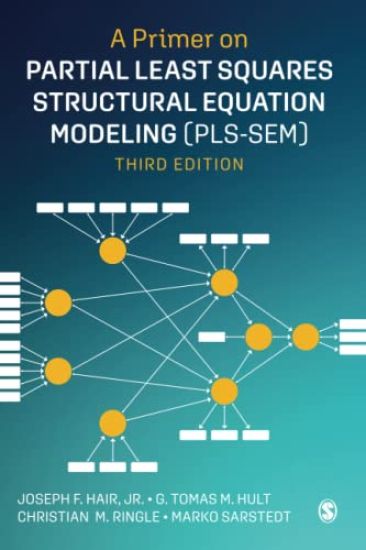
The third edition of A Primer on Partial Least Squares Structural Equation Modeling (PLS-SEM) guides readers through learning and mastering the techniques of this approach in clear language. Authors Joseph H. Hair, Jr., G. Tomas M. Hult, Christian Ringle, and Marko Sarstedt use their years of conducting and teaching research to communicate the fundamentals of PLS-SEM in straightforward language to explain the details of this method, with limited emphasis on equations and symbols. A running case study on corporate reputation follows the different steps in this technique so readers can better understand the research applications. Learning objectives, review and critical thinking questions, and key terms help readers cement their knowledge. This edition has been thoroughly updated, featuring the latest version of the popular software package SmartPLS 3. New topics have been added throughout the text, including a thoroughly revised and extended chapter on mediation, recent research on the foundations of PLS-SEM, detailed descriptions of research summarizing the advantages as well as limitations of PLS-SEM, and extended coverage of advanced concepts and methods, such as out-of-sample versus in-sample prediction metrics, higher-order constructs, multigroup analysis, necessary condition analysis, and endogeneity.
This book offers an easily accessible and comprehensive guide to the entire market research process, from asking market research questions to collecting and analyzing data by means of quantitative methods. It is intended for all readers who wish to know more about the market research process, data management, and the most commonly used methods in market research. The book helps readers perform analyses, interpret the results, and make sound statistical decisions using IBM SPSS Statistics. Hypothesis tests, ANOVA, regression analysis, principal component analysis, factor analysis, and cluster analysis, as well as essential descriptive statistics, are covered in detail. Highly engaging and hands-on, the book includes many practical examples, tips, and suggestions that help readers apply and interpret the data analysis methods discussed. The new edition uses IBM SPSS version 25 and offers the following new features:A single case and dataset used throughout thebook to facilitate learningNew material on survey design and all data analysis methods to reflect the latest advances concerning each topicImproved use of educational elements, such as learning objectives, keywords, self-assessment tests, case studies, and much moreA glossary that includes definitions of all the keywords and other descriptions of selected topics Links to additional material and videos via the Springer Multimedia App
This book is an easily accessible and comprehensive guide which helps make sound statistical decisions, perform analyses, and interpret the results quickly using Stata. It includes advanced coverage of ANOVA, factor, and cluster analyses in Stata, as well as essential regression and descriptive statistics. It is aimed at those wishing to know more about the process, data management, and most commonly used methods in market research using Stata. The book offers readers an overview of the entire market research process from asking market research questions to collecting and analyzing data by means of quantitative methods. It is engaging, hands-on, and includes many practical examples, tips, and suggestions that help readers apply and interpret quantitative methods, such as regression, factor, and cluster analysis. These methods help researchers provide companies with useful insights.
This book offers an easily accessible and comprehensive guide to the entire market research process, from asking market research questions to collecting and analyzing data by means of quantitative methods. It is intended for all readers who wish to know more about the market research process, data management, and the most commonly used methods in market research. The book helps readers perform analyses, interpret the results, and make sound statistical decisions using IBM SPSS Statistics. Hypothesis tests, ANOVA, regression analysis, principal component analysis, factor analysis, and cluster analysis, as well as essential descriptive statistics, are covered in detail. Highly engaging and hands-on, the book includes many practical examples, tips, and suggestions that help readers apply and interpret the data analysis methods discussed. The new edition uses IBM SPSS version 25 and offers the following new features:A single case and dataset used throughout thebook to facilitate learningNew material on survey design and all data analysis methods to reflect the latest advances concerning each topicImproved use of educational elements, such as learning objectives, keywords, self-assessment tests, case studies, and much moreA glossary that includes definitions of all the keywords and other descriptions of selected topics Links to additional material and videos via the Springer Multimedia App
This book is an easily accessible and comprehensive guide which helps make sound statistical decisions, perform analyses, and interpret the results quickly using Stata. It includes advanced coverage of ANOVA, factor, and cluster analyses in Stata, as well as essential regression and descriptive statistics. It is aimed at those wishing to know more about the process, data management, and most commonly used methods in market research using Stata. The book offers readers an overview of the entire market research process from asking market research questions to collecting and analyzing data by means of quantitative methods. It is engaging, hands-on, and includes many practical examples, tips, and suggestions that help readers apply and interpret quantitative methods, such as regression, factor, and cluster analysis. These methods help researchers provide companies with useful insights.
This accessible, practice-oriented and compact text provides a hands-on introduction to market research. Using the market research process as a framework, it explains how to collect and describe data and presents the most important and frequently used quantitative analysis techniques, such as ANOVA, regression analysis, factor analysis and cluster analysis. The book describes the theoretical choices a market researcher has to make with regard to each technique, discusses how these are converted into actions in IBM SPSS version 22 and how to interpret the output. Each chapter concludes with a case study that illustrates the process using real-world data. A comprehensive Web appendix includes additional analysis techniques, datasets, video files and case studies. Tags in the text allow readers to quickly access Web content with their mobile device.The new edition features: Stronger emphasis on the gathering and analysis of secondary data (e.g., internetand social networking data)New material on data description (e.g., outlier detection and missing value analysis)Improved use of educational elements such as learning objectives, keywords, self-assessment tests, case studies, and much moreStreamlined and simplified coverage of the data analysis techniques with more rules-of-thumbUses IBM SPSS version 22
With applications using SmartPLS —the primary software used in partial least squares structural equation modeling (PLS-SEM)—this practical guide provides concise instructions on how to use this evolving statistical technique to conduct research and obtain solutions. Featuring the latest research, new examples, and expanded discussions throughout, the Second Edition is designed to be easily understood by those with limited statistical and mathematical training who want to pursue research opportunities in new ways. Please note that all examples in this Second Edition use SmartPLS 3. To access this software, please visit