

Kirjailija
Markus Gabriel
Kirjat ja teokset yhdessä paikassa: 54 kirjaa, julkaisuja vuosilta 2006-2026, suosituimpien joukossa Die Macht der Kunst. Vertaile teosten hintoja ja tarkista saatavuus suomalaisista kirjakaupoista.
54 kirjaa
Kirjojen julkaisuhaarukka 2006-2026.
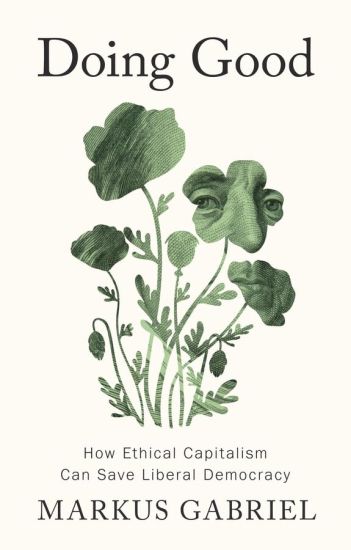
Doing Good is a bold call for a new social contract in a world buckling under the weight of multiple crises — geopolitical tension, ecological collapse, technological disruption, growing inequality and the slow erosion of liberal democracy. The promises of modernity, once rooted in the convergence of technoscientific progress and liberal capitalism, have failed to deliver widespread peace and prosperity. Instead, we face an uncertain future that demands radical rethinking. Markus Gabriel offers a daring yet pragmatic vision: a New Enlightenment that fuses ethical insight with market forces. We don't need to abandon capitalism, but we need a revolution within capitalism itself: ethical capitalism. This is a form of capitalism that doesn't merely accommodate morality but thrives on it — generating profit by doing good. Rejecting the temptation to vilify capitalism, Gabriel reframes it as a system ripe for moral evolution. Doing business is not exempt from ethical responsibility. Ethical business is not only more just: it is economically smarter too. Businesses that solve real problems, respect planetary boundaries, and promote human flourishing are better positioned for long-term success than those that pursue short-term gain through exploitation or extraction. Ethical capitalism is not a utopian fantasy: it is a realistic, actionable path that rejects authoritarian alternatives while advancing a richer conception of freedom. Gabriel thus opens the way to a new eco-social liberalism, one grounded in what we actually know about ourselves as prosocial, value-producing animals. Doing Good is both a warning and a manifesto for those determined to steer humanity toward a future worth inheriting.

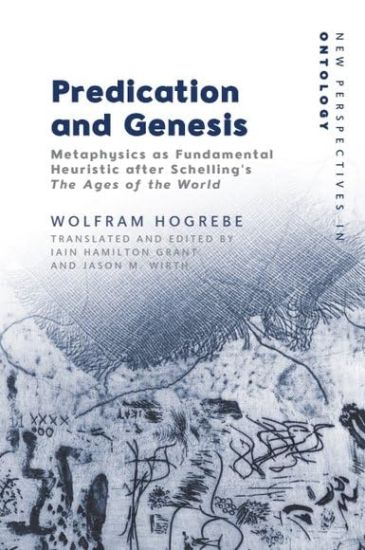
Wolfram Hogrebe offers a robust, uncompromisingly metaphysical reading of Schelling's unfinished masterpiece, The Ages of the World, to propose a completely contemporary epistemology. By translating Schelling into the language of predicate logic and philosophy of language, Hogrebe also defends its metaphysical claims, equally foregrounding the relevance and challenges that Schelling's work presents to contemporary analytic philosophy. Originally published 35 years ago, Hogrebe's book remains ahead of his time. It masterfully bridges the analytic and continental divide before most philosophers considered this a possibility and successfully demonstrates Schelling's contemporary relevance and vitality. Included in this translation is a new author's preface to the English edition, his preface to the Italian translation (2011), an introduction to the philosophical themes of the book by the translators who are prominent Schelling scholars, a Postface by Markus Gabriel, Hogrebe's colleague in Bonn, along with a readers' guide to Hogrebe's major works.

EPÜ-, EPGÜ- und PCT-Tabellen
Markus Gabriel; Torben Stingl; Christian Renz
Heymanns Verlag GmbH
2025
sidottu

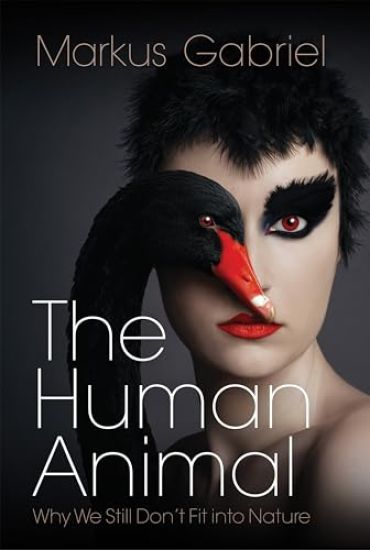
The climate crisis has forced us to recognize that we are not separate from nature but are part of the natural world on which we depend: human beings are animals and we must understand much better our place in nature and our impact on our environment if we are to avoid our own annihilation as a species. And yet we feel nevertheless that we do not entirely fit into nature, that we stand apart from other animals in some way – in what way, exactly?Markus Gabriel argues that what distinguishes humans from other animals is that humans are minded living beings who seek to understand the world and themselves and who possess ethical insight into moral contexts. Mind is the capacity to lead one’s life in the light of a conception of who or what one is. The undeniable difference between us and other animals defines the human condition and places a special responsibility on us to consider our actions in the context of other living beings and our shared habitat. It also calls on us to cultivate an ethics of not-knowing: to recognize that, however much we may seek to understand the world, we will never completely master it. Our grasp of reality, mediated by our animal minds, will always be limited: much is and will remain alien to us, lending itself only to speculation – and to remember this is to stand us in better stead for carving out an existence among the environmental crisis that looms before us all.

EPÜ-, EPGÜ- und PCT-Tabellen
Markus Gabriel; Karen Göhler; Christian Renz
Heymanns Verlag GmbH
2024
sidottu
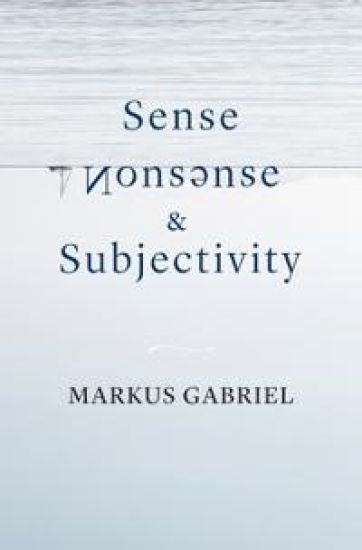
A leading German philosopher offers his most ambitious work yet on the nature of knowledge, arguing that being wrong about things defines the human condition.For millennia, philosophers have dedicated themselves to advancing understanding of the nature of truth and reality. In the process they have amassed a great deal of epistemological theory—knowledge about knowledge. But negative epistemological phenomena, such as ignorance, falsity, illusion, and delusion, are persistently overlooked. This is surprising given that we all know how fallible humans are.Sense, Nonsense, and Subjectivity replies with a theory of false thought, demonstrating that being wrong about things is part and parcel of subjectivity itself. For this reason, knowledge can never be secured without our making claims that can always, in principle, be wrong. Even in successful cases, where we get something right and thereby gain knowledge, the possibility of failure lingers with us. Markus Gabriel grounds this argument in a novel account of the relationship between sense, nonsense, and subjectivity—phenomena that hang together in the temporal unfolding of our cognitive lives.While most philosophers continue to theorize subjectivity in terms of conscious self-representation and the supposedly infallible grip we have on ourselves as thinkers, Sense, Nonsense, and Subjectivity addresses the age-old Platonic challenge to understand situations in which we do not get reality right. Adding a stimulating perspective on epistemic failures to the work of New Realism, Gabriel addresses long-standing ontological questions in an age where the line between the real and the fake is increasingly blurred.

From ancient philosophy to contemporary theories of fiction, it is a common practice to relegate illusory appearances to the realm of the non-existent, like shadows on the wall of Plato’s cave. Contrary to this traditional mode of drawing a metaphysical distinction between reality and fiction, Markus Gabriel argues that the realm of the illusory, fictional, imaginary and conceptually indeterminate is as real as it gets. Being in touch with reality need not and cannot require that we overcome appearances in order to grasp a meaningless reality which exists ‘out there’, outside and maybe even beyond our minds. Human mindedness (Geist) exists in the mode of fictions through which we achieve self-consciousness. This novel approach provides a fresh perspective on our existence as subjects who lead their lives in the light of self-conceptions. Fictions also develops a social ontology according to which the social unfolds as a constant renegotiation of dissent, of different points of view onto the same reality. Thus we cannot ever hope to ground human society in a fiction-free realm of objective transactions. However, this does not mean that truth and reality are somehow outdated concepts. On the contrary, we need to enlarge our conception of reality so that it fully encompasses ourselves as specifically minded social animals. This major new work of philosophy will be of interest to students and scholars throughout the humanities and to anyone interested in contemporary philosophy and social thought.

Auf dem Weg zu einer Neuen Aufklärung
Markus Gabriel; Christoph Horn; Anna Katsman
TRANSCRIPT VERLAG
2022
nidottu
The challenges we face today are unprecedented, from the existential crisis of climate change to the global security threats posed by aggression in Ukraine and elsewhere. Add to this the crisis of liberal democracy and we seem to be swirling in a state of moral disarray, unsure whether there are any principles to which we can appeal today that would be anything other than particularistic. In contrast to this view, Markus Gabriel puts forward the bold argument that there are guiding moral principles for human behaviour. These guiding principles extend across cultures; they are universally valid and form the source of universal values in the twenty-first century. In developing what he calls a ‘New Moral Realism’, Gabriel breathes fresh life into the idea that humanity’s task on our planet is to enable moral progress through cooperation. It is only by achieving moral progress in a way that incorporates universal values – and thus embraces all of humanity – that we can avoid the abyss into which we will otherwise slide. Written with verve, wit and imagination, Gabriel's call for a new enlightenment is a welcome antidote to the value relativism and nihilism of our times, and it lays out a moral framework within which we can work together – as surely we must – to deal with the great challenges we now face.
Is it possible for reality as a whole to be part of itself? Can the world appear within itself without thereby undermining the consistency of our thought and knowledge-claims concerning more local matters of fact? This is a question on which Markus Gabriel and Graham Priest disagree. Gabriel argues that the world cannot exist precisely because it is understood to be an absolutely totality. Priest responds by developing a special form of mereology according to which reality is a single all-encompassing whole, everything, which counts itself among its denizens. Their disagreement results in a debate about everything and nothing: Gabriel argues that we experience nothingness once we overcome our urge to contain reality in an all-encompassing thought, whereas Priest develops an account of nothing according to which it is the ground of absolutely everything. A debate about everything and nothing, but also a reflection on the very possibility of metaphysics.
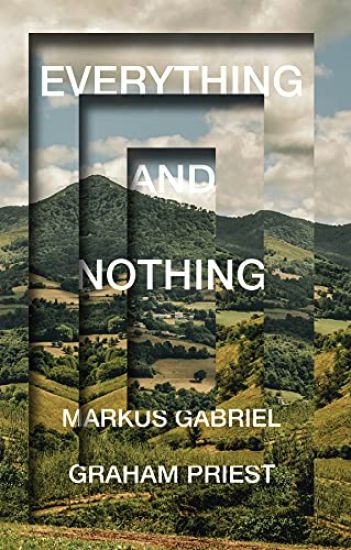
Is it possible for reality as a whole to be part of itself? Can the world appear within itself without thereby undermining the consistency of our thought and knowledge-claims concerning more local matters of fact? This is a question on which Markus Gabriel and Graham Priest disagree. Gabriel argues that the world cannot exist precisely because it is understood to be an absolutely totality. Priest responds by developing a special form of mereology according to which reality is a single all-encompassing whole, everything, which counts itself among its denizens. Their disagreement results in a debate about everything and nothing: Gabriel argues that we experience nothingness once we overcome our urge to contain reality in an all-encompassing thought, whereas Priest develops an account of nothing according to which it is the ground of absolutely everything. A debate about everything and nothing, but also a reflection on the very possibility of metaphysics.