Kirjojen hintavertailu. Mukana 12 657 676 kirjaa ja 12 kauppaa.

Kirjailija

Markus Gabriel

Kirjat ja teokset yhdessä paikassa: 54 kirjaa, julkaisuja vuosilta 2006-2026, suosituimpien joukossa Die Macht der Kunst. Vertaile teosten hintoja ja tarkista saatavuus suomalaisista kirjakaupoista.

54 kirjaa

Kirjojen julkaisuhaarukka 2006-2026.

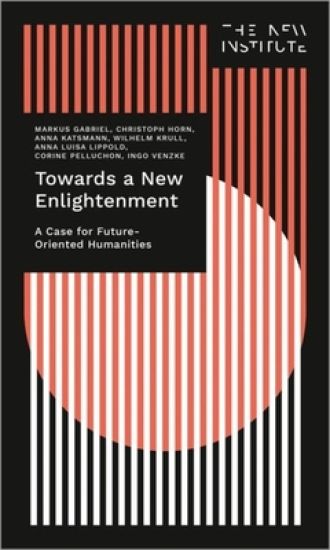
Towards a New Enlightenment - The Case for Future-Oriented Humanities

Towards a New Enlightenment - The Case for Future-Oriented Humanities

Markus Gabriel; Christoph Horn; Anna Katsman; Wilhelm Krull; Anna Luisa Lippold; Corine Pelluchon; Ingo Venzke

TRANSCRIPT VERLAG
2022
nidottu
What role can the humanities play in shaping our common future? What are the values that guide us in the 21st century? How can we unleash the potential the humanities offer in a time of multiple crises? This volume tackles some of these fundamental questions, acknowledging and developing the changing role of academic discourse in a turbulent world. This timely book argues that the humanities engender conceptual tools that are capable of reconciling theory and practice. In a bold move, we call for the humanities to reach beyond the confines of universities and engage in the most urgent debates facing humanity today – in a multidisciplinary, transformative, and constructive way. This is a blueprint for how societal change can be inclusive and equitable for the good of humans and non-humans alike.
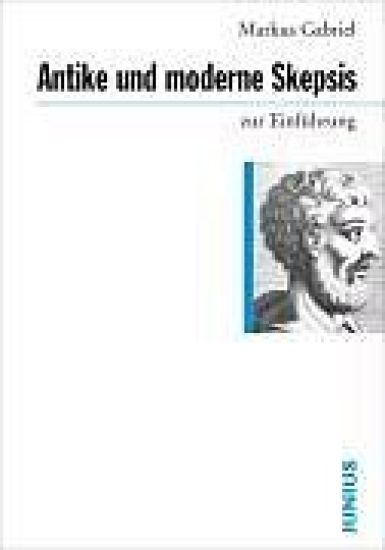
Antike und moderne Skepsis zur Einführung

Antike und moderne Skepsis zur Einführung

Markus Gabriel

JUNIUS VERLAG GMBH
2021
nidottu
Skepsis ist die Bezeichnung für eine philosophische Haltung, die grundsätzlich in Frage stellt, dass wir überhaupt irgendetwas wissen können. Trotz der Erfolge der modernen Naturwissenschaften kehrt diese Frage in der gegenwärtigen Philosophie wieder. Denn es ist gerade die Wissenschaft, die uns lehrt, dass die Welt anders ist, als sie uns erscheint. Daher stellt sich für einen Skeptiker die Frage, ob sie nicht auch anders sein könnte, als sie der Wissenschaft erscheint. Diese Frage führt auf den Unterschied von Sein und Schein, von dem die antike Skepsis ihren Ausgang nimmt und der in der modernen Skepsis wiederkehrt. Allerdings besteht die Skepsis nicht nur aus kritischen Rückfragen an Wissensansprüche, sondern auch in einer Lebensform. Wenn wir nichts wissen können, was sollen wir dann tun? Auch diese Frage muss thematisieren, wer sich der Skepsis stellt.
The Meaning of Thought

The Meaning of Thought

Markus Gabriel

Polity Press
2020
sidottu
From populist propaganda attacking knowledge as ‘fake news’ to the latest advances in artificial intelligence, human thought is under unprecedented attack today. If computers can do what humans can do and they can do it much faster, what’s so special about human thought? In this new book, bestselling philosopher Markus Gabriel steps back from the polemics to re-examine the very nature of human thought. He conceives of human thinking as a ‘sixth sense’, a kind of sense organ that is closely tied our biological reality as human beings. Our thinking is not a form of data processing but rather the linking together of images and imaginary ideas which we process in different sensory modalities. Our time frame expands far beyond the present moment, as our ideas and beliefs stretch far beyond the here and now. We are living beings and the whole of evolution is built into our life story. In contrast to some of the exaggerated claims made by proponents of AI, Gabriel argues that our thinking is a complex structure and organic process that is not easily replicated and very far from being superseded by computers. With his usual wit and intellectual verve, Gabriel combines philosophical insight with pop culture to set out a bold defence of the human and a plea for an enlightened humanism for the 21st century. This timely book will be of great value to anyone interested in the nature of human thought and the relations between human beings and machines in an age of rapid technological change.
Neo-Existentialismus

Neo-Existentialismus

Markus Gabriel

Karl-Alber-Verlag
2020
sidottu
In diesem Band stellt Markus Gabriel seine neuartige philosophische Theorie des menschlichen Selbst vor. Seine Sichtweise, der sogenannte Neo-Existentialismus, ist dabei als anti-naturalistisches Projekt zu begreifen, dem zufolge sich der menschliche Geist der Tatsache bewusst zu werden hat, dass der Mensch nicht in der unbelebten Natur und dem ubrigen Tierreich aufgeht, sondern auf ein sich anderndes Bild seines Selbst angewiesen ist, das ihn im grossten denkbaren Kontext des Universums verortet. Jocelyn Benoist, Andrea Kern, Jocelyn Maclure und Charles Taylor diskutieren seine Thesen zum Neo-Existentialismus kritisch - Markus Gabriel stellt sich dieser Kritik, indem er seine Argumentation weiter expliziert.
The Power of Art

The Power of Art

Markus Gabriel

Polity Press
2020
sidottu
We live in an era of aesthetics. Art has become both pervasive and powerful – it is displayed not only in museums and galleries but also on the walls of corporations and it is increasingly fused with design. But what makes art so powerful, and in what does its power consist? According to a widespread view, the power of art – its beauty – lies in the eye of the beholder. What counts as art appears to be a function of individual acts of evaluation supported by powerful institutions. On this account, the power of art stems from a force that is not itself aesthetic, such as the art market and the financial power of speculators. Art expresses, in a disguised form, the power of something else – like money – that lies behind it. In one word, art has lost its autonomy. In this short book, Markus Gabriel rejects this view. He argues that art is essentially uncontrollable. It is in the nature of the work of art to be autonomous to such a degree that the art world will never manage to overpower it. Ever since the cave paintings of Lascaux, art has taken hold of the human mind and implemented itself in our very being. Thanks to the emergence of art we became human beings, that is, beings who lead their lives in light of an image of the human being and its position in the world and in relation to other species. Due to its structural, ontological power, art itself is and remains radically autonomous. Yet, this power is highly ambiguous, as we cannot control its unfolding. In this book, a leading proponent of New Realism applies this philosophical perspective to art to create a new aesthetic realism.
The Power of Art

The Power of Art

Markus Gabriel

Polity Press
2020
nidottu
We live in an era of aesthetics. Art has become both pervasive and powerful – it is displayed not only in museums and galleries but also on the walls of corporations and it is increasingly fused with design. But what makes art so powerful, and in what does its power consist? According to a widespread view, the power of art – its beauty – lies in the eye of the beholder. What counts as art appears to be a function of individual acts of evaluation supported by powerful institutions. On this account, the power of art stems from a force that is not itself aesthetic, such as the art market and the financial power of speculators. Art expresses, in a disguised form, the power of something else – like money – that lies behind it. In one word, art has lost its autonomy. In this short book, Markus Gabriel rejects this view. He argues that art is essentially uncontrollable. It is in the nature of the work of art to be autonomous to such a degree that the art world will never manage to overpower it. Ever since the cave paintings of Lascaux, art has taken hold of the human mind and implemented itself in our very being. Thanks to the emergence of art we became human beings, that is, beings who lead their lives in light of an image of the human being and its position in the world and in relation to other species. Due to its structural, ontological power, art itself is and remains radically autonomous. Yet, this power is highly ambiguous, as we cannot control its unfolding. In this book, a leading proponent of New Realism applies this philosophical perspective to art to create a new aesthetic realism.
The Limits of Epistemology

The Limits of Epistemology

Markus Gabriel

Polity Press
2019
nidottu
At the centre of modern epistemology lurks the problem of scepticism: how can we know that the forms of our cognition are compatible with the world? How can we state success conditions for knowledge claims without somehow transcending our discursive and fallible nature as knowers? By distinguishing different forms of scepticism, Markus Gabriel shows how all objective knowledge relies on shared discourses and how the essential corrigibility of knowledge claims is a crucial condition of their objectivity. We should understand scepticism not so much as posing a threat, but as offering a vital lesson about the fallibility of discursive thinking. By heeding this lesson, we can begin to reintegrate the solipsistic subject of modern epistemology back into the community of actual knowers. Taking his cue from Hegel, Wittgenstein and Brandom, Gabriel shows how intentionality as such is a public rather than a private phenomenon. He concedes that the sceptic can prove the necessary finitude of objective knowledge, but denies that this has to lead us into an aporia. Instead, it shows us the limits of the modern project of epistemology. Through an examination of different kinds of sceptical paradoxes, Gabriel not only demonstrates their indispensable role within epistemological theorising, but also argues for the necessary failure of all totalizing knowledge claims. In this way, epistemology, as the discipline that claims knowledge about knowledge, begins to grasp its own fallibility and, as a result, the true nature of its objectivity. The Limits of Epistemology will be of great value to students and scholars of philosophy.
The Limits of Epistemology

The Limits of Epistemology

Markus Gabriel

Polity Press
2019
sidottu
At the centre of modern epistemology lurks the problem of scepticism: how can we know that the forms of our cognition are compatible with the world? How can we state success conditions for knowledge claims without somehow transcending our discursive and fallible nature as knowers? By distinguishing different forms of scepticism, Markus Gabriel shows how all objective knowledge relies on shared discourses and how the essential corrigibility of knowledge claims is a crucial condition of their objectivity. We should understand scepticism not so much as posing a threat, but as offering a vital lesson about the fallibility of discursive thinking. By heeding this lesson, we can begin to reintegrate the solipsistic subject of modern epistemology back into the community of actual knowers. Taking his cue from Hegel, Wittgenstein and Brandom, Gabriel shows how intentionality as such is a public rather than a private phenomenon. He concedes that the sceptic can prove the necessary finitude of objective knowledge, but denies that this has to lead us into an aporia. Instead, it shows us the limits of the modern project of epistemology. Through an examination of different kinds of sceptical paradoxes, Gabriel not only demonstrates their indispensable role within epistemological theorising, but also argues for the necessary failure of all totalizing knowledge claims. In this way, epistemology, as the discipline that claims knowledge about knowledge, begins to grasp its own fallibility and, as a result, the true nature of its objectivity. The Limits of Epistemology will be of great value to students and scholars of philosophy.
Propos Realistes

Propos Realistes

Markus Gabriel

Librarie Philosophique J. Vrin
2019
nidottu
Dans ce livre Markus Gabriel poursuit et generalise sa reflexion sur des domaines aussi varies que la theorie de la connaissance, l'ontologie et l'esthetique. La contextualite de ces Propos, concus lors d'un sejour en France et adresses en premier lieu a toute une serie d'interlocuteurs francais, reflete l'integration du discours philosophique dans la realite du dialogue franco-allemand au sein de la philosophie contemporaine. Dans une introduction approfondie, Markus Gabriel poursuit plus particulierement le debat avec le contextualisme de Jocelyn Benoist et developpe, au cours de ses Propos, une theorie innovante de la non-existence.
I am Not a Brain

I am Not a Brain

Markus Gabriel

Polity Press
2019
nidottu
Many consider the nature of human consciousness to be one of the last great unsolved mysteries. Why should the light turn on, so to speak, in human beings at all? And how is the electrical storm of neurons under our skull connected with our consciousness? Is the self only our brain’s user interface, a kind of stage on which a show is performed that we cannot freely direct? In this book, philosopher Markus Gabriel challenges an increasing trend in the sciences towards neurocentrism, a notion which rests on the assumption that the self is identical to the brain. Gabriel raises serious doubts as to whether we can know ourselves in this way. In a sharp critique of this approach, he presents a new defense of the free will and provides a timely introduction to philosophical thought about the self – all with verve, humor, and surprising insights. Gabriel criticizes the scientific image of the world and takes us on an eclectic journey of self-reflection by way of such concepts as self, consciousness, and freedom, with the aid of Kant, Schopenhauer, and Nagel but also Dr. Who, The Walking Dead, and Fargo.
Neo-Existentialism

Neo-Existentialism

Markus Gabriel

Polity Press
2018
nidottu
In this highly original book, Markus Gabriel offers an account of the human self that overcomes the deadlocks inherent in the standard positions of contemporary philosophy of mind. His view, Neo-Existentialism, is thoroughly anti-naturalist in that it repudiates any theory according to which the ensemble of our best natural-scientific knowledge is able to account fully for human mindedness. Instead, he shows that human mindedness consists in an open-ended proliferation of mentalistic vocabularies. Their role in the human life form consists in making sense of the fact that the human being does not merely blend in with inanimate nature and the rest of the animal kingdom. Humans rely on a self-portrait that locates them in the broadest conceivable context of the universe. What distinguishes this self-portrait from our knowledge of natural reality is that we change in light of our true and false beliefs about the human being. Gabriel’s argument is challenged in this volume by Charles Taylor, Andrea Kern and Jocelyn Benoist. In defending his argument against these and other objections and in spelling out his theory of self-constitution, Gabriel refutes naturalism’s metaphysical claim to epistemic exclusiveness and opens up new paths for future self-knowledge beyond the contemporary ideology of the scientific worldview.
Neo-Existentialism

Neo-Existentialism

Markus Gabriel

Polity Press
2018
sidottu
In this highly original book, Markus Gabriel offers an account of the human self that overcomes the deadlocks inherent in the standard positions of contemporary philosophy of mind. His view, Neo-Existentialism, is thoroughly anti-naturalist in that it repudiates any theory according to which the ensemble of our best natural-scientific knowledge is able to account fully for human mindedness. Instead, he shows that human mindedness consists in an open-ended proliferation of mentalistic vocabularies. Their role in the human life form consists in making sense of the fact that the human being does not merely blend in with inanimate nature and the rest of the animal kingdom. Humans rely on a self-portrait that locates them in the broadest conceivable context of the universe. What distinguishes this self-portrait from our knowledge of natural reality is that we change in light of our true and false beliefs about the human being. Gabriel’s argument is challenged in this volume by Charles Taylor, Andrea Kern and Jocelyn Benoist. In defending his argument against these and other objections and in spelling out his theory of self-constitution, Gabriel refutes naturalism’s metaphysical claim to epistemic exclusiveness and opens up new paths for future self-knowledge beyond the contemporary ideology of the scientific worldview.
Was ist Wirklichkeit?

Was ist Wirklichkeit?

Markus Gabriel; Malte Dominik Krüger

Mohr Siebeck
2018
nidottu
Was ist Wirklichkeit? Welchen Zugang haben wir zu ihr in einer zunehmend medialen und digitalisierten Gesellschaft? Oder befinden wir uns mit diesen Fragen vielleicht selbst schon in einem illusionären oder imaginären Zusammenhang, weil die Realität jedem Verstehen zuvorkommt? Und: Was heißt es, mit diesen Fragen philosophisch und theologisch im gegenwärtigen Realismus-Streit angemessen umzugehen? Diesen Problemen wenden sich Markus Gabriel und Malte Dominik Krüger zu, die jeweils aus der Sicht des Neuen Realismus und der (Bild-) Hermeneutischen Theologie argumentieren und auch aufeinander Bezug nehmen. Dabei werden alte Grundfragen des philosophischen und theologischen Wirklichkeitsverständnisses neu verhandelt und in aktuellen Konzepten greifbar. Dokumentiert werden damit - einschließlich der Grußworte - die Vorträge der 1. Internationalen Bultmann-Lecture 2017 in Marburg.