Kirjojen hintavertailu. Mukana 12 390 323 kirjaa ja 12 kauppaa.

Kirjailija

Markus J. Prutsch

Kirjat ja teokset yhdessä paikassa: 2 kirjaa, julkaisuja vuosilta 2019-2021, suosituimpien joukossa Caesarism in the Post-Revolutionary Age. Vertaile teosten hintoja ja tarkista saatavuus suomalaisista kirjakaupoista.

2 kirjaa

Kirjojen julkaisuhaarukka 2019-2021.

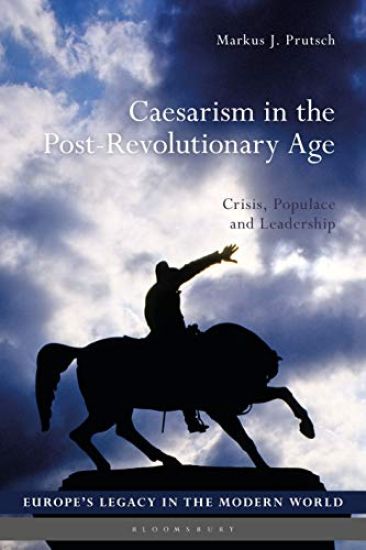
Caesarism in the Post-Revolutionary Age

Caesarism in the Post-Revolutionary Age

Markus J. Prutsch

Bloomsbury Academic
2021
nidottu
This book is open access and available on www.bloomsburycollections.com. It is funded by Knowledge Unlatched.Debates about the legitimacy and ‘essence’ of political rule and the search for ‘ideal’ forms of government have been at the very heart of political thought ever since antiquity. Caesarism in the Post-Revolutionary Age explores the complex relationship between democracy and dictatorship from the 18th century onwards. More concretely, it assesses how democracy emerged as something compatible with dictatorship, both at the level of political thought and practice. Taking Caesarism – a political alternative somewhere between democracy and dictatorship – as its key concept, the book considers: * To what extent was Caesarism seen as a new post-revolutionary form of rule?* What were the flaws and perils, strengths and promises of Caesaristic regimes?* Can 19th-century Caesarism be characterised as a ‘prelude’ to 20th-century totalitarianism?* What is the legacy and ongoing appeal of Caesarism in the contemporary world? This study will be of value to anyone interested in modern political history, but also contemporary politics.
Caesarism in the Post-Revolutionary Age

Caesarism in the Post-Revolutionary Age

Markus J. Prutsch

Bloomsbury Academic
2019
sidottu
This book is open access and available on www.bloomsburycollections.com. It is funded by Knowledge Unlatched.Debates about the legitimacy and ‘essence’ of political rule and the search for ‘ideal’ forms of government have been at the very heart of political thought ever since antiquity. Caesarism in the Post-Revolutionary Age explores the complex relationship between democracy and dictatorship from the 18th century onwards. More concretely, it assesses how democracy emerged as something compatible with dictatorship, both at the level of political thought and practice. Taking Caesarism – a political alternative somewhere between democracy and dictatorship – as its key concept, the book considers: * To what extent was Caesarism seen as a new post-revolutionary form of rule?* What were the flaws and perils, strengths and promises of Caesaristic regimes?* Can 19th-century Caesarism be characterised as a ‘prelude’ to 20th-century totalitarianism?* What is the legacy and ongoing appeal of Caesarism in the contemporary world? This study will be of value to anyone interested in modern political history, but also contemporary politics.