Kirjojen hintavertailu. Mukana 12 582 661 kirjaa ja 12 kauppaa.

Kirjailija

Markus Neuhäuser

Kirjat ja teokset yhdessä paikassa: 6 kirjaa, julkaisuja vuosilta 2010-2024, suosituimpien joukossa The Statistical Analysis of Small Data Sets. Vertaile teosten hintoja ja tarkista saatavuus suomalaisista kirjakaupoista.

Mukana myös kirjoitusasut: Markus Neuhauser

6 kirjaa

Kirjojen julkaisuhaarukka 2010-2024.

The Statistical Analysis of Small Data Sets

The Statistical Analysis of Small Data Sets

Markus Neuhäuser; Graeme D. Ruxton

Oxford University Press
2024
nidottu
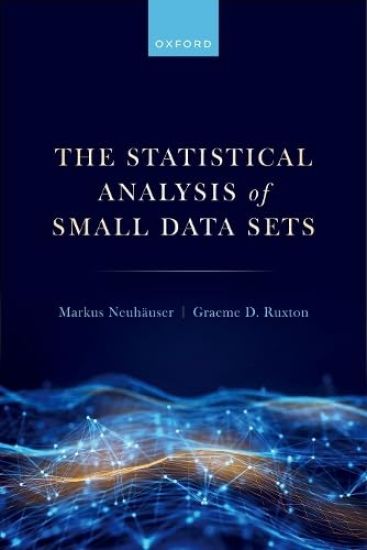
We live in the era of big data. However, small data sets are still common for ethical, financial, or practical reasons. Small sample sizes can cause researchers to seek out the most powerful methods to analyse their data, but they may also be wary that some methodologies and assumptions may not be appropriate when samples are small. The book offers advice on the statistical analysis of small data sets for various designs and levels of measurement, helping researchers to analyse such data sets, but also to evaluate and interpret others' analyses. The book discusses the potential challenges associated with a small sample, as well as the ways in which these challenges can be mitigated. General topics with strong relevance to small sample sizes such as meta-analysis, sequential and adaptive designs, and multiple testing are introduced. While the focus is on hypothesis tests and confidence intervals, Bayesian analyses are also covered. Code written in the statistical software R is presented to carry out the proposed methods, many of which are not limited to use on small data sets, and the book also discusses approaches to computing the power or the necessary sample size, respectively.
The Statistical Analysis of Small Data Sets

The Statistical Analysis of Small Data Sets

Markus Neuhäuser; Graeme D. Ruxton

Oxford University Press
2024
sidottu
We live in the era of big data. However, small data sets are still common for ethical, financial, or practical reasons. Small sample sizes can cause researchers to seek out the most powerful methods to analyse their data, but they may also be wary that some methodologies and assumptions may not be appropriate when samples are small. The book offers advice on the statistical analysis of small data sets for various designs and levels of measurement, helping researchers to analyse such data sets, but also to evaluate and interpret others' analyses. The book discusses the potential challenges associated with a small sample, as well as the ways in which these challenges can be mitigated. General topics with strong relevance to small sample sizes such as meta-analysis, sequential and adaptive designs, and multiple testing are introduced. While the focus is on hypothesis tests and confidence intervals, Bayesian analyses are also covered. Code written in the statistical software R is presented to carry out the proposed methods, many of which are not limited to use on small data sets, and the book also discusses approaches to computing the power or the necessary sample size, respectively.
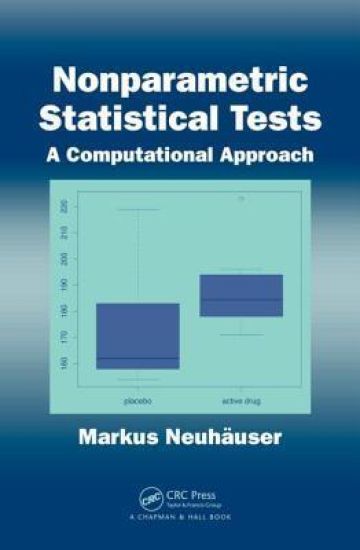
Nonparametric Statistical Tests

Nonparametric Statistical Tests

Markus Neuhauser

CRC Press
2017
nidottu
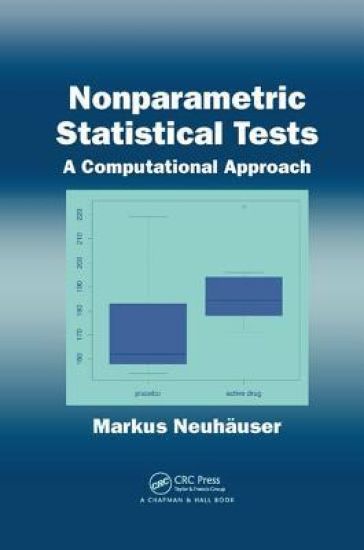
Nonparametric Statistical Tests: A Computational Approach describes classical nonparametric tests, as well as novel and little-known methods such as the Baumgartner-Weiss-Schindler and the Cucconi tests. The book presents SAS and R programs, allowing readers to carry out the different statistical methods, such as permutation and bootstrap tests. The author considers example data sets in each chapter to illustrate methods. Numerous real-life data from various areas, including the bible, and their analyses provide for greatly diversified reading.The book covers:Nonparametric two-sample tests for the location-shift model, specifically the Fisher-Pitman permutation test, the Wilcoxon rank sum test, and the Baumgartner-Weiss-Schindler testPermutation tests, location-scale tests, tests for the nonparametric Behrens-Fisher problem, and tests for a difference in variabilityTests for the general alternative, including the (Kolmogorov-)Smirnov test, ordered categorical, and discrete numerical data Well-known one-sample tests such as the sign test and Wilcoxon’s signed rank test, a modification suggested by Pratt (1959), a permutation test with original observations, and a one-sample bootstrap test are presented. Tests for more than two groups, the following tests are described in detail: the Kruskal-Wallis test, the permutation F test, the Jonckheere-Terpstra trend test, tests for umbrella alternatives, and the Friedman and Page tests for multiple dependent groupsThe concepts of independence and correlation, and stratified tests such as the van Elteren test and combination testsThe applicability of computer-intensive methods such as bootstrap and permutation tests for non-standard situations and complex designsAlthough the major development of nonparametric methods came to a certain end in the 1970s, their importance undoubtedly persists. What is still needed is a computer assisted evaluation of their main properties. This book closes that gap.
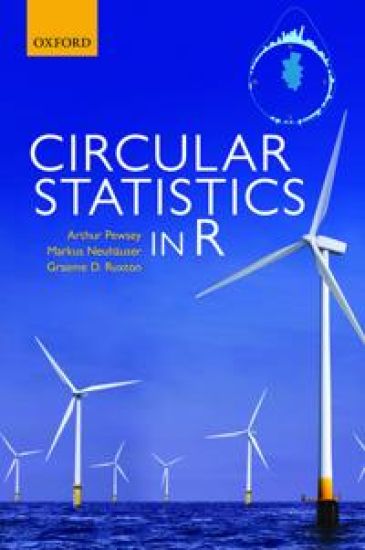
Circular Statistics in R

Circular Statistics in R

Arthur Pewsey; Markus Neuhäuser; Graeme D Ruxton

Oxford University Press
2013
nidottu
Circular Statistics in R provides the most comprehensive guide to the analysis of circular data in over a decade. Circular data arise in many scientific contexts whether it be angular directions such as: observed compass directions of departure of radio-collared migratory birds from a release point; bond angles measured in different molecules; wind directions at different times of year at a wind farm; direction of stress-fractures in concrete bridge supports; longitudes of earthquake epicentres or seasonal and daily activity patterns, for example: data on the times of day at which animals are caught in a camera trap, or in 911 calls in New York, or in internet traffic; variation throughout the year in measles incidence, global energy requirements, TV viewing figures or injuries to athletes. The natural way of representing such data graphically is as points located around the circumference of a circle, hence their name. Importantly, circular variables are periodic in nature and the origin, or zero point, such as the beginning of a new year, is defined arbitrarily rather than necessarily emerging naturally from the system. This book will be of value both to those new to circular data analysis as well as those more familiar with the field. For beginners, the authors start by considering the fundamental graphical and numerical summaries used to represent circular data before introducing distributions that might be used to model them. They go on to discuss basic forms of inference such as point and interval estimation, as well as formal significance tests for hypotheses that will often be of scientific interest. When discussing model fitting, the authors advocate reduced reliance on the classical von Mises distribution; showcasing distributions that are capable of modelling features such as asymmetry and varying levels of kurtosis that are often exhibited by circular data. The use of likelihood-based and computer-intensive approaches to inference and modelling are stressed throughout the book. The R programming language is used to implement the methodology, particularly its "circular" package. Also provided are over 150 new functions for techniques not already covered within R. This concise but authoritative guide is accessible to the diverse range of scientists who have circular data to analyse and want to do so as easily and as effectively as possible.
Nonparametric Statistical Tests

Nonparametric Statistical Tests

Markus Neuhauser

Taylor Francis Inc
2011
sidottu
Nonparametric Statistical Tests: A Computational Approach describes classical nonparametric tests, as well as novel and little-known methods such as the Baumgartner-Weiss-Schindler and the Cucconi tests. The book presents SAS and R programs, allowing readers to carry out the different statistical methods, such as permutation and bootstrap tests. The author considers example data sets in each chapter to illustrate methods. Numerous real-life data from various areas, including the bible, and their analyses provide for greatly diversified reading.The book covers:Nonparametric two-sample tests for the location-shift model, specifically the Fisher-Pitman permutation test, the Wilcoxon rank sum test, and the Baumgartner-Weiss-Schindler testPermutation tests, location-scale tests, tests for the nonparametric Behrens-Fisher problem, and tests for a difference in variabilityTests for the general alternative, including the (Kolmogorov-)Smirnov test, ordered categorical, and discrete numerical data Well-known one-sample tests such as the sign test and Wilcoxon’s signed rank test, a modification suggested by Pratt (1959), a permutation test with original observations, and a one-sample bootstrap test are presented. Tests for more than two groups, the following tests are described in detail: the Kruskal-Wallis test, the permutation F test, the Jonckheere-Terpstra trend test, tests for umbrella alternatives, and the Friedman and Page tests for multiple dependent groupsThe concepts of independence and correlation, and stratified tests such as the van Elteren test and combination testsThe applicability of computer-intensive methods such as bootstrap and permutation tests for non-standard situations and complex designsAlthough the major development of nonparametric methods came to a certain end in the 1970s, their importance undoubtedly persists. What is still needed is a computer assisted evaluation of their main properties. This book closes that gap.
Computer-intensive und nichtparametrische statistische Tests
Dieses Lehrbuch fuhrt verstandlich in nichtparametrische Tests ein; besondere Berucksichtigung finden Permutations- und Bootstrap-Tests, die seit der zweiten Halfte der 1990er mehr und mehr in den Vordergrund rucken und inzwischen in zahlreichen statistischen Programmsystemen implementiert wurden. Auf die Vorstellung der verschiedenen Testverfahren folgt die Bearbeitung konkreter, beispielhafter Testprobleme. Zudem werden Programme umfassend vorgestellt, so dass der Leser in der Lage ist, die Verfahren selbst anzuwenden.