Kirjojen hintavertailu. Mukana 12 390 323 kirjaa ja 12 kauppaa.

Kirjailija

Marlene K. Sokolon

Kirjat ja teokset yhdessä paikassa: 5 kirjaa, julkaisuja vuosilta 2006-2022, suosituimpien joukossa Seeing with Free Eyes. Vertaile teosten hintoja ja tarkista saatavuus suomalaisista kirjakaupoista.

5 kirjaa

Kirjojen julkaisuhaarukka 2006-2022.

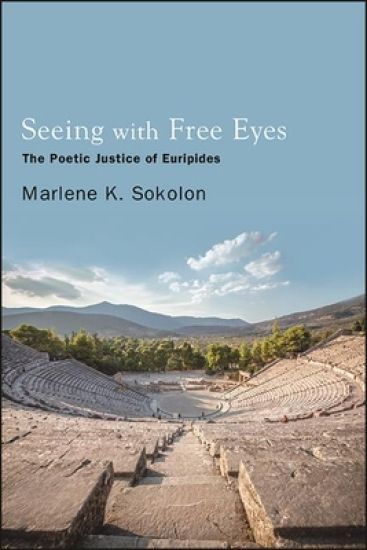
Seeing with Free Eyes

Seeing with Free Eyes

Marlene K. Sokolon

STATE UNIVERSITY OF NEW YORK PRESS
2022
pokkari
Examines the ideas of justice in Euripidean tragedy, which reveals the human experience of justice to be paradoxical, and reminds us of the need for humility in our unceasing quest for a just world.Responding to Plato's challenge to defend the political thought of poetic sources, Marlene K. Sokolon explores Euripides's understanding of justice in nine of his surviving tragedies. Drawing on Greek mythological stories, Euripides examines several competing ideas of justice, from the ancient ethic of helping friends and harming enemies to justice as merit and relativist views of might makes right. Reflecting Dionysus, the paradoxical god of Greek theater, Euripides reveals the human experience of understanding justice to be limited, multifaceted, and contradictory. His approach underscores the value of understanding justice not only as a rational idea or theory, but also as an integral part of the continuous and unfinished dialogue of political community. As the first book devoted to Euripidean justice, Seeing with Free Eyes adds to the growing interest in how citizens in democracies use storytelling genres to think about important political questions, such as "What is justice?"
Seeing with Free Eyes

Seeing with Free Eyes

Marlene K. Sokolon

State University of New York Press
2021
sidottu
Examines the ideas of justice in Euripidean tragedy, which reveals the human experience of justice to be paradoxical, and reminds us of the need for humility in our unceasing quest for a just world.Responding to Plato's challenge to defend the political thought of poetic sources, Marlene K. Sokolon explores Euripides's understanding of justice in nine of his surviving tragedies. Drawing on Greek mythological stories, Euripides examines several competing ideas of justice, from the ancient ethic of helping friends and harming enemies to justice as merit and relativist views of might makes right. Reflecting Dionysus, the paradoxical god of Greek theater, Euripides reveals the human experience of understanding justice to be limited, multifaceted, and contradictory. His approach underscores the value of understanding justice not only as a rational idea or theory, but also as an integral part of the continuous and unfinished dialogue of political community. As the first book devoted to Euripidean justice, Seeing with Free Eyes adds to the growing interest in how citizens in democracies use storytelling genres to think about important political questions, such as "What is justice?"
Fertile Ground

Fertile Ground

Stephanie Paterson; Francesca Scala; Marlene K. Sokolon

McGill-Queen's University Press
2014
sidottu
Ideas of choice and rights traditionally dominate discussions concerning reproduction and gender politics. Fertile Ground argues that the current political climate in Canada necessitates a broader understanding of the links between the politics of reproduction, the state, and gender relations. Three major themes are developed in the book: women's lived experiences, the role of the state in reproductive politics, and discourses around reproduction. Contributors examine unequal access to in vitro fertilization treatments depending upon class, race, age, disability, and health status; critique Health Canada's adherence to a medical model of breastfeeding; analyze marketing campaigns for birth-control products; and recount the Aamjiwnaang First Nation's experience of seeking recognition for reproductive health concerns. Fertile Ground links reproduction to marginalization, contestation, and the state in order to illuminate the continuity of reproductive moments and their implications for identity, activism, policy formation, and further scholarship. A timely and multidisciplinary account of reproduction and gender politics in Canada, Fertile Ground will interest academics, activists, and professionals involved in the areas of women's studies, politics, sociology, and public health.
Fertile Ground

Fertile Ground

Stephanie Paterson; Francesca Scala; Marlene K. Sokolon

McGill-Queen's University Press
2014
nidottu
Ideas of choice and rights traditionally dominate discussions concerning reproduction and gender politics. Fertile Ground argues that the current political climate in Canada necessitates a broader understanding of the links between the politics of reproduction, the state, and gender relations. Three major themes are developed in the book: women's lived experiences, the role of the state in reproductive politics, and discourses around reproduction. Contributors examine unequal access to in vitro fertilization treatments depending upon class, race, age, disability, and health status; critique Health Canada's adherence to a medical model of breastfeeding; analyze marketing campaigns for birth-control products; and recount the Aamjiwnaang First Nation's experience of seeking recognition for reproductive health concerns. Fertile Ground links reproduction to marginalization, contestation, and the state in order to illuminate the continuity of reproductive moments and their implications for identity, activism, policy formation, and further scholarship. A timely and multidisciplinary account of reproduction and gender politics in Canada, Fertile Ground will interest academics, activists, and professionals involved in the areas of women's studies, politics, sociology, and public health.
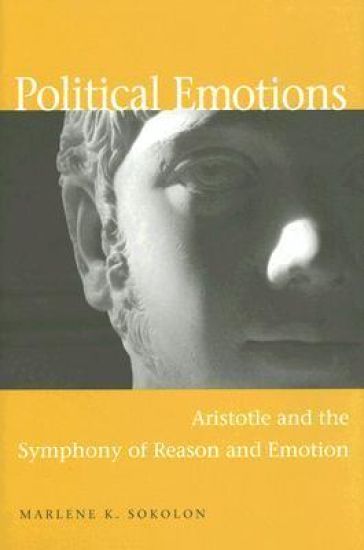
Political Emotions

Political Emotions

Marlene K. Sokolon

Northern Illinois University Press
2006
sidottu
A rioting crowd in a burning city, a lynch mob circling a battered body, a campaigning senator exaggerating the threat of an enemy's bombs—evidence of the power of anger, hate, and fear has lead many political philosophers to call for rationality as the exclusive basis for a stable, just society. Yet Aristotle himself granted emotions a role as significant as that of reason in political life. In this timely book, Marlene K. Sokolon revisits Aristotle's understanding of emotions and finds that his ideas not only resonate with current psychological theories but, more importantly, offer a resource for political life in the twenty-first century. Identifying fourteen political emotions, ranging from pity through envy, benevolence through shame, Aristotle discovered that, inherently, they are neither negative nor positive. Significantly, different emotions have different functions. Anger and love pertain to the well-being of the individual and his/her family and friends. Indignation and benevolence, in contrast, are more concerned with the security of other, unrelated persons. Aristotle asserted that these political emotions, united in a harmonious "symphony" with reason, could lead to stability, justice, moral action, and community. But exactly what are emotions? According to Aristotle, they are both innate physiological processes and psychological assessments of one's political and social environment. This concept, Sokolon shows, stands up surprisingly well in light of current evolutionary, cognitive, and social construct theories. Combining modern science and ancient thought, she concludes by suggesting a framework for understanding the interaction of emotion and cognitive rationality in sociopolitical decision making and behavior.