Kirjojen hintavertailu. Mukana 12 595 353 kirjaa ja 12 kauppaa.
Kirjailija
Marques Vickers
Kirjat ja teokset yhdessä paikassa: 52 kirjaa, julkaisuja vuosilta 2014-2025, suosituimpien joukossa Twisted Tour Guide. Vertaile teosten hintoja ja tarkista saatavuus suomalaisista kirjakaupoista.
The edition "Objects That Aren't" is a photographic contrast between tangible imagery and perceived and/or implied meanings. Photographer Marques Vickers has incorporated a surrealist approach reminiscent of artist Rene Magritte's painting This Is Not A Pipe. Vickers identifies what each object does not represent to him. In many instances his opinion appears obvious. In others, his conclusion may not have even occurred to the viewer. His subjectivity prompts the viewer into determining his or her own personal interpretation of what the camera lens is portraying. Images are not necessarily confined to exact interpretation. The majority of candid frames represent little more than frozen impressions. Reaction is potentially triggered and often dependent on the viewer's reference base of experiences, traumas, and overall aperture towards life.As with previous photographic editions, the author questions accepted or traditional standards, while accentuating absurdity with humor and subtlety.There exists no certainty as to what precisely each image represents. Contextual background is missing and clues are frequently minimal. The viewer is left to decipher their own meaning or simply perceive the images absent of contributing commentary.
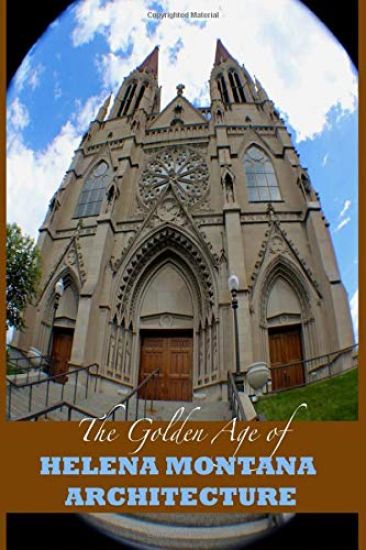
The most distinguishing remnant from the 1860s Montana Gold Rush remains Helena's striking and statuesque architecture mirroring the prosperity of the era. The concentration of wealth proved unprecedented within both the community and Montana territory.Marques Vickers "The Golden Age of Helena Architecture" illustrates the preserved diversity and beauty of the city's commercial, residential districts, picturesque churches, attractions and historical background that distinguishes Montana state capital city.In 1888, approximately fifty millionaires inhabited Helena, elevating its status as the highest concentration of wealth per capita within the United States. Such eminence and prosperity were doomed by the characteristics of the source and by the continued expansion and development of the West.The precious metal industry proved incapable of sustaining wealth stabilization. The volatile value fluctuations and its inherent boom and bust nature evaporated fortunes as rapidly as creating them. The Golden era spawned ostentatious displays of Victorian architecture. Several were employed in a thriving local brothel industry, servicing the miners and more affluent community leaders. Strolling the neighborhoods connecting the historic downtown with the state capital buildings freezes a visual time capsule of Victorian, Edwardian and early twentieth century styled architecture.The most impressive architectural attraction is the Cathedral of Saint Helena completed in November 1924 following sixteen years of construction. The gothic cathedral was modeled after the Votivkirch in Vienna, Austria. Fifty-nine installed stained glass windows depict the evolution of the Christian church from the fall of Adam and Eve to the early years of the twentieth century. Most portray narrative scenes from the Old and New Testament.The most prominent structural feature is the 230-foot twin spires adorned by gold-leafed crosses standing 12 feet in height and 6 feet in length. The church's North tower contains fifteen hand-cast bells representing the mysteries of the Rosary.The other treasure, the Helena Civic Center, formerly known as the Algeria Shrine Temple, was constructed in 1919. It has been historically employed for civic and Shriner functions and events. The building features a 2,000-seat auditorium and 15,000 square foot ballroom and exhibition space. The temple rivals the detailing of any intricate Islamic Mosque. Located south of the downtown, abandoned lime kilns stagger as relics from a forgotten medieval era. The Helena kilns were typified as continuous designed with vertical furnaces made of mortar, brick, wire cables and wood poles. The square-shaped kilns had openings from the top and base. Alternative layers of wood fuel and quarried limestone cobbles were layered inside the kiln and fired at extreme temperatures. Wood and limestone were continuously fed into the top with the resulting powdery quicklime shoveled from the bottom mouth into wood barrels. At the peak of production during the early twentieth century, the most important use of lime was for building mortar and plaster. Artificial hydraulic cement eventually displaced quicklime.Helena has experienced significant trauma and devastation throughout its history. The most pronounced acts have been raging wildfires and earthquakes. Bearing witness to each destructive occurrence and renovation has been a solitary sentinel overlooking the historical center of the city. The wood-frame observation tower is called The Guardian of the Gulch, originally constructed in 1870 and rebuilt in 1886.The Guardian has borne witnessed to a city that has known extravagance and decline and today remains notably preserved of its renowned golden age.
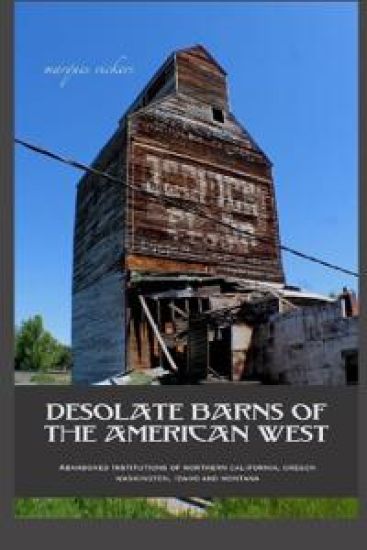
This edition represents a photographic celebration of damaged and often abandoned barns and silos located within the rural Western United States. Over fifty structures are photographed amidst a backdrop of panoramic mountains, turbulent rivers and sagebrush flatlands. Many are inaccessible via roadways or difficult to approach due to private property restrictions. The captures images are spread over California, Oregon, Washington, Idaho and Montana. The objective of this photography project is to isolate the abandoned and frequently decaying remnants of a uniquely national architecture treasure. Barns and silos represent an iconic and important American rural tradition. An altered historic frontier has left many of these monoliths forsaken and deteriorating organically into the landscape. American agriculture has become forever transformed by advanced machinery, technology and the consolidation of land holdings. These remaining stately buildings represent a crossroads between traditional rural lifestyle and the effects of modernity. In numerous instances, timber framed structures undergo a gradual deterioration before collapsing into splinted heaps. Their disintegrating structural supports corrode until gravity ultimately prevails. The wood remnants are often simply left to blend harmoniously into the natural surroundings. The isolation and expansive landscape of the American northwest provides an evocative comparison to contemporary confined urban and suburban environments. The continuity of these utilitarian structures remains timeless in spite of their condition.
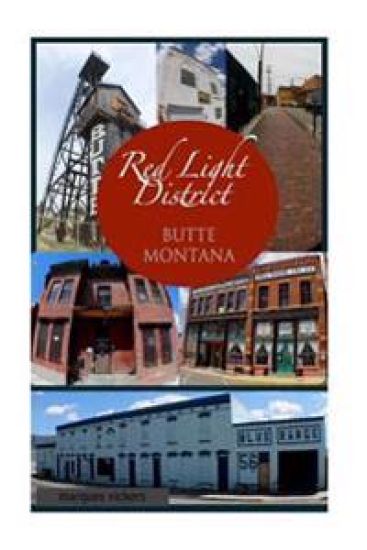
This edition is an intimate photo examination of the infamous Butte, Montana sex trade once nationally recognized during the late 19th and early 20th century. Over 135 current photographs document the remnants of the famed copper mining town's prostitution core. The work details historical anecdotes, narratives on colorful personages and perspective on an era when prostitution was locally institutionalized. The remaining Dumas Brothel is a profiled parlor house noteworthy for its operational longevity between 1890-1982. The Dumas is the longest tenured American house of prostitution. The property weathered numerous reform movements and attempts towards forced closure by governmental authorities. Owner tax evasion ultimately shuttered the property. Across the road is the Blue Range Building, the last street-facing example of the lowest extremity of prostitution once employed within the district. The seven sets of ground floor doors and adjacent windows housed segregated cubicles called cribs. Diminutive cribs accommodated only a single bed and an occasional washbasin. Lower esteemed prostitutes serviced clients from these utilitarian spaces. Butte's prostitution industry reinforced a rigid hierarchy of distinguishing elite mistresses for the affluent and influential, from lowly street solicitors. The lifestyle of sex professionals was plagued by drug addiction, financial debt, sexually transmitted diseases, pregnancy, abortion, violence and abuse by their patrons and jealousy-motivated clients. Suicide was common even amongst the highest regarded women within such a cannibalistic environment, During the turn of the twentieth century, Butte was one of the largest Rocky Mountain population centers. Its licentious reputation mirrored contemporary Las Vegas. Unlike many western frontier settlements, cowboy culture made minimal intrusion. Butte's red-light district is a haunting environment with a complex past.
This illustrated edition captures the city's architecture and constructions built between 1890-1930. Over 300+ photographs document historical structures establishing a visual profile and economic time capsule of Seattle's early economic legacy. The edition portrays the most influential downtown constructions including the Smith and Seattle Towers, Washington Mutual Triangle, Coliseum Theatre and the Interurban, Arctic, Dexter Horton, and Pioneer Buildings. Photographs from multiple perspectives accentuate distinctive architectural traits and detailing. Contemporary Seattle is undergoing a dynamic resurgence of architectural construction consisting primarily of skyscrapers. Each completed monolith provides an intriguing and often imposing contrast to the modestly scaled structures from a distant era. Historical preservation has enabled Seattle to assume a distinctive and prominent in West Coast architecture. Seattle's integration of traditional and contemporary design reinforces its image as a desirable urban living environment. Few American cities can still document the precise stages of their evolution by the remaining strata of their architecture. Seattle is an exemplary example showcasing that capability. Historically Seattle was deeply traumatized by a devastating June 6th, 1889 fire that decimated the entire downtown commercial district. The entire composition of wood framed structures was destroyed. The catastrophe ironically rejuvenated the downtown, resulting in a fervent reconstruction program consisting exclusively of stone and brick structures. Most remain standing today. Wood framed building construction was prohibited. The nationwide financial Panic of 1893 compounded the calamity causing a massive slowdown in construction. The Klondike gold rush of 1896 spurred regional economic activity, particularly in providing goods and services to the Alaskan bound miners. During the first two decades of the 20th century, Seattle accommodated a massive incoming immigration. The influx resulted in the creation of outlying tightly concentrated neighborhoods. The downtown core swelled minus coordinated zoned planning. Steep hillsides were lowered to enable fresh constructions and greenbelt territories. Parklands, bridges and public works projects proliferated creating a diverse blend of ambiance and chaos. In 1914, the 38-story Smith Tower was constructed and named after firearm and typewriter magnate Lyman Cornelius Smith. The skyscraper was Seattle's first and among the tallest outside of New York City at the time of its completion. It remained the tallest building west of the Mississippi until 1931 and was only eclipsed within Seattle upon the construction of the iconic Space Needle in 1962. "Seattle Early and Modernism Architecture" showcases the unique charm of urban Seattle that was and still remains.
"So You Think You Know Pacific Coast Wines?" is designed to simplify your understanding by identifying growing trends, grape descriptions, the histories and future direction of the California, Washington and Oregon wine industry. This book concisely profiles each state's leading growing regions, rainfall statistics and prominent grapes based on the most recent available harvest data. The 2017-18 edition is ideal for wine collectors, winemakers and anyone who appreciates a world class Pacific Coast grown vintage. The following facts are just ten from hundreds of little known essentials included in the book: 1. California is the top producing state, Washington second and Oregon fourth (behind New York) in American wine grape production. California harvested 4 million tons and Washington 270 thousand tons during the 2016 harvest. Oregon harvested 84.9 tons during the 2015 harvest. Washington's harvest is only 6.7% and Oregon's 2.1% of California's overall production. 2. Cabernet Sauvignon is California's second most popular and second highest priced red wine grape. It is Washington's most popular and fifth highest priced. The average Napa Valley grown grape is priced between five and fifteen times more than competing states and regions within California. Napa grown Cabernet Sauvignon traditionally sells out before picking even commences. 3. California increased wine grape production by 8.1% and Washington by 21.6% during 2016. Both harvests established new state records. 4. California has 4,200+, Washington 900+, and Oregon 700+ wineries. California has seventeen designated growing regions. Washington has fourteen and Oregon five. 5. With Washington's red grape harvest at 157.3 thousand tons, the closest California equivalent is the San Luis Obispo, Santa Barbara, and Ventura County growing region (164 thousand tons). The growing regions of San Luis Obispo County, Yakima Valley and Walla Walla Valley share numerous similarities. Their topographies feature expansive arid flatlands surrounded by hilly terrain. Each region has a long historical agricultural tradition. 6. Pinot Noir is Oregon's largest harvested grape accounting for 59.7% of the state's wine grape production and is the second highest priced. It is California's sixth most popular and sixteenth highest priced red wine grape. 7. Oregon's wine grape production (84,9 thousand tons in 2015) most closely compares with the Mendocino County growing region of California (77,9 thousand tons in 2016). 8. Chardonnay is California's largest harvested grape accounting for 38% of the white wine grapes and 16.8% of the state's overall yield. It is the twenty-fourth highest priced white wine grape. It is Washington's third largest wine grape, most popular white wine grape, and the second highest priced. It is Oregon's third largest produced, second highest white wine grape and second highest priced. 9. California's wines were considered the equal to European's elite vintages in 1890. Following the phylloxera pest and Prohibition, the state would not regain their global reputation until the mid-1970s. Washington's international reputation began during the 1990s and Oregon's during the 1980s. 10. Real Estate valuation remains the most important financial consideration influencing the value of varietal grapes. Top-tiered Washington vineyards have commanded pricing between $75,000-$80,000 per acre. Large established vineyards have been documented to sell for $25,000-$30,000 and bare unplanted terrain often averages $10,000-$15,000 per acre. In Napa County, secondary vineyard lands begin at $90,000-$165,000 an acre. Prime vineyards range between $225,000-$300,000 and upwards per acre.
Author Marques Vickers returns to his hometown of Vallejo, California with his memoir "You Can't Return Home Except Through Photographs and Memory". The personal narrative traces his formation within a community that through his eyes has slipped a notch from both the middle-class and affluence. Vickers employs a light but candid tone on a gravely perceived subject, Vallejo's regressive deterioration. The suburban San Francisco Bay Area town of 120,000 was formerly the California State Capital twice and home to the Mare Island Naval Shipyard. The base closed in 1996 creating an employment void that prompted stagnation within the downtown core. Vickers was raised locally during the 1960s-70s. He traces the specific causes for decline as the proliferation of long simmering racial tensions, homelessness, aggressive criminality and drug trafficking. Returning in 1987 as an adult following a twelve-year absence, he was struck by the town's smallness of scale. In spite of the successful recruitment of Marine World Africa USA in 1986, the addition has not elevated Vallejo into a desirable extended stay tourist destination. He observes that seemingly for every positive step forward, the city tends to relapse two steps backwards. Despite the deterioration, most Vallejoans he knows are proud of their grounded heritage. His text is far from bleak and bitter. He cites the town's distinctiveness, attractions and diversity that positively impacted his personal development. His photo compilation was prompted by a return for the funeral service of a 90-year-old friend Andy who died on New Years Day 2017. Andy, a former longtime resident, avoided local visitations noting the degenerating conditions from his residence in adjacent Benicia. The author's own series of memories were exhumed at the same time as the body of his friend was being lowered into the ground for burial. Vickers surveys the present tense community with his camera lens portraying a bittersweet reality. Although he cannot overlook the obvious, he hopes the current downtown may ultimately be viewed as an isolated puzzle piece fitting into a larger positive legacy. Balancing his criticism with objectivity, humor and insight, Vickers attempts to accurate portray a subject he mourns and knows intimately.
In his book "John D. Parkinson: Eternally Elevating the Los Angeles Skyline", author Marques Vickers examines the architect's life and creative legacy. Parkinson is noted for his iconic Los Angeles landmarks. His most recognized works include the Los Angeles City Hall, Memorial Coliseum, Union Station, Bullock's Wilshire and the nucleus of USC's campus. Vickers photographs thirty-six of his standing projects and provides background details on their origins and design. Following four years of steady commissions in Seattle, Parkinson uprooted his practice to Los Angeles in 1894 following a series of financial reversals. Over the next forty years, he was credited with over 200 projects. Fifty remain today creating a blueprint for twentieth century Los Angeles modernism. Despite his achievements, output and recognition during his era, his name is nearly forgotten amongst memorable architects. Parkinson died in 1935 and both his son and grandson, who carried on his practice died within in twenty years. Their premature passing contributed towards his name receding from public recognition. Many of his prominent skyscrapers formed the core of Los Angeles' downtown financial, theatre and shopping districts. The decline of these sectors during the 1960s into squalor and vice further diminished his reputation. A current revitalization of Spring and Broadway Streets has renewed appreciation for Parkinson's classic designs and aesthetic contributions. The edition traces the improbable evolution of a master architect from his modest Lancashire, England background. Parkinson left school at thirteen, apprenticed with a Bolton architect while studying evenings at the local Mechanics Institute. His eventual immigration to America included formative stops in Winnipeg, Canada, Minneapolis and Napa. His genius and innovation first emerged in Seattle through Romanesque Revival styling. His classic Los Angeles designs were articulated through Beaux Arts, Spanish Renaissance and Art Deco. Photographed and elaborated upon in "John D. Parkinson: Eternally Elevating the Los Angeles Skyline" Seattle Years and Projects (1889-1894): Interurban BuildingB. F. Day Elementary SchoolAlexander HallGarrand Building Los Angeles Years and Projects (1895-1939)Homer Laughlin Building (Los Angeles' first steel-reinforced and fireproof structure)O.T. Johnson BuildingBrady Building (Los Angeles' first skyscraper)Trustee BuildingSecurity Bank BuildingAlexandria HotelBullock's Department StoreYorkshire ApartmentsPacific Southwest BankPershing Square RenovationRowan BuildingA.G. Bartlett BuildingWashington BuildingJunipero Serra BuildingCrocker Bank BuildingRosslyn Hotel and Rosslyn AnnexLos Angeles Theatre CenterSecurity Trust and Savings BuildingLos Angeles Memorial ColiseumMetropolitan Annex BuildingHotel Hayward AdditionSouthern California Gas Company ComplexUSC Gwynn Wilson Student Union BuildingLos Angeles City Hall ComplexTitle Insurance and TrustUSC Zumberge Hall of Science BuildingUSC George Finley Bovard BuildingBullock's Wilshire Department StoreLos Angeles Stock ExchangeBanks and Huntley BuildingTitle Guarantee and Trust Building
Irony and subtlety enable proper satire. The shrewder and more subversive the message, the greater the likelihood it will be misunderstood or unappreciated.Photographer, author and social satirist Marques Vickers has compiled a series of comparative images and commentary in his edition "102 Satirical Photographic Ironies: Subtle to Subversive". The photographic compositions are laid out to resemble contemporary advertisements.This edition is an entertaining and disarming visual portrayal of lifestyle choices and realities that pose paradoxical contrasts. Vickers' third satirical work ventures into social commentary and presumptive observations usually taken for granted. His two previous editions concentrated on human phobias and obsessions.Among the varied topics of assault include racism, sexism, nationalism, poverty, addiction, privacy invasion, societal evolution, icons, vanishing idealism, excess and clich s that often summarize human behavior.His succinct and sometimes biting messages offer an offbeat perspective to customarily simplistic assumptions. His downplayed visual comparisons contrast with overt proselytizing tactics that he observes in his preface as "usually condescending, sentimentalized or simply redundant". Vickers photography offers him a platform to focus his aim beyond superficiality with a notable absence of malice.
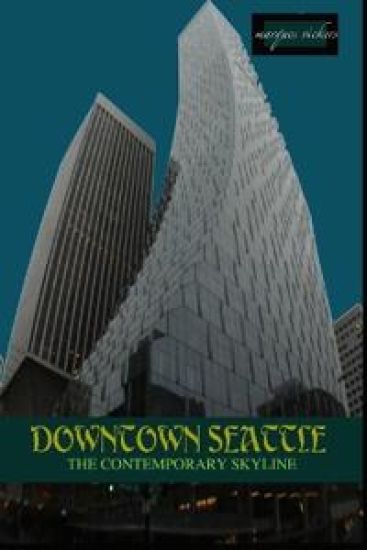
This edition is an ongoing architectural pictorial survey of the contemporary Seattle core skyline. Documenting the city's explosive growth downtown, the profiling images capture the elevated monoliths of the city's urban expansion. Photographed between 2016-2023, the edition traces over 150 commercial development projects from a variety of completion stages and perspective angles. The heightening of the downtown Seattle skyline up mirrors the prosperity and expansion of the high technology and bio-med business center. The effects of the 2020-21 pandemic modestly slowed the construction pace, as projects had been designed and approved years earlier. The aggressive growth trend raises questions over the potential oversaturation of available office and residential space. With the nature of commercial and remote employment evolving, can the occupancy rates maintain the financial equilibrium necessary the keep these projects solvent and profitable? The contemporary project designs are primarily compositions of steel, glass, and concrete creating innovate structural geometry and exterior skins. Historically, the Seattle regional economy was dependant on the Boeing Corporation and later Microsoft and Amazon as its most visible commercial institutions. Broader tech growth has accelerated the demands for office space, parking, residential housing and transportation solutions. Aggressive development has resulted in soaring rents, traffic congestion and extreme gridlock. The new normal will continue to address these challenges. The city of Seattle appears to be playing infrastructure catch-up. Numerous additional developments under construction and in the planning stages will test the resiliency of the boom era. Optimistic visions towards a vibrant downtown core continue forward. With each subsequent monolith, Seattle solidifies its claim as a building showcase of twenty-first century architecture design, credibility, and stature. Growth has remained an insatiable surge for the high technology industry to maintain its frenetic pace. Perhaps soon, Seattle and such a volatile industry will arrive at a crossroad where sustaining such expansion becomes problematic and difficult to sustain.
One of the most unconventional and fascinating tours of Berlin should include tracing the path of the former historic Berlin Wall. This edition takes you on a visual tour showcasing the changes, constructions and alterations to the terrain that for thirty-eight years divided Berlin. Over 325 images intimately detail the core of the city's center, commencing from the northern Wedding district to southern Oberbaum Bridge. Concise commentary illuminates the background of prominent structures, memorials and historical events. Over a quarter century has followed the permanent dismantlement of the concrete slab barrier. Few remnant sections still remain. The outline of the wall has been identified locally through dual rectangular cobblestones embedded in the streets, walkways and under structures. The visual pathway showcases what remains and what has been reconstructed since the German reunification of 1990. Berlin has eluded becoming a mausoleum of antiquated remembrance. The city radiates vibrancy. It has successfully integrated the shame of historical actions, consequences and memorials into its present tense. The majority of new constructions are located within the former territories of East Berlin. That land was essentially vacant in 1989 when the Wall was first permanently breeched. Due to its previous proximity to the Wall, the real estate then was significantly undervalued. This valuation discrepancy no longer exists." Amongst his most notable images include the Brandenburg Gate, Reichstag, Adolph Hitler's Bunker site, The Memorial to the Murdered Jews of Europe, Potsdamer Platz, Checkpoint Charlie, East Side Gallery, Lantag of Prussia Building, Topography of Terror Museum, foundational remains of the Gestapo headquarters, Oberbaum Bridge and the lone stretch of remaining undeveloped No Man's Land in the core of Berlin. His visual documentary also includes residential, commercial and governmental buildings, cemeteries, memorials and neighborhoods. The Berlin Wall's creation did not immediately follow the conclusion of World War II. The East German Democratic Republic (GDR) was established in 1949 under Soviet Union occupation. Russian domination proved unpopular amongst a large percentage of the eastern population. A 1953 Berlin worker's uprising directly challenged Russian authority and was brutally crushed. The sole outlet for protest and discontent became flight to West Germany via the portal of Berlin. Within twelve years of existence, the GDR had lost 20% of its population, particularly badly need skilled laborers and professionals. At the summit of the exodus, approximately 1,000 people per day were defecting to the West. On August 13, 1961, East Berlin residents awoke to barbed wire fencing that had been installed dividing the city's east and west sectors. Dual concrete barricades incrementally fortified this temporary barrier. The failure of the GDR and the Berlin Wall remain valid lessons for today. Insight may be perceived regarding Russia's renewed foreign policy aggressiveness and political discussions about the construction of national barriers. The edition illustrates how Berlin expediently revitalized desolate urban wasteland into aesthetic and functional relevance. The Berlin guide is the perfect travel accompaniment for viewing a fascinating slice of Berlin many tourists overlook. The work can also serve as a valuable reference overview even if one never sets foot in the city.
Author and Photographer Marques Vickers examines a propaganda story introduced by Russian President Vladimir Putin crediting himself with single-handedly defusing a hostile East German crowd intent on ransacking the Dresden KGB offices in 1989. Vickers' book "Vladimir Putin and Dresden, Germany: The Genesis of Myth Making", recounts the narrative, first related in Putin's published memoirs "First Person" (2000) and later embellished in a 2009 broadcast via a Russian national television documentary.Between 1985 and 1990, Putin was stationed as a KGB officer in Dresden, Germany, the third largest city of the German Democratic Republic (GDR). He was officially titled as a consular officer, but most scrutinizing Western observers have concurred that his energies were directed towards recruiting spies and siphoning out information regarding West German high technology industries. Other media sources have conjectured that he commanded an investigative team with the East German Stasi police that investigated political crime within the GDR.On the evening of December 5, 1989, a large crowd (speculated at 15,000 people) reportedly surrounded the Dresden Stasi prison. They then entered the facility overwhelming the outnumbered guards. The compound was located across the road from Putin's KGB bureau. The event occurred one month following the fall of the Berlin Wall. That same evening, Putin elaborated that a faction of the crowd descended upon the KGB offices. In First Person, Putin elaborated that he verbally confronted and defused the crowd's hostile intentions by persuasion. Their intention was to ransacking the KGB compound. In a 2009 Russian television documentary, a modified version indicated that he brandished a pistol and threatened to shoot anyone trespassing into the facility. The documentary account accentuated the menacing conditions and heightened Putin's heroics. The size of crowd has never been determined. The incident was not published at the time either. Two cited crowd participants confirmed the story over twenty years later, but their credibility has never been publicly authenticated.Russian media has integrated this encounter prominently into their character construction of Vladimir Putin. Did the incident actually occur? There are significant reasons for doubt.Putin's tenure in Dresden and intimate view of the GDR's collapse has been acknowledged as an influential contributing factor to his hard-line and aggressive foreign policy. His conclusions regarding the momentum of change a unified crowd can provoke has prompted his own tight internal controls within Russia.The 102-page book features over 100 photographs of the Dresden KGB bureau, Stasi prison facility including a decrepit Russian interrogation wing, the former nearby residence of the Putin family, and renovated core of Dresden's center city.Vickers addresses the background, evolution and reconstruction of Dresden since the Russian Cold War occupation between 1945-1989. The author visited Dresden during the summer of 1990 when the city's once esteemed monuments and architecture languished in neglect and decay under the Soviet Occupation. The contemporary city center no longer resembles the wreckage that Putin once knew during his residence.German reunification has completely upgraded and polished Dresden to aesthetic preeminence. The city was formerly known as the Florence on the River Elbe and the jewel of Prussian Empire aesthetics. Dresden stunning Baroque architecture has been rescued due to German taxation subsidies intended towards eastern rehabilitation.Vickers, in his research was unable to confirm or adequately contest Putin's account of 1989 events. Understanding Putin's Dresden experience, however, has proven an excellent window into the thinking process of one of the world's most complex and perplexing national leaders.
This edition is a pictorial survey of contemporary downtown Bellevue, Washington. Documenting the city's explosive growth within the core, these profiled mid-rise and high-rise developments span a period from the past two decades until the present. The commercial downtown has become a concentrated collection of vertical skyscrapers dominated by glass panels, steel framework and concrete support. The cumulative effect has created a profound and concentrated nucleus leaving a prototype for future architectural styling and aesthetic interplay. The shifting of office space by Amazon from Seattle to Bellevue has hastened the latter city's growth. Bellevue's employment and residential capacity continues to expand. The Sound Transit's Link Rail development infrastructure currently connects Seattle with Bellevue before continuing further onto Redmond servicing the high technology community. Bellevue will become the barometer for measuring and evaluating and the longevity and durability for early twenty-first century design. Whether strictly fashionable or the foundational base for sustainability, the city is leading the forefront of development into the future. Suburban architecture projects dominated the focus of Puget Sound's architects post-World War II. The construction of the initial bridge across Lake Washington in 1939 radically changed Bellevue from merely being a farming community into a residential suburb directly linked with Seattle. In 1940, Bellevue had only a population of 5,000 residents. That figure would only modestly increase to 6,000 by the end of the war. Population increases continued gradually throughout the 1950s. In the 1960 census, the population had reached 13,000. The 1960s witnessed a population expansion that by 1970 had increased the level to 61,000 residents. The emergence of the tech industry had a profound growth effect upon the city. In 1990, the population increased to 98,000 swelling to 152,000 by 2020. The city is currently ranked the 178th largest in the United States. City projections envision a 25% growth rate over the next twenty years. Bellevue was officially incorporated in 1953. In 1963, the Evergreen Point Bridge opened across Lake Washington becoming a second commuter option. The positioning solidified Bellevue's central hub status from Seattle into the Eastside suburbs. Essentially a bedroom community, Bellevue evolved into a major commercial center. Bellevue steadily cultivated a business core attracting finance. insurance and real estate corporate headquarters. Two of the most prominent included T-Mobile and Smartsheet. The demographic educated base and elevated quality of life enticed decision makers at Google, Facebook and Amazon to establish a growing corporate presence. Additional technology firms and start-ups have followed. The rate of growth within the downtown core accelerated beginning in 1996. Five initial skyscrapers were erected during the 1980s before development stalled during the early 1990s. A major element of the renewed stimulus involved creating a pedestrian friendly urban environment. Long range city-planning decisions created accompanying priorities to accommodate the influx of anticipated pedestrian traffic creating a desirable environment.
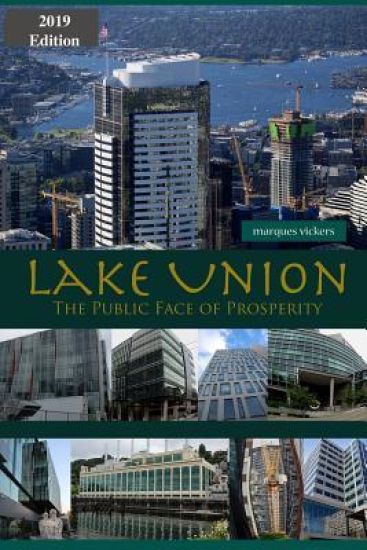
This edition is an ongoing architectural pictorial survey of Seattle's Lake Union district. Documenting the city's explosive growth downtown, the profiled mid-rise and high-rise developments cover the period of 2016-2023. The photography captures the projects from a variety of completion stages and perspective angles. The Lake Union sector was historically composed of single storied shops, residential dwellings, light industry and boatyards. Lake Union is a freshwater passage contained entirely within Seattle's city limits. It was originally formed by the melting of the Vashon Glacier waters and officially named by Seattle pioneer Thomas Mercer in 1854. Mercer correctly forecasted that with effective damming and canals, the eventual union of Lake Washington and Puget Sound could be completed. The Duwamish and Chinook native tribes called the body small waters. The Boeing Corporation initiated production facilities in 1916. The shoreline for decades remained principally shipyards, wharfs, sawmills and diminutive restaurant and retail outlets. The high technology industry has completely altered the commercials emphasis. The chronic Seattle housing shortage has accentuated a similar boom for elevated residential properties. The city of Seattle appears to be playing infrastructure catch-up. Numerous additional developments under construction and in the planning stages will test the resiliency of the boom era. Optimistic visions towards a vibrant downtown core continue forward. With each subsequent monolith downtown, Seattle solidifies its claim as a building showcase of twenty-first century architecture design, credibility, and stature. Growth has remained an insatiable surge for the high technology industry to maintain its frenetic pace. Perhaps soon, Seattle and such a volatile industry will arrive at a crossroad where sustaining such expansion becomes problematic and difficult to sustain. The Lake Union shoreline has become forever changed. Most of the completed high-rise buildings featured in this edition are less than twenty years old. More are anticipated and currently in diverse stages of planning and completion. With the nature of commercial and remote employment evolving, can the occupancy rates maintain the financial equilibrium necessary the keep these projects solvent and profitable? The contemporary project designs are primarily compositions of steel, glass, and concrete creating innovate structural geometry and exterior skins. The most notable shift within in Lake Union district has occurred since the beginning of this illustrated directory. In the area of Seattle's Denny Triangle, larger monolithic structures have begun to tower over the more modest Lake Union shoreline mid-rises. Amazon has expanded their corporate growth and base, but in some instances to the detriment of Seattle. Their demand for office space has shifted to Bellevue with several completed projects and others nearing completion. The future is less certain for the Lake Union district than four years ago, but at the present time, still generally optimistic.