Kirjojen hintavertailu. Mukana 12 390 323 kirjaa ja 12 kauppaa.

Kirjailija

Martha A. Zierden

Kirjat ja teokset yhdessä paikassa: 4 kirjaa, julkaisuja vuosilta 2016-2024, suosituimpien joukossa Materializing Colonial Identities in Clay. Vertaile teosten hintoja ja tarkista saatavuus suomalaisista kirjakaupoista.

4 kirjaa

Kirjojen julkaisuhaarukka 2016-2024.

Materializing Colonial Identities in Clay

Materializing Colonial Identities in Clay

Andrew Agha; Ronald W. Anthony; Jodi A. Barnes; David J. Cranford; Katherine P. Gill; J. W. Joseph; Julia A. King; Jon Bernard Marcoux; Sarah E. Platt; Corey A. H. Sattes; Craig T. Sheldon; Scott M. Strickland; Martha A. Zierden

THE UNIVERSITY OF ALABAMA PRESS
2024
sidottu
In Materializing Colonial Identities in Clay, Jon Bernard Marcoux, Corey A. H. Sattes, and contributors examine colonoware to explore the active roles that African Americans and Indigenous people played in constructing southern colonial culture and part of their shared history with Europeans. Colonoware was most likely produced by African and Indigenous potters and used by all colonial groups for cooking, serving, and storing food. It formed the foundation of colonial foodways in many settlements across the southeastern United States. Even so, compared with other ceramics from this period, less has been understood about its production and use because of the lack of documentation. This collection of essays fills this gap with valuable, recent archaeological data from which much may be surmised about the interaction among Europeans, Indigenous, and Africans, especially within the contexts of the African and Indigenous slave trade and plantation systems. The chapters represent the full range of colonoware research: from the beginning to the end of its production, from urban to rural contexts, and from its intraregional variation in the Lowcountry to the broad patterns of colonialism across the early American Southeast. The book summarizes current approaches in colonoware research and how these may bridge the gaps between broader colonial American studies, Indigenous studies, and African Diaspora studies. A concluding discussion contextualizes the chapters through the perspectives of intersectionality and Black feminist theory, drawing attention to the gendered and racialized meanings embodied in colonoware, and considering how colonialism and slavery have shaped these cultural dimensions and archaeologists’ study of them.
Materializing Colonial Identities in Clay

Materializing Colonial Identities in Clay

Andrew Agha; Ronald W. Anthony; Jodi A. Barnes; David J. Cranford; Katherine P. Gill; J. W. Joseph; Julia A. King; Jon Bernard Marcoux; Sarah E. Platt; Corey A. H. Sattes; Craig T. Sheldon; Scott M. Strickland; Martha A. Zierden

THE UNIVERSITY OF ALABAMA PRESS
2024
nidottu
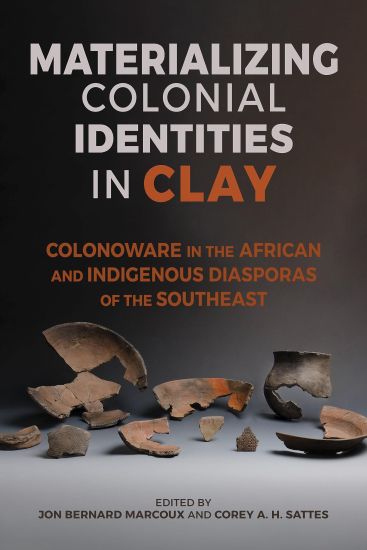
In Materializing Colonial Identities in Clay, Jon Bernard Marcoux, Corey A. H. Sattes, and contributors examine colonoware to explore the active roles that African Americans and Indigenous people played in constructing southern colonial culture and part of their shared history with Europeans. Colonoware was most likely produced by African and Indigenous potters and used by all colonial groups for cooking, serving, and storing food. It formed the foundation of colonial foodways in many settlements across the southeastern United States. Even so, compared with other ceramics from this period, less has been understood about its production and use because of the lack of documentation. This collection of essays fills this gap with valuable, recent archaeological data from which much may be surmised about the interaction among Europeans, Indigenous, and Africans, especially within the contexts of the African and Indigenous slave trade and plantation systems. The chapters represent the full range of colonoware research: from the beginning to the end of its production, from urban to rural contexts, and from its intraregional variation in the Lowcountry to the broad patterns of colonialism across the early American Southeast. The book summarizes current approaches in colonoware research and how these may bridge the gaps between broader colonial American studies, Indigenous studies, and African Diaspora studies. A concluding discussion contextualizes the chapters through the perspectives of intersectionality and Black feminist theory, drawing attention to the gendered and racialized meanings embodied in colonoware, and considering how colonialism and slavery have shaped these cultural dimensions and archaeologists’ study of them.
Charleston

Charleston

Martha A. Zierden; Elizabeth J. Reitz

University Press of Florida
2024
pokkari
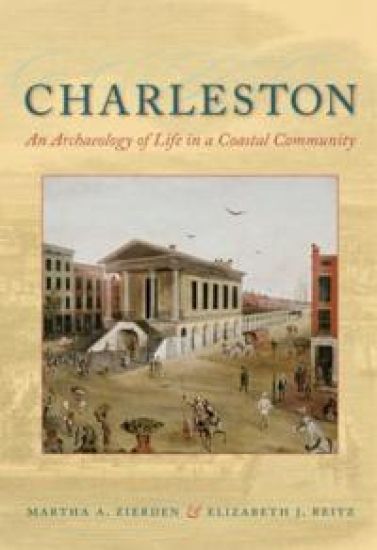
Choice Outstanding Academic TitleSociety for Historical Archaeology James Deetz Book AwardThe archaeology and history of one of the most storied cities of the American South. Charleston, South Carolina, is one of the most storied cities of the American South. Widely recognized for its historic buildings, its thriving maritime culture, and its role in the Civil War, Charleston is also considered the birthplace of historic preservation. Martha Zierden and Elizabeth Reitz—whose archaeological fieldwork in the city spans more than three decades—explore the evolution of the urban environment, the intricacies of provisioning such a robust city, and the urban foodways that continue to inspire Charleston's culture.In Charleston, Zierden and Reitz weave archaeology and history to illuminate this vibrant, densely packed Atlantic port city. They detail the residential, commercial, and public life of the city, the ruins of taverns, markets, and townhouses, including those of Thomas Heyward, shipping merchant Nathaniel Russell, and William Aiken. The authors shed light on the dynamics of production, distribution, and consumption of goods and services that linked the city with rural neighbors and global markets. They also trace fish and game from the woods and waters to the kitchens where the food was prepared and the tables where it was served. Zierden and Reitz reveal how global trade goods combined with indigenous flavors to create a cuisine that was uniquely Charleston.The artifacts unearthed show how Charleston continued to grow and develop as it contended with public health initiatives necessitated by post–Civil War changes, the fire of 1861, and the earthquake of 1886. They also testify to the city's arts and finery and to the challenges experienced by laboring slaves, house servants, and other underprivileged citizens. By reminding us that urban areas shape and are shaped by their inhabitants, Charleston evokes the essence of the deeply complex city whose influence was felt throughout the Atlantic World.
Charleston

Charleston

Martha A. Zierden; Elizabeth J. Reitz

University Press of Florida
2016
sidottu
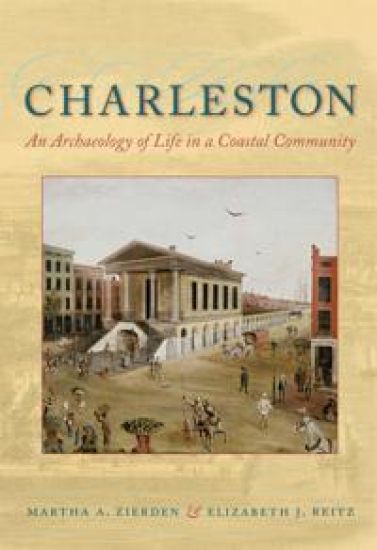
Charleston, South Carolina, is one of the most storied cities of the American South. Well known for its historic buildings and landscape, its thriving maritime culture, and its role in the beginning of the American Civil War, many consider it the birthplace of historic preservation. In Charleston, Martha Zierden and Elizabeth Reitz—whose archaeological fieldwork in the city spans more than three decades—reveal a vibrant, densely packed city, where people, animals, and colonial activity carried on in close proximity. Examining animal bones and the ruins of taverns, markets, townhouses, and smaller homes, the authors consider the residential, commercial, and public life of the city and the dynamics of production, distribution, and consumption of goods and services that linked it with rural neighbors and global markets. From early attempts at settlement and cattle ranching to the Denmark Vesey insurrection and efforts to improve the city’s drinking water, Zierden and Reitz explore the evolution of the urban environment, the intricacies of provisioning such a unique city, and the urban foodways and cuisine that continue to inspire Charleston’s culinary scene even today.