Kirjojen hintavertailu. Mukana 12 579 013 kirjaa ja 12 kauppaa.

Kirjailija

Martha W. McCartney

Kirjat ja teokset yhdessä paikassa: 8 kirjaa, julkaisuja vuosilta 2011-2017, suosituimpien joukossa The Henrico Parish Glebe, Varina, Virginia: 44HE229, A Multidisciplinary Case Study. Vertaile teosten hintoja ja tarkista saatavuus suomalaisista kirjakaupoista.

Mukana myös kirjoitusasut: Martha W McCartney

8 kirjaa

Kirjojen julkaisuhaarukka 2011-2017.

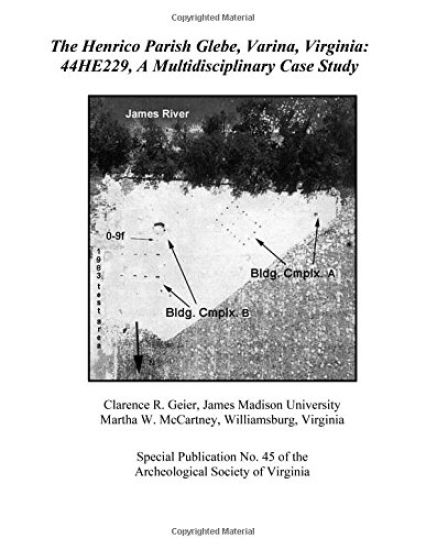
The Henrico Parish Glebe, Varina, Virginia: 44HE229, A Multidisciplinary Case Study

The Henrico Parish Glebe, Varina, Virginia: 44HE229, A Multidisciplinary Case Study

Martha W. McCartney; Clarence R. Geier

Createspace Independent Publishing Platform
2017
nidottu
This book introduces the reader to the historical and archaeological evidence of a significant Colonial Period habitation on the James River believed to have been seriously impacted by 17th and 18th century floods and hurricanes. The interpretation of the Henrico Glebe Site, located within Henrico Parish Glebe lands at Varina, opens the door to a discussion of the role of the Church of England in the Virginia Colony and the types of housing parish leaders were obliged to provide to the clergy. Interpreted to include evidence of two building periods dating from as early as 1680 through the mid-18th century, the glebe served as the home of Rev. James Blair, the first recognized head, or Commissary, of the Church of England in Virginia, and the first president of the College of William and Mary. In the mid-18th century the glebe was occupied by the Rev. William Stith, who also served as one of the College's presidents. A rigorous discussion of Virginia legislation and parish records from glebes of the period describes the types of buildings and glebe land that the law required a parish vestry to provide to its clergy. This discussion, which includes the physical description of the diverse residences and service buildings, provided a context for the interpretation of architectural remains identified at the site. While focusing on developing a history of the glebe of the Henrico Parish, which included the Richmond area by 1741, the town of Varina, east of the study area, is introduced. That community, though short-lived, served as Henrico County's seat and was an important early inland port.
Virginia Immigrants and Adventurers, 1607-1635

Virginia Immigrants and Adventurers, 1607-1635

Martha W McCartney

Genealogical Publishing Company
2017
sidottu
In 1607 America's first permanent English colony was planted on Jamestown Island, in Virginia. Soon afterwards, thousands of immigrants flocked to Jamestown and surrounding areas on the James and York Rivers, where they struggled to maintain a foothold. A number of these settlers--by their own prodigious efforts or by virtue of their financial investment in the colony--rose to prominence, leaving a paper trail that historians have followed ever since. The majority, however--the ordinary men, women, and children whose efforts enabled the colony to become viable--simply escaped notice. As a result, 400 years later, we're still curious about Virginia's earliest settlers--who they were, where they lived, and how they lived. To answer these questions, this book brings together a variety of primary sources that inform the reader about the colony's earliest European inhabitants and the sparsely populated and fragile communities in which they lived, resulting in the most comprehensive collection of annotated biographical sketches yet published.From the earliest records relating to Virginia, we learn the basics about many of these original colonists: their origins, the names of the ships they sailed on, the names of the "hundreds" and "plantations" they inhabited, the names of their spouses and children, their occupations and their position in the colony, their relationships with fellow colonists and Indian neighbors, their living conditions as far as can be ascertained from documentary sources, their ownership of land, the dates and circumstances of their death, and a host of fascinating, sometimes incidental details about their personal lives, all gathered together in the handy format of a biographical dictionary.Maps provided here identify the sites at which Virginia's earliest plantations were located and enable genealogists and students of colonial history to link most of the more than 5,500 people included in this volume to the cultural landscape--establishing definitively a specific location and a timeframe for these early colonists. Placing all this in perspective, an introductory chapter includes an overview of local and regional settlement and provides succinct histories of the various plantations established in Tidewater Virginia by 1635.
Jordan's Point, Virginia

Jordan's Point, Virginia

Martha W. McCartney

Tendai Educational Foundation, Incorporated, dba Hawaii Nikkei History Editorial Board
2011
nidottu
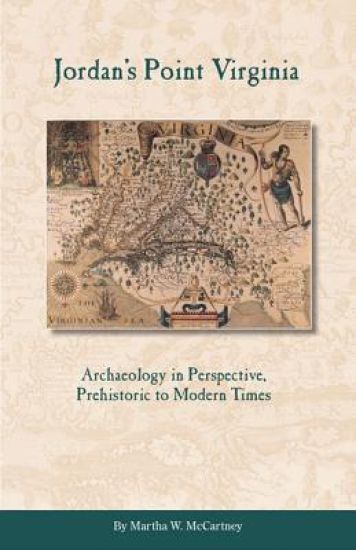
Jordan’s Point, a nearly triangular promontory in the James River, is situated in Prince George County, just east of the confluence of the James and Appomattox Rivers. A broad terrace overlooking the James, Jordan’s Point is bounded by small streams, tidal marshes, and protective uplands that rise to a height of 100 feet or more. In 1607, when the first European colonists saw Jordan’s Point, it was graced by the homes and cleared fields of natives they would call the Weyanoke. Virginia colonist Samuel Jordan established a community called Jordan’s Journey around 1621, giving his name to what became known as Jordan’s Point.In time, the settlement became a hub of social and political life. By 1660, Jordan’s Point had come into the possession of the Blands, one of England’s most important mercantile families. They leased their property to one or more of their agents, usually merchants and mariners involved in inter-colonial trade. Richard Bland I and his descendants developed Jordan’s Point into a family seat and working plantation they retained until after the Civil War. At Jordan’s Point enslaved men, women, and children toiled in the fields, enabling the Blands to prosper. Richard Bland IV went on to become a distinguished American patriot, and one of his sons became a physician.Featuring more than one hundred photos and illustrations, most in color, and intended for a general reader, Jordan’s Point, Virginia: Archaeology in Perspective, Prehistoric to Modern Times tells the story of Jordan’s Point, which spans thousands of years, through the cultural features that archaeologists have unearthed there. This is a book that will attract readers interested in Native American studies, Virginia and colonial history, and archaeology.Distributed for the Virginia Department of Historic Resources