Kirjojen hintavertailu. Mukana 12 390 323 kirjaa ja 12 kauppaa.
Kirjailija
Martin Bell
Kirjat ja teokset yhdessä paikassa: 20 kirjaa, julkaisuja vuosilta 1988-2026, suosituimpien joukossa Late Quaternary Environmental Change. Vertaile teosten hintoja ja tarkista saatavuus suomalaisista kirjakaupoista.
Late Quaternary Environmental Change addresses the interaction between human agency and other environmental factors in the landscapes, particularly of the temperate zone.Taking an ecological approach, the authors cover the last 20,000 years during which the climate has shifted from arctic severity to the conditions of the present interglacial environment.
Late Quaternary Environmental Change addresses the interaction between human agency and other environmental factors in the landscapes, particularly of the temperate zone.Taking an ecological approach, the authors cover the last 20,000 years during which the climate has shifted from arctic severity to the conditions of the present interglacial environment.
There are no winners in war, only losers. We have so far avoided a third world war, but across the globe regional conflicts flare up in a seemingly unstoppable cycle. Who can stand between the armed camps? Over six decades, Martin Bell has stood in eighteen war zones – as a soldier, a reporter and a UNICEF ambassador. Now he looks back on our efforts to keep the peace since the end of the Second World War and the birth of the United Nations peacekeeping mission in the new State of Israel. From the failures of Bosnia, Rwanda and South Sudan to nationalism’s resurgence and the distribution of alternative facts across a darkening political landscape, Bell calls for us to learn from past mistakes – before it’s too late.
The book draws on the evidence of landscape archaeology, palaeoenvironmental studies, ethnohistory and animal tracking to address the neglected topic of how we identify and interpret past patterns of movement in the landscape. It challenges the pessimism of previous generations which regarded prehistoric routes such as hollow ways as generally undatable.The premise is that archaeologists tend to focus on ‘sites’ while neglecting the patterns of habitual movement that made them part of living landscapes. Evidence of past movement is considered in a multi-scalar way from the individual footprint to the long distance path including the traces created in vegetation by animal and human movement. It is argued that routes may be perpetuated over long timescales creating landscape structures which influence the activities of subsequent generations. In other instances radical changes of axes of communication and landscape structures provide evidence of upheaval and social change. Palaeoenvironmental and ethnohistorical evidence from the American North West coast sets the scene with evidence for the effects of burning, animal movement, faeces deposition and transplantation which can create readable routes along which are favoured resources.Evidence from European hunter-gatherer sites hints at similar practices of niche construction on a range of spatial scales. On a local scale, footprints help to establish axes of movement, the locations of lost settlements and activity areas. Wood trackways likewise provide evidence of favoured patterns of movement and past settlement location. Among early farming communities alignments of burial mounds, enclosure entrances and other monuments indicate axes of communication. From the middle Bronze Age in Europe there is more clearly defined evidence of trackways flanked by ditches and fields. Landscape scale survey and excavation enables the dating of trackways using spatial relationships with dated features and many examples indicate long-term continuity of routeways. Where fields flank routeways a range of methods, including scientific approaches, provide dates.Prehistorians have often assumed that Ridgeways provided the main axes of early movement but there is little evidence for their early origins and rather better evidence for early routes crossing topography and providing connections between different environmental zones. The book concludes with a case study of the Weald of South East England which demonstrates that some axes of cross topographic movement used as droveways, and generally considered as early medieval, can be shown to be of prehistoric origin. One reason that dryland routes have proved difficult to recognise is that insufficient attention has been paid to the parts played by riverine and maritime longer distance communication. It is argued that understanding the origins of the paths we use today contributes to appreciation of the distinctive qualities of landscapes. Appreciation will help to bring about effective strategies for conservation of mutual benefit to people and wildlife by maintaining and enhancing corridors of connectivity between different landscape zones including fragmented nature reserves and valued places. In these ways an understanding of past routeways can contribute to sustainable landscapes, communities and quality of life.
Warum Leichen etwas Wunderbares sind - was den Helden mit dem F rsten der Finsternis verbindet -- warum seine Geliebte den besten Sex beim Hexen hat - wieso Vampire alkoholfreies Blut bevorzugen - wann D monen peinlich ber hrt sind... Am Beispiel der "D monenkiller"-Serie analysiert die Untersuchung Bauformen und Inhalte der 'Trivial'literatur. Zugleich geht es ihr um eine methodische Selbstreflexion der Literaturwissenschaft: Statt ihrem Gegenstand einen Sonderstatus zuzuweisen, der ihn jenseits des Literarischen und damit auch jenseits des literatur-wissenschaftlich Fassbaren ansiedelt, n hert sie sich ihm als einem fiktionalen Text, an dem sich die Wirksamkeit des literaturwissen-schaftlichen Instrumentariums erproben l sst. Sprache und Erz hlstrukturen stehen dabei ebenso im Blickpunkt wie Figurenzeichnung und Handlungsmuster sowie die Ideologeme, die sich in ihnen verwirklichen."Hervorzuheben ist das stilistische Geschick des Verfassers, das von der ironischen und doch anschaulichen Paraphrase ber die scharfsinnige, manchmal brillante Enth llung von sthetischer wie ideologischer Bodenlosigkeit bis zu einer Polemik reicht, die sich noch aufs Argumentieren versteht."Professor Bernhard Spies (em.), Deutsches Institut, Mainz"... von hohem intellektuellen Niveau... gewandte, oft sogar brillante Formulierungskunst..."Professor Dieter Kafitz (+), Deutsches Institut, Mainz
Wenn die Jukebox im Hessischen Rundfunk lief (1986-1990), riefen bis zu 40.000 H rer im Studio an. Ein sonderbares Format. Denn die Jukebox war de facto eine Wunschmusiksendung ohne Wunschmusik. Mit Gespr chen ohne Gespr chsgrundlage. Mit Anrufern, die kaum etwas ber die Lippen brachten. Und mit Moderatoren, die fortw hrend redeten - obwohl sie nur versuchten, den Anrufern das Wort zu berlassen.Eine Radioshow als Tummelplatz kurioser Erscheinungen. Auch aus Sicht der Sprachwissenschaft: Martin Bells Gespr chsanalyse f rdert eigent mliche Strukturen und unerwartetes Sprachverhalten zutage. Inklusive Textkorpus mit acht verschrifteten Jukebox-Gespr chen.
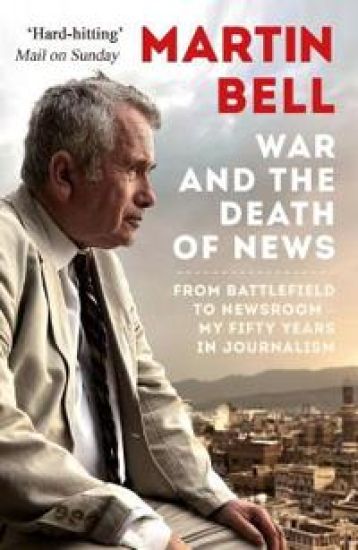
A smoke bomb went off. Then shots were fired from buildings overlooking the square… The camera had a BBC News sign on it. Someone cried out from the crowd: ‘You are the world, you are the world, you have to tell what they are doing to our people.’ From Vietnam to Iraq, Martin Bell has seen how war has changed over the last fifty years, neither fought nor reported the way it used to be. Truth is degraded in the name of balance and good taste, reports are delivered from the sidelines, and social media, with rumours and unverifiable videos, has ushered in a post-truth world. As modern news increasingly seeks to entertain first and inform second, the man in the white suit provides a moving account of all he has witnessed throughout his career and issues an impassioned call to put the substance back into reporting.
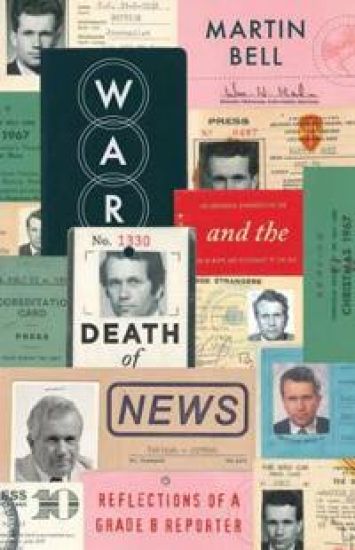
Martin Bell has stood in war zones as both a soldier and a journalist. From Vietnam to Bosnia to Iraq, he has witnessed first-hand the dramatic changes in how conflicts are fought and how they are reported. He has seen the truth degraded in the name of balance and good taste – grief and pain censored so the viewers are not disturbed. In an age of international terror, where journalists themselves have become targets, more and more reports are issued from the sidelines. The dominance of social media has ushered in a post-truth world: Twitter rumours and unverifiable videos abound, and TV news seeks to entertain rather than inform. In this compelling account, one of the outstanding journalists of our time provides a moving, personal account of war and issues an impassioned call to put the substance back in our news.
Im "Mythos von Sisyphos" zeichnet der franz sische Existentialist Albert Camus das Bild des absurden Menschen. Der Mensch fragt, aber die Welt schweigt; er will dauern, aber er muss sterben. Diese Erkenntnis macht jedes Streben, jedes Planen auf eine Zukunft hin sinnlos: Das Dasein ist absurd.Verlangt diese Erkenntnis der Sinnlosigkeit, dem Leben ein Ende zu setzen? Camus verneint das. Und entwickelt stattdessen ein Konzept des vivre le plus: so lange und so intensiv wie m glich zu leben - nicht obwohl, sondern weil das Leben sinnlos ist. Allein: L sst sich diese Schlussfolgerung tats chlich aus der Idee des Absurden herleiten?
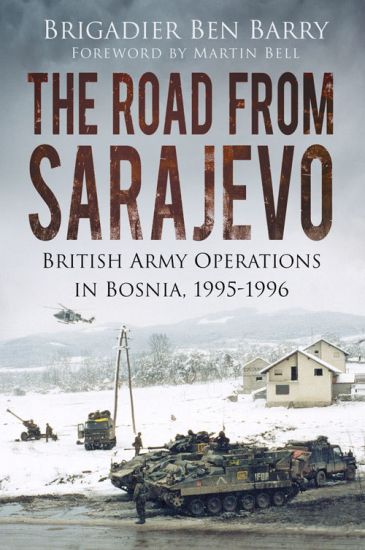
In 1992 Bosnia descended into a savage and bitter civil war, which by 1995 had claimed over a quarter of a million lives. Following the Dayton Peace Agreement between the warring Bosnian Serbs, Muslims and Croats, NATO began its first land operation, taking over from the UN Protection Force. With a total of only 200 men, a British battlegroup was charged to enforce the peace in a 100km area, through which wound a front line separating the territory of the Bosnian Muslims from that of the Bosnian Serb forces. In this updated edition of the acclaimed book A Cold War, Brigadier Ben Barry has produced the definitive account of the British Army’s dangerous and groundbreaking operations in Bosnia.
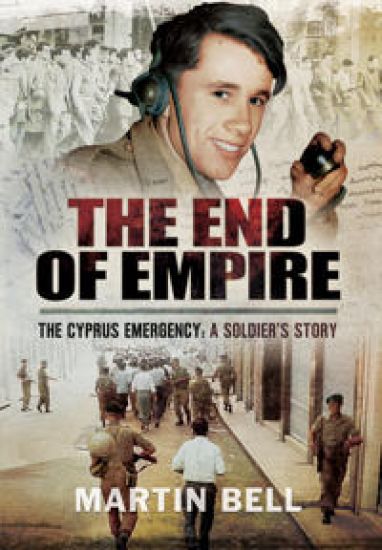
Martin Bell, the former BBC war reporter and Independent MP, served as a soldier in the British army in Cyprus in the late 1950s during the EOKA rebellion against British rule, and recently he discovered the letters he had written home during the conflict. They describe road blocks and cordons and searches, murders and explosions and riots - and a strategy of armed repression that failed. Now, almost sixty years later, he has used these letters to write The End of Empire. His narrative is a powerful personal account of the violent process of decolonization, of the character of the British army at the time and the impact of National Service on young men who were not much more than 'kids in uniform'. He also gives a graphic insight into the futility of the use of force in wars among the people and reveals, for the first time, the true story of the insurgency and the campaign to defeat it, for recently declassified documents show that the army commanders adopted misguided tactics that served only to strengthen support for their enemy.
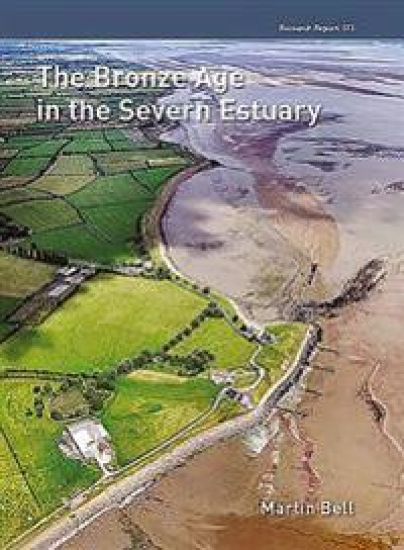
Archaeological fieldwork in the inter-tidal zone of the Severn Estuary over the past twenty years has revealed a rich landscape of prehistoric settlement. This latest volume by Professor Martin Bell presents the evidence for the Bronze Age, focusing on sites at Redwick and Peterstone in the Gwent Levels.At Redwick, a settlement of four rectangular buildings, defined by well-preserved timber posts dating to the middle Bronze Age (1600–940 cal BC), is surrounded by footprint-tracks of animals and humans. Peterstone and other locations in the estuary have revealed a variety of wood artefacts and structures, and features such as fish traps, trackways and sites of seasonal encampments.The relationship between the wetland and dry ground settlements around the estuary is explored in detail, through artefacts, pollen and stable isotope analysis. The author concludes that there is clear evidence for transhumance throughout the Bronze Age. In the final chapters the author compares the Severn Estuary with other coastal sites of the Bronze Age in Britain and continental Europe.
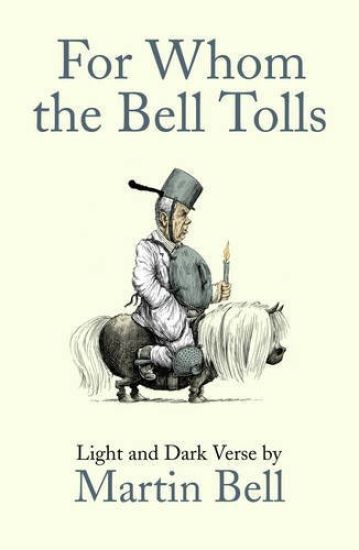
Martin Bell OBE has been many things - an icon of BBC war reporting, Britain's first independent MP for 50 years, a UNICEF ambassador, and 'the man in the white suit' - a tireless campaigner for honesty and accountability in politics.But as For Whom the Bell Tolls reveals, he's also a poet of light verse, and here Bell's poems continue his war by other means on duplicitous politicians, our all-consuming media, the venality of celebrity culture and much more. Bell presents poems on Tony Blair and Iraq, on Serbian war criminal Radovan Karadzic, on his hero, Reuters reporter Kurt Schork, and colourful episodes from his work and life, from being starstruck by Angelina Jolie, to a mordant epitaph on Margaret Thatcher, to his being a guest at Idi Amin's wedding: '. that by God / Was well worth doing, if distinctly odd.'
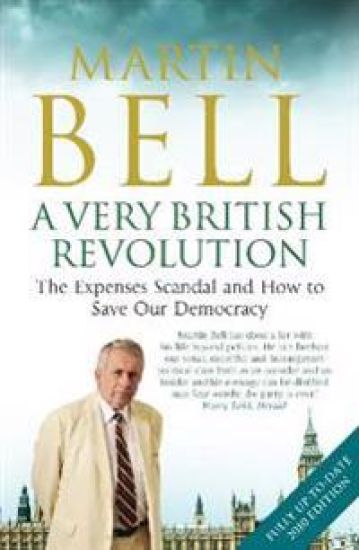
The revelations over MPs' expenses that began in May 2009 ranged from petty thieving to outright fraud and sparked a crisis in confidence unprecedented in modern times. This was a 21st-century Peasants' Revolt - an uprising of the people against the political class. Ordinary men and women with political views across the spectrum were by turns amused, incredulous, shocked and then bitterly angry as the disclosures on MPs' expenses flooded out. From Home Secretary Jacqui Smith's bath plug to Conservative MP Sir John Butterfill's 'flipping' of his constituency home - a now-notorious manoeuvre that required him to refund GBP60,000 to the taxpayer - the exposure of MPs' expenses revealed Westminster's culture of quiet corruption like never before. Drawing on his experience as an MP and as a member of the Committee on Standards and Privileges, Martin Bell explains how the expenses crisis arose and, most compellingly, lays out his prescription for healing the deep wounds inflicted by the scandal. As Martin puts it: 'The revolution will not be complete until all the rogues in the House are gone and public confidence in the MPs remaining is restored.' This is truly a once-in-a-lifetime opportunity to revive British politics, and the rebuilding starts here.
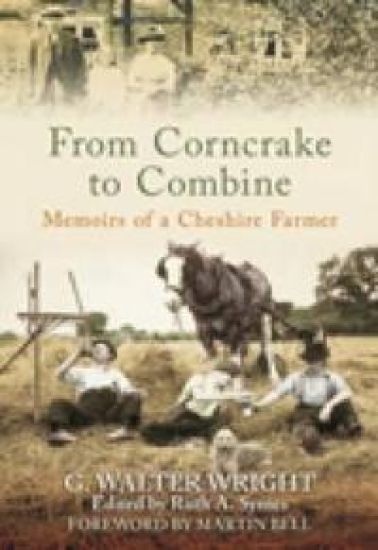
This is an utterly charming history of life at Yew Tree Farm, North Cheshire, over the last eighty years. Beginning in the era when shire horses pulled the plough and country news passed from mouth to mouth at the blacksmith's forge, it explores a world and a way of life that has now vanished. Many readers will know Walter as a family man, farmer, councillor (and often counsellor), but this witty, shrewd and honest account shows a new side - a country writer in the same league as Cobbett, White and Herriot.These delightful tales travel through the war years, when prisoners of war from Dunham worked at the local farms and American trucks careered through Walter's fields, to the local 'hops' of the 1950s - you could always tell a farm girl by the mark her wellies made just below her knees - and through to the modern day, when the M6 and M56 motorways altered the shape and sound of the landscape forever. Illustrated with more than seventy photographs, full of memorable characters, from tramps, land girls and country vicars to Mrs Jones and her infamous swear box, and with sections on local institutions such as Chelford Market and Knutsford Young Farmers' Club (of which Walter has been a member for nearly sixty years), this book will delight anyone with an interest in life in the country as it used to be - and as it is today.
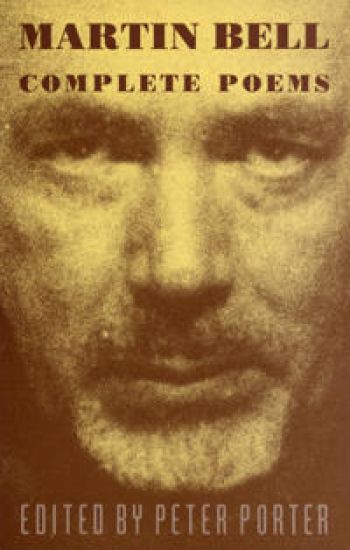
Born in Hampshire in 1918, Martin Bell was the leading member of the 'lost generation' of English poets whose careers were interrupted by the War. He was a prominent member of The Group during the fifties, and a major influence on younger poets like Peter Redgrove and Peter Porter. His poetry reached a wide audience during the sixties through Penguin Modern Poets, and in 1967 he published his Collected Poems,1937-1966, his first and last book. Bell was also a champion and brilliant translator of French Surrealist poets. He died in poverty in Leeds in 1978. Like other 'provincial' working-class contemporaries, Bell wrote fantastical, highly erudite, biting, belligerent poetry. And yet – as Philip Hobsbaum said – he also wrote 'some of the most delicate love poems of our time' as well as 'one of the major war poems in the language'. A. Alvarez called him 'an emotional tightrope walker... He writes a rather bitter, tensely colloquial verse based, it seems, on a radical dislike for both himself and pretty much everything else.'