Kirjailija
Martin Conway
Kirjat ja teokset yhdessä paikassa: 24 kirjaa, julkaisuja vuosilta 1994-2023, suosituimpien joukossa The Alps. Vertaile teosten hintoja ja tarkista saatavuus suomalaisista kirjakaupoista.
24 kirjaa
Kirjojen julkaisuhaarukka 1994-2023.
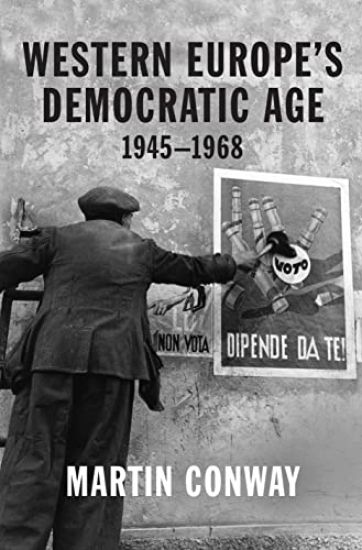
A major new history of how democracy became the dominant political force in Europe in the second half of the twentieth centuryWhat happened in the years following World War II to create a democratic revolution in the western half of Europe? In Western Europe's Democratic Age, Martin Conway provides an innovative new account of how a stable, durable, and remarkably uniform model of parliamentary democracy emerged in Western Europe—and how this democratic ascendancy held fast until the latter decades of the twentieth century.Drawing on a wide range of sources, Conway describes how Western Europe's postwar democratic order was built by elite, intellectual, and popular forces. Much more than the consequence of the defeat of fascism and the rejection of Communism, this democratic order rested on universal male and female suffrage, but also on new forms of state authority and new political forces—primarily Christian and social democratic—that espoused democratic values. Above all, it gained the support of the people, for whom democracy provided a new model of citizenship that reflected the aspirations of a more prosperous society.This democratic order did not, however, endure. Its hierarchies of class, gender, and race, which initially gave it its strength, as well as the strains of decolonization and social change, led to an explosion of demands for greater democratic freedoms in the 1960s, and to the much more contested democratic politics of Europe in the late twentieth century.Western Europe's Democratic Age is a compelling history that sheds new light not only on the past of European democracy but also on the unresolved question of its future.
A major new history of how democracy became the dominant political force in Europe in the second half of the twentieth centuryWhat happened in the years following World War II to create a democratic revolution in the western half of Europe? In Western Europe's Democratic Age, Martin Conway provides an innovative new account of how a stable, durable, and remarkably uniform model of parliamentary democracy emerged in Western Europe—and how this democratic ascendancy held fast until the latter decades of the twentieth century.Drawing on a wide range of sources, Conway describes how Western Europe's postwar democratic order was built by elite, intellectual, and popular forces. Much more than the consequence of the defeat of fascism and the rejection of Communism, this democratic order rested on universal male and female suffrage, but also on new forms of state authority and new political forces—primarily Christian and social democratic—that espoused democratic values. Above all, it gained the support of the people, for whom democracy provided a new model of citizenship that reflected the aspirations of a more prosperous society.This democratic order did not, however, endure. Its hierarchies of class, gender, and race, which initially gave it its strength, as well as the strains of decolonization and social change, led to an explosion of demands for greater democratic freedoms in the 1960s, and to the much more contested democratic politics of Europe in the late twentieth century.Western Europe's Democratic Age is a compelling history that sheds new light not only on the past of European democracy but also on the unresolved question of its future.

No Man's Land, a history of Spitsbergen from its discovery in 1596 to the beginning of the scientific exploration of the country
Martin Conway
Alpha Edition
2020
pokkari
This book has been considered by academicians and scholars of great significance and value to literature. This forms a part of the knowledge base for future generations. So that the book is never forgotten we have represented this book in a print format as the same form as it was originally first published. Hence any marks or annotations seen are left intentionally to preserve its true nature.

The Good Ship Chancer: Humorous Yachting Cartoons
Martin Conway
Independently Published
2018
nidottu

Reproduction of the original: The Alps by Martin Conway

Reproduction of the original: The Alps by Martin Conway

Ants with Attitude: Cartoon Antics
Martin Conway
Createspace Independent Publishing Platform
2018
nidottu
This fun, coffee table book of Antics was inspired by Martin's original cartoon series of watercolour paintings, The Antics Series. Martin caught the publishing bug having been almost bullied by his wife Soraya to publish his funny verse and great illustrations in books. Now that he has begun, there is no holding him back. Watch this space, there are more books in the pipeline.

The Brown Bear and Bigfoot: Cartoon Book
Martin Conway
Createspace Independent Publishing Platform
2018
nidottu
The Brown Bear and Bigfoot Cartoon Book This fun cartoon book about Brown Bear and Bigfoot the Yeti, was inspired by Martin's original cartoon series of watercolour paintings, The Antics Series. Martin caught the publishing bug having been almost bullied by his wife Soraya to publish his funny verse and great illustrations in books. Now that he has begun, there is no holding him back. Watch this space, there are more books in the pipeline.
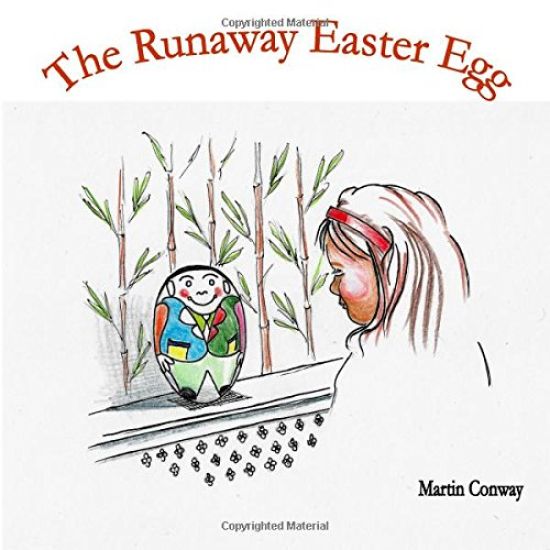
The Runaway Easter Egg Sally has the biggest egg to decorate and she takes her time while painting a bright jacket and trousers and a funny face on her egg. She sits her decorated egg on the radiator for the paint to dry. Sally is excited. She cant wait to see everyone's face when they see her egg. Can you imagine what happens when she joins everyone to roll her beautifully painted Easter egg down the hill.

Can these Fairies Save Christmas
Martin Conway
Createspace Independent Publishing Platform
2017
nidottu
Grot the Goblin hates Christmas. What schemes will he devise to spoil things. Will he succeed in spoiling Christmas for everyone or, can these Fairies Save Christmas?
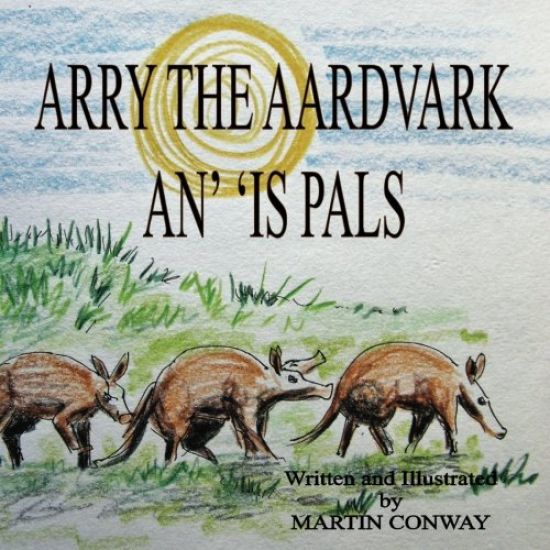
Arry the Aardvark and his Pals
Martin Conway
Createspace Independent Publishing Platform
2017
nidottu

The history of Catholic political movements has long been a missing dimension of the history of Europe during the twentieth century. Martin Conway explores the fascinating history of Catholic political movements in Europe between 1918 and 1945, demonstrating the crucial role which Catholics played in the rise of fascism in Italy and Germany, the events of the Spanish Civil War and of the Second World War. Drawing on the findings of recent research, Conway shows how Catholic political movements formed a vital element of the political life of Europe during the inter-war years. In countries as diverse as France, Germany, Italy, Spain and Austria, as well as further east in Poland, Slovakia, Croatia, and Lithuania, Catholic political parties flourished. Inspired by the values of Catholicism, these movements fought for their own political ideals; hostile to both liberal democracy and totalitarian fascism, Catholics were a 'third force' in European politics. During the Second World War, Catholic political movements continued to pursue their own goals; some chose to fight alongside the German armies, other groups joined Resistance movements to fight against German oppression and for a new social and political order based on Catholic principles.Catholic Politics in Europe will provide an original key point of reference for twentieth century history, for comparison with fascist and communist movements of the period, and will give insight into the present-day character of Catholicism.
This book provides a state-of-the-art review and critical evaluation of research into 'flashbulb' memories. The opening chapters explore the 'encoding' view of flashbulb memory formation and critically appraise a number of lines of research that have opposed this view. It is concluded that this research does not provide convincing evidence for the rejection of the encoding view. Subsequent chapters review and appraise more recent work which has generally found in favour of the flashbulb concept. But this research too, does not provide unequivocal support for the encoding view of flashbulb memory formation. Evidence from clinical studies of flashbulb memories, particularly in post-traumatic stress disorder and related emotional disturbances, is then considered. The clinical studies provide the most striking evidence of flashbulb memories and strongly suggest that these arise in response to intense affective experiences. Neurobiological models of memory formation are briefly reviewed and one view suggesting that there may be multiple routes to memory formation is explored in detail. From this research it seems possible that there could be a specific route for the formation of detailed and durable memories associated with emotional experiences. In the final chapter a cognitive account of flashbulb memories is outlined. This account is centred on recent plan-based theories of emotion and proposes that flashbulb memories arise in responses to disruptions of personal and cultural plans. This chapter also considers the wider functions of flashbulb memories and their potential role in the formation of generational identity.

Memory is the most researched, and taught, area in cognitive psychology. This book introduces students to the newer aspects of memory research. In addition, contemporary research themes which are somewhat under-represented in other European texts, such as false memory and eyewitness memory, are covered in detail.
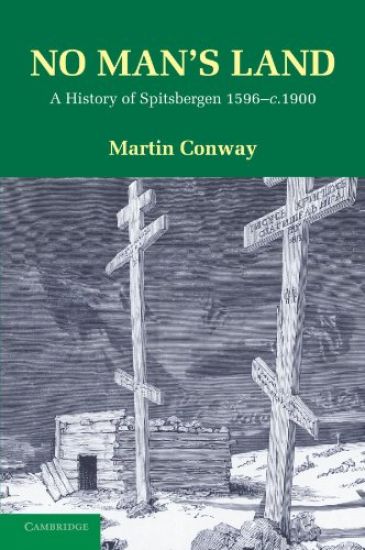
First published in 1906, this volume traces the history of Spitsbergen in the Svalbald archipelago, from its discovery by a Dutch explorer in 1596 to the beginning of its scientific exploration in the nineteenth century. The volume was written by Sir Martin Conway (later Baron Conway of Allington), and offers a chronological narrative of the island over the course of more than three centuries, during which time it was often the centre of conflicting interest among various countries. Included in the volume are numerous maps and illustrations, a list of the principal voyages to the island from 1847 to 1900, and a history of Spitsbergen nomenclature before the nineteenth century.
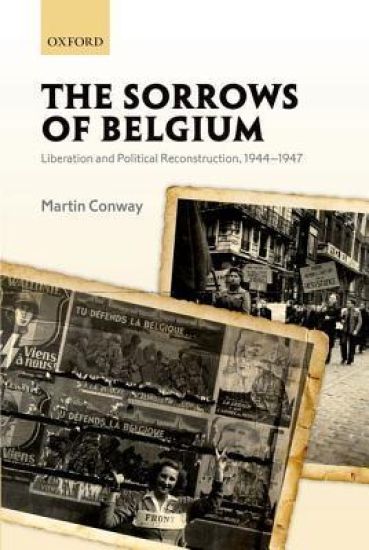
The liberation of Belgium by Allied troops in September 1944 marked the end of a harsh German Occupation, but also the beginning of a turbulent and decisive period in the history of the country. There would be no easy transition to peace. Instead, the rival political forces of King Leopold III and his supporters, the former government in exile in London, and the Resistance movements which had emerged during the Occupation confronted each other in a bitter struggle for political ascendancy. The subsequent few years were dominated by an almost continual air of political and social crisis as Resistance demonstrations, strikes, and protests for and against the King appeared to threaten civil war and the institutional dissolution of the country. And yet by 1947 a certain stability had been achieved: the Resistance groups had been marginalised, the Communist Party was excluded from government, the King languished in unwilling exile in Switzerland, and, most tangibly, the pre-war political parties and the parliamentary political regime had been restored. In this substantial contribution to the history of the liberation era in Europe, Martin Conway provides the first account, based on substantial new archival material, of this process of political normalisation, which provided the basis for the integration of Belgium into the post-war West European political order. That success, however, came at a cost: the absence of any substantial political reform after the Second World War exacerbated the tensions between the different social classes, linguistic communities, and regions within Belgium, providing the basis for the gradual unravelling of the Belgian nation-state which occurred over the second half of the twentieth century.