Kirjojen hintavertailu. Mukana 12 657 676 kirjaa ja 12 kauppaa.

Kirjailija

Martin Erwig

Kirjat ja teokset yhdessä paikassa: 5 kirjaa, julkaisuja vuosilta 1999-2024, suosituimpien joukossa Once Upon an Algorithm. Vertaile teosten hintoja ja tarkista saatavuus suomalaisista kirjakaupoista.

5 kirjaa

Kirjojen julkaisuhaarukka 1999-2024.

Programming Language Fundamentals

Programming Language Fundamentals

Martin Erwig

JOHN WILEY SONS INC
2024
sidottu
PROGRAMMING LANGUAGE FUNDAMENTALS Understand the key principles of programming languages Programming languages are the tools needed to let algorithms run on electronic computers. As they form the linguistic interface between humans and machines, the understanding of programming languages is essential for being able to control machine behavior. Programming Language Fundamentals offers a precise, comprehensive introduction to the principles that are the basis of most programming languages. Explaining both functional programming and logic programming, it presents a broad perspective on programming and constitutes an indispensable introduction to the foundations of programming languages. Programming Language Fundamentals readers will also find: Introduction to Elm as a metalanguage to encourage thinking and experimenting with programming languages in a formal way Detailed discussion of topics including abstract syntax, semantics, types, and more In-depth explanations of key concepts such as scope and parameter passing Programming Language Fundamentals is ideal for undergraduate students in computer science, as well as researchers and practitioners working with programming languages who are looking to broaden their understanding of the field.
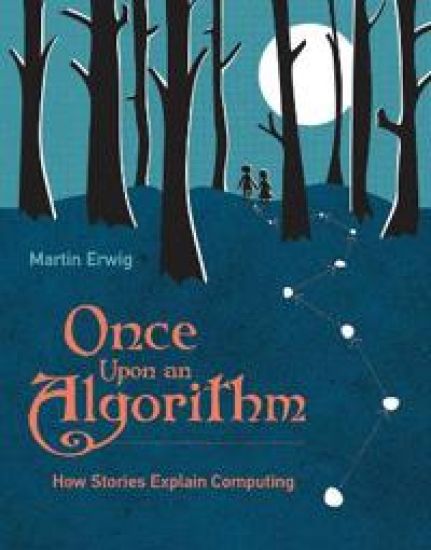
Once Upon an Algorithm

Once Upon an Algorithm

Martin Erwig

MIT PRESS LTD
2022
nidottu
This easy-to-follow introduction to computer science reveals how familiar stories like Hansel and Gretel, Sherlock Holmes, and Harry Potter illustrate the concepts and everyday relevance of computing. Picture a computer scientist, staring at a screen and clicking away frantically on a keyboard, hacking into a system, or perhaps developing an app. Now delete that picture. In Once Upon an Algorithm, Martin Erwig explains computation as something that takes place beyond electronic computers, and computer science as the study of systematic problem solving. Erwig points out that many daily activities involve problem solving. Getting up in the morning, for example: You get up, take a shower, get dressed, eat breakfast. This simple daily routine solves a recurring problem through a series of well-defined steps. In computer science, such a routine is called an algorithm. Erwig illustrates a series of concepts in computing with examples from daily life and familiar stories. Hansel and Gretel, for example, execute an algorithm to get home from the forest. The movie Groundhog Day illustrates the problem of unsolvability; Sherlock Holmes manipulates data structures when solving a crime; the magic in Harry Potter’s world is understood through types and abstraction; and Indiana Jones demonstrates the complexity of searching. Along the way, Erwig also discusses representations and different ways to organize data; “intractable” problems; language, syntax, and ambiguity; control structures, loops, and the halting problem; different forms of recursion; and rules for finding errors in algorithms. This engaging book explains computation accessibly and shows its relevance to daily life. Something to think about next time we execute the algorithm of getting up in the morning.
Once Upon an Algorithm

Once Upon an Algorithm

Martin Erwig

MIT Press
2017
sidottu
How Hansel and Gretel, Sherlock Holmes, the movie Groundhog Day, Harry Potter, and other familiar stories illustrate the concepts of computing.Picture a computer scientist, staring at a screen and clicking away frantically on a keyboard, hacking into a system, or perhaps developing an app. Now delete that picture. In Once Upon an Algorithm, Martin Erwig explains computation as something that takes place beyond electronic computers, and computer science as the study of systematic problem solving. Erwig points out that many daily activities involve problem solving. Getting up in the morning, for example: You get up, take a shower, get dressed, eat breakfast. This simple daily routine solves a recurring problem through a series of well-defined steps. In computer science, such a routine is called an algorithm.Erwig illustrates a series of concepts in computing with examples from daily life and familiar stories. Hansel and Gretel, for example, execute an algorithm to get home from the forest. The movie Groundhog Day illustrates the problem of unsolvability; Sherlock Holmes manipulates data structures when solving a crime; the magic in Harry Potter's world is understood through types and abstraction; and Indiana Jones demonstrates the complexity of searching. Along the way, Erwig also discusses representations and different ways to organize data; "intractable" problems; language, syntax, and ambiguity; control structures, loops, and the halting problem; different forms of recursion; and rules for finding errors in algorithms.This engaging book explains computation accessibly and shows its relevance to daily life. Something to think about next time we execute the algorithm of getting up in the morning.
Übersetzerbau

Übersetzerbau

Ralf Hartmut Güting; Martin Erwig

Springer-Verlag Berlin and Heidelberg GmbH Co. K
1999
nidottu
Das Buch bietet eine kompakte Einführung in die Grundlagen und Techniken des Übersetzerbaus. Übersetzer transformieren Texte einer Quellsprache, deren Struktur durch eine formale Grammatik beschrieben ist, in eine Zielsprache. Die Übersetzung imperativer Programmiersprachen in Maschinensprache ist dabei nur ein Spezialfall. Dieses Lehrbuch betont die vielseitige Verwendbarkeit von Übersetzerbau-Techniken. Insbesondere kann man mit Methoden der Syntaxanalyse Strukturen in Texten, Dateien oder Byte-Strömen identifizieren. Ein weiterer Schwerpunkt liegt in der Verbindung von Theorie und Praxis und der Einübung der Benutzung von Werkzeugen wie Lex und Yacc. So wird u.a. die vollständige Implementierung eines Übersetzers einer einfachen Dokument-Beschreibungssprache nach LaTeX vorgeführt. Angemessen berücksichtigt wird auch die Implementierung imperativer und funktionaler Sprachen. Das didaktisch ansprechende Buch enthält Übungsaufgaben mit Lösungen und ist auch zum Selbststudium geeignet.