Kirjailija
Martín Espada
Kirjat ja teokset yhdessä paikassa: 22 kirjaa, julkaisuja vuosilta 1994-2025, suosituimpien joukossa Poetry Like Bread, New Expanded Edition. Vertaile teosten hintoja ja tarkista saatavuus suomalaisista kirjakaupoista.
Mukana myös kirjoitusasut: Martin Espada
22 kirjaa
Kirjojen julkaisuhaarukka 1994-2025.
In this brilliant new collection of poems, National Book Award winner Mart n Espada offers narratives of the forgotten and the unforgettable. The poems in Jailbreak of Sparrows reveal the ways in which the ordinary becomes monumental: family portraits, politically charged reports, and tributes to the unsung. Espada's focus ranges from the bombardment of his family's hometown in Puerto Rico amid an anti-colonial uprising to the murder of a Mexican man by police in California, from the poet's adolescent brawl on a basketball court over martyred baseball hero Roberto Clemente to his unorthodox methods of representing undocumented migrants as a tenant lawyer. We also encounter "love songs" to the poet's wife from a series of unexpected voices: a bat with vertigo, the polar bear mascot for a minor league ballclub, a disembodied head in a jar. Jailbreak of Sparrows is a collection of arresting poems that roots itself in the image, the musicality of language, and the depth of human experience. "Look at this was all he said, and all he had to say," the poet says about his father, a photographer who documented his Puerto Rican community in Brooklyn and beyond. The poems of Mart n Espada tell us: Look.
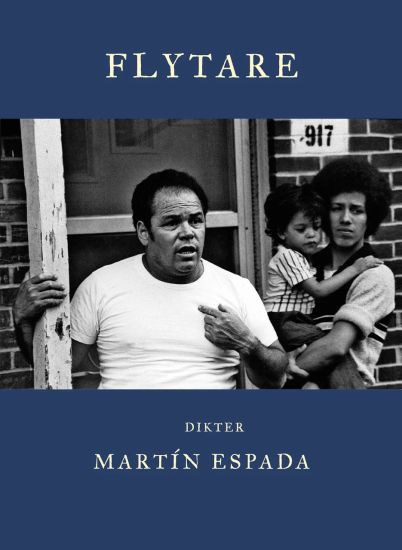
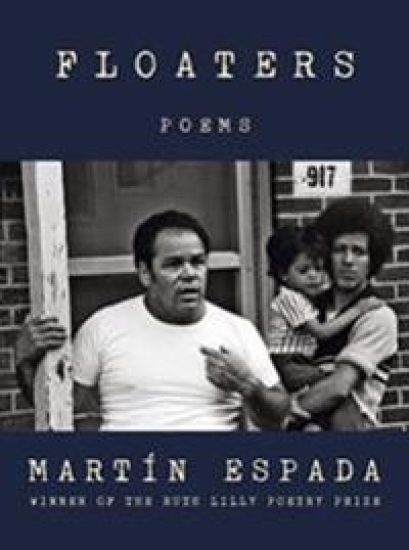
Flytare är den amerikanska gränspolisens benämning på de oftast latinamerikanska migranter som med oroväckande regelbundenhet påträffas drunknade längs gränsen mellan USA och Mexiko. I den puertoricansk-amerikanske poeten Martín Espadas diktsamling med samma namn blir begreppet utgångspunkt för en rik exposé över såväl samtiden som ett inte alltför avlägset förflutet där omvärldens många tystade röster står i fokus. Med växelvis isande skärpa och inkännande värme skriver Espada fram ett lyriskt dokument som vittnar om avgrundsdjup ojämlikhet samtidigt som han återupprättar den lilla människans plats i världen och historien, inte sällan med en självbiografisk fond. "Flytare" är en diktsamling som inte räds att ta ställning - och som en gång för alla slår fast att poesi och aktivism kan vara oupplösligt ett och detsamma. För den svenska översättningen svarar Henrik C. Enbohm. Boken belönades med National Book Award för bästa diktsamling när den utkom i USA år 2021. "... oumbärlig läsning för alla som är intresserade av poesi som en form av protest." CHICAGO REVIEW OF BOOKS "Ett verk av nådefullt trots." BOSTON GLOBE "Precis som hos Whitman uppväcker Espada i oss en känsla av obestridlig social medvetenhet och samhörighet." RICHARD BLANCO Martín Espada är född 1957 och tillhör den amerikanska samtidspoesins centralgestalter. Han har tilldelats en lång rad litterära utmärkelser och priser, och hans poesi har liknats vid såväl Walt Whitmans som Pablo Nerudas. Martín Espada är bosatt i Massachusetts och verksam som professor i engelska vid University of Massachusetts - Amherst. Med boken "Flytare" introduceras Espadas poesi för första gången på svenska.
Mart n Espada is a poet who "stirs in us an undeniable social consciousness," says Richard Blanco. Floaters offers exuberant odes and defiant elegies, songs of protest and songs of love from one of the essential voices in American poetry. Floaters takes its title from a term used by certain Border Patrol agents to describe migrants who drown trying to cross over. The title poem responds to the viral photograph of scar and Valeria, a Salvadoran father and daughter who drowned in the R o Grande, and allegations posted in the "I'm 10-15" Border Patrol Facebook group that the photo was faked. Espada bears eloquent witness to confrontations with anti-immigrant bigotry as a tenant lawyer years ago, and now sings the praises of Central American adolescents kicking soccer balls over a barbed wire fence in an internment camp founded on that same bigotry. He also knows that times of hate call for poems of love--even in the voice of a cantankerous Gal pagos tortoise.The collection ranges from historical epic to achingly personal lyrics about growing up, the baseball that drops from the sky and smacks Espada in the eye as he contemplates a girl's gently racist question.Whether celebrating the visionaries--the fallen dreamers, rebels and poets--or condemning the outrageous governmental neglect of his father's Puerto Rico in the wake of Hurricane Mar a, Espada invokes ferocious, incandescent spirits.
Poems from Pandemia
Martin Espada; Eilean Ni Chuilleanain; David Harsent
SOUTHWORD EDITIONS
2020
pokkari
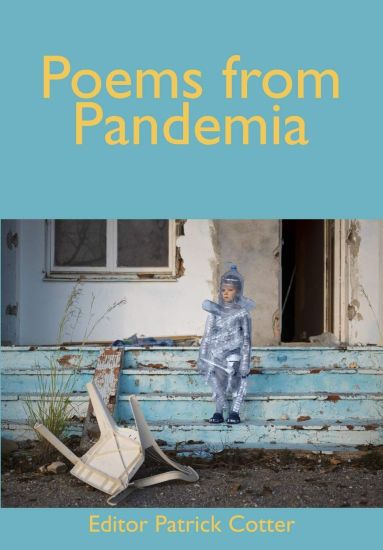
Pandemia being a land or planet whose name derives from the word pandemic. This is an anthology of brilliant work by both established and emerging poets from across the English-speaking world, from Australia to India, Europe to North America. With its accounts of life changed utterly, lives abruptly finished, testimonies of the poignancy, the loneliness and sometimes madness of lockdown, this book is an essential statement of record on the dark times we are living through.
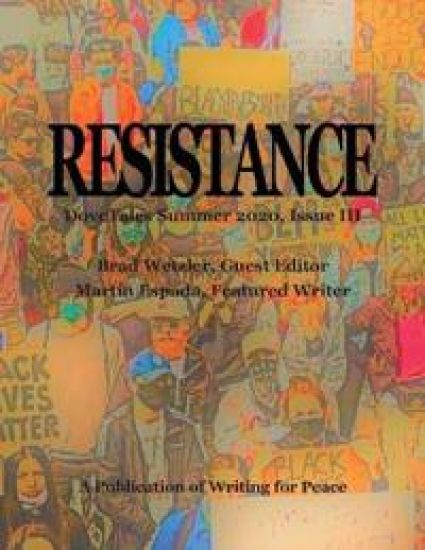
Resistance, Guest Edited by Brad Wetzler. With contributors from all over the globe, our 2020 Young Writers Contest Winners, and our Featured Writer Martín Espada, Resistance is a powerful statement of our First Amendment Rights.
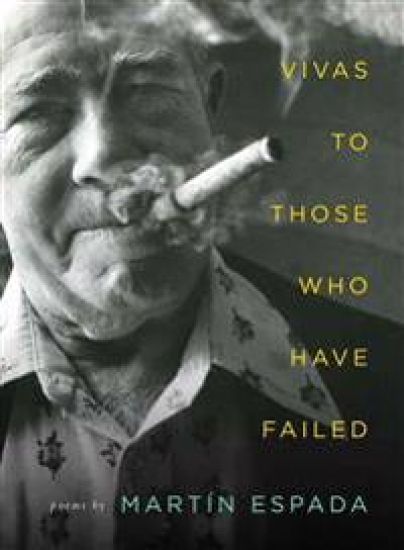
In this powerful new collection of poems, Mart n Espada articulates the transcendent vision of another, possible world. He invokes the words of Whitman in "Vivas to Those Who Have Failed," a cycle of sonnets about the Paterson Silk Strike and the immigrant laborers who envisioned an eight-hour workday. At the heart of this volume is a series of ten poems about the death of the poet's father. "El Moriviv " uses the metaphor of a plant that grows in Puerto Rico to celebrate the many lives of Frank Espada, community organizer, civil rights activist, and documentary photographer, from a jailhouse in Mississippi to the streets of Brooklyn. The son lyrically imagines his father's return to a bay in Puerto Rico: "May the water glow blue as a hyacinth in your hands." Other poems confront collective grief in the wake of the killings at the Sandy Hook Elementary School and police violence against people of color: "Heal the Cracks in the Bell of the World" urges us to "melt the bullets into bells." Yet the poet also revels in the absurd, recalling his dubious career as a Shakespearean "actor," finding madness and tenderness in the crowd at Fenway Park. In exquisitely wrought images, Espada's poems show us the faces of Whitman's "numberless unknown heroes."
The ferocious acumen with which the award-winning poet Martín Espada attacks issues of social injustice in Zapata’s Disciple makes it no surprise that the book has been the subject of bans in both Arizona and Texas, targeted for its presence in the Mexican American Studies curriculum of Tucson’s schools and for its potential to incite a riot among Texas prison populations. This new edition of Zapata’s Disciple, which won the 1999 Independent Publisher Book Award for Essay / Creative Nonfiction, opens with an introduction in which the author chronicles this history of censorship and continues his lifelong fight for freedom of expression. A dozen of Espada’s poems, tender and wry as theyare powerful, interweave with essays that address the denigration of the Spanish language by American cultural arbiters, castigate Nike for the exploitation of its workers, reflect upon National Public Radio’s censorship of Espada’s poem about Mumia Abu- Jamal, and more. Zapata’s Disciple is a potent assault on the continued marginalization of Latinos and other poor and workingclass citizens in American society, and the collection breathes with a revolutionary zeal that is as relevant now as when it was first published.
This chapbook collection offers new poems from the prolific career of a community leader, activist, and healer. Luis J. Rodríguez’s work asks profound questions of us as readers and fellow humans, such as, ""If society cooperates, can we nurture the full / and healthy development of everyone?"" In his introductory remarks, Martín Espada describes the poet as a man engaged in people and places: ""Luis Rodríguez is a poet of many tongues, befitting a city of many tongues. He speaks English, Spanish, ‘Hip Hop,’ ‘the Blues,’ and ‘cool jazz.’ He speaks in ‘mad solos.’ He speaks in ‘People’s Sonnets.’ He speaks in the language of protest. He speaks in the language of praise.
In this powerful new collection of poems, Mart n Espada articulates the transcendent vision of another, possible world. He invokes the words of Whitman in "Vivas to Those Who Have Failed," a cycle of sonnets about the Paterson Silk Strike and the immigrant laborers who envisioned an eight-hour workday. At the heart of this volume is a series of ten poems about the death of the poet's father. "El Moriviv " uses the metaphor of a plant that grows in Puerto Rico to celebrate the many lives of Frank Espada, community organizer, civil rights activist, and documentary photographer, from a jailhouse in Mississippi to the streets of Brooklyn. The son lyrically imagines his father's return to a bay in Puerto Rico: "May the water glow blue as a hyacinth in your hands." Other poems confront collective grief in the wake of the killings at the Sandy Hook Elementary School and police violence against people of color: "Heal the Cracks in the Bell of the World" urges us to "melt the bullets into bells." Yet the poet also revels in the absurd, recalling his dubious career as a Shakespearean "actor," finding madness and tenderness in the crowd at Fenway Park. In exquisitely wrought images, Espada's poems show us the faces of Whitman's "numberless unknown heroes."
In this new collection of poems, Martin Espada crosses the borderlands of epiphany and blasphemy: from a pilgrimage to the tomb of Frederick Douglass to an encounter with the swimming pool at a centre of torture and execution in Chile, from the adolescent discovery of the poet Omar Khayyam to the death of an "illegal" Mexican immigrant. From "The Trouble Ball" On my father's island, there were hurricanes and tuberculosis, dissidents in jail and baseball. The loudspeakers boomed: Satchel Paige pitching for the Brujos of Guayama. From the Negro Leagues he brought the gifts of Baltasar the King; from a bench on the plaza he told the secrets of a thousand pitches: The Trouble Ball, The Triple Curve, The Bat Dodger, The Midnight Creeper, The Slow Gin Fizz, The Thoughtful Stuff. Pancho Co mbre hit rainmakers for the Leones of Ponce; Satchel sat the outfielders in the grass to play poker, windmilled three pitches to the plate, and Pancho spun around three times. He couldn't hit The Trouble Ball.
The Lover of a Subversive Is Also a Subversive
Martin Espada
The University of Michigan Press
2010
nidottu
Prior praise for Martín Espada:"Political poetry at its finest…with his soaring lyrics, Espada broadens our appreciation not only of poetry but of resistance itself."---The Progressive "(Espada) writes beautiful poems about terrible realities."---San Francisco Chronicle A volume in the Poets on Poetry series, which collects critical works by contemporary poets, gathering together the articles, interviews, and book reviews by which they have articulated the poetics of a new generation.This collection of essays on poetry and politics comes from the man the New York Times predicted would become "the Latino poet of his generation" and whom Sandra Cisneros called "the Pablo Neruda of North American authors."Martín Espada defends what Walt Whitman called, "the rights of them the others are down upon." He invokes the spirit of poet-advocates such as Whitman and Edgar Lee Masters to explore his own history as a poet and tenant lawyer in Boston's Latino community. He celebrates the poets of Puerto Rico, imprisoned for espousing the cause of independence, and the poets of the Bronx, writing bilingual poems in the voices of the dead.Espada writes of forgotten places and reminds us of the poet's responsibility to remember, as Pablo Neruda remembers the anonymous builders of Machu Picchu or Sterling Brown remembers the slave uprising of Nat Turner. He argues that poets should embrace the role of Shelley's "unacknowledged legislator" in their work as writers and in their lives as citizens. He challenges the conventional wisdom that poetry and politics are mutually exclusive, and rejects the poetics of self-marginalization, in keeping with Adrian Mitchell's dictum that, "most people ignore most poetry because most poetry ignores most people."Martín Espada has published seventeen books as a poet, editor, and translator. The Republic of Poetry, a collection of poems, received a Paterson Award for Sustained Literary Achievement and was a finalist for the Pulitzer Prize. Imagine the Angels of Bread won an American Book Award and was a finalist for the National Book Critics Circle Award. He has received numerous fellowships and awards, including a Guggenheim Fellowship and the National Hispanic Cultural Center Literary Award. Espada is a Professor of English at the University of Massachusetts-Amherst.
The Lover of a Subversive Is Also a Subversive
Martin Espada
The University of Michigan Press
2010
sidottu
Prior praise for Martín Espada:"Political poetry at its finest…with his soaring lyrics, Espada broadens our appreciation not only of poetry but of resistance itself."---The Progressive "(Espada) writes beautiful poems about terrible realities."---San Francisco Chronicle A volume in the Poets on Poetry series, which collects critical works by contemporary poets, gathering together the articles, interviews, and book reviews by which they have articulated the poetics of a new generation.This collection of essays on poetry and politics comes from the man the New York Times predicted would become "the Latino poet of his generation" and whom Sandra Cisneros called "the Pablo Neruda of North American authors."Martín Espada defends what Walt Whitman called, "the rights of them the others are down upon." He invokes the spirit of poet-advocates such as Whitman and Edgar Lee Masters to explore his own history as a poet and tenant lawyer in Boston's Latino community. He celebrates the poets of Puerto Rico, imprisoned for espousing the cause of independence, and the poets of the Bronx, writing bilingual poems in the voices of the dead.Espada writes of forgotten places and reminds us of the poet's responsibility to remember, as Pablo Neruda remembers the anonymous builders of Machu Picchu or Sterling Brown remembers the slave uprising of Nat Turner. He argues that poets should embrace the role of Shelley's "unacknowledged legislator" in their work as writers and in their lives as citizens. He challenges the conventional wisdom that poetry and politics are mutually exclusive, and rejects the poetics of self-marginalization, in keeping with Adrian Mitchell's dictum that, "most people ignore most poetry because most poetry ignores most people."Martín Espada has published seventeen books as a poet, editor, and translator. The Republic of Poetry, a collection of poems, received a Paterson Award for Sustained Literary Achievement and was a finalist for the Pulitzer Prize. Imagine the Angels of Bread won an American Book Award and was a finalist for the National Book Critics Circle Award. He has received numerous fellowships and awards, including a Guggenheim Fellowship and the National Hispanic Cultural Center Literary Award. Espada is a Professor of English at the University of Massachusetts-Amherst.
Offering both a twenty-year retrospective and seventeen new poetic works, this major anthology by the American Book Award-winning Latino poet explores the essence of the American political imaginaton and the resilience of human dignity. Reprint.
In his sixth collection, American Book Award winner Martín Espada has created a poetic mural. There are conquerors, slaves, and rebels from Caribbean history; the "Mayan astronomer" calmly smoking a cigarette in the middle of a New York tenement fire; a nun staging a White House vigil to protest her torture; a man on death row mourning the loss of his books; and even Carmen Miranda.
Poetry Like Bread contains poems by nearly forty poets published by the Curbstone Press during the last twenty years. These poets are probably unlike any you have studied. Their engagement with everyday political and economic realities is as direct as a newspaper, their language as familiar as conversation. Their motto, taken from Roque Dalton for the title of the collection, is that ""poetry, like bread, is for everyone."" These poems were not written to be studied. They were meant to be read. Or better yet, heard. Whole or in part. Alone or among friends and strangers. Reading and hearing them, you must respond and react. Some may inspire you, knock the wind out of you--make you indignant, sad, joyous, ashamed. Whether you drop this book, seek out others, join a social action group, write letters to your elected representatives, or write poems of your own, your reaction to the poems will be as political as the poems themselves. Some of the subjects of these poems may be unfamiliar to you, or very familiar to you. Many relate stories from war-torn Central and South America, where U. S. policy has had a huge impact on people's lives. The rest are the voices of the voiceless here in the U.S: Latinos and African Americans, Vietnam veterans and Vietnamese, prison inmates, blue collar workers, migrant workers, women, the homeless. It's the poet's job to open up and validate these worlds to us. Our job, once roused, is to learn. To learn and to act.
Combining the personal with the political in his fifth collection, Martín Espada celebrates the bread of the imagination, the bread of the table, and the bread of justice. The heart of the collection is a series of autobiographical poems recalling family, school, neighborhood, and work experiences-from bouncer to tenant lawyer. There are moments of revelation and political transcendence here, which culminate in an elegy for the Puerto Rican poet Clemente Soto Velez, imprisoned for his advocacy of independence for Puerto Rico.