Kirjailija
Martin Gayford
Kirjat ja teokset yhdessä paikassa: 40 kirjaa, julkaisuja vuosilta 2007-2026, suosituimpien joukossa Lucian Freud. Vertaile teosten hintoja ja tarkista saatavuus suomalaisista kirjakaupoista.
40 kirjaa
Kirjojen julkaisuhaarukka 2007-2026.
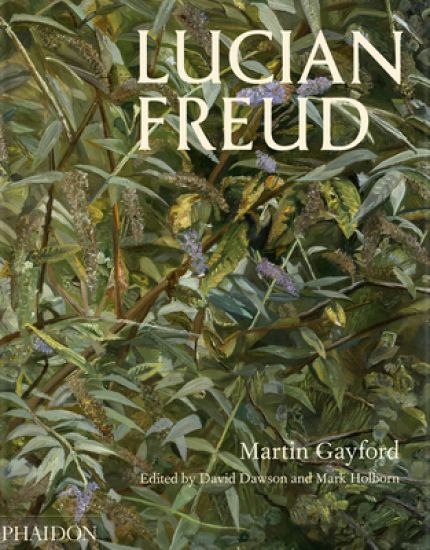
A sumptuous single-volume edition of Phaidon's acclaimed overview of one of the greatest painters of our time Larger-than-life British artist Lucian Freud enjoyed a career lasting over seven decades. He worked almost until the day he died, when he left a portrait of friend and studio assistant David Dawson unfinished. Now available for the first time in one elegantly combined edition, this acclaimed celebration of Freud's work from the 1930s to his death in 2011 includes hundreds of paintings, drawings, sketches, and etchings - even personal photographs and illustrated private letters. A comprehensive overview of his life and work in one luxurious volume, this book is a gorgeous addition to the shelves of art lovers everywhere. Created in collaboration with the Lucian Freud Archive and David Dawson, Director of the Archive, and edited by Mark Holborn.
Hughie O'Donoghue
Martin Gayford; Lee Hallman; Thomas Marks; Tanja Pirsig-Marshall; Tom Paulin
LUND HUMPHRIES PUBLISHERS LTD
2023
sidottu
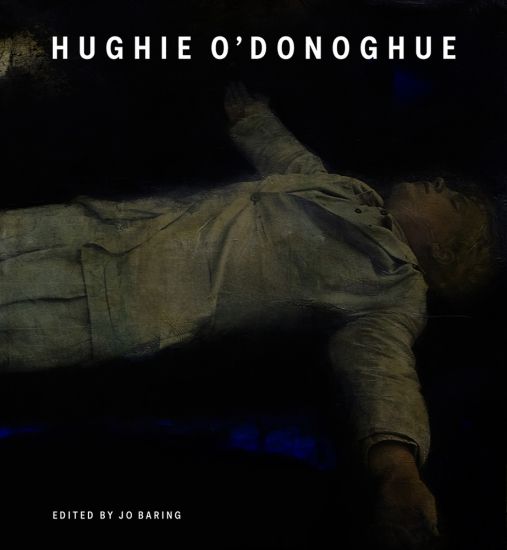
Hughie O’Donoghue (b. 1953) explores themes of universal human experience, ideas of truth and the relationship between memory and identity. Often standing apart from his contemporaries in the scale and ambition of his paintings, O’Donoghue’s work addresses the need to learn the lessons and complexities of recent history through the lens of the often overlooked and anonymous individual. Beautifully illustrated, encompassing four decades of work, this major publication is the broadest survey of the artist to date. Including new writing from the artist alongside four commissioned essays by leading art historians and critics, with a preface by the poet Tom Paulin, this comprehensive book documents O’Donoghue’s ambitious vision.
Frank Auerbach: The Sitters provides a comprehensive overview of the artist’s portraiture. It reveals the special connection between the artist and his ‘sitters’ - the small group of dedicated models who have been Auerbach’s chief subject over a career spanning seven decades. A comprehensive list of his sitters has been compiled here for the first time, providing new biographical information about his models from E.O.W. to J.Y.M. and beyond. Frank Auerbach: The Sitters includes a wide range of contributors. An essay by the art critic William Feaver describes the experience of sitting for Auerbach, while a conversation from 2001 between the artist and Martin Gayford describes Auerbach’s intentions and process. Auerbach’s close friendship with the art historian Michael Podro is also explored, with a short memoir by Natasha Podro and a re-published, little known essay from 1969 by Podro himself. Forty paintings and drawings from 1956 to 2020 are illustrated in colour, with thoroughly researched catalogue entries that shed new light on the artist’s relationships and his work. The publication accompanies Piano Nobile’s exhibition Frank Auerbach: The Sitters, held in autumn 2022.
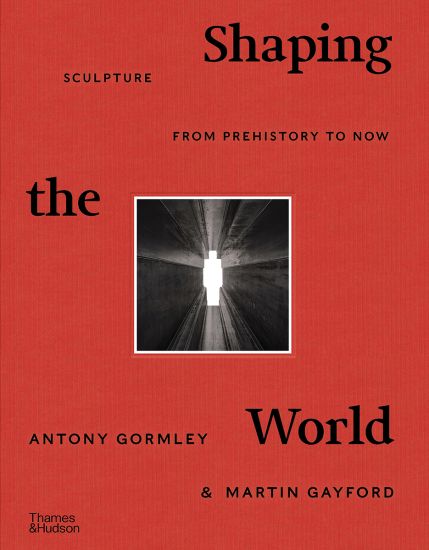
In this wide-ranging, thought-provoking and sometimes provocative new book, leading sculptor Antony Gormley, informed and energised by a lifetime of making, and art critic and historian Martin Gayford, explore sculpture as a transnational art form with its own compelling history. The authors’ lively conversations and explorations make unexpected connections across time and media. Sculpture has been practised by every culture throughout the world and stretches back into our distant past. The first surviving shaped stones may even predate the advent of language. Evidently, the desire to carve, mould, bend, chip away, weld, suspend, balance – to transform a vast array of materials and light into new shapes and forms – runs deep in our psyche and is a fundamental part of our human journey and need for expression. With more than 300 spectacular illustrations, Shaping the World juxtaposes a rich variety of works – from the famous Lowenmensch or Lion Man, c. 35,000 BCE to Michelangelo’s luminous Pietà in Rome, the Terracotta Warriors in China to Rodin’s The Kiss, Marcel Duchamp’s ready-mades, Olafur Eliasson’s extraordinary Weather Project and Kara Walker’s Fons Americanus, and Tomas Saraceno’s ongoing Aerocene project, as well as examples of Gormley’s own work. Antony Gormley and Martin Gayford take into account materials and techniques, and consider overarching themes such as light, mortality and our changing world. Above all, they discuss their view of sculpture as a form of physical thinking capable of altering the way people feel, and they invite us to look at sculpture we encounter – and more broadly the world around us – in a completely different way.
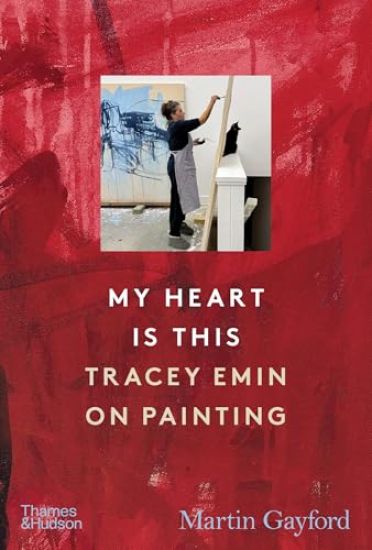
Tracey Emin talks about painting: what it is, why she does it, why it matters. Tracey Emin is one of the most widely admired artists working in Britain today. Richly illustrated with photographs of the artist and her art, here is a vivid and intimate portrait of her life and work in her own words, in conversation with art critic Martin Gayford. Emin reflects on painting – how she approaches it, why it matters to her, and how it connects to her life – and how everything has changed since her cancer diagnosis four years ago. Offering a uniquely personal insight into the artist’s extraordinary life and career, Emin expresses herself in her characteristically frank confessional style that is so familiar to anyone who has seen her paintings. This is Tracey Emin on her own terms: on learning to paint, how to live her life after cancer, and relearning why painting matters above everything else.
Critic, author and art pilgrim Martin Gayford recounts some of the many journeys he has made in the course of a lifetime in pursuit of art.
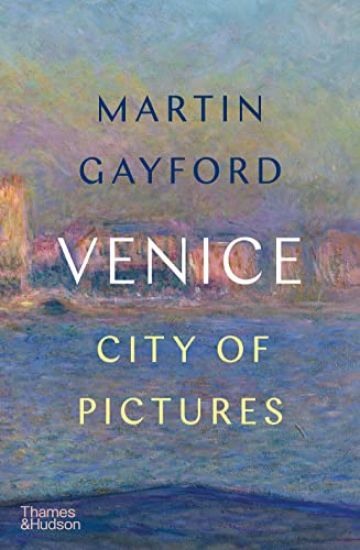
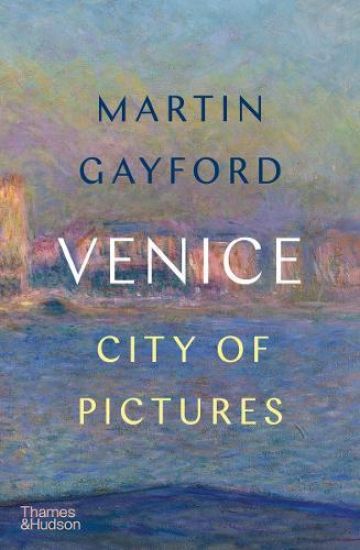
Venice was a major center of art in the Renaissance: the city where the medium of oil on canvas became the norm. The achievements of the Bellini brothers, Carpaccio, Giorgione, Titian, Tintoretto, and Veronese are a key part of this story. No other city has been depicted by so many great painters in such diverse styles and moods. Venetian views were a specialty of native artists such as Canaletto and Guardi, but the city has also been represented by outsiders: J. M. W. Turner, Claude Monet, John Singer Sargent, Howard Hodgkin, and many more.Then there are those who came to look at and write about art. The reactions of Henry James, George Eliot, Richard Wagner, and others enrich this tale. Nor is the story over. Since the advent of the Venice Biennale in the 1890s, and the arrival of pioneering modern-art collector Peggy Guggenheim in the late 1940s, the city has become a shop window for the contemporary art of the whole world, and it remains the site of important artistic events.In this elegant volume, Gayford--who has visited Venice countless times since the 1970s, covered every Biennale since 1990, and even had portraits of himself exhibited there on several occasions--takes us on a visual journey through the past five centuries of the city known as "La Serenissima," the Most Serene. It is a unique and compelling portrait of Venice that will delight lovers of the city and lovers of its art.
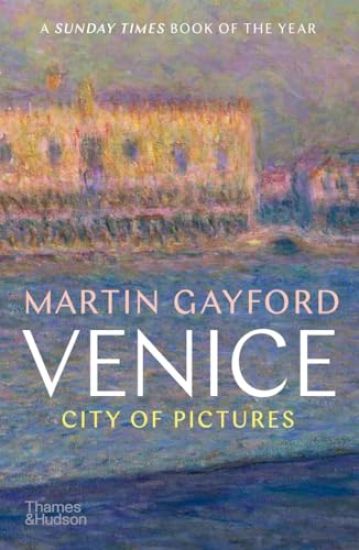
A Sunday Times Art Book of the Year. This is a unique and compelling journey through five centuries of the city known as ‘La Serenissima’ – a perfect companion for both lovers of Venice and lovers of its art. Venice was a major centre of art in the Renaissance: the city where the medium of oil on canvas became the norm. Nowhere else has been depicted by so many great painters in so many diverse styles and moods. Venetian views were a speciality of native artists such as Canaletto and Guardi, but the city has also been represented by outsiders: J. M. W. Turner, Claude Monet, John Singer Sargent, Howard Hodgkin, and many more. Then there are those who came to look at and write about art. The reactions of Henry James, George Eliot, Richard Wagner and others enrich this tale. Nor is the story over. Since the advent of the Venice Biennale in the 1890s, and the arrival of Peggy Guggenheim in the late 1940s, the city has become a shop window for the contemporary art of the whole world, and it remains the site of important artistic events. In this elegant volume, Gayford – who has visited Venice countless times since the 1970s, covered every Biennale since 1990, and even had portraits of himself exhibited there on several occasions – takes us on a visual journey through the city’s past five centuries.
The bestselling book of conversations between David Hockney and art critic Martin Gayford as they explore the nature of creativity. David Hockney’s exuberant work is highly praised and widely loved, but he is also something else: an incisive and original thinker on art. In this now classic book, filled with anecdote, insight, passion and wit, Hockney reveals the fruits of his lifelong meditations on the problems and paradoxes of representing a three-dimensional world on a flat surface. Compiled from a decade and a half of conversations with art critic Martin Gayford, it reflects a period in which Hockney relocated from Los Angeles to his native East Yorkshire. Their exchanges communicate the immense delight and inspiration that Hockney finds in the changing seasons and natural splendours of this sparsely inhabited corner of England – a delight that is, in the words of Margaret Drabble, ‘an invitation to us all to look better, see better, enjoy more’.
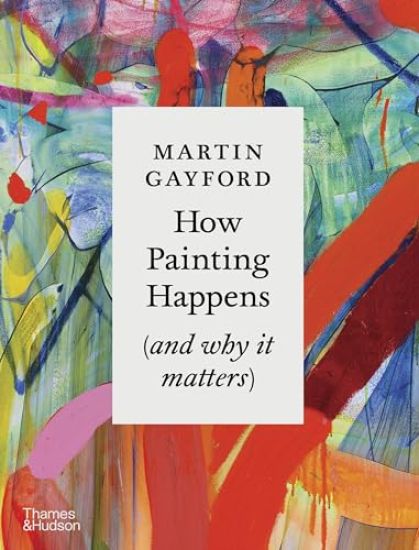
How Painting Happens (and why it matters) – A Times Book of the Year 2024
Martin Gayford
THAMES HUDSON LTD
2024
sidottu
A Times Book of the Year ‘This is as clear a piece of writing about the experience of looking at a great painting as I have ever read … Gayford seems to have seen everything and thought deeply about all of it’ Andrew Marr, New Statesman 'If you are someone who revels in the deliciousness of oil paintings, who looks at them and wants to eat them ‘as if they were ice cream or something’, in Damien Hirst’s phrase, then Martin Gayford’s latest book will be a banquet' The Spectator 'Martin Gayford, long-serving critic and art historian, is a trusted insider and a favoured guest of the most celebrated talents in the UK and beyond. If anyone knows what makes them tick, it ought to be this latter-day Vasari ... Stimulating and sumptuously illustrated' Financial Times 'From El Greco to Picasso, Martin Gayford’s How Painting Happens offers us an encyclopedic journey through art history' Daily Telegraph ‘A remarkable painting can move the soul. So how does it come about? Martin Gayford brilliantly marks out the path from inspiration to execution’ The Irish Times Drawing on decades of conversations with practising artists, Martin Gayford offers intimate insight into the practice, meaning and potential of painting. Painting is an almost inconceivably ancient activity that remains vigorously alive in the twenty-first century. Every successful painting creates a new world, which we inhabit for as long as we care to look at it. Paintings can incorporate profound ideas and paradoxes that can be grasped without words. For those who dedicate themselves to it, the art of painting can become an all-consuming, lifelong obsession. It is a subject on which painters themselves are often the most incisive commentators. Martin Gayford’s riveting and richly illustrated book deftly brings together numerous artists’ voices, past and present. It draws on a trove of conversations conducted over more than three decades with artists including Frank Auerbach, Gillian Ayres, Frank Bowling, Cecily Brown, Peter Doig, Lucian Freud, Katharina Fritsch, David Hockney, Claudette Johnson, Lee Ufan, Paula Rego, Gerhard Richter, Bridget Riley, Jenny Saville, Frank Stella, Luc Tuymans, Zeng Fanzhi and many more. Here too is Vincent van Gogh on Rembrandt, John Constable on Titian, Francis Bacon on Velazquez, R. B. Kitaj on Cézanne and Jean-Michel Basquiat on Picasso. We hear the personal reflections of these artists on their chosen medium; how and why they paint; how they came to the practice; the influence of fellow painters; and how they find creative sustenance and inspiration in their art. How Painting Happens crosses the centuries to give us a wealth of insights into the endlessly compelling phenomenon of painters and painting.
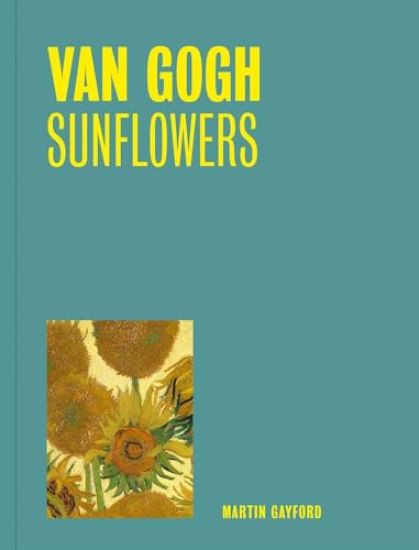
Van Gogh: Sunflowers (One Painting, One Story)
Martin Gayford
NATIONAL GALLERY COMPANY LTD
2024
pokkari
‘The sunflower is mine’, Van Gogh once declared. No other artist has been so closely associated with a specific flower, and his sunflower pictures are among his most loved works. In this compact and richly illustrated book, Martin Gayford explores the history of the National Gallery’s Sunflowers, painted in Arles in 1888 shortly before Paul Gauguin came to stay with Van Gogh in the famous Yellow House. The book will look closely at the painting itself, conjuring the time and place of its creation, as well as considering its legacy and reception at the National Gallery after it was acquired in 1924.Published by National Gallery Global/Distributed by Yale University Press
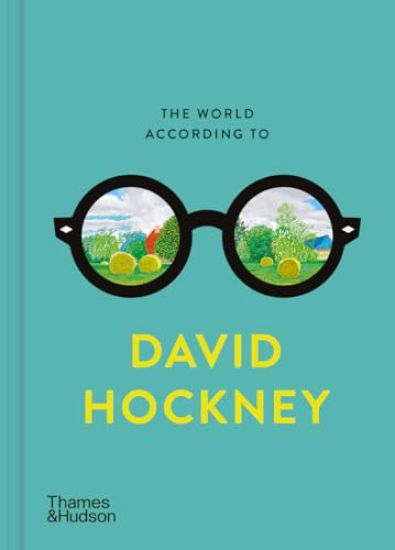
A collection of legendary British artist David Hockney’s insights into art, life, nature, creativity and much more. ‘I’ve always been a looker ... that’s what artists do’ This anthology of quotations by David Hockney follows in the successful format of ‘The World According to’ series. Ranging across topics including drawing, photography, nature, creativity, the internet and much more, The World According to David Hockney offers a delightful and engaging overview of the artist’s inimitable spirit, personality and opinions. From everyday observations – ‘The eye is always moving; if it isn’t moving you are dead’ – to artistic insights such as ‘painted colour always will be better than printed colour, because it is the pigment itself’, as well as musings on other image makers, including Caravaggio, Cézanne and Hokusai, Hockney has a knack for capturing profound truths in pithy statements. Born in Bradford, England, in 1937, Hockney attended art school in London before moving to Los Angeles in the 1960s. There, he painted his famous swimming pool paintings, and since then has embraced a range of media including photocollage, video and digital technologies. In a 2011 poll of more than 1,000 British artists, Hockney was voted the most influential British artist of all time. Presented as a beautifully designed and attractive package, illustrated with works of art from throughout Hockney's career, this is the perfect gift for art lovers everywhere.
A Sunday Times Art Book of the Year A visual journey through five centuries of the city known for centuries as 'La Serenissima' – a unique and compelling story for both lovers of Venice and lovers of its art. Venice was a major centre of art in the Renaissance: the city where the medium of oil on canvas became the norm. The achievements of the Bellini brothers, Carpaccio, Giorgione, Titian, Tintoretto and Veronese are a key part of this story. Nowhere else has been depicted by so many great painters in so many diverse styles and moods. Venetian views were a speciality of native artists such as Canaletto and Guardi, but the city has also been represented by outsiders: J. M. W. Turner, Claude Monet, John Singer Sargent, Howard Hodgkin, and many more. Then there are those who came to look at and write about art. The reactions of Henry James, George Eliot, Richard Wagner and others enrich this tale. Nor is the story over. Since the advent of the Venice Biennale in the 1890s, and the arrival of pioneering modern art collector Peggy Guggenheim in the late 1940s, the city has become a shop window for the contemporary art of the whole world, and it remains the site of important artistic events. In this elegant volume, Gayford – who has visited Venice countless times since the 1970s, covered every Biennale since 1990, and even had portraits of himself exhibited there on several occasions – takes us on a visual journey through the past five centuries of the city known ‘La Serenissima’, the Most Serene. It is a unique and compelling portrait of Venice that will delight lovers of the city and lovers of its art.
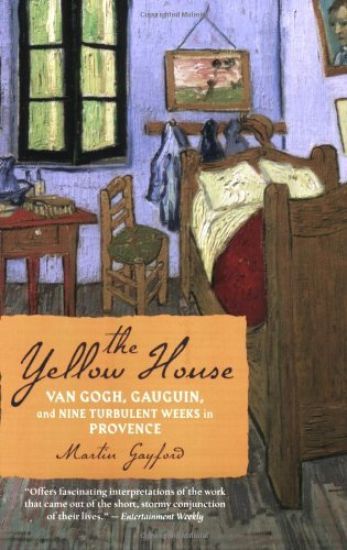
From October to December of 1888, Paul Gauguin shared a yellow house in the south of France with Vincent van Gogh. They were the odd couple of the art world -- one calm, the other volatile -- and the denouement of their living arrangement was explosive. Making use of new evidence and Van Gogh's voluminous correspondence, Martin Gayford describes not only how these two hallowed artists painted and exchanged ideas, but also the texture of their everyday lives. Gayford also makes a persuasive analysis of Van Gogh's mental illness -- the probable bipolar affliction that led him to commit suicide at the age of thirty-seven. The Yellow House is a singular biographical work, as dramatic and vibrant as the work of these brilliant artists.
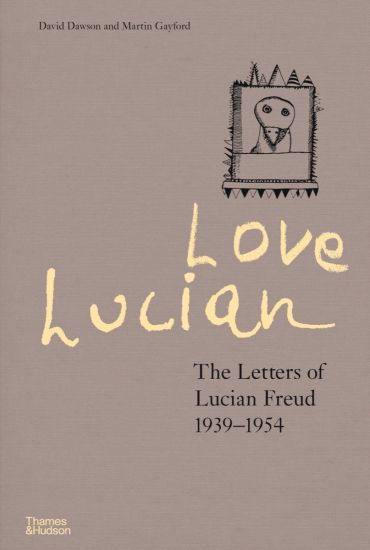
Love Lucian: The Letters of Lucian Freud 1939–1954 – A Times Best Art Book of 2022
David Dawson; Martin Gayford
THAMES HUDSON LTD
2022
sidottu
A Times Best Art Book of 2022Reproductions of the young Lucian Freud’s letters alongside insightful context and commentary reveal the foundations of the artist’s personality and creative practice. The young Lucian Freud was described by his friend Stephen Spender as ‘totally alive, like something not entirely human, a leprechaun, a changeling child, or, if there is a male opposite, a witch.’ All that magnetism and brilliance is displayed in the letters assembled here. Ranging from schoolboy messages to his parents, through letters and carefully-chosen, often embellished postcards to friends, lovers and confidants, to correspondence with patrons and associates. They are peppered with wit, affection and irreverence. Alongside rarely seen photographs and Freud’s extraordinary works, each chapter charts Freud’s evolving art alongside intimate accounts of his life. We trace Freud’s early friendships with Stephen Spender, John Craxton, his wild days at art school in East Anglia, and a stint as a merchant seaman. Among the highlights are Freud’s accounts of his first trip to Paris in 1946 and encounters with Picasso, Alexander Calder and Giacometti (who, he thought, looked like Harpo Marx). Equally revealing are letters to and from his first love, Lorna Wishart and second wife, Caroline Blackwood. Among his friends and confidantes were Sonia Orwell and Ann Fleming: remarkable, hitherto unknown letters to both of whom are included. To Ann Fleming he wrote a richly-comic, six-page description of a high society fancy dress ball which took place at Biarritz in 1953. He also went to stay with Ann and her husband Ian in their house in Jamaica, Goldeneye. From there, he sent a stream of letters, plus a telegram to his colleagues at the Slade School of Fine Art (where he was supposed to be teaching): “PLEASE SEND TEN SHEETS GREY GREEN INGRES PAPER”. The volume ends in early 1954 with his inclusion at the age of 31, as one of the artists representing Britain at the Venice Biennale - the high point of his early career. Co-authored by David Dawson and Martin Gayford, this is the first published collection of Freud’s correspondence, many brought to light for the first time. Reproduced in facsimile alongside reproductions of Freud’s artwork, the letters are linked by a narrative that weaves them into the story of his life and relationships through his formative first three decades. Collectively, they provide a powerful insight into his early life and art.
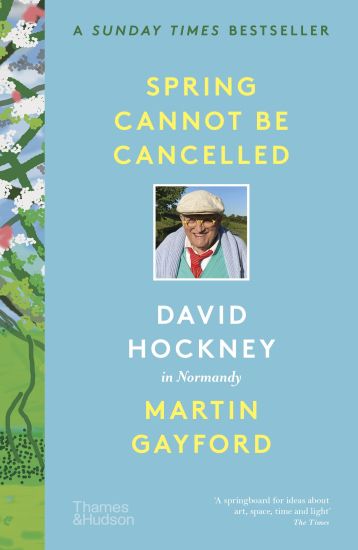
THE SUNDAY TIMES BESTSELLER 'A burst of springtime joy' Daily Telegraph 'A springboard for ideas about art, space, time and light' The Times 'Lavishly illustrated' Guardian David Hockney reflects upon life and art as he experiences lockdown in rural Normandy On turning eighty, David Hockney sought out rustic tranquility for the first time: a place to watch the sunset and the change of the seasons; a place to keep the madness of the world at bay. So when Covid-19 and lockdown struck, it made little difference to life at La Grande Cour, the centuries-old Normandy farmhouse where Hockney set up a studio a year before, in time to paint the arrival of spring. In fact, he relished the enforced isolation as an opportunity for even greater devotion to his art. Spring Cannot be Cancelled is an uplifting manifesto that affirms art’s capacity to divert and inspire. It is based on a wealth of new conversations and correspondence between Hockney and the art critic Martin Gayford, his long-time friend and collaborator. Their exchanges are illustrated by a selection of Hockney’s new, unpublished Normandy iPad drawings and paintings alongside works by van Gogh, Monet, Bruegel, and others. We see how Hockney is propelled ever forward by his infectious enthusiasms and sense of wonder. A lifelong contrarian, he has been in the public eye for sixty years yet remains entirely unconcerned by the view of critics or even history. He is utterly absorbed by his four acres of northern France and by the themes that have fascinated him for decades: light, colour, space, perception, water, trees. He has much to teach us, not only about how to see... but about how to live.