Kirjojen hintavertailu. Mukana 12 168 188 kirjaa ja 12 kauppaa.

Kirjailija

Martin H. Redish

Kirjat ja teokset yhdessä paikassa: 11 kirjaa, julkaisuja vuosilta 1995-2024, suosituimpien joukossa Wholesale Justice. Vertaile teosten hintoja ja tarkista saatavuus suomalaisista kirjakaupoista.

11 kirjaa

Kirjojen julkaisuhaarukka 1995-2024.

Due Process As American Democracy

Due Process As American Democracy

Martin H. Redish

OXFORD UNIVERSITY PRESS INC
2024
sidottu
Procedural due process guarantees to individual members of the polity that government will treat each of them with fairness and respect when seeking to take their life, liberty, or property. Although enshrined in the US Constitution's Fifth and Fourteenth Amendments, the scope of those guarantees has long been a source of public and academic debate. Due Process as American Democracy develops an entirely new approach to the procedural due process, grounded in foundational precepts of American political theory. It argues that American political thought comes from an adversarial understanding of democracy where individuals need to protect their own interests, because no one else can be trusted to do so. This skeptical democracy informs the separation of powers and operates as the protector of liberal democracy. When applied to procedural due process, adversary democracy dictates a skepticism of both judges and those who seek unilaterally to represent the individuals' interests. The end result is a demand for strong protections of judicial neutrality and independence far beyond what is presently required and imposition of serious restrictions on the ability of courts to appoint others to protect individuals' legally protected interests. The book applies these underlying democratic premises to areas of modern civil procedure and constitutional law, urging dramatic alterations in both. Original and provocative,Due Process as American Democracy provides a fresh view of the constitutional guarantee of due process and will appeal to legal scholars, practitioners, and political theorists alike.
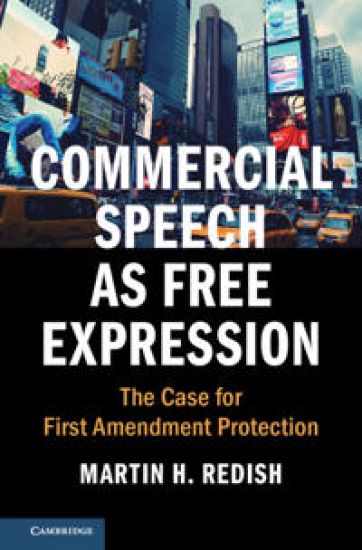
Commercial Speech as Free Expression

Commercial Speech as Free Expression

Martin H. Redish

Cambridge University Press
2021
pokkari
For many years, commercial speech was summarily excluded from First Amendment protection, without reason or logic. Starting in the mid-1970s, the Supreme Court began to extend protection but it remained strictly limited. In recent years, that protection has expanded, but both Court and scholars have refused to consider treating commercial speech as the First Amendment equivalent of traditionally protected expressive categories such as political speech or literature. Commercial Speech as Free Expression stands as the boldest statement yet for extending full First Amendment protection to commercial speech by proposing a new, four-part synthesis of different perspectives on the manner in which free expression fosters and protects expressive values. This book explains the complexities and subtleties of how the equivalency principle would function in real-life situations. The key is to recognize that as a matter of First Amendment value, commercial speech deserves treatment equivalent to that received by traditionally protected speech.
Commercial Speech as Free Expression

Commercial Speech as Free Expression

Martin H. Redish

Cambridge University Press
2021
sidottu
For many years, commercial speech was summarily excluded from First Amendment protection, without reason or logic. Starting in the mid-1970s, the Supreme Court began to extend protection but it remained strictly limited. In recent years, that protection has expanded, but both Court and scholars have refused to consider treating commercial speech as the First Amendment equivalent of traditionally protected expressive categories such as political speech or literature. Commercial Speech as Free Expression stands as the boldest statement yet for extending full First Amendment protection to commercial speech by proposing a new, four-part synthesis of different perspectives on the manner in which free expression fosters and protects expressive values. This book explains the complexities and subtleties of how the equivalency principle would function in real-life situations. The key is to recognize that as a matter of First Amendment value, commercial speech deserves treatment equivalent to that received by traditionally protected speech.
Civil Procedure

Civil Procedure

Richard L. Marcus; Martin H. Redish; Edward F. Sherman; James E. Pfander

West Academic Press
2018
sidottu
Since it first appeared, this casebook has sought to capture the evolving challenges of civil procedure in a way that engages students and fosters critical judgment on the underlying policy issues. The authors have closely monitored the evolution of procedure over this time, and adapted the basic structure of the book to take account of those changes.That evolution remains central to the seventh edition. The new edition retains the basic structure of the book, and a great deal of the existing superstructure of principal cases. It adds substantially revised text and note material to present contemporary issues in the context of those cases or new principal cases. The discovery chapter, for example, is infused with coverage of the 2015 rule amendments that have received somuch attention. The personal jurisdiction chapter integrates the many recent Supreme Court decisions into the existing framework, conveying the developments that have occurred since the last edition appeared in 2013.The new edition also offers new principal cases to examine and illustrate a number of issues. A new Rule 19 case on required parties presents the contemporary issues in a setting likely to be interesting to many students. A new Internet jurisdiction case involves online payday lending, an example of the fast-moving world of Internet-based commerce. A recent supplemental jurisdiction case enables students to work through the application of § 1367 in a setting that also involves appreciation of various joinder concepts. A new class-action case presents the challenges of consumer class actions. New Supreme Court and other principal cases address issues of subject matter jurisdiction and appellate jurisdiction. As reflects contemporary litigation, intellectual property cases are more prominent than in previous editions.
Judicial Independence and the American Constitution

Judicial Independence and the American Constitution

Martin H. Redish

Stanford University Press
2017
sidottu
The Framers of the American Constitution took special pains to ensure that the governing principles of the republic were insulated from the reach of simple majorities. Only super-majoritarian amendments could modify these fundamental constitutional dictates. The Framers established a judicial branch shielded from direct majoritarian political accountability to protect and enforce these constitutional limits. Paradoxically, only a counter-majoritarian judicial branch could ensure the continued vitality of our representational form of government. This important lesson of the paradox of American democracy has been challenged and often ignored by office holders and legal scholars. Judicial Independence and the American Constitution provocatively defends the centrality of these special protections of judicial independence. Martin H. Redish explains how the nation's system of counter-majoritarian constitutionalism cannot survive absent the vesting of final powers of constitutional interpretation and enforcement in the one branch of government expressly protected by the Constitution from direct political accountability: the judicial branch. He uncovers how the current framework of American constitutional law has been unwisely allowed to threaten or undermine these core precepts of judicial independence.
The Adversary First Amendment

The Adversary First Amendment

Martin H. Redish

Stanford University Press
2013
sidottu
The Adversary First Amendment presents a unique and controversial rethinking of modern American democratic theory and free speech. Most free speech scholars understand the First Amendment as a vehicle for or protection of democracy itself, relying upon cooperative or collectivist theories of democracy. Martin Redish reconsiders free speech in the context of adversary democracy, arguing that individuals should have the opportunity to affect the outcomes of collective decision-making according to their own values and interests. Adversary democracy recognizes the inevitability of conflict within a democratic society, as well as the need for regulation of that conflict to prevent the onset of tyranny. In doing so, it embraces pluralism, diversity, and the individual growth and development deriving from the promotion of individual interests. Drawing on previous free speech scholarship and case studies of controversial speech, Redish advances a theory of free expression grounded in democratic notions of self-promotion and controlled adversary conflict, making a strong case for its application across such areas as commercial speech, campaign spending, and anonymous speech.
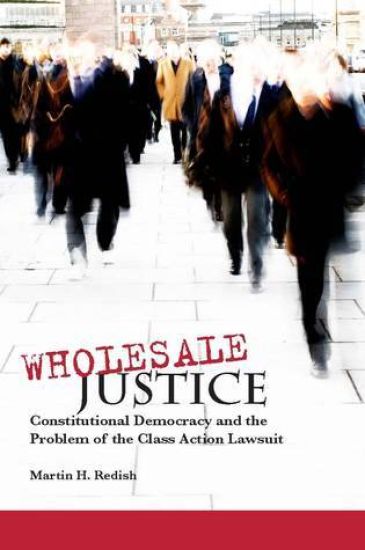
Wholesale Justice

Wholesale Justice

Martin H. Redish

Stanford University Press
2009
pokkari
In recent years, much political and legal debate has centered on the class action lawsuit. Many lawyers and judges have noted the intense pressure to settle caused by the very filing of a suit. Some contend that the procedure amounts to a form of judicial blackmail. Others counter that it is an effective means of policing corporate behavior and assuring injured victims' fair compensation. This book represents the first scholarly effort to view the modern class action comprehensively through the lenses of American political and constitutional theory. Redish argues that the modern class action undermines foundational constitutional principles, including procedural due process and separation of powers, and has been improperly transformed from its origins as a complex procedural device into a means for altering controlling substantive law in highly undemocratic ways. Redish proposes an alternative vision of the class action lawsuit, one that is designed to enable the device to serve its valuable procedural purposes without simultaneously contravening core precepts of American constitutional democracy.
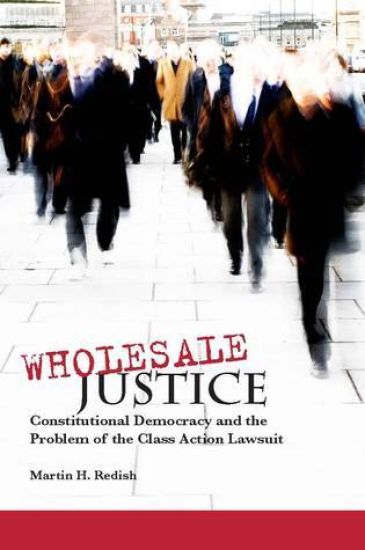
Wholesale Justice

Wholesale Justice

Martin H. Redish

Stanford University Press
2009
sidottu
In recent years, much political and legal debate has centered on the class action lawsuit. Many lawyers and judges have noted the intense pressure to settle caused by the very filing of a suit. Some contend that the procedure amounts to a form of judicial blackmail. Others counter that it is an effective means of policing corporate behavior and assuring injured victims' fair compensation. This book represents the first scholarly effort to view the modern class action comprehensively through the lenses of American political and constitutional theory. Redish argues that the modern class action undermines foundational constitutional principles, including procedural due process and separation of powers, and has been improperly transformed from its origins as a complex procedural device into a means for altering controlling substantive law in highly undemocratic ways. Redish proposes an alternative vision of the class action lawsuit, one that is designed to enable the device to serve its valuable procedural purposes without simultaneously contravening core precepts of American constitutional democracy.
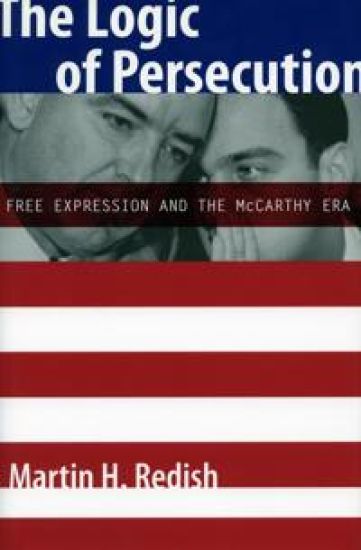
The Logic of Persecution

The Logic of Persecution

Martin H. Redish

Stanford University Press
2006
pokkari
This book demonstrates that neither the current liberal nor conservative position on the McCarthy era provides the basis for an appropriate normative perspective. Adding the perspective of the theory of free expression, it becomes apparent that both sides have ignored a vitally important point. While recently declassified documents demonstrate widespread participation by American Communists in conducting or facilitating espionage, much of the negative treatment received by American Communists had little or nothing to do with such activity. From the perspective of the First Amendment right of free speech, there exists a significant difference between speech that advocates conduct, on the one hand, and speech that itself is part of a nonspeech criminal act, such as espionage, on the other. By helping to separate protected speech from unprotected "speech-acts," First Amendment theory can do much to distinguish between the legitimate governmental responses to American Communism and those that contravened basic notions of communicative freedom protected by the Constitution. At the same time, by focusing the First Amendment inquiry on the McCarthy era, one should be able to glean insights about the broader implications of free speech protection.
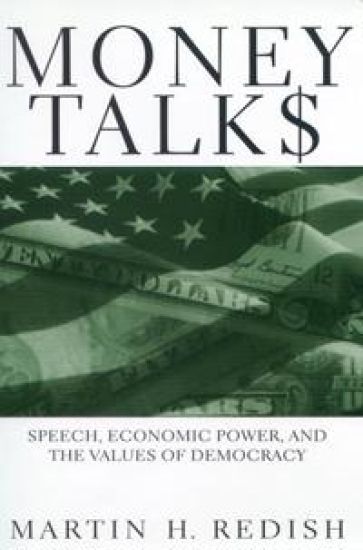
Money Talks

Money Talks

Martin H. Redish

New York University Press
2001
sidottu
Many have argued that soft money and special interests are destroying the American electoral system. And yet the clarion call for campaign finance reform only touches on the more general belief that money and economic power have a disastrous impact on both free expression and American democracy. The nation's primary sources of communication, the argument goes, are increasingly controlled by vast corporate empires whose primary, or even exclusive motive is the maximization of profit. And these conglomerates should simply not be granted the same constitutional protection as, say, an individual protester. And yet neither the expenditure of money for expressive purposes nor an underlying motive of profit maximization detracts from the values fostered by such activity, claims Martin H. Redish. In fact, given the modern economic realities that dictate that effective expression virtually requires the expenditure of capital, any restriction of such capital for expressive purposes will necessarily reduce the sum total of available expression. Further, Redish here illustrates, the underlying motive of those who wish to restrict corporate expression is disagreement with the nature of the views they express. Confronting head-on one of the sacred cows of American reformist politics, Martin H. Redish here once again lives up to his reputation as one of America's most original and counterintuitive legal minds.
The Constitution as Political Structure

The Constitution as Political Structure

Martin H. Redish

Oxford University Press Inc
1995
sidottu
Over the last forty years both modern constitutional scholarship and Supreme Court constitutional doctrine have concentrated on the analysis of rights, while issues of constitutional law related to the structure of government have been largely ignored. The irony of this interpretive emphasis is that the Constitution itself contains relatively little dealing with rights. Rather, it is primarily a blueprint for the establishment of a complex form of federal-democratic structure. This work is the only scholarly attempt to emphasize the central role served by the structural portions of the Constitution. Redish argues that these structural values were designed to provide the foundation in which our rights-based system may flourish, and that judicial abandonment of these structural values threatens the very basis of American political theory.