Kirjojen hintavertailu. Mukana 12 595 353 kirjaa ja 12 kauppaa.
Kirjailija
Martin Henig
Kirjat ja teokset yhdessä paikassa: 11 kirjaa, julkaisuja vuosilta 1973-2017, suosituimpien joukossa Roman Sculpture from the Cotswold Region, with Devon and Cornwall. Vertaile teosten hintoja ja tarkista saatavuus suomalaisista kirjakaupoista.
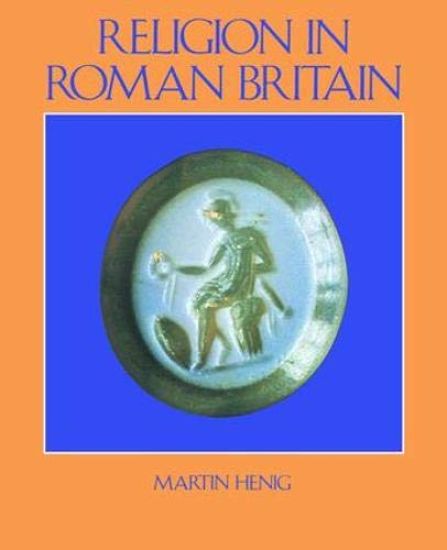
Apart from Christianity and the Oriental Cults, religion in Roman Britain is often discussed as though it remained basically Celtic in belief and practice, under a thin veneer of Roman influence. Using a wide range of archaeological evidence, Dr Henig shows that the Roman element in religion was of much greater significance and that the natural Roman veneration for the gods found meaningful expression even in the formal rituals practised in the public temples of Britain.
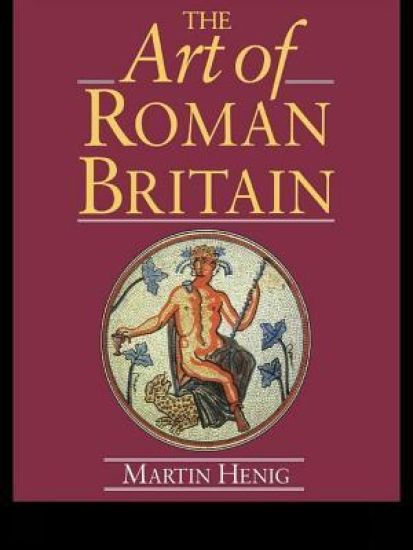
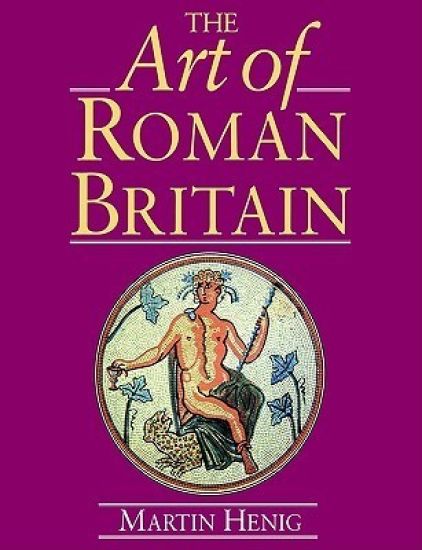
With the help of over 100 illustrations, many of them little known, Martin Henig shows that the art produced in Britannia--particularly in the golden age of Late Antiquity--rivals that of other provinces and deserves comparison with the art of metropolitan Rome. The originality and breadth of Henig's study is shown by its systematic coverage, embracing both the major arts--stone and bronze statuary, wall-painting and mosaics--and such applied arts as jewelery-making, silversmithing, furniture design, figure pottery, figurines and appliques. The author explains how the various workshops were organized, the part played by patronage and the changes that occurred in the fourth century.
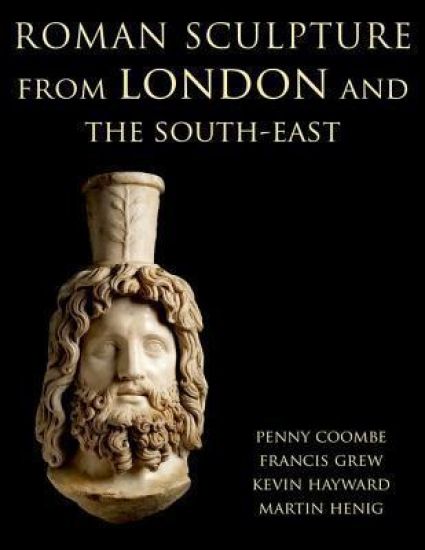
This, the tenth fascicule in the British section of the international series Corpus Signorum Imperii Romani, concerns Roman sculpture from south-east England. Over 200 individual items are catalogued, from the counties of Kent, Surrey and Hertfordshire, as well as from Greater London. In contrast to the rest of Britain, this region has yielded a substantial collection of marble and bronze statuary. The sculptures from the Temple of Mithras in London are notable highlights, as are the busts probably of the emperor Pertinax and his father from the villa at Lullingstone. The famous head of Hadrian from the Thames is one of only three bronze statues of that emperor from the entire Roman world. Scarcely less impressive is the limestone sculpture, which includes important funerary monuments and sarcophagi, alongside depictions of Classical and Romano-British deities. In the last of these categories, a Matronae relief with four rather than the usual three matrons, and several representations of a Hunter God are particularly intriguing. A substantial part of the book concerns architectural sculpture, in particular fragments of three major monuments: the quadrifrons arch at Richborough, and a small arch and screen from London. The figural and floral motifs on the London monuments are analysed in detail, revealing close links with contemporary sculpture in the Rhineland. For the first time in the British CSIR series, this fascicule contains a comprehensive study of the types and sources of the stone. Nearly every item was examined visually by an archaeological petrologist, Dr Kevin Haywood, and approaching half in thin-section. It emerges that in the early Roman period sculptors in Kent used stone quarried in northern France rather than Britain, so demonstrating the importance of cross-Channel connections in the formative years of the province of Britannia.
This is a controversial re-examination of historical and archaeological evidence in Roman Britain, which suggests that the impulse for political and cultural change came from the Britons--not the Romans.
This is a collection of eighteen papers presented at a conference that was held at the Hatfield Campus of the University of Hertfordshire with 122 members and guests from the United Kingdom, the United States of America, Germany and Norway were present. The papers are on the research on various aspects of the art and architecture of the abbey, at St Albans and provides an ideal forum for bringing together many aspects of the abbey’s history.
This is a collection of eighteen papers presented at a conference that was held at the Hatfield Campus of the University of Hertfordshire with 122 members and guests from the United Kingdom, the United States of America, Germany and Norway were present. The papers are on the research on various aspects of the art and architecture of the abbey, at St Albans and provides an ideal forum for bringing together many aspects of the abbey’s history.
With the help of over 100 illustrations, many of them little known, Martin Henig shows that the art produced in Britannia--particularly in the golden age of Late Antiquity--rivals that of other provinces and deserves comparison with the art of metropolitan Rome. The originality and breadth of Henig's study is shown by its systematic coverage, embracing both the major arts--stone and bronze statuary, wall-painting and mosaics--and such applied arts as jewelery-making, silversmithing, furniture design, figure pottery, figurines and appliques. The author explains how the various workshops were organized, the part played by patronage and the changes that occurred in the fourth century.
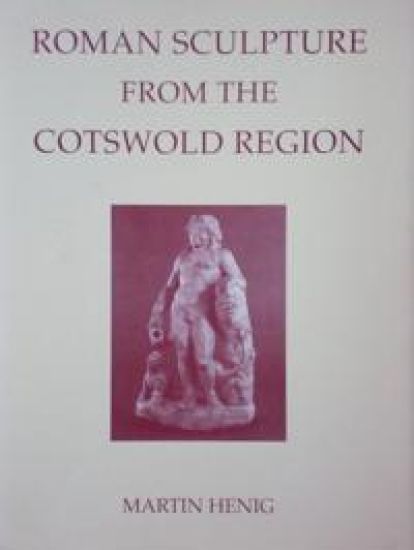
Roman sculpture from the Cotswolds (principally Gloucestershire and Oxfordshire) forms one of the most consistent regional traditions of Roman Britain. These sculptors, working with the soft local limestone, displayed a considerable feeling for pattern and texture. Many of the pieces are well known and the best are among the most distinguished works of art from Roman Britain, but they have never before been discussed as a whole. This volume features detailed catalogue entries and over 300 illustrations, providing a full record of the material. An introductory essay sets the historical and stylistic contexts. Concluding the text, Dr Henig also covers the Roman sculpture from Devon and Cornwall.
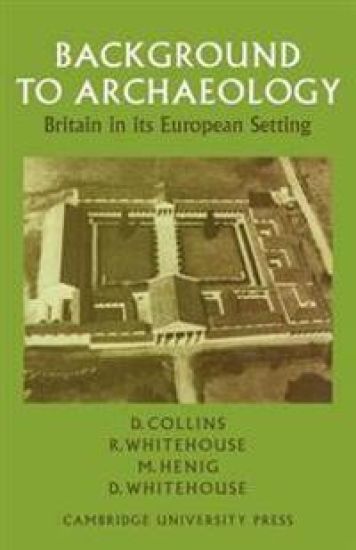
A concise, clearly written introduction to the early past of Britain and Europe from the beginnings up to the twelfth century AD, which presents archaeological research in a readily understandable form. Written, and originally published in 1973, for readers with no specialist knowledge or the subject, a major virtue of this book is the way in which it brings into focus all the separate strands of evidence to present a coherent narrative development. The account starts with a brief survey of human evolution and a consideration of the evidence of tool-making in the Old Stone Age. It goes on to describe the origins and spread of farming and the subsequent development of metallurgy and full urban civilization and the contribution made by the urban civilization of Rome to the development of Europe. It looks at the Migration Period through to the reestablishment of urban culture in northern Europe concluding with a brief description of conditions in the twelfth century.