Kirjojen hintavertailu. Mukana 12 390 323 kirjaa ja 12 kauppaa.

Kirjailija

Martin Hughes

Kirjat ja teokset yhdessä paikassa: 17 kirjaa, julkaisuja vuosilta 1986-2023, suosituimpien joukossa Translating Beethoven. Vertaile teosten hintoja ja tarkista saatavuus suomalaisista kirjakaupoista.

17 kirjaa

Kirjojen julkaisuhaarukka 1986-2023.

Space Captive

Space Captive

Martin Hughes

CHIMERA
2023
pokkari
With unexpected speed the pirate pressed a finger against Liz's lips, silencing her. 'Shhhh...' the finger pressed a little. 'I said nice and still, and quiet. Don't make me angrier than I already am. I don't like finding Federation scum roaming unsupervised around my section. Got it' The pressure of the finger increased, and Liz could do nothing but allow her lips to peel apart and for it to push into her mouth. The pirate smirked, pulled the finger out, cupped her chin, and pushed her head back against the wall. 'Now, I have to search you, ' he went on, his face mere centimetres from hers. 'For all I know you could have a nasty weapon concealed somewhere.' Commander Liz Hartley, the beautiful second-in-command of the Space Cruiser Explorer, is captured by vicious pirates in the lawless Megellan region of space, and Liz has to call upon all her reserves of courage to survive at the hands of her sadistic captors, who seek the codes to disarm her ship. Eventually she and the prettier members of her crew are consigned to the hell of a detention camp and the whims of the Commandant and guards, but undaunted, Liz and the girls endure all whilst plotting revenge...

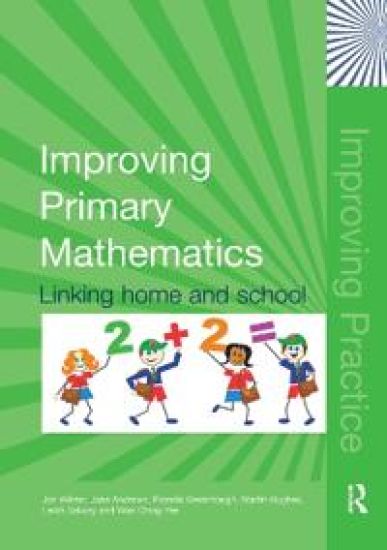
Improving Primary Mathematics

Improving Primary Mathematics

Jan Winter; Jane Andrews; Pamela Greenhough; Martin Hughes; Leida Salway; Wan Ching Yee

Routledge
2018
sidottu
Improving Primary Mathematics provides primary teachers with practical ideas about how to bring these two worlds closer to improve children’s mathematics learning. Using a number of fascinating case studies focusing on children’s experiences of mathematics both inside and outside the classroom, the book asks: How do children use mathematics in their everyday lives? How can teachers use this knowledge to improve children’s learning in school? What activities can teachers use with parents to help share the ways that schools teach mathematics? What can parents do to support their children’s learning of mathematics?Tried-and-tested practical suggestions for activities to support and encourage children’s learning of mathematics include: making videos to share teaching methods; children taking photos to show how they use mathematics at home; inviting parents into school to share in mathematics learning; and numeracy-based activities for children and their parents to do together at home. All those involved in planning, teaching and supporting primary mathematics will benefit from new insights into how learning at home and at school can be brought together to strengthen and improve children’s learning of mathematics.
Public Consultation and Community Involvement in Planning
Public Consultation and Community Involvement in Planning is the definitive introduction to public consultation for developers, students and planners. The past decade has seen a complete transformation in consultation and community relations in the UK, from increased requirements to consult, to the introduction of neighbourhood planning and a revolution in online communication. Public Consultation and Community Involvement in Planning takes readers through consultation from the basics right through to emerging trends to demonstrate how a successful consultation process can benefit both the developers and the local community.The book begins with a definition of consultation and community involvement and an explanation of their role within the development process, before going on to clarify the legal, ethical, practical and ideological concerns to be addressed by the consultation process. Consultation strategy is explored step by step, and social media and online consultation is explored in detail. This is the first comprehensive guide to modern public consultation within the UK development sector and will be essential reading for developers, students and planners.
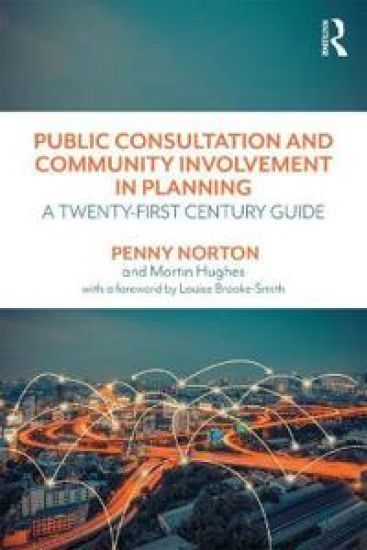
Public Consultation and Community Involvement in Planning
Public Consultation and Community Involvement in Planning is the definitive introduction to public consultation for developers, students and planners. The past decade has seen a complete transformation in consultation and community relations in the UK, from increased requirements to consult, to the introduction of neighbourhood planning and a revolution in online communication. Public Consultation and Community Involvement in Planning takes readers through consultation from the basics right through to emerging trends to demonstrate how a successful consultation process can benefit both the developers and the local community.The book begins with a definition of consultation and community involvement and an explanation of their role within the development process, before going on to clarify the legal, ethical, practical and ideological concerns to be addressed by the consultation process. Consultation strategy is explored step by step, and social media and online consultation is explored in detail. This is the first comprehensive guide to modern public consultation within the UK development sector and will be essential reading for developers, students and planners.
The Slow Guide to Melbourne

The Slow Guide to Melbourne

Martin Hughes; Simone Egger

Affirm Press
2010
pokkari
The Slow Guide to Melbourne is a lifestyle guide for Melburnians who want to slow down and live it up. Refashioned, refreshed and fully recharged, The Slow Guide is the perfect tonic in these accelerated times. An alternative to guidebooks, it celebrates all that is local, natural, traditional, sensory and most gratifying about living in this corner of the world.
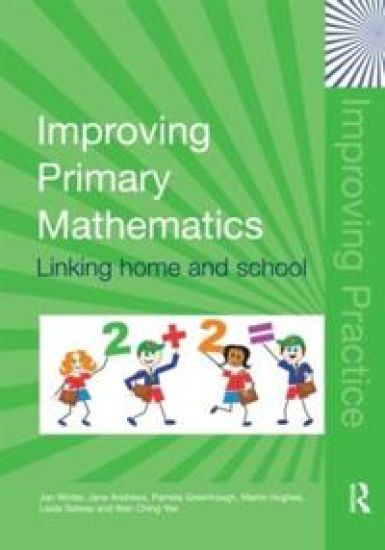
Improving Primary Mathematics

Improving Primary Mathematics

Jan Winter; Jane Andrews; Pamela Greenhough; Martin Hughes; Leida Salway; Wan Ching Yee

Routledge
2009
nidottu
Improving Primary Mathematics provides primary teachers with practical ideas about how to bring these two worlds closer to improve children’s mathematics learning. Using a number of fascinating case studies focusing on children’s experiences of mathematics both inside and outside the classroom, the book asks: How do children use mathematics in their everyday lives? How can teachers use this knowledge to improve children’s learning in school? What activities can teachers use with parents to help share the ways that schools teach mathematics? What can parents do to support their children’s learning of mathematics?Tried-and-tested practical suggestions for activities to support and encourage children’s learning of mathematics include: making videos to share teaching methods; children taking photos to show how they use mathematics at home; inviting parents into school to share in mathematics learning; and numeracy-based activities for children and their parents to do together at home. All those involved in planning, teaching and supporting primary mathematics will benefit from new insights into how learning at home and at school can be brought together to strengthen and improve children’s learning of mathematics.
How to Reach 'Hard to Reach' Children

How to Reach 'Hard to Reach' Children

Kathryn Pomerantz; Martin Hughes; David Thompson

John Wiley Sons Inc
2007
nidottu
It is now widely acknowledged that the most vulnerable and at risk children are children whom the current systems of education, care and health (especially mental health) are failing. The problem of dealing with 'at risk' children is also a problem of definition as one service provider s definition might often reflect an entirely different social reality from another's. Bringing years of collaborative expertise across many disciplines to the problem, the authors of How to Reach 'Hard to Reach' Children demonstrate how it is possible for all children to meet the following criteria of staying safe, enjoying and achieving, being healthy, making a positive contribution, and economic well-being.
Improving Primary Literacy

Improving Primary Literacy

Anthony Feiler; Jane Andrews; Pamela Greenhough; Martin Hughes; David Johnson; Mary Scanlan; Wan Ching Yee

Routledge
2007
nidottu
Parents can play an immensely important role in supporting their children's literacy learning at home, but how can primary teachers enlist the support of parents in helping children learn literacy?With a focus on improving children's literacy skills, this book provides practical answers to key questions that are directly relevant to all primary teachers and to many parents. It presents new ways of linking learning in home and school through a range of activities that can be used to share knowledge between children, parents and teachers. Activities include:teachers and children making videos to show parents how children learn literacy in schoolparents and children taking photos of the 'everyday' literacy they use outside schoolparents and teachers exchanging information through Home-School folders and diaries.Particular attention is given to ways of working with parents from a diverse range of family backgrounds reflecting the multi-ethnic nature of many schools today.The practical activities can easily be fitted into the day-to-day activities of busy classrooms and can provide crucial new ways of improving children's learning of literacy skills.
Young Children Learning

Young Children Learning

Barbara Tizard; Martin Hughes

JOHN WILEY AND SONS LTD
2003
nidottu
This fascinating account of an unusual research project challenges many assumptions about how young children learn and how best to teach them. In particular it turns upside-down the commonly held belief that professionals know better than parents how to educate and bring up children; and it throws doubt on the theory that working-class children underachieve at school because of a language deficit at home. The second edition of this bestselling text includes a new introduction by Judy Dunn. Fascinating account of an unusual research project challenges many assumptions about how young children. Turns upside-down the commonly held belief that professionals know better than parents how to educate and bring up children. Throws doubt on the theory that working-class children underachieve at school because of a language deficit at home. The authors' evidence is the children's own conversations which are quoted extensively and are delightful. The second edition of this bestselling text includes an introduction by Judy Dunn.
Mastering Systems Analysis Design

Mastering Systems Analysis Design

Martin Hughes

Red Globe Press
1999
nidottu
This book provides a practically-based introduction to the tools and techniques of computer systems analysis and design. The notation and terminology used is compatible with the latest version of the official UK government method, SSADM version 4.2+, but the order and delivery has been simplified to make it suitable as a first text in the subject for students on Computing, Information Systems and Business Studies degrees, especially those on modular courses.To emphasise the practical aspects of the topic, reference material and case studies are supported by an independent example, so that teaching and learning activities can progress independently but in parallel. This allows the material to be used by students and lecturers to support more advanced practical courses, especially where group activities and role-playing are involved. In addition, advice on professional practice and common skills are made where appropriate throughout the text.
Parents and Their Children's Schools

Parents and Their Children's Schools

Martin Hughes; Tricia Nash; Felicity Wikeley

Blackwell Publishers
1994
nidottu
The role of parents in their children's education is an issue of critical importance. Many of the changes currently underway in British schools have been justified on the grounds that they provide "what parents want". But what do parents really want? And how have they reacted to the changes already introduced in the UK, such as increased parental choice, the National Curriculum, and standardized assessment? Parents and Their Children's Schools is the first book to tackle this important issue in depth and will be important reading for all those involved in education. It presents the findings of a unique research study which looked directly at these questions. The study followed 150 children through Key Stage One (5-7 years) of the National Curriculum, culminating in the first standardized assessments of 7 year olds ever to take place in the UK. The book presents the views of their parents and teachers, obtained through regular in-depth interviews at crucial stages during this period. As such, it provides important insights into the changes currently underway in schools and their effects on parents. In a broader context, it makes a major contribution to our understanding of the fundamental relationship between parents and schools.
Children and Number

Children and Number

Martin Hughes

JOHN WILEY AND SONS LTD
1986
nidottu
The importance of learning mathematics is constantly stressed by educationalists and employers alike. Yet survey after survey shows that large numbers of children leave school lacking both competence and interest in mathematics. What is going wrong and what should be done about it? In Children and Number Martin Hughes proposes a new perspective on children's early attempts to understand mathematics. He describes the surprisingly substantial knowledge about number which children acquire naturally before they start school, and contrasts this with the difficulties presented by the formal written symbolism of mathematics in the classroom. He argues that children need to build links between their informal and their formal understanding of number, and shows what happens when these links are not made. Children and Number describes many novel ways in which young children can be helped to learn about number. The author shows that the written symbols children often invent for themselves are more meaningful to them than the symbols that they are taught. He presents simple number games for introducing children to mathematical symbols in ways they can appreciate and understand. Dr. Hughes also describes how the computer language LOGO can be adapted for young children, and shows the dramatic effect that LOGO can have on their mathematical understanding.