Kirjojen hintavertailu. Mukana 12 595 353 kirjaa ja 12 kauppaa.

Kirjailija

Martin J. Ball

Kirjat ja teokset yhdessä paikassa: 13 kirjaa, julkaisuja vuosilta 1992-2025, suosituimpien joukossa Phonetics for Speech Pathology. Vertaile teosten hintoja ja tarkista saatavuus suomalaisista kirjakaupoista.

Mukana myös kirjoitusasut: Martin J Ball

13 kirjaa

Kirjojen julkaisuhaarukka 1992-2025.

The Phonetics and Phonology of Approximants

The Phonetics and Phonology of Approximants

Martin J. Ball

UNIVERSITY OF TORONTO PRESS
2025
sidottu
Approximants are an especially interesting group of consonants. They consist of four separate types, traditionally termed lateral approximants, rhotic (or central) approximants, semi-vowels, and frictionless continuants. The contributors to The Phonetics and Phonology of Approximants examine the phonetics and phonology of this diverse group of sounds and also look at the question of whether they should, in fact, be grouped together. Part 1 of this four-part volume contains seven chapters dealing with the general characteristics of approximants: their articulatory features, acoustics, and perception, together with phonological and sociolinguistic aspects, concluding with surveys of approximant systems in the languages of the world and means of transcribing them phonetically. Part 2 has five chapters examining the acquisition of approximants (in Maltese, Spanish, Portuguese, and English) and the effects of speech disorders of different types on the production of these sounds. Part 3 describes approximant systems in a variety of the languages of the world, including several Indo-European languages but also examples of Dravidian, Semitic, Uralic, and Sinitic languages, and languages from Africa, South America, and Australia. The final part contains a single chapter that examines the approximant category phonetically and phonologically, asking whether the approximant consonant group is justified. The Phonetics and Phonology of Approximants offers a holistic yet detailed understanding of the fascinating concept of approximants and its many implications.
Phonetics for Speech Pathology

Phonetics for Speech Pathology

Martin J Ball; Nicola Bessell; Alice Lee; Orla Lowry; Joan Rahilly

Equinox Publishing Ltd
2020
pokkari
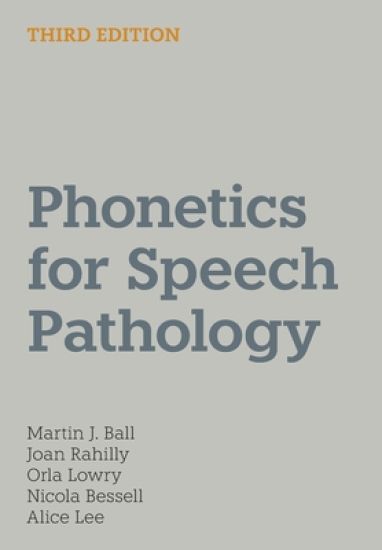
The new, third, edition of this indispensable guide for speech pathology and therapy students is completely updated, applying the results of the most recent research into speech disorders. Phonetics for Speech Pathology introduces normative aspects of phonetics and describes how these may go wrong in atypical speech, and the consequences when they do. The book deals with the three main areas of phonetics: articulatory, acoustic, and auditory, this last being often neglected in phonetics textbooks. The chapters are copiously illustrated, with most diagrams and figures newly drawn for this edition. Correct use of phonetic symbolizations and the importance of adequate transcription in the clinic are stressed, as is the use of instrumental analyses to augment impressionistic descriptions of speech. A range of modern instrumental techniques in speech analysis is covered, as are developments in hearing research including auditory processing disorder. The book concludes with an introduction to current models of speech production and perception.
Phonetics for Speech Pathology

Phonetics for Speech Pathology

Martin J. Ball; Joan Rahilly; Orla Lowry; Nicola Bessell; Alice Lee

Equinox Publishing Ltd
2020
sidottu
The new, third, edition of this indispensable guide for speech pathology and therapy students is completely updated, applying the results of the most recent research into speech disorders. Phonetics for Speech Pathology introduces normative aspects of phonetics and describes how these may go wrong in atypical speech, and the consequences when they do. The book deals with the three main areas of phonetics: articulatory, acoustic, and auditory, this last being often neglected in phonetics textbooks. The chapters are copiously illustrated, with most diagrams and figures newly drawn for this edition. Correct use of phonetic symbolizations and the importance of adequate transcription in the clinic are stressed, as is the use of instrumental analyses to augment impressionistic descriptions of speech. A range of modern instrumental techniques in speech analysis is covered, as are developments in hearing research including auditory processing disorder. The book concludes with an introduction to current models of speech production and perception.
Mutation in Welsh

Mutation in Welsh

Martin J. Ball; Nicole Müller

Routledge
2016
nidottu
The Initial Consonant Mutation system of Welsh is unique to Indo-European languages and has been the subject of much theoretical research. The multi-faceted nature of the phenomenon demands multi-dimensional treatment and this uniquely comprehensive book provides an integrated overview of this important feature from a wide linguistic viewpoint. In Welsh, Initial Consonant Mutation has implications for historical and comparative analyses, phonetic description, phonological theory, syntactic theory, and the interfaces between phonetics and phonology, morphology and phonology, and phonology and syntax. It also requires examination from semantic, psycholinguistic and sociolinguistic perspectives. This study, therefore, brings together a variety of approaches to a wide range of levels of linguistic analysis, all concentrated on one unusual linguistic feature. A detailed review of past research, together with an exploration of recent theoretical advances in many areas, makes this an indispensable book for departments of Celtic Studies and all scholars of comparative linguistics.
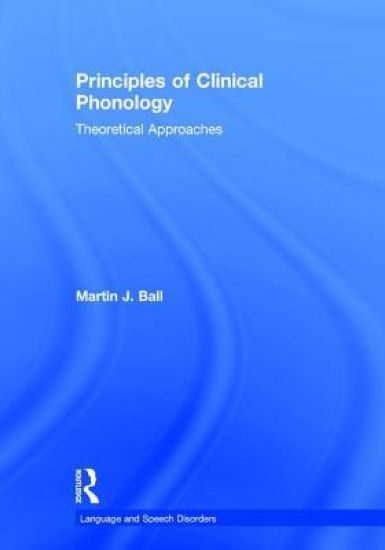
Principles of Clinical Phonology

Principles of Clinical Phonology

Martin J. Ball

Routledge
2015
sidottu
Those working on the description of disordered speech are bound to be also involved with clinical phonology to some extent. This is because interpreting the speech signal is only the first step to an analysis. Describing the organization and function of a speech system is the next step. However, it is here that phonologists differ in their descriptions, as there are many current approaches in modern linguistics to undertaking phonological analyses of both normal and disordered speech.Much of the work in theoretical phonology of the last fifty years or so is of little use in either describing disordered speech or explaining it. This is because the dominant theoretical approach in linguists as a whole attempts elegant descriptions of linguistic data, not a psycholinguistic model of what speakers do when they speak. The latter is what is needed in clinical phonology. In this text, Martin J. Ball addresses these issues in an investigation of what principles should underlie a clinical phonology. This is not, however, simply another manual on how to do phonological analyses of disordered speech data, though examples of the application of various models of phonology to such data are provided. Nor is this a guide on how to do therapy, though a chapter on applications is included. Rather, this is an exploration of what theoretical underpinnings are best suited to describing, classifying, and treating the wide range of developmental and acquired speech disorders encountered in the speech-language pathology clinic.
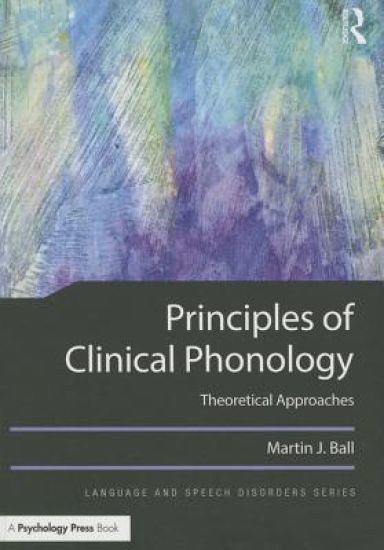
Principles of Clinical Phonology

Principles of Clinical Phonology

Martin J. Ball

Routledge
2015
nidottu
Those working on the description of disordered speech are bound to be also involved with clinical phonology to some extent. This is because interpreting the speech signal is only the first step to an analysis. Describing the organization and function of a speech system is the next step. However, it is here that phonologists differ in their descriptions, as there are many current approaches in modern linguistics to undertaking phonological analyses of both normal and disordered speech.Much of the work in theoretical phonology of the last fifty years or so is of little use in either describing disordered speech or explaining it. This is because the dominant theoretical approach in linguists as a whole attempts elegant descriptions of linguistic data, not a psycholinguistic model of what speakers do when they speak. The latter is what is needed in clinical phonology. In this text, Martin J. Ball addresses these issues in an investigation of what principles should underlie a clinical phonology. This is not, however, simply another manual on how to do phonological analyses of disordered speech data, though examples of the application of various models of phonology to such data are provided. Nor is this a guide on how to do therapy, though a chapter on applications is included. Rather, this is an exploration of what theoretical underpinnings are best suited to describing, classifying, and treating the wide range of developmental and acquired speech disorders encountered in the speech-language pathology clinic.
Phonology for Communication Disorders

Phonology for Communication Disorders

Martin J. Ball; Nicole Muller; Ben Rutter

Psychology Press
2009
nidottu
This textbook describes the approaches to phonology that are most relevant to communication disorders. It examines schools of thought in theoretical phonology, and their relevance to description, explanation and remediation in the clinical context.A recurring theme throughout the book is the distinction between phonological theories that attempt elegant, parsimonious descriptions of phonological data, and those that attempt to provide a psycholinguistic model of speech production and perception.This book introduces all the relevant areas of phonology to the students and practitioners of speech-language pathology and is a companion volume to the authors’ Phonetics for Communication Disorders.
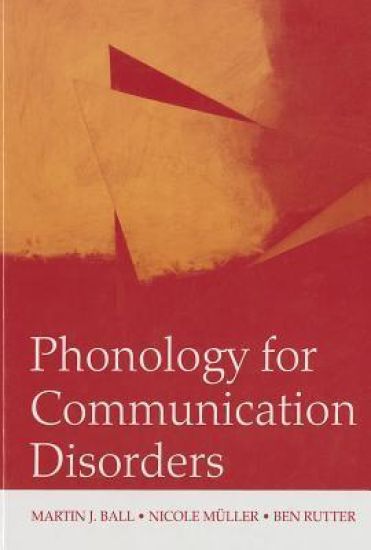
Phonology for Communication Disorders

Phonology for Communication Disorders

Martin J. Ball; Nicole Muller; Ben Rutter

Psychology Press
2009
sidottu
This textbook describes the approaches to phonology that are most relevant to communication disorders. It examines schools of thought in theoretical phonology, and their relevance to description, explanation and remediation in the clinical context.A recurring theme throughout the book is the distinction between phonological theories that attempt elegant, parsimonious descriptions of phonological data, and those that attempt to provide a psycholinguistic model of speech production and perception.This book introduces all the relevant areas of phonology to the students and practitioners of speech-language pathology and is a companion volume to the authors’ Phonetics for Communication Disorders.
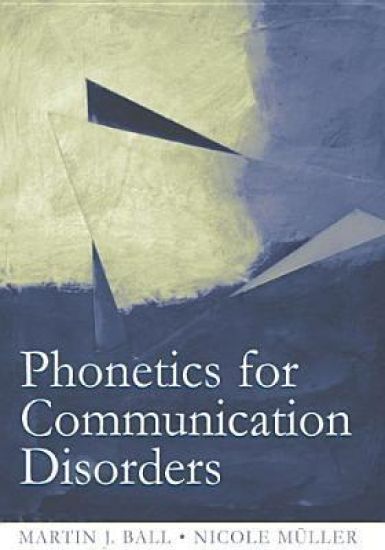
Phonetics for Communication Disorders

Phonetics for Communication Disorders

Martin J. Ball; Nicole Muller

Psychology Press
2005
sidottu
This comprehensive textbook offers a basic introduction to phonetics in an applied systematic presentation that equips the communication disorders student to deal with the wide range of speech types that will be encountered in a clinic. While the major discussion is articulatory, speech acoustics are also examined. Illustrations of sample spectrograms appear in tandem with the more traditional articulatory drawings. Downloadable resources of sound examples accompany the textbook. This comprehensive textbook offers a basic introduction to phonetics in an applied systematic presentation that equips the communication disorders student to deal with the wide range of speech types that will be encountered in a clinic. While the major discussion is articulatory, speech acoustics
Phonetics for Communication Disorders

Phonetics for Communication Disorders

Martin J. Ball; Nicole Muller

Psychology Press
2005
nidottu
This comprehensive textbook offers a basic introduction to phonetics in an applied systematic presentation that equips the communication disorders student to deal with the wide range of speech types that will be encountered in a clinic. While the major discussion is articulatory, speech acoustics are also examined. Illustrations of sample spectrograms appear in tandem with the more traditional articulatory drawings. Downloadable resources of sound examples accompany the textbook. This comprehensive textbook offers a basic introduction to phonetics in an applied systematic presentation that equips the communication disorders student to deal with the wide range of speech types that will be encountered in a clinic. While the major discussion is articulatory, speech acoustics
Phonetics

Phonetics

Martin J Ball

Hodder Education
1999
nidottu
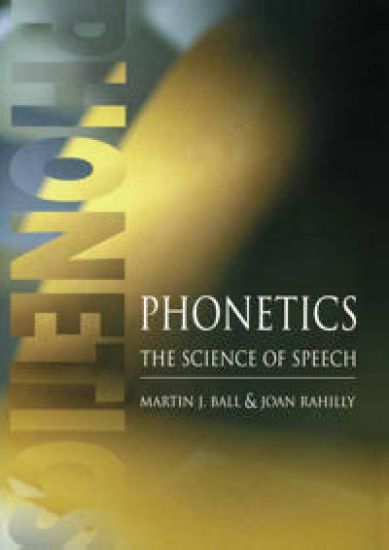
In their comprehensive new introduction to phonetics, Ball and Rahilly offer a detailed explanation of the process of speech production, from the anatomical initiation of sounds and their modification in the larynx, through to the final articulation of vowels and consonants in the oral and nasal tracts. This textbook is one of the few to give a balanced account of segmental and suprasegmental aspects of speech, showing clearly that the communication chain is incomplete without accurate production of both individual speech sounds (segmental features) and aspects such as stress and intonation (suprasegmental features). Throughout the book the authors provide advice on transcription, primarily using the International Phonetic Alphabet (IPA). Students are expertly guided from basic attempts to record speech sounds on paper, to more refined accounts of phonetic detail in speech. The authors go on to explain acoustic phonetics in a manner accessible both to new students in phonetics, and to those who wish to advance their knowledge of key pursuits in the area, including the sound spectrograph. They describe how speech waves can be measured, as well as considering how they are heard and decoded by listeners, discussing both physiological and neurological aspects of hearing and examining the methods of psychoacoustic experimentation. A range of instrumentation for studying speech production is also presented. The next link is acoustic phonetics, the study of speech transmission. Here the authors introduce the basic concepts of sound acoustics and the instrumentation used to analyse the characteristics of speech waves. Finally, the chain is completed by examining auditory phonetics, and providing a fascinating psychoacoustic experimentation, used to determine what parts of the speech signal are most crucial for listener understanding. The book concludes with a comprehensive survey and description of modern phonetic instrumentation, from the sound spectrograph to magnetic resonance imaging (MRI).
Mutation in Welsh

Mutation in Welsh

Martin J. Ball; Nicole Müller

Routledge
1992
sidottu
The Initial Consonant Mutation system of Welsh is unique to Indo-European languages and has been the subject of much theoretical research. The multi-faceted nature of the phenomenon demands multi-dimensional treatment and this uniquely comprehensive book provides an integrated overview of this important feature from a wide linguistic viewpoint. In Welsh, Initial Consonant Mutation has implications for historical and comparative analyses, phonetic description, phonological theory, syntactic theory, and the interfaces between phonetics and phonology, morphology and phonology, and phonology and syntax. It also requires examination from semantic, psycholinguistic and sociolinguistic perspectives. This study, therefore, brings together a variety of approaches to a wide range of levels of linguistic analysis, all concentrated on one unusual linguistic feature. A detailed review of past research, together with an exploration of recent theoretical advances in many areas, makes this an indispensable book for departments of Celtic Studies and all scholars of comparative linguistics.