Kirjojen hintavertailu. Mukana 12 390 323 kirjaa ja 12 kauppaa.

Kirjailija

Martin Mace

Kirjat ja teokset yhdessä paikassa: 11 kirjaa, julkaisuja vuosilta 2014-2025, suosituimpien joukossa The Sniper Anthology. Vertaile teosten hintoja ja tarkista saatavuus suomalaisista kirjakaupoista.

11 kirjaa

Kirjojen julkaisuhaarukka 2014-2025.

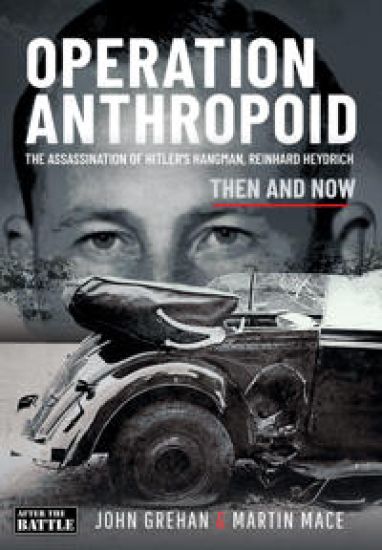
Operation Anthropoid

Operation Anthropoid

John Grehan; Martin Mace

PEN SWORD BOOKS LTD
2025
sidottu
Czechoslovakia, a vital European economy, was dismantled by Nazi Germany. The Sudetenland was annexed, and the rest of the nation became the Protectorate of Bohemia and Moravia. Hitler replaced Reichsprotektor Konstantin von Neurath with Reinhard Heydrich in September 1941 due to unmet production quotas. Known as the "Butcher of Prague," Heydrich imposed martial law, leading to widespread arrests and executions. In response, the Czechoslovak government-in-exile, led by Edvard Beneš, devised Operation Anthropoid to assassinate Heydrich. Josef Gabcík and Jan Kubiš, members of the exiled Czech Army trained by the British Special Operations Executive, parachuted into Czechoslovakia on 29 December 1941. Despite Heydrich’s suppression of the Czech resistance, local supporters assisted them. On 27 May 1942, Gabcík and Kubiš attacked Heydrich as his car slowed at a bend. Gabcík’s Sten gun jammed, but Kubiš’s grenade wounded Heydrich. Though they escaped, Heydrich died eight days later.
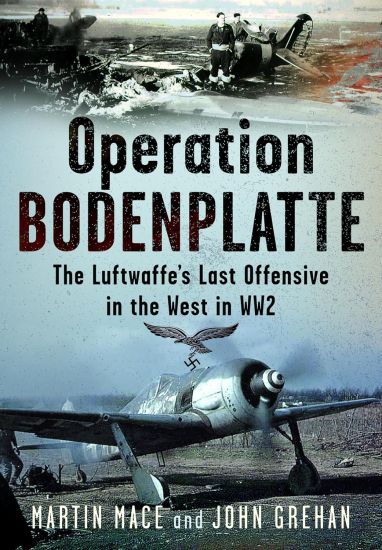
Operation Bodenplatte

Operation Bodenplatte

Martin Mace; John Grehan

PEN SWORD BOOKS LTD
2025
sidottu
Hitler’s Ardennes Offensive, his last great throw of the dice, was stagnating. After the initial German successes, the Allies had rallied. In a desperate bid to recover the momentum, the Luftwaffe aimed to gain control of the air by launching a major attack upon Allied airfields in the Low Countries – Operation Bodenplatte. On 1 January 1945, more than 800 fighters and fighter-bombers, predominantly Focke-Wulf Fw 190s and Messerschmitt Bf 109s, were despatched in this low-level, dawn raid on Allied airfields in Belgium and the Netherlands. The object was to destroy or cripple as many Allied aircraft, hangars and airstrips as possible. Generalleutnant Adolf Galland, the man in charge of Germany’s fighter force and responsible for the original plans for Operation Bodenplatte, saw that the Allies had accumulated such a strong force of aircraft that there must be heavy congestion on the airfields used by the Allies. As the Luftwaffe rarely risked daylight raids, he hoped to take the Allies by surprise and catch their aircraft on the ground in a single massive strike. Galland’s plan worked. Surprise was complete, and many Allied aircraft were destroyed before they could be scrambled. Allied pilots and aircrew ran or dived for cover as the German fighters swept over the airfields of Duerne at Antwerp, Evere in Brussels, Eindhoven, Ghent and another twelve bases of the RAF’s 2nd Tactical Air Force, and the American Eighth and Ninth Air Forces. But not all the attacks were as successful as Galland had hoped. At some airfields the Allied squadrons were absent, already engaged in operations and at others powerful anti-aircraft batteries took a heavy toll of the attackers. As Galland, explained: ‘In Unfamiliar conditions and with insufficient training and combat experience, our numerical strength had no effect. It was decimated while in transfer, on the ground, in large air battles ... and was finally destroyed.’ Figures vary enormously, though it has been recorded that 224 Allied aircraft were destroyed (of which 144 were RAF) with a further eighty-four damaged beyond unit repair. For its part, the Luftwaffe lost sixty-two aircraft to Allied fighters and 172 to anti-aircraft guns – losses that it never really replaced, particularly in terms of aircrew. In Galland’s words, the Luftwaffe ‘received its death blow at the Ardennes offensive’. Told through a detailed narrative and a unique collection of dramatic photographs, the story of the last major air battle of the Second World War, is portrayed in vivid detail allowing the reader to see the destruction and devastation of the German attacks – and the crippling losses the Luftwaffe sustained.
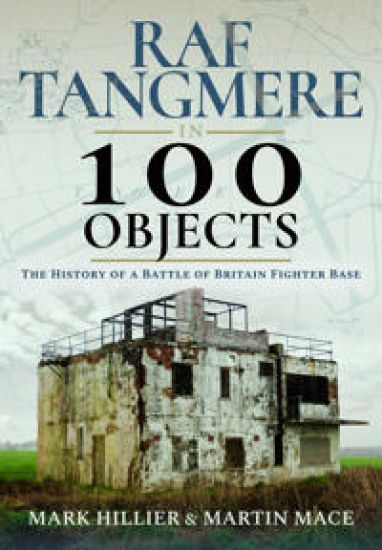
RAF Tangmere in 100 Objects

RAF Tangmere in 100 Objects

Mark Hillier; Martin Mace

Frontline Books
2025
sidottu
On 16 November 1916, Lieutenant Geoffrey Dorman took off from Shoreham in a Royal Aircraft Factory FE2b with the intention of heading West along the South Coast to the airfield at Gosport. Not long into the flight, however, a dense sea fog formed and as his engine was also ‘misbehaving’, Dorman decided ‘it would be best to try and land’. Spotting a suitable area of farmland, Lieutenant Dorman put his aircraft down near the West Sussex village of Tangmere. Evidently aware of what he had stumbled across, Dorman’s subsequent report on the incident included a suggestion that the site would be eminently suitable for an aerodrome. Within twelve months, construction had started – and so was born the legend of RAF Tangmere. Over the years that followed, Tangmere became one of the best known and strategically most important fighter stations in the United Kingdom. From its connections with the highly-polished air displays given at various RAF pageants in the 1920s and 1930s, through to numerous royal visits, or for its role in the post-war record-breaking speed flights or as a Cold War air-sea rescue base, Tangmere was a vital part of the nation’s defences. It is, however, for its service on the front line in the Second World War that Tangmere is best remembered. Not only was the airfield itself bombed and blitzed, its aircraft and pilots also found themselves in the thick of the fighting in the Battle of Britain, before turning to an increasingly offensive role whilst led by Wing Commander Douglas Bader. Operation Jubilee, the Combined Operations raid on Dieppe, and the D-Day landings in 1944 all required RAF Tangmere to play its part. As well as overt offensive sorties, Tangmere was involved in the secretive world of covert warfare, when, during the full moon periods, ‘A’ Flight of 161 (Special Duties) Squadron would move its Lysanders forward to Tangmere. As well as delivering SOE agents, wireless operators, wireless equipment and weapons to assist the Resistance, these aircraft often returned with agents, VIPs and even Allied escapers and evaders. In this highly-illustrated publication, the renowned aviation historian and author Mark Hillier explores the development and role of RAF Tangmere from 1916 until its closure in 1970, along with some of the fascinating individuals associated with it, through an intriguing collection of 100 objects.
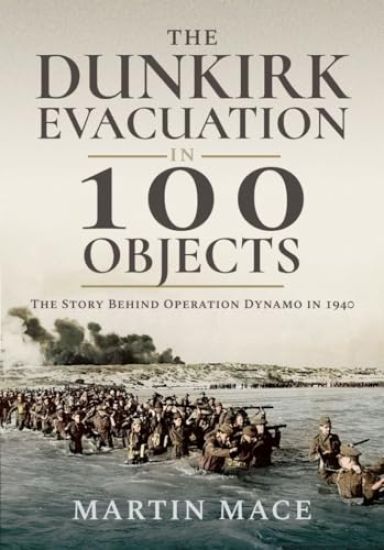
The Dunkirk Evacuation in 100 Objects

The Dunkirk Evacuation in 100 Objects

Martin Mace; Joshua Levine

PEN SWORD BOOKS LTD
2025
nidottu
On 26 May 1940, the Admiralty issued the directive for Operation Dynamo, aiming to rescue the British Expeditionary Force (BEF) from Dunkirk. Initially, they expected to evacuate only 45,000 men within two days, anticipating that enemy action would soon end the operation. However, the outcome exceeded all expectations. Between 26 May and 4 June 1940, a fleet of naval and civilian vessels evacuated 338,682 men, a feat considered impossible. The scale of this success prompted The New York Times to declare Dunkirk a word of reverence. The British Army’s Quartermaster-General called it "unprecedented in the history of war." The Dunkirk evacuation has been immortalized in numerous books and films, becoming one of the defining moments of British history. Today, many artifacts from the operation remain, including shipwrecks, rifles, and photographs, each serving as poignant reminders of the event. Through 100 objects, this book tells the powerful story of The Miracle of Dunkirk, bringing the past to life by showcasing these historical remnants and memorials.
Great War Artefacts in 100 Objects

Great War Artefacts in 100 Objects

Martin Mace

Frontline Books
2024
sidottu
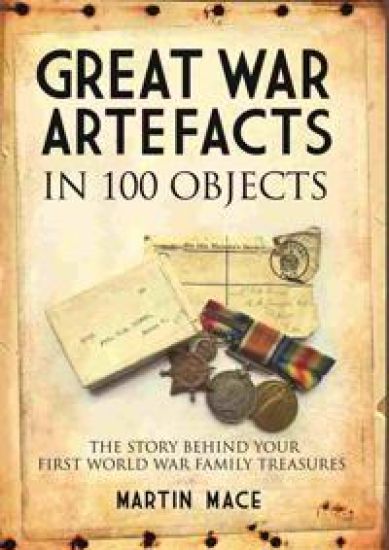
The First World War touched every community and almost every home in the UK. In its wake, it left behind memories and mementos of loved ones. For every casualty there was a scar, for every death there was grief. Often the only tangible connection with those who fought, whether they survived the horrors of that brutal conflict or remained in some foreign field, are the artefacts still held, so dearly, by their families. Some might still possess the death pennies, or memorial plaques, or fathers, uncles or grandfathers sent by a grateful government, or the terrible message that told of a brother 'missing believed killed'. Not all the items held by families are sad reminders of the past. The Princess Mary Gift Fund box, sent to the men at the front for Christmas 1914, for example, contained such luxuries as chocolate and tobacco, and brought great pleasure to the men in the trenches. Items of uniforms, photographs, and, most poignant and personal of all, the letters written from the front, present the human side of an inhuman war, in a deeply moving snapshot of the past.The full-colour photographs of each 100 items are accompanied by detailed explanations of the object and the people and events which make them so special - not just to the families concerned, but to all those who hold such artefacts in cupboards, on mantelpieces or shelves, or in display cases. The memory of the men and women they represent lives on through the items they have left behind.
Gallipoli and the Dardanelles 1915-1916

Gallipoli and the Dardanelles 1915-1916

Martin Mace; John Grehan

PEN SWORD BOOKS LTD
2022
nidottu
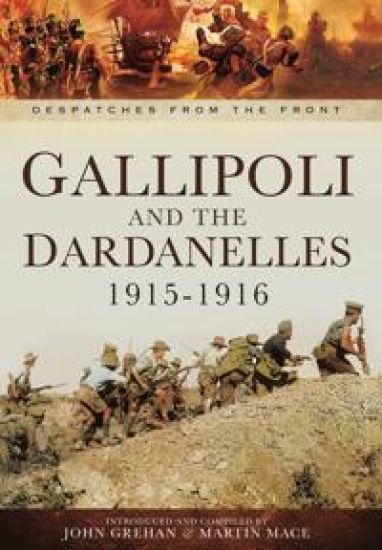
The fighting in the Gallipoli or Dardanelles campaign began in 1915 as a purely naval affair undertaken partly at the instigation of Winston Churchill, who, as First Lord of the Admiralty, had entertained plans of capturing the Dardanelles as early as September 1914. It was the Royal Navy that bore the brunt of the initial action, supported by the French and with minor contributions from, the Russian and Australian fleets. On 3 November 1914, Churchill ordered the first British attack on the Dardanelles following the opening of hostilities between Ottoman and Russian empires. The British attack was carried out by battle cruisers of Carden's Mediterranean Squadron, HMS Indomitable and HMS Indefatigable, as well as two French battleships. This attack actually took place before a formal declaration of war had been made by Britain against the Ottoman Empire. Royal Navy submarines had already been operating in the region. When the naval operations failed, a full invasion of the Gallipoli Peninsula was launched. The bitter fighting that followed resonated profoundly among all nations involved. The campaign was the first major battle undertaken by the Australian and New Zealand Army Corps (ANZAC), and is often considered to mark the birth of national consciousness in both of these countries. For the Turkish forces it would prove a major victory.
Unearthing Churchill's Secret Army

Unearthing Churchill's Secret Army

Martin Mace; John Grehan

Pen Sword Military
2021
nidottu
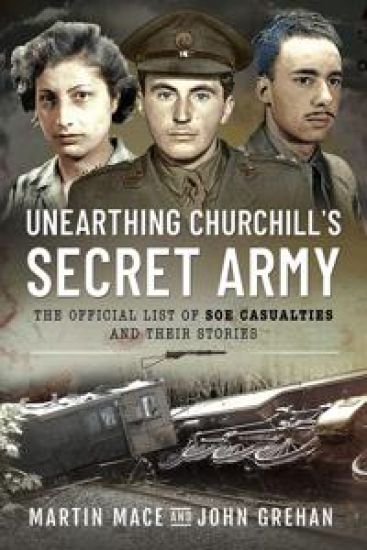
Special Operations Executive was one of the most secretive organizations of the Second World War, its activities cloaked in mystery and intrigue. The fate, therefore, of many of its agents was not revealed to the general public other than the bare details carved with pride upon the headstones and memorials of those courageous individuals. Then in 2003, the first batch of SOE personal files was released by The National Archives. Over the course of the following years more and more files were made available. Now, at last, it is possible to tell the stories of all those agents that died in action. These are stories of bravery and betrayal, incompetence and misfortune, of brutal torture and ultimately death. Some died when their parachutes failed to open, others swallowed their cyanide capsules rather than fall into the hands of the Gestapo, many died in combat with the enemy, most though were executed, by hanging, by shooting and even by lethal injection. The bodies of many of the lost agents were never found, destroyed in the crematoria of such places as Buckenwald, Mauthausen and Natzweiler, others were buried where they fell. All of them should be remembered as having undertaken missions behind enemy lines in the knowledge that they might never return.
The Battle for Norway, 1940-1942

The Battle for Norway, 1940-1942

John Grehan; Martin Mace

Pen Sword Military
2020
nidottu
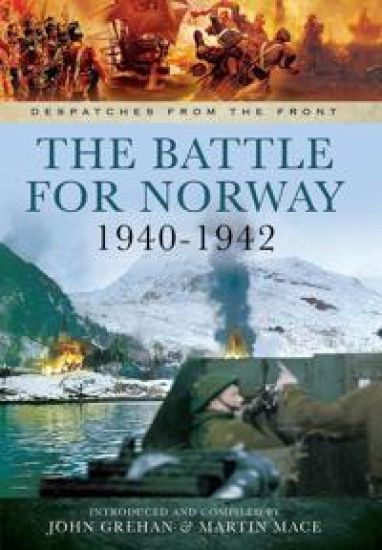
Despatches in this volume include that on the first and second battles of Narvik in 1940; the despatch on operations in central Norway 1940, by Lieutenant General H.R.S. Massy, Commander-in-Chief, North West Expeditionary Force; Despatch on operations in Northern Norway between April and June 1940; the despatch on carrier-borne aircraft attacks on Kirkenes (Norway) and Petsamo (Finland) in 1941, by Admiral Sir John C. Tovey; the despatch on the raid on military and economic objectives in the Lofoten Islands (Norway) in March 1941, by Admiral Sir John C. Tovey, Commander-in-Chief, Home Fleet; and the despatch on the raid on military and economic objectives in the vicinity of Vaagso Island (Norway) in December 1941, by Admiral Sir John C. Tovey. This unique collection of original documents will prove to be an invaluable resource for historians, students and all those interested in what was one of the most significant periods in British military history.
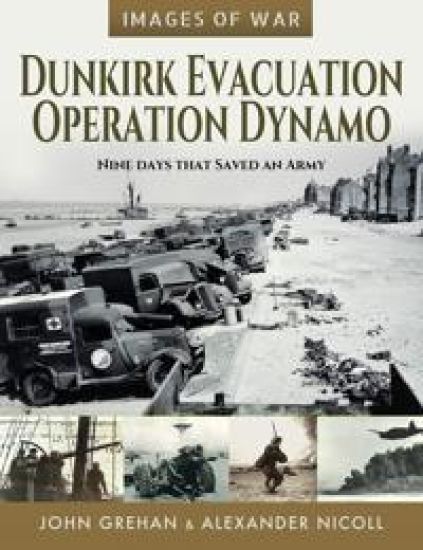
Dunkirk Evacuation - Operation Dynamo

Dunkirk Evacuation - Operation Dynamo

Martin Mace; John Grehan

Frontline Books
2020
nidottu
The miracle' of Dunkirk is one of the most inspiring stories of all time. The British Expeditionary Force had been all but surrounded, and, with the French armies collapsing on all sides, it appeared that Britain was about to suffer the heaviest defeat in its history. When Winston Churchill's War Cabinet finally accepted that the Battle of France had been lost, preparations were made to try and rescue as many soldiers as possible from one of the few ports left open to the British Expeditionary Force - Dunkirk. So rushed and chaotic was the retreat to the Channel coast, with thousands of guns, vehicles and tanks being abandoned, there was little time for soldiers to consider taking photographs of the shocking scenes of death and destruction which surrounded them. Yet images do exist of the ships and boats of all descriptions which braved the bombs and guns of the German Air Force to rescue Britain's only field army from the clutches of Hitler's panzer divisions. One man in particular, Sub-Lieutenant John Rutherford Crosby, a member of the crew of the minesweeper, and converted Clyde paddle steamer, HMS Oriole, left a legacy of dramatic images. These include the never-to-be-forgotten scenes of long lines of tired and anxious troops stretching into the sea and of bombs exploding on the packed beaches - all with his own personal little camera. Other images in this book paint a vivid and memorable picture, as no words ever could, of the greatest evacuation of troops under fire.
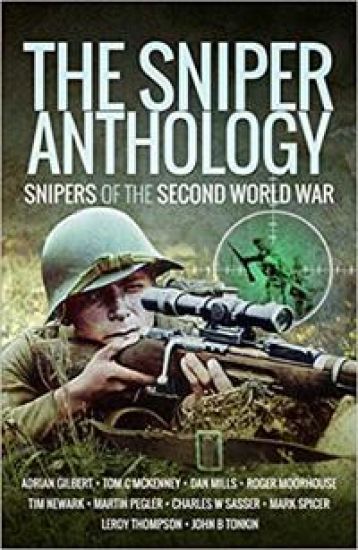
The Sniper Anthology

The Sniper Anthology

Martin Mace

Frontline Books
2019
nidottu
Revered by some as the ultimate warrior, and condemned by others as ruthless assassins, the combat sniper is more than just a crack shot. These are highly disciplined individuals, calm professionals skilled in marksmanship, reconnaissance and camouflage. During the Second World War these lethal fighters were deployed by all sides to deadly effect. This collection of biographies written by sniper experts from around the world explores the careers of the top marksmen between 1939 and 1945. As well as providing incisive technical information, each author offers a glimpse of the character and personality of their chosen sniper, giving them a human face that is often missing in standard portrayals. These gripping, in-depth narratives go beyond the cursory treatment in existing histories and will be essential reading for anyone wanting to learn about the role and technique of the sniper during the Second World War. The impressive list of contributors to The Sniper Anthology includes Mark Spicer writing on Harry M. Furness, the last surviving British sniper who went ashore on D-Day; Martin Pegler, who details the famous Soviet sniper Vassili Zaitsev; Adrian Gilbert on the Wehrmacht sharpshooter and lone wolf Sepp Allerberger; and Roger Moorhouse on Simo Hayha, the man with the most confirmed kills in any major war.
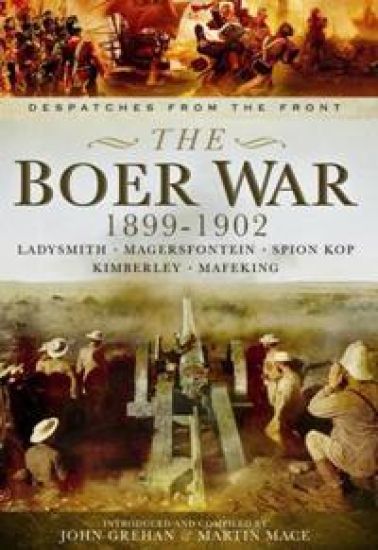
Boer War 1899-1902

Boer War 1899-1902

John Grehan; Martin Mace

Pen Sword Military
2014
sidottu
Fought between the British Empire and the two independent Boer republics, the Orange Free State and the Transvaal Republic, the First Boer War (1880-1881) was a rebellion by the Boers (farmers) against British rule in the Transvaal that re-established their independence. The engagements that it involved, such as they were, were small and involved few casualties. More commonly referred to as just the Boer War, the Second Boer War (1899-1902), by contrast, was a lengthy conflict involving large numbers of troops from many British possessions (up to as many as 500,000 men), which ended with the conversion of the Boer republics into British colonies. The British defeated the Transvaal and the Orange Free State, first in open warfare and then in a long and bitter guerrilla campaign. British losses were high due to both disease and combat. It was also the war conflict which saw Winston Churchill first achieve household fame. The war had a lasting effect on the region and on British domestic politics. For Britain, the Boer War was the longest, the most expensive (GBP200 million), and the bloodiest conflict between 1815 and 1914, lasting three months longer and resulting in higher British casualties than the Crimean War. This unique collection of original documents will prove to be an invaluable resource for historians, students and all those interested in what was one of the most significant periods in British military history.