Kirjojen hintavertailu. Mukana 12 595 353 kirjaa ja 12 kauppaa.

Kirjailija

Martin Marty

Kirjat ja teokset yhdessä paikassa: 7 kirjaa, julkaisuja vuosilta 2003-2020, suosituimpien joukossa Visions of Utopia. Vertaile teosten hintoja ja tarkista saatavuus suomalaisista kirjakaupoista.

7 kirjaa

Kirjojen julkaisuhaarukka 2003-2020.

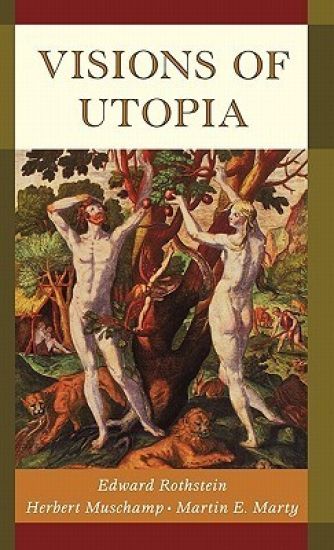
Visions of Utopia

Visions of Utopia

Edward Rothstein; Herbert Muschamp; Martin Marty

Oxford University Press Inc
2003
sidottu
From the sex-free paradise of the Shakers to the worker's paradise of Marx, utopian ideas seem to have two things in common--they all are wonderfully plausible at the start and they all end up as disasters. In Visions of Utopia, three leading cultural critics--Edward Rothstein, Martin Marty, and Herbert Muschamp--look at the history of utopian thinking, exploring why they fail and why they are still worth pursuing. Edward Rothstein, New York Times cultural critic, contends that every utopia is really a dystopia--a disaster in the making--one that overlooks the nature of humanity and the impossibilities of paradise. He traces the ideal in politics and technology and suggests that only in art--and especially in music--does the desire for utopia find satisfaction. Martin Marty examines several models of utopia--from Thomas More's to a 1960s experimental city that he helped to plan--to show that, even though utopias can never be realized, we should not be too quick to condemn them. They can express dimensions of the human spirit that might otherwise be stifled and can plant ideas that may germinate in more realistic and practical soil. And Herbert Muschamp, the New York Times architectural critic, looks at Utopianism as exemplified in two different ways: the Buddhist tradition and the work of visionary Viennese architect Adolph Loos. Utopian thinking embodies humanity's noblest impulses, yet it can lead to horrors such as Nazi Germany and the Soviet Regime. In Visions of Utopia, these leading thinkers offer an intriguing look at the paradoxes of paradise.
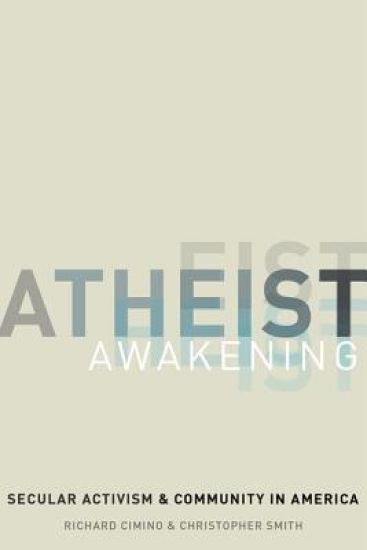
Atheist Awakening

Atheist Awakening

Richard Cimino; Christopher Smith; Martin Marty

Oxford University Press Inc
2015
sidottu
Surveys over the last twenty years have seen an ever-growing number of Americans disclaim religious affiliations and instead check the "none" box. In the first sociological exploration of organized secularism in America, Richard Cimino and Christopher Smith show how one segment of these "nones" have created a new, cohesive atheist identity through activism and the creation of communities. According to Cimino and Smith, the new upsurge of atheism is a reaction to the revival of religious fervor in American politics since 1980. Feeling overlooked and underrepresented in the public sphere, atheists have employed a wide variety of strategiessome evangelical, some based on identity politicsto defend and assert themselves against their ideological opponents. These strategies include building and maintaining communities, despite the absence of the kinds of shared rituals, texts, and laws that help to sustain organized religions. Drawing on in-depth interviews with self-identified atheist, secularist, and humanist leaders and activists, as well as extensive observations and analysis of secular gatherings and media, Cimino and Smith illustrate how atheists organize and align themselves toward common goals, and how mediaparticularly web-based mediahave proven invaluable in connecting atheists to create a powerful virtual community. Cimino and Smith show that, in addition to the Internet, secularists draw on new forms of ritual to build their burgeoning community. This groundbreaking study will be essential reading for anyone seeking to understand the growing atheist movement in America.
Do Real Men Pray?

Do Real Men Pray?

Charles Lippy; Martin Marty

University of Tennessee Press
2005
sidottu
Spirituality has long been regarded as a haven of the female gender?and a componentequally deficient in men?particularly among the white male Protestant population.So, it was with much surprise that the American media greeted the seeminglysudden explosion of the Promise Keepers movement with its emotional stadium ralliesand vivid images of praying men openly recommitting to their faith. The shatteringof a long-held stereotype brought into question the veracity behind long-held perceptions of men and the depth and nature of their piety.In Do Real Men Pray?, author Charles H. Lippy argues that, in fact, American menhave always exhibited a deep and profound spirituality. He challenges the popular beliefthat men somehow cannot match the profundity found in female spirituality. Instead, Lippy lays out a convincing counterargument that the United States has a long and pronounced history of male spirituality.Do Real Men Pray? takes the reader through a chronological history of male spiritualityfrom the colonial period to the present day. Along the way, Lippy introduces readers tosix distinct, powerful images that manifested themselves as the ideal of American Protestant identity at different periods in history: the dutiful patriarch, the gentleman entrepreneur, the courageous adventurer, the efficient businessman, the positive thinker (inspired by the ubiquitous Norman Vincent Peale), and the modern-day faithful leader. From the piety of Cotton Mather to the ?muscular Christianity? of the early twentieth century, this book reveals a clear understanding of the obvious effect spirituality had on men.This book is the first to address thematically the history of male spirituality in theUnited States and is a rich, well-documented addition to the field of religious studies.Do Real Men Pray? will appeal to anyone with an interest in religious history in theUnited States as well as anyone interested in gender studies.
Mormonism in Dialogue with Contemporary Christian Theologies
Misunderstanding, misrepresentation, and ensuing acrimony have too often characterized Mormon relations with other Christians. In pursuing "discussions that lead to understanding," this volume brings together, for the first time, a broad range of scholars from Mormon and other Christian traditions. Replacing polemics and apologetics with dialogue, these exchanges show how the full spectrum of contemporary theologies can be informed by uniquely Mormon ideas, and correlatively, how Mormon thought can be illuminated through the study of key ideas of the foremost theologians of the twentieth and twenty-first centuries, including Karl Barth, Reinhold Niebuhr, Paul Tillich, Langdon Gilkey, Robert McAfee Brown, Clark Pinnock, Rosemary Radford Reuther, Linda Thomas, Dwight Hopkins, David Griffin, and David Tracy. Besides providing succinct but illuminating presentations of basic Christian theological topics, this work discloses Mormon perspectives, virtually unknown in academia, on these topics. In content, as well as methodology, this book provides promising contexts for mainline Christian-Mormon conversations in particular and an exemplary model for intra-faith dialogue in general.