
Kirjailija
Martin Pohl
Kirjat ja teokset yhdessä paikassa: 11 kirjaa, julkaisuja vuosilta 2010-2026, suosituimpien joukossa Eindimensionale Analysis: Ein Lernbuch. Vertaile teosten hintoja ja tarkista saatavuus suomalaisista kirjakaupoista.
11 kirjaa
Kirjojen julkaisuhaarukka 2010-2026.

Particles, Fields, Space-Time: From Thomson’s Electron to Higgs’ Boson explores the concepts, ideas, and experimental results that brought us from the discovery of the first elementary particle in the end of the 19th century to the completion of the Standard Model of particle physics in the early 21st century. The book concentrates on disruptive events and unexpected results that fundamentally changed our view of particles and how they move through space-time. It separates the mathematical and technical details from the narrative into focus boxes, so that it remains accessible to non-scientists, yet interesting for those with a scientific background who wish to further their understanding. The text presents and explains experiments and their results wherever appropriate. This book is of interest to a general audience but also to students studying particle physics, physics teachers at all levels, and scientists with a recreational curiosity towards the subject. For this second edition, the complete text has been thoroughly revised. A description of plans for new accelerator facilities has been added, as well as new results on cosmic ray physics, dark matter and dark energy. The usage of natural units has been abandoned in favour of SI units throughout the text.Key Features:Short, comprehensive overview concentrating on major breakthroughs, disruptive ideas, and unexpected resultsAccessible to all interested in subatomic physics with little prior knowledge requiredContains the latest developments in this exciting field
Particles, Fields, Space-Time: From Thomson’s Electron to Higgs’ Boson explores the concepts, ideas, and experimental results that brought us from the discovery of the first elementary particle in the end of the 19th century to the completion of the Standard Model of particle physics in the early 21st century. The book concentrates on disruptive events and unexpected results that fundamentally changed our view of particles and how they move through space-time. It separates the mathematical and technical details from the narrative into focus boxes, so that it remains accessible to non-scientists, yet interesting for those with a scientific background who wish to further their understanding. The text presents and explains experiments and their results wherever appropriate. This book is of interest to a general audience but also to students studying particle physics, physics teachers at all levels, and scientists with a recreational curiosity towards the subject. For this second edition, the complete text has been thoroughly revised. A description of plans for new accelerator facilities has been added, as well as new results on cosmic ray physics, dark matter and dark energy. The usage of natural units has been abandoned in favour of SI units throughout the text.Key Features:Short, comprehensive overview concentrating on major breakthroughs, disruptive ideas, and unexpected resultsAccessible to all interested in subatomic physics with little prior knowledge requiredContains the latest developments in this exciting field
Unsere wohl am weitesten entwickelten Sinnesorgane sind die Augen. Direkt mit dem Gehirn verbunden, speisen die hundert Millionen Lichtrezeptoren unserer Netzhaut geschätzte zehn Megabits pro Sekunde in unser Gehirn ein. So erlaubt uns das visuelle System seit frühester Kindheit, unsere Umwelt zu erfassen und zu interpretieren. Bereits die antiken Naturphilosophen haben sich mit Licht und dem Sehvorgang beschäftigt. Die Entwicklung der Wissenschaft, wie wir sie heute kennen, lässt sich anhand des Leitmotivs Licht gut nachzeichnen. Licht und verwandte Boten geben Auskunft über so faszinierende Phänomene wie die Babyjahre des Universums, Vergangenheit und Gegenwart entfernter Himmelskörper und die Beschaffenheit der mikroskopischen Welt. Sie sind ein Werkzeug in Kosmologie, Astronomie, Teilchenphysik und Medizin. Das Buch analysiert Ideen über Licht – seine Natur, Entstehung und Wirkung – von der griechischen Antike bis heute. Die Wechselwirkung zwischen Theorien, Methodologie, Instrumenten und mathematischen Werkzeugen der jeweiligen Zeit wird beleuchtet. Feuilletonistische Schlaglichter auf Kunst und Kultur machen den Zeitgeist lebendig, vor dessen Hintergrund diese Entwicklungen stattgefunden haben.

This book introduces you to the physics of cosmic rays, charged particles which reach us from known – and maybe unknown – sources in the cosmos. Starting from a brief history of this fascinating field, it reviews what we know about the creation of elements in the Big Bang and inside stars. It explains cosmic accelerators reaching fabulous energies. It follows the life cycle of cosmic rays all the way from their sources to detection near, on or below Earth. The central three chapters cover what we know about them at the level of the solar system, the Milky Way and the Universe at large. Up-to-date experimental results are presented in detail, showing how they are obtained and interpreted. The book provides an accessible overview of this lively and diversified research field. It will be of interest to undergraduate physics students beginning their studies on astronomy, cosmology, and particle physics. It is also accessible to the general public by concentrating mathematical and technical detail into Focus Boxes.Key features: Complete introductory overview of cosmic ray physics Covers the origins, acceleration, transport mechanisms and detection of these particles Mathematical and technical detail is kept separate from the main text

This book introduces you to the physics of cosmic rays, charged particles which reach us from known – and maybe unknown – sources in the cosmos. Starting from a brief history of this fascinating field, it reviews what we know about the creation of elements in the Big Bang and inside stars. It explains cosmic accelerators reaching fabulous energies. It follows the life cycle of cosmic rays all the way from their sources to detection near, on or below Earth. The central three chapters cover what we know about them at the level of the solar system, the Milky Way and the Universe at large. Up-to-date experimental results are presented in detail, showing how they are obtained and interpreted. The book provides an accessible overview of this lively and diversified research field. It will be of interest to undergraduate physics students beginning their studies on astronomy, cosmology, and particle physics. It is also accessible to the general public by concentrating mathematical and technical detail into Focus Boxes.Key features: Complete introductory overview of cosmic ray physics Covers the origins, acceleration, transport mechanisms and detection of these particles Mathematical and technical detail is kept separate from the main text
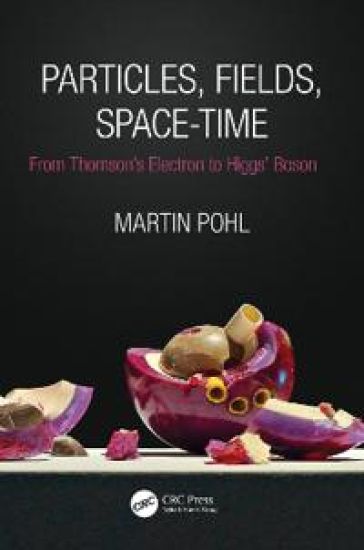
CHOICE Highly Recommended 2021Particles, Fields, Space-Time: From Thomson's Electron to Higgs' Boson explores the concepts, ideas, and experimental results that brought us from the discovery of the first elementary particle in the end of the 19th century to the completion of the Standard Model of particle physics in the early 21st century. The book concentrates on disruptive events and unexpected results that fundamentally changed our view of particles and how they move through space-time. It separates the mathematical and technical details from the narrative into focus boxes, so that it remains accessible to non-scientists, yet interesting for those with a scientific background who wish to further their understanding. The text presents and explains experiments and their results wherever appropriate.This book will be of interest to a general audience, but also to students studying particle physics, physics teachers at all levels, and scientists with a recreational curiosity towards the subject.Features Short, comprehensive overview concentrating on major breakthroughs, disruptive ideas, and unexpected results Accessible to all interested in subatomic physics with little prior knowledge required Contains the latest developments in this exciting field
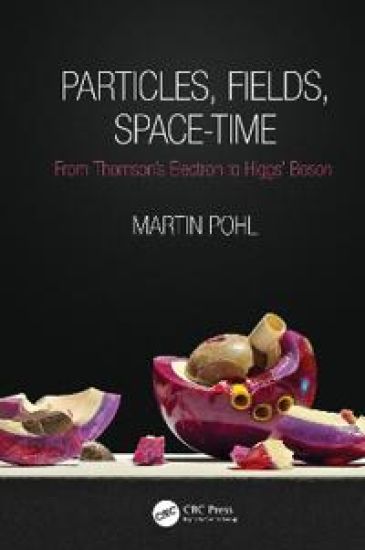
CHOICE Highly Recommended 2021Particles, Fields, Space-Time: From Thomson's Electron to Higgs' Boson explores the concepts, ideas, and experimental results that brought us from the discovery of the first elementary particle in the end of the 19th century to the completion of the Standard Model of particle physics in the early 21st century. The book concentrates on disruptive events and unexpected results that fundamentally changed our view of particles and how they move through space-time. It separates the mathematical and technical details from the narrative into focus boxes, so that it remains accessible to non-scientists, yet interesting for those with a scientific background who wish to further their understanding. The text presents and explains experiments and their results wherever appropriate.This book will be of interest to a general audience, but also to students studying particle physics, physics teachers at all levels, and scientists with a recreational curiosity towards the subject.Features Short, comprehensive overview concentrating on major breakthroughs, disruptive ideas, and unexpected results Accessible to all interested in subatomic physics with little prior knowledge required Contains the latest developments in this exciting field
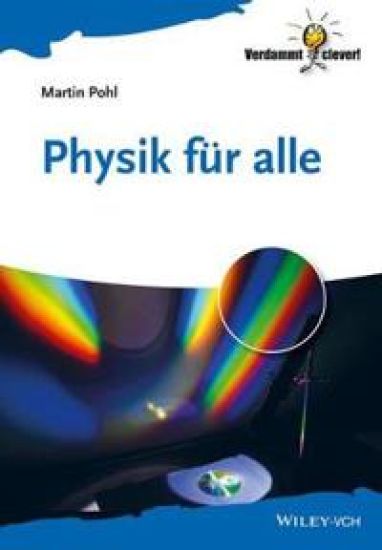
Physik für alle – das schließt neben Naturwissenschaftlern und Lehramtskandidaten auch Geisteswissenschaftler ein. Dieses Buch richtet sich an Leser, die ganz ohne Mathematik die Konzepte der Physik sowie Struktur und grundlegende Aussagen physikalischer Formeln verstehen wollen. Beschrieben wird in leicht verständlicher Form die Physik in der Folge ihrer historischen Entwicklung. Der Schwerpunkt liegt auf der Verwendung von Konzepten und, unter Verwendung einfacher Mathematik, ihrer Formulierung in physikalischen Formeln. Ein weiteres Thema sind die Methoden der Wahrheitsfindung in der Physik. Konzeptionelle Fragen an den Leser sowie Übungsaufgaben am Ende der einzelnen Kapitel bieten Gelegenheit für eine Reflexion und die Festigung der Methoden und Inhalte. Aufgrund des intuitiven Zugangs zu physikalischen Themen und der Diskussion der grundlegenden Konzepte der Physik eignet sich dieses Buch besonders als Einführung in die Physik für alle Nicht-Naturwissenschaftler. Es ist aus der gleichnamigen, sehr erfolgreichen Vorlesung entstanden, die der Autor seit dem Jahr 2010 an der Universität Potsdam hält. Die einzelnen Kapitel sind mit Ausnahme des ersten als in sich abgeschlossene Themenblöcke konzipiert.

Traumnovelle. EinFach Deutsch ...verstehen
Arthur Schnitzler; Martin Pohl
Schoeningh Verlag
2010
nidottu

Der Netzzugang bei Briefdiensten in Deutschland und Großbritannien
Martin Pohl
Diplomica Verlag
2010
pokkari